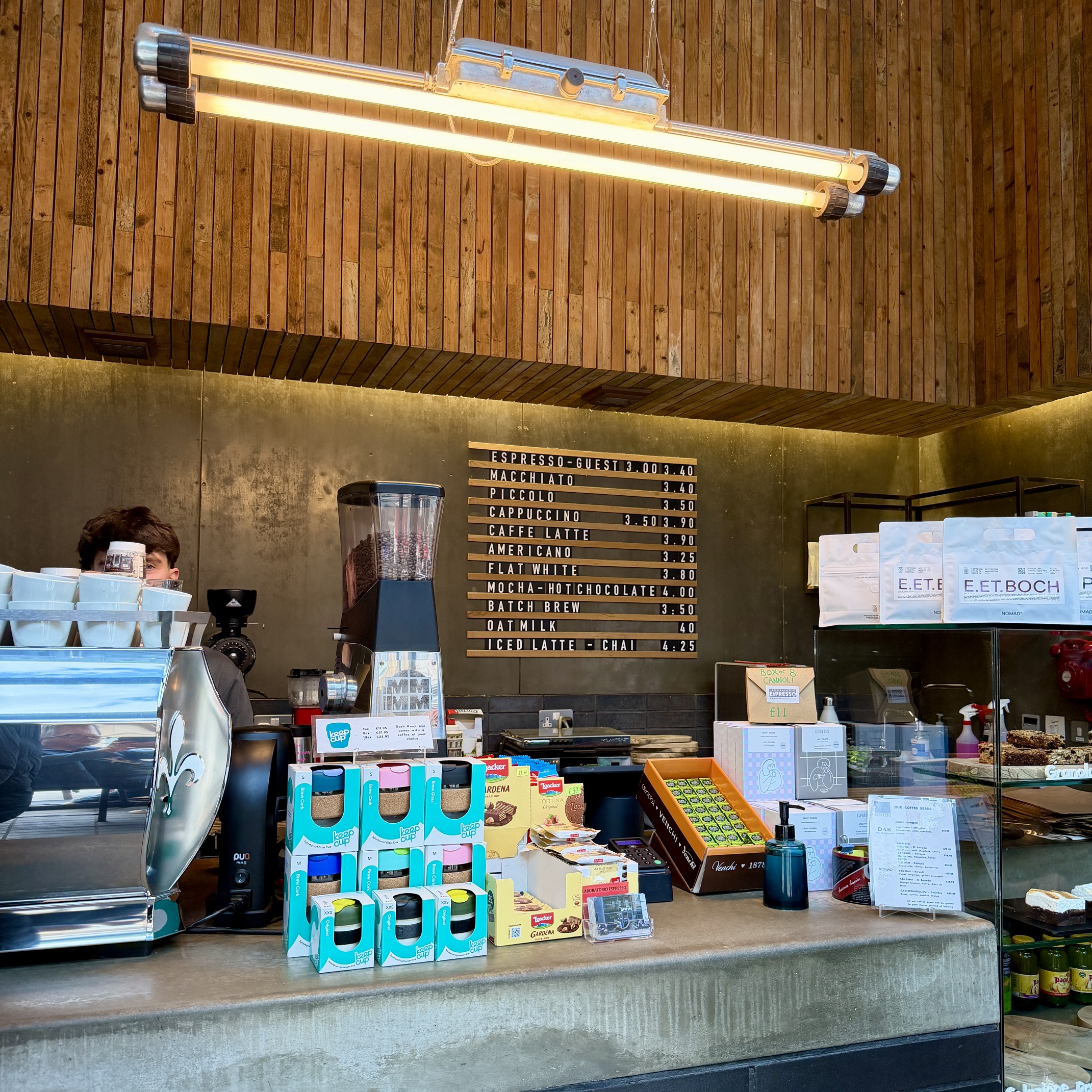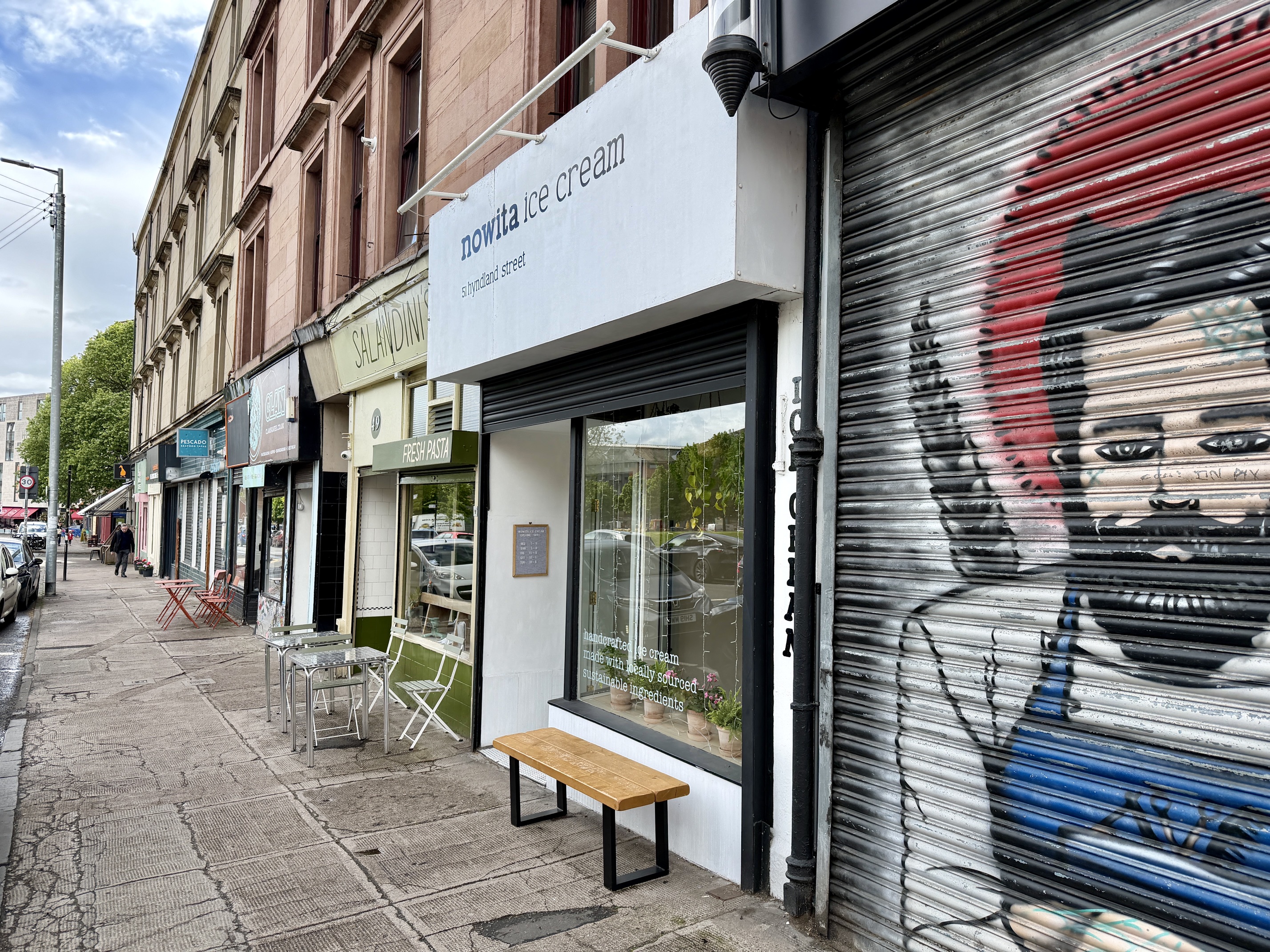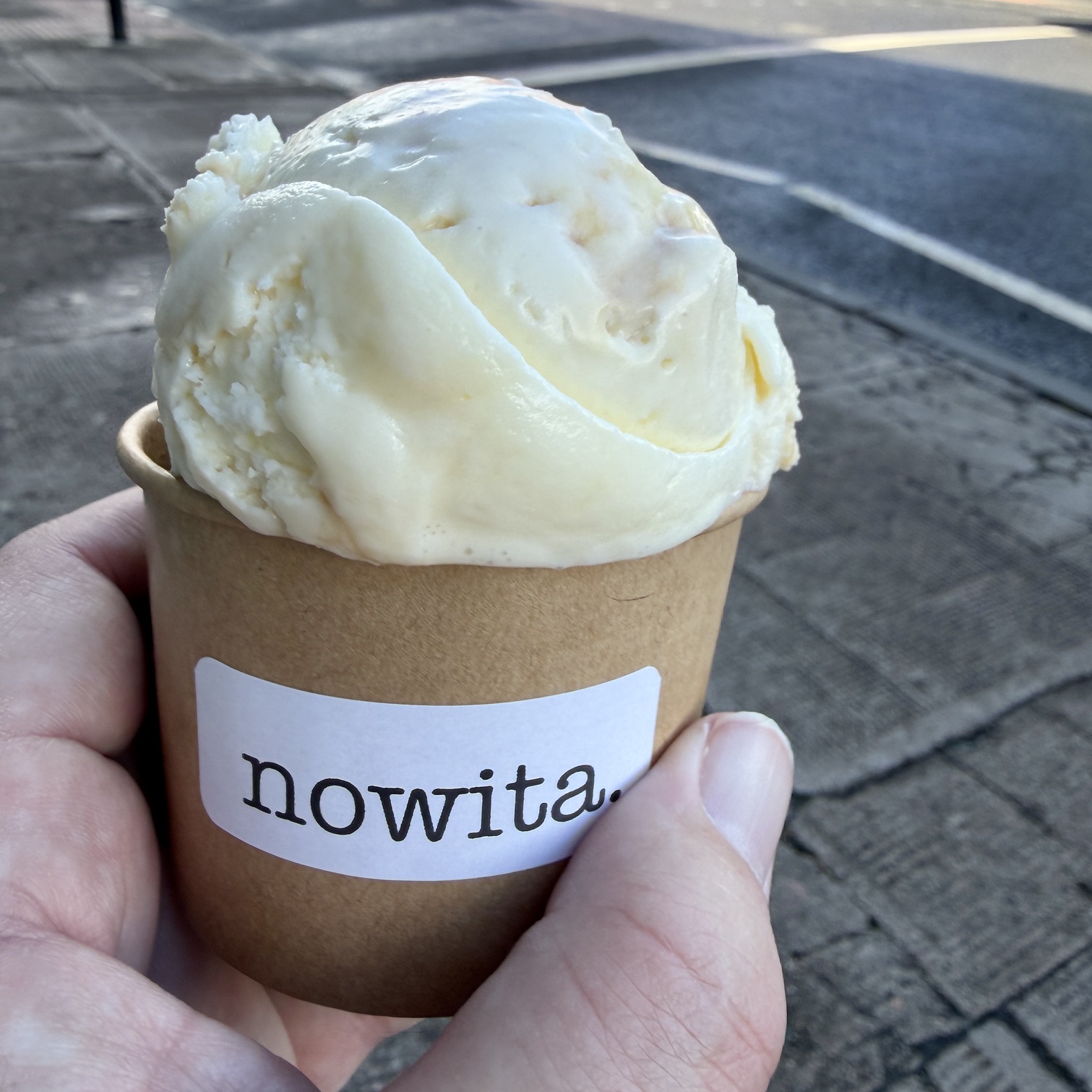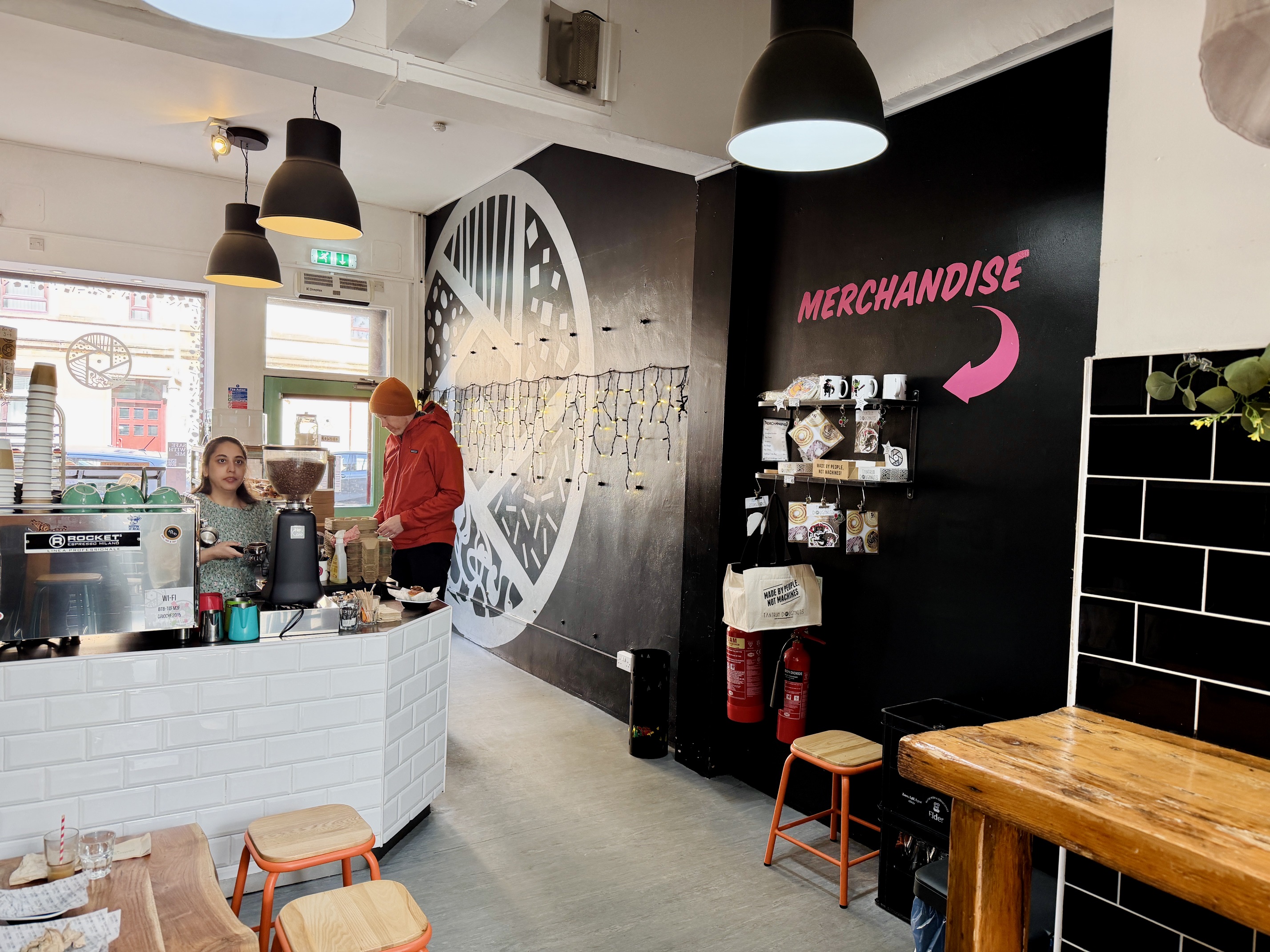
City guide: Bruges (2026)

This is my third city guide to Bruges: I put the first one out back in 2022, and then I wrote another one two years later which I’ve been updating piecemeal ever since. Both times it shared the billing with Ghent, which has become increasingly ludicrous, so for 2026 Bruges finally gets a city guide in its own right. And I should warn you in advance that this is long, and as exhaustive as anything I write is ever likely to be, because I go to Bruges a lot.

Eight times in the last four years, would you believe, which has surprised me as much as it probably surprises you. Because when I got together with my wife Zoë, over eight years ago, two things I knew about her for sure were that she loved watching Top Of The Pops reruns on BBC Four and that she loved going to Belgium in general and Bruges in particular. Before we ever met, when I used to follow her on Twitter (back when Twitter was good) if she wasn’t posting about one she was posting about the other.

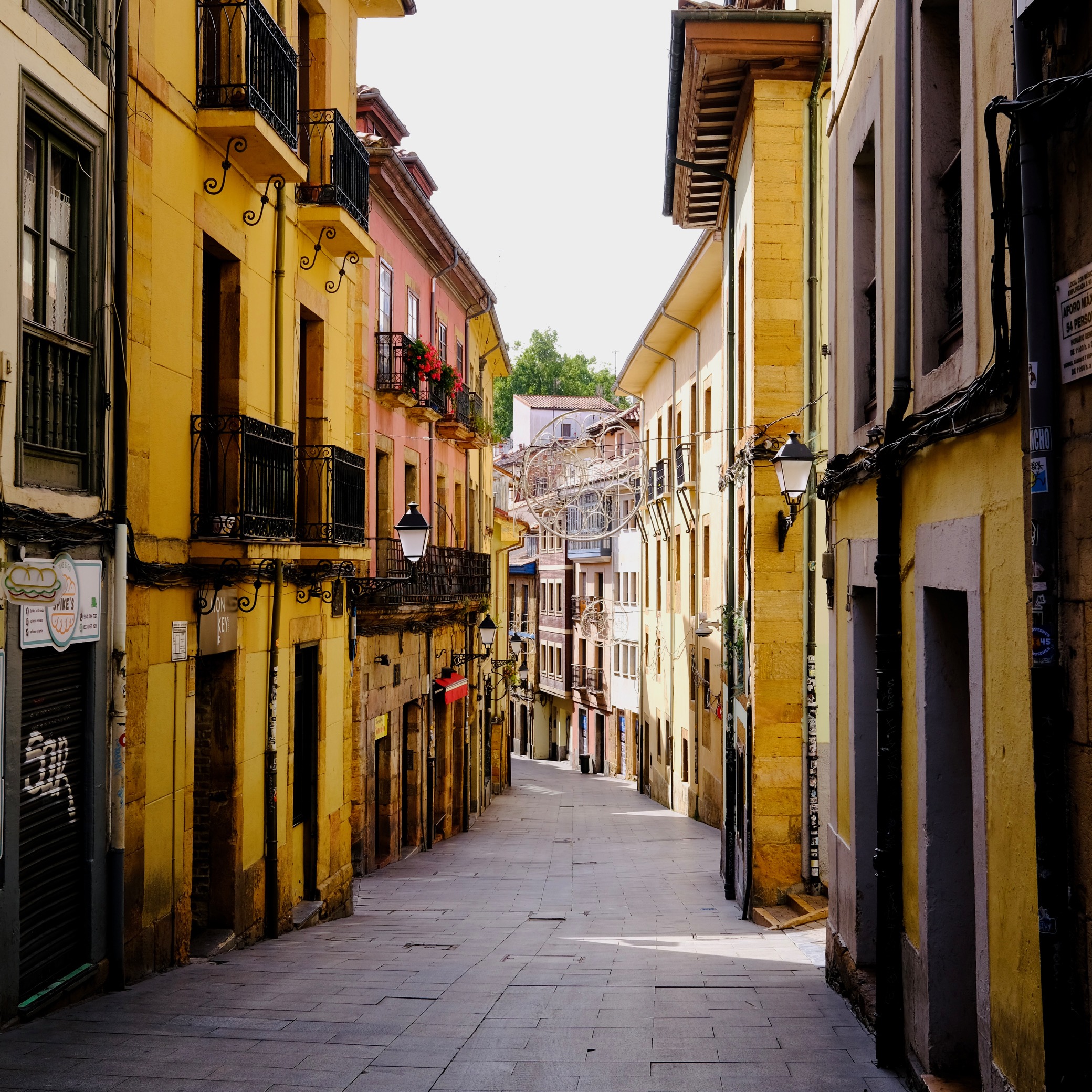
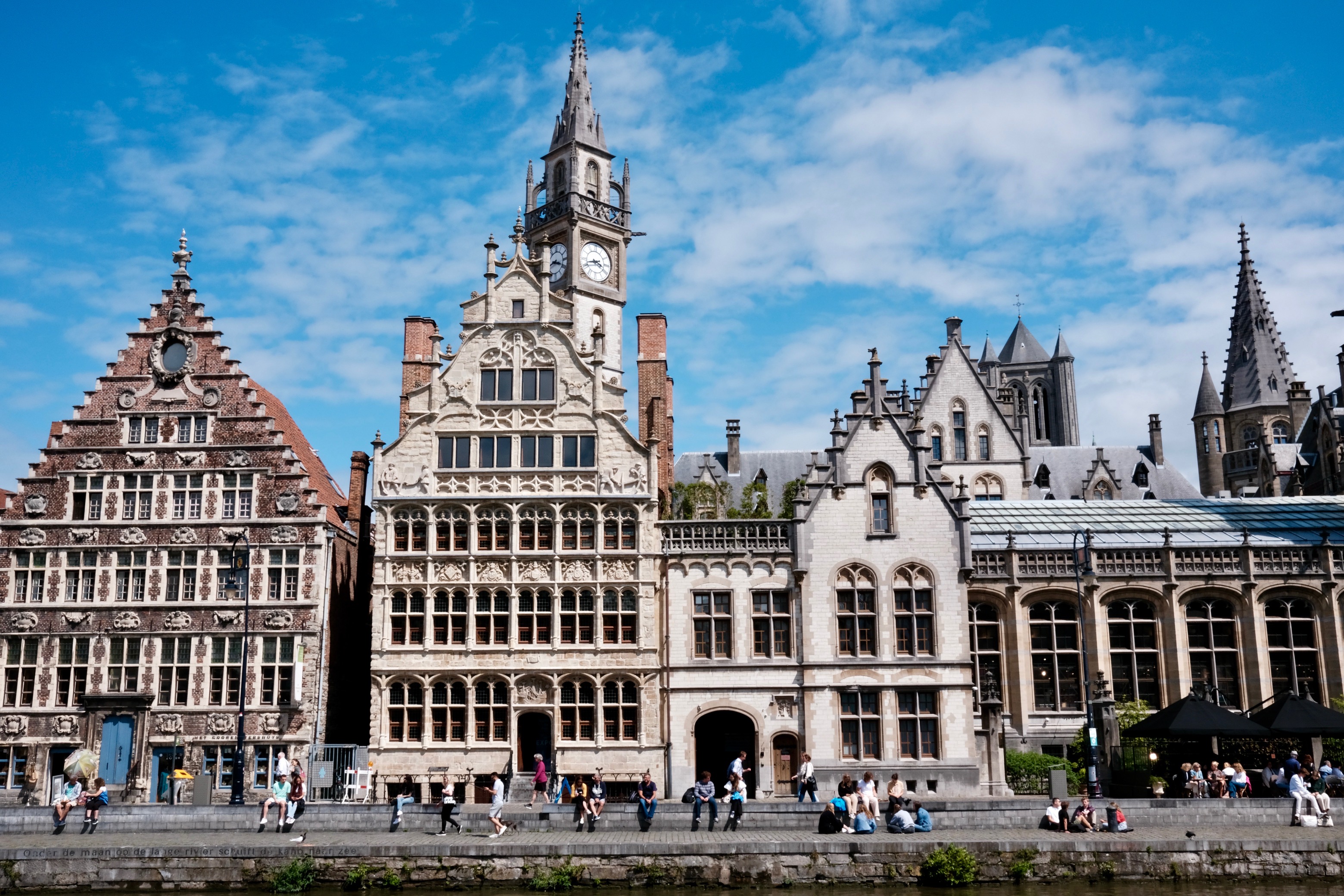
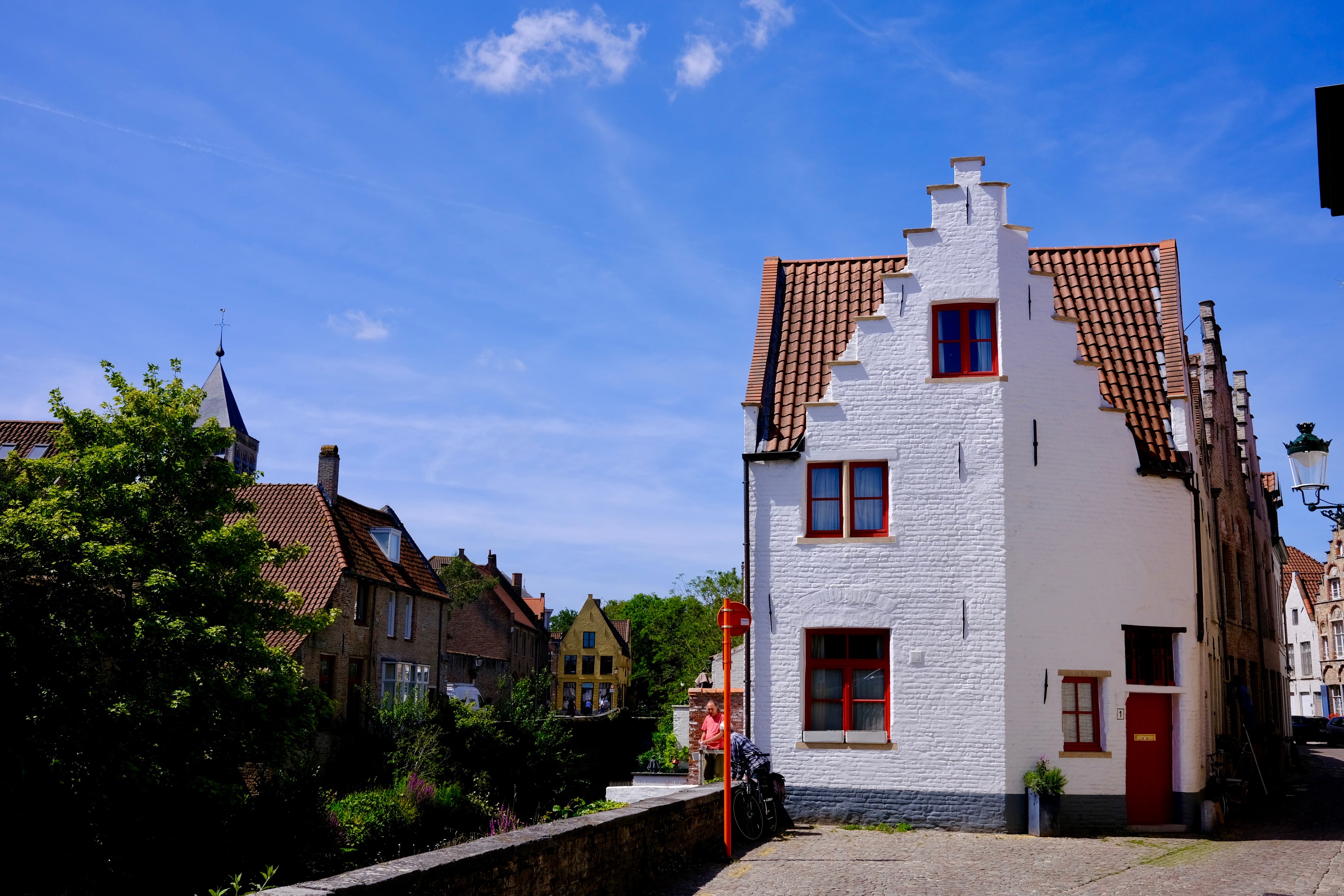
I didn’t understand it at first – hadn’t she been to Paris, or Granada? – but then I went to Bruges with her and I fell in love with it, the way it’s easy to fall in love with something when it’s so loved by someone you yourself have fallen in love with. It is an absolutely beautiful place – almost unreally so – from its medieval streets to grand squares, its picturesque canals and sleepy little bridges. It is chocolate boxy – and, of course, the easiest place in the world to buy a box of chocolates.
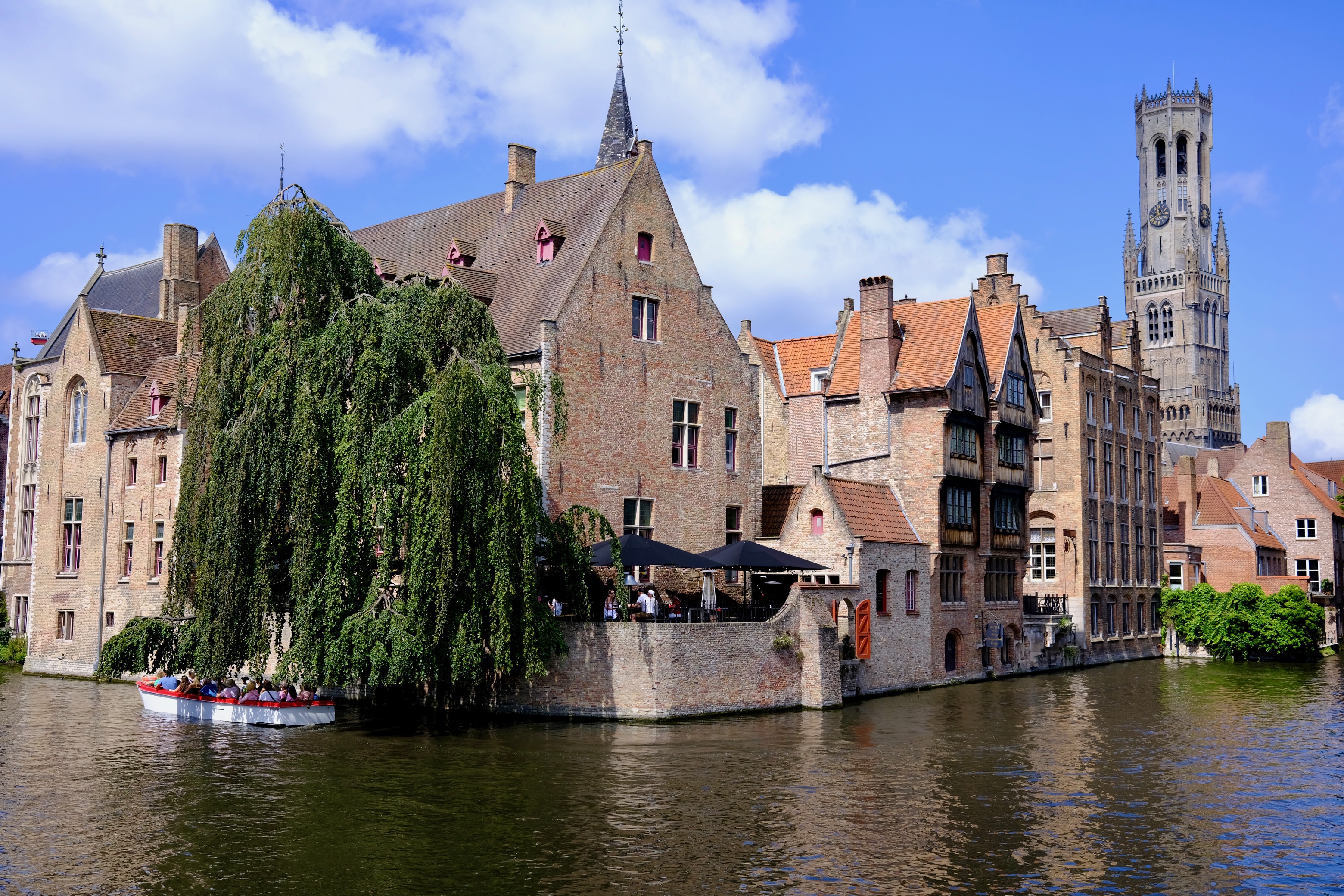
It has one other huge thing going for it. During the day, especially in summer, there are a shitload of tourists and yes, it can be a lot. But they do seem to be concentrated in the prettiest bits of the city – they’ll meander through the Markt, they’ll take forever outside the chocolate shops on Wollestraat, they’ll drive you mad posing for photos outside the Gruuthuse Hof. They’ll flock to the Rozenhoedkaai to take pictures of the prettiest view in the city, and they’ll pile on to their boats, zip down the canal and have an absolutely amazing time.

And, honestly, good for them. But you don’t have to stray too far from the touristy bits, or wander round the city long after about 6pm, and it can be almost eerily quiet. You can feel like you have the place to yourself, and that’s when the city gently exhales and you see its true beauty and hear yourself think, all at the same time.
Anyway, all the other guides will tell you about the quays and canals and boats, they’ll all talk about the Belfort and the Basilica Of The Holy Blood. The New York Times just updated its 36 Hours In feature about Bruges, and they would advise you to check out the new art gallery, walk round the parks or visit the Frites Museum.

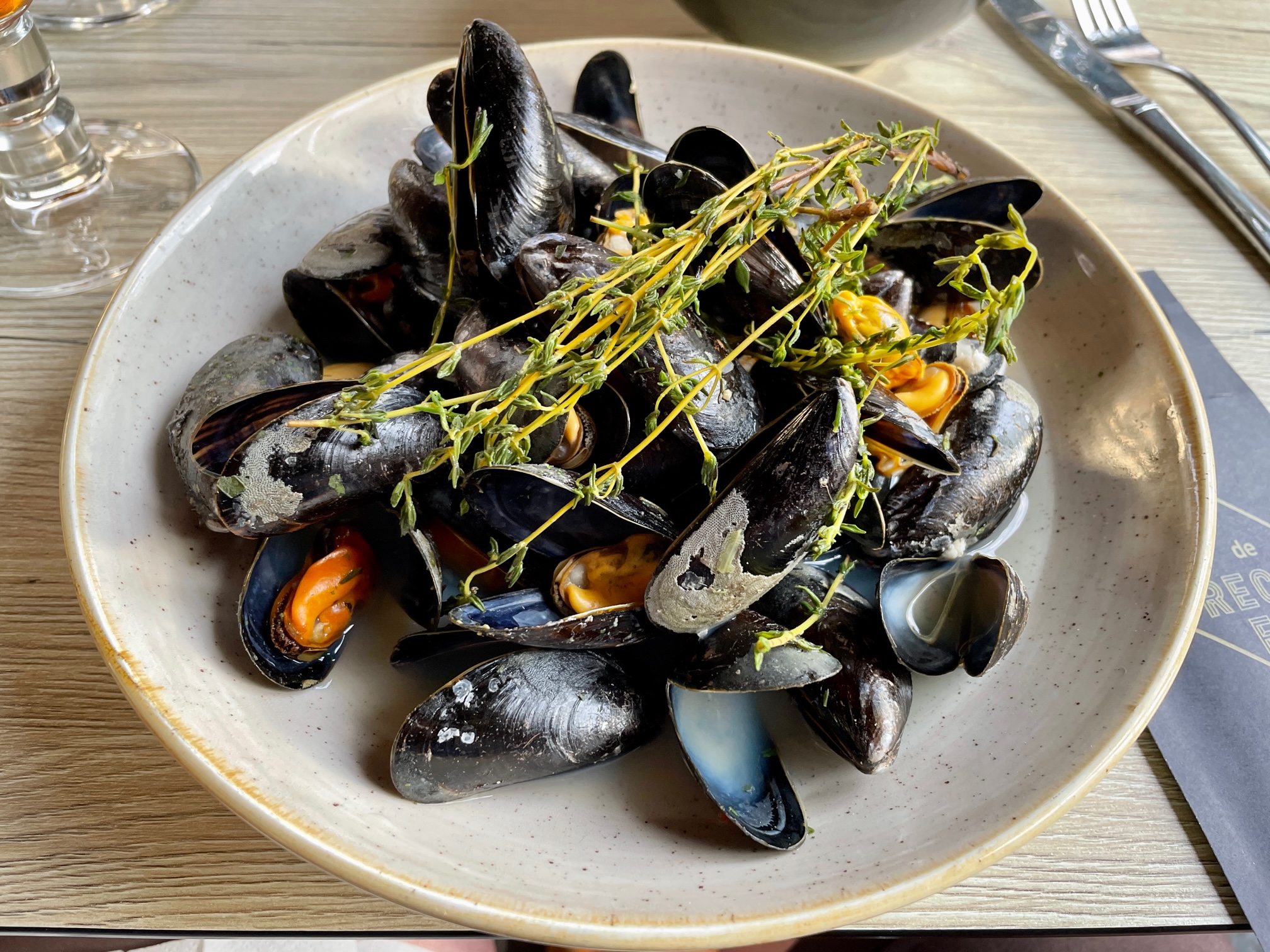
But this guide is all about where to eat and drink because, beneath the surface, ignoring all the tourist brasseries on the main square that will serve you moules and the shops flogging waffles, nougat and marzipan there is an awful lot of interesting food and drink going on in Bruges.

I would say that scene has evolved and deepened even in my time visiting the city, to the point where every visit uncovers something new and makes the decisions about where to eat more difficult. It also highlights that certain kinds of restaurants – pan-Asian small plates for sharing, for instance – are having a moment across the city.

But even so, you will be bombarded with excellent choices and all of the options in this guide have something to offer. Whether you want awesome pizza or a classic Flemish beef stew, delicate and precise textbook gastronomy or one-of-a-kind choices from a genius one man band, whether you fancy some of the most intelligent pan-Asian food you’ll ever eat, fried chicken, skate wing in beurre noisette or – yes – tacos, Bruges has you covered.

Add in corking coffee, great wine, excellent natural wine and, naturally, a series of imperious pubs that both elevate beer and provide a pedestal worthy of it and you have a city that rewards visitors again and again. I wouldn’t go back pretty much twice a year if that wasn’t true, believe me: there are far too many cities and restaurants I haven’t eaten in yet to waste time somewhere I didn’t adore.
A few bits of housekeeping – this guide replaces one written in 2024 and updated a few times since, but the vast majority of it is new. Most of the recommendations date from a visit this year, practically all of the remainder are of places I visited and vetted last year (and in a lot of instances have been to a fair few times before that!). Only two of the venues in here date from 2024, but I have total confidence in those too. In each case I have put the year of my most recent visit in brackets, to be transparent and so you can trust my recommendations.

I should add too that you should always check opening hours and even then, have a Plan B up your sleeve, unless you have a table reservation. Bruges has the most erratic opening hours of any city I’ve ever visited and I’ve lost track of the number of times I’ve rocked up somewhere Google is adamant is open to find the proprietors just didn’t fancy trading that day. You get used to it eventually and it becomes part of the charm, but the first few times it can be irksome.

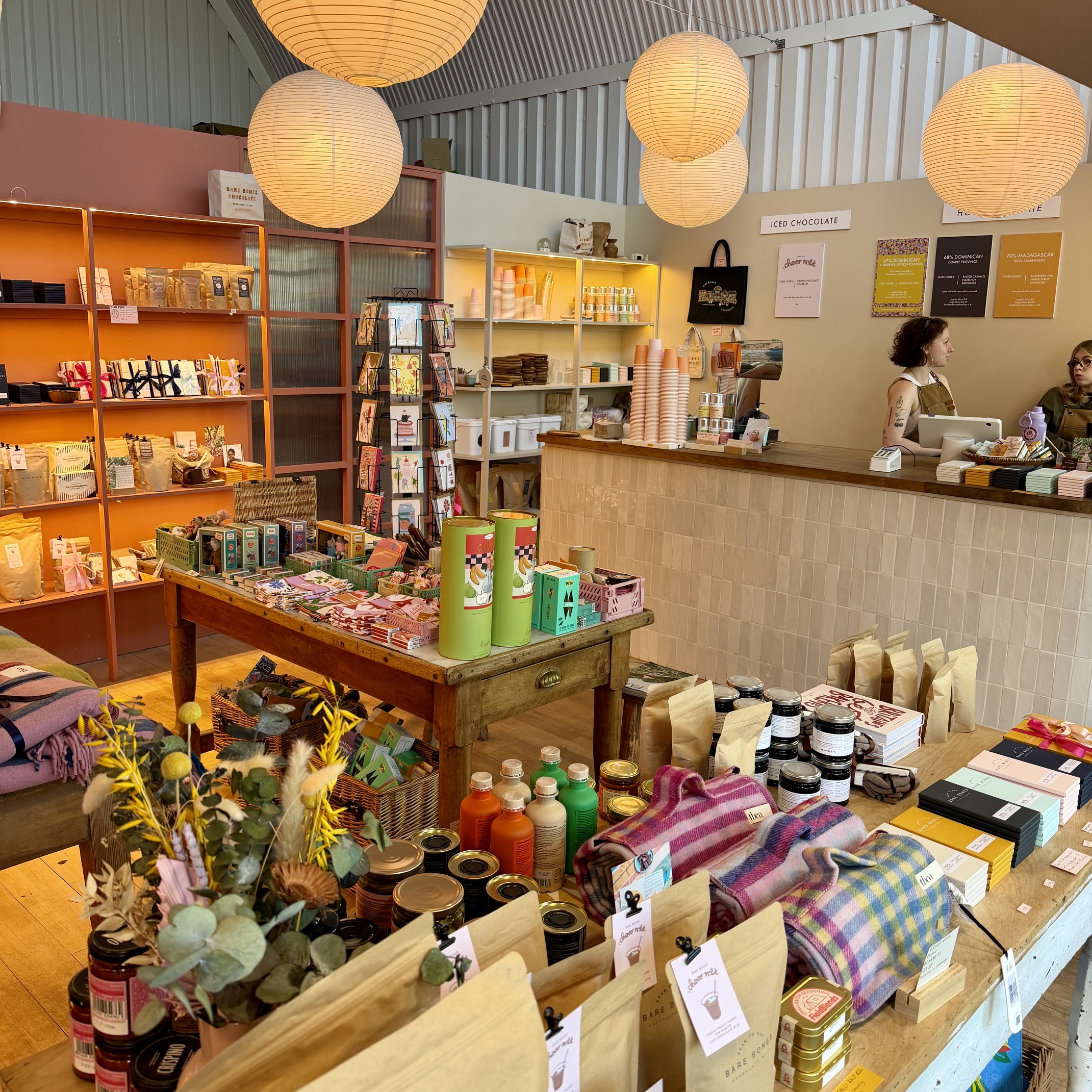
This isn’t a shopping guide, but even so I have a few tips. If you want chocolate my personal favourite is Dumon, which is superb and very polished and has several branches across the city (you can even get a hot chocolate in one of them). If you want Belgian beer, go to the Bottle Shop on Wollestraat which can sort out the majority of your take home requirements: they also sell a phenomenal array of the correct glassware.

For more esoteric Belgian beers, Bacchus Cornelius on Academiestraat is excellent and for modern Belgian craft – or rare and marvellous craft beer from up and coming breweries throughout Europe – I love the two branches of Stacks, both of which are further out of the city (buses are contactless, tap on and very reliable).

Last of all, I know this is a big guide and I promise you everywhere on here has earned its place. But just in case you do find it a little tl:dr, here’s how to make it easy if you’re short of time.

If you only do one place for lunch, visit Bruut if you want to push the boat out or TouGou if you want a slightly more modest, but equally brilliant, experience. If you only do one place for dinner go to Assiette Blanche for classic cuisine or either Màs or Shibuya if you want something less traditional. If you only go to one coffee spot make it Dees. If you only have one daytime beer have the eponymous tripel at De Garre. And if you only go to one pub in the evening, it really has to be ‘t Brugs Beertje.

Hopefully you will have time to do far more than that, so without further ado I hope you enjoy this and it helps to make your trip to Bruges as joyous as all of mine have been. Let me know how you get on – I’m at ediblereading@gmail.com.

Where to eat

1. Assiette Blanche (2026)
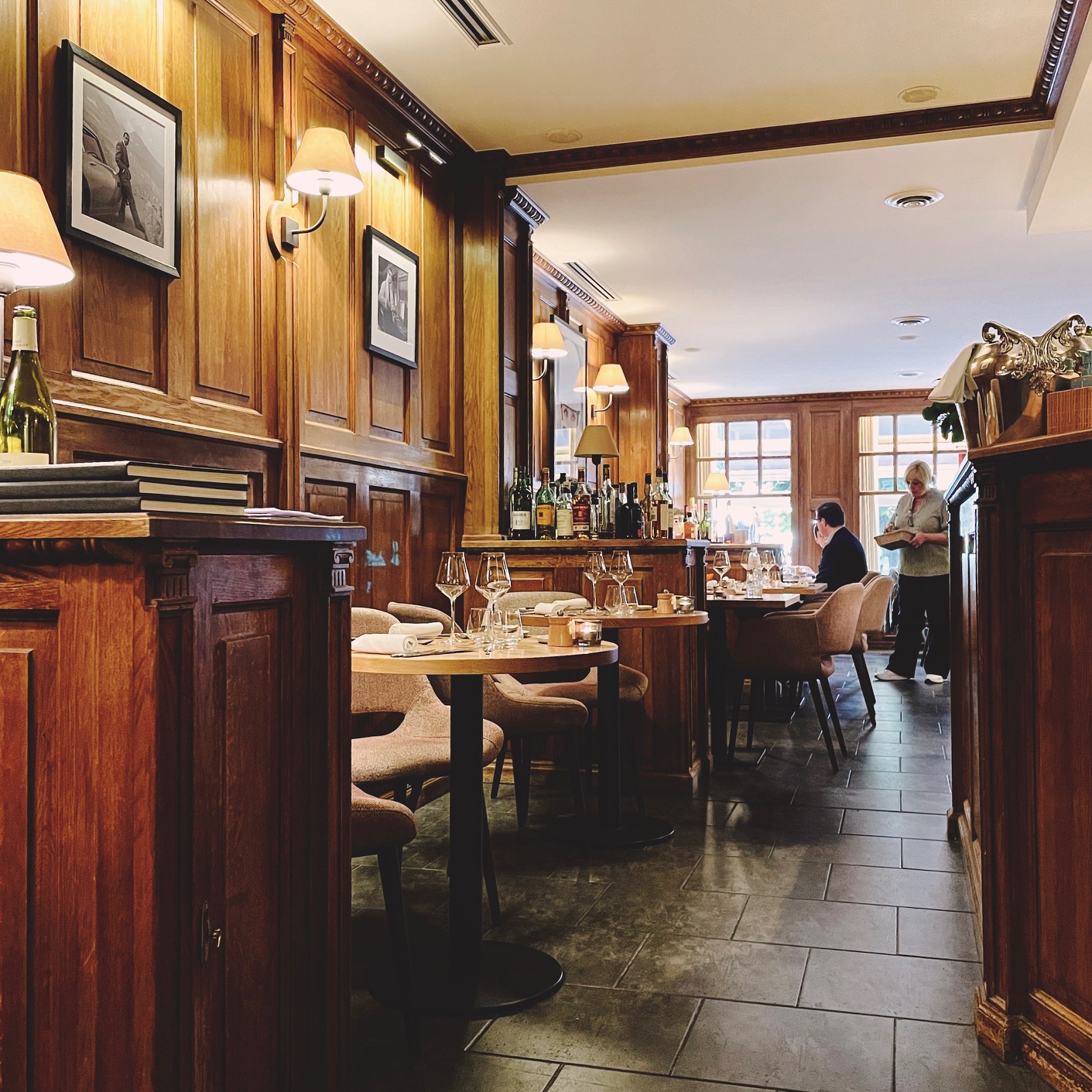
I went to Assiette Blanche for my first ever dinner in Bruges, back in 2022. It set a high bar for the city and I’ve been back many times since, including on my most recent visit this summer. Simply put, it’s a class act.

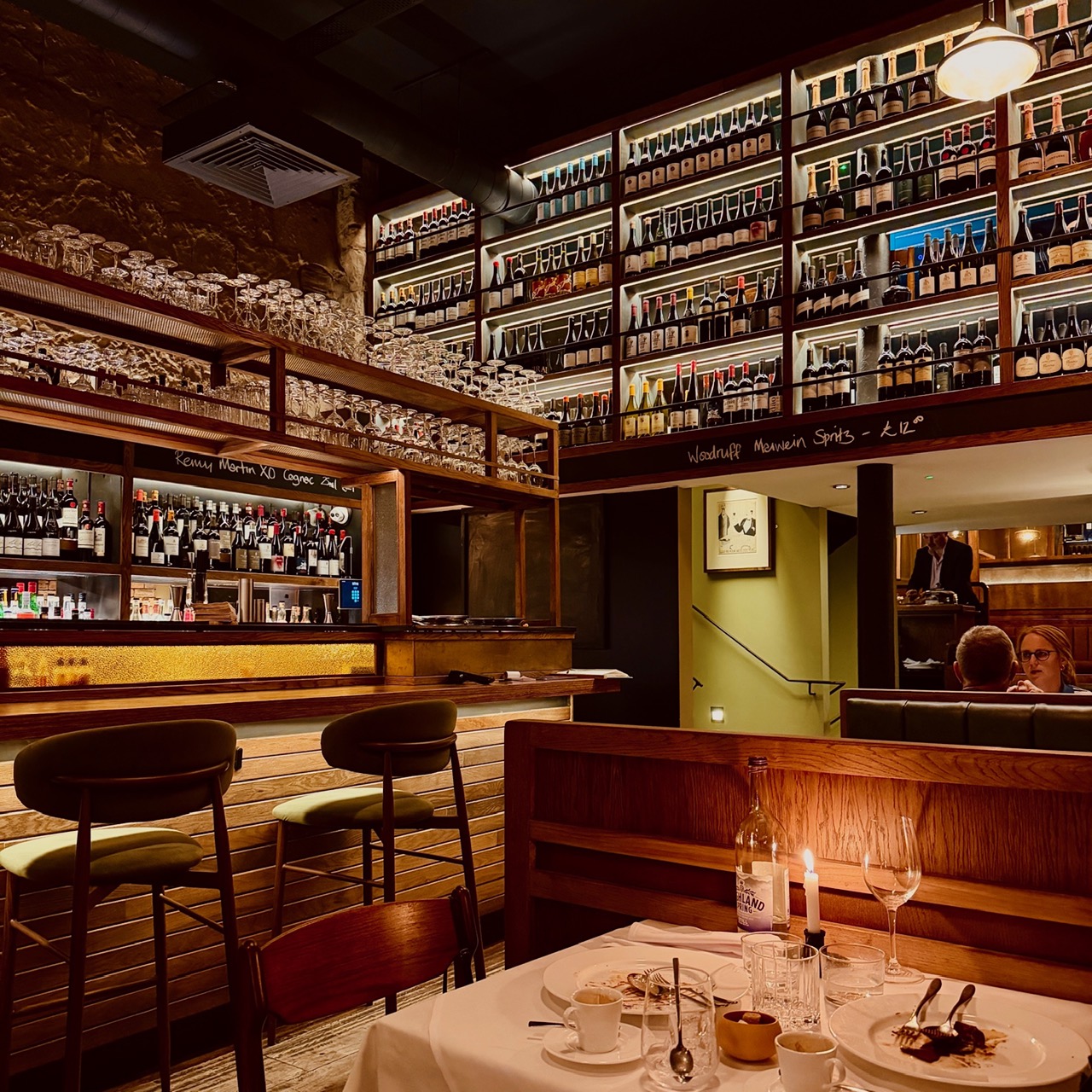
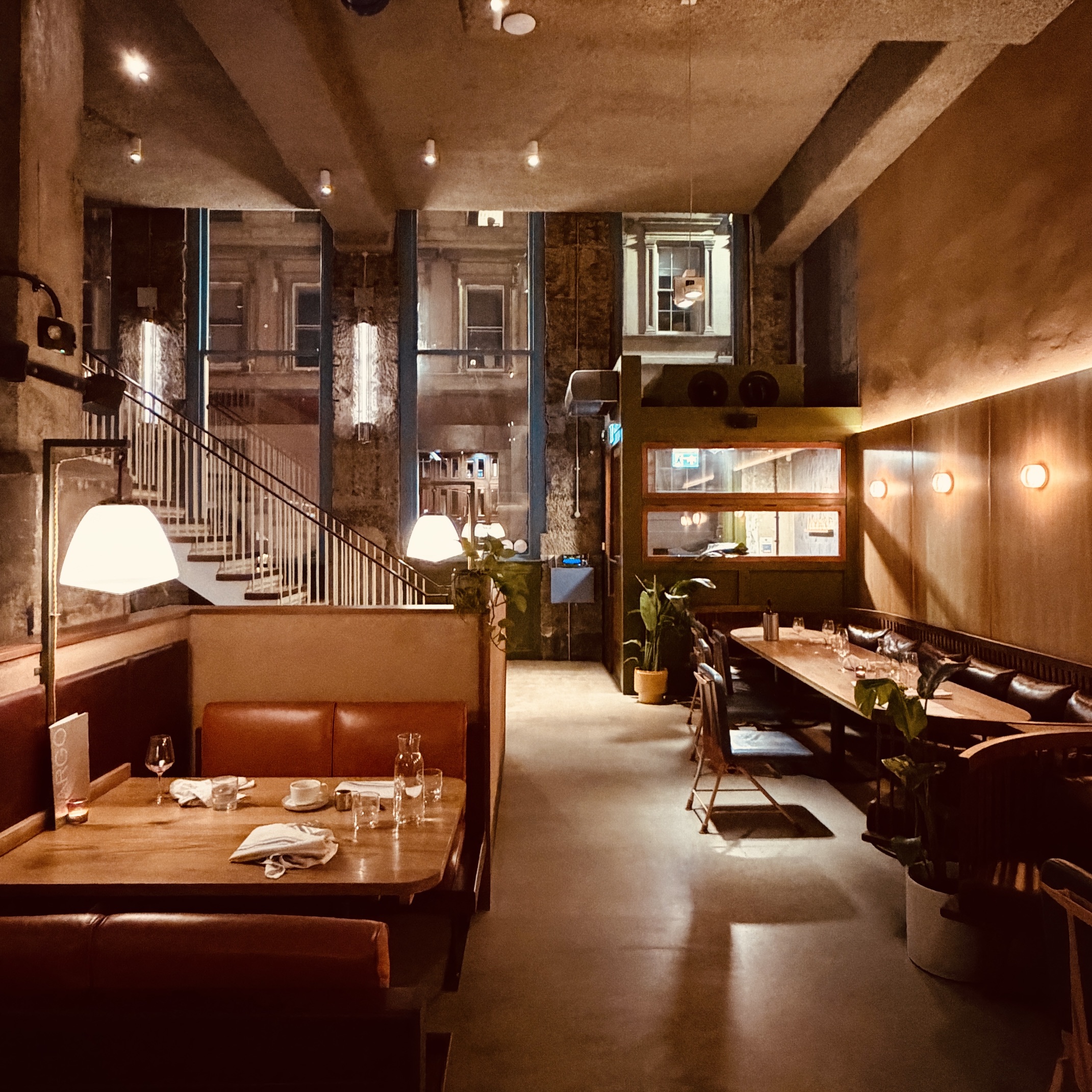
It’s a very grown-up restaurant, all well-spaced tables, tasteful wood panelling and faultless service. In a city where sometimes dining feels split between stuffy traditional Belgian fare and a more Modern European procession of small plates – everybody does a steak tartare, everybody does fried chicken – Assiette Blanche sits above all of that and just offers an excellent, constantly changing menu of exceptionally executed food.

It has a very good set menu, with a couple of choices per course, or an à la carte menu, although they will allow you to mix and match to some extent. But the set menu has always sorted me out because I’ve nearly always wanted to order both the options on offer, so it makes matters quite difficult enough.

I have had countless exemplary dishes at Assiette Blanche, to the point where it would be easier to point out the dishes I haven’t liked – or would be, if I’d ever disliked anything. But really, if you book a table there on your trip to Bruges I find it hard to believe that you could go wrong. I’ve had scallop carpaccio with cauliflower couscous, delicate as you like, and big wedges of black pudding served with apple and pickled beetroot. Both were done equally well.

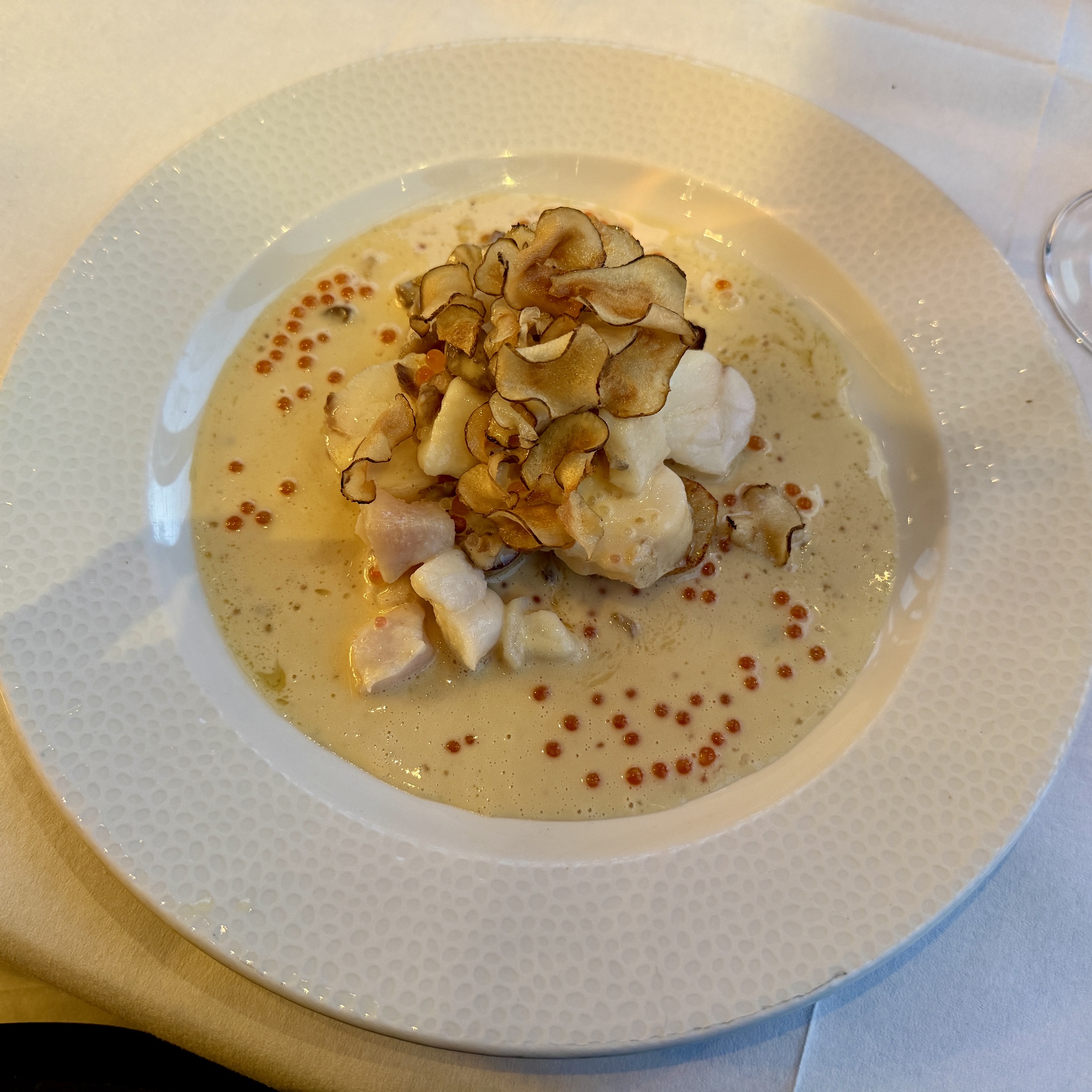
I’ve even gone often enough to have the same dish twice, two and a half years apart: a silky potato mousseline topped with a tumble of brown shrimp bathed in beurre noisette, the whole thing topped with a poached egg. Perfect execution, and perfect consistency: I look at the two pictures and they could have been taken the very same night.

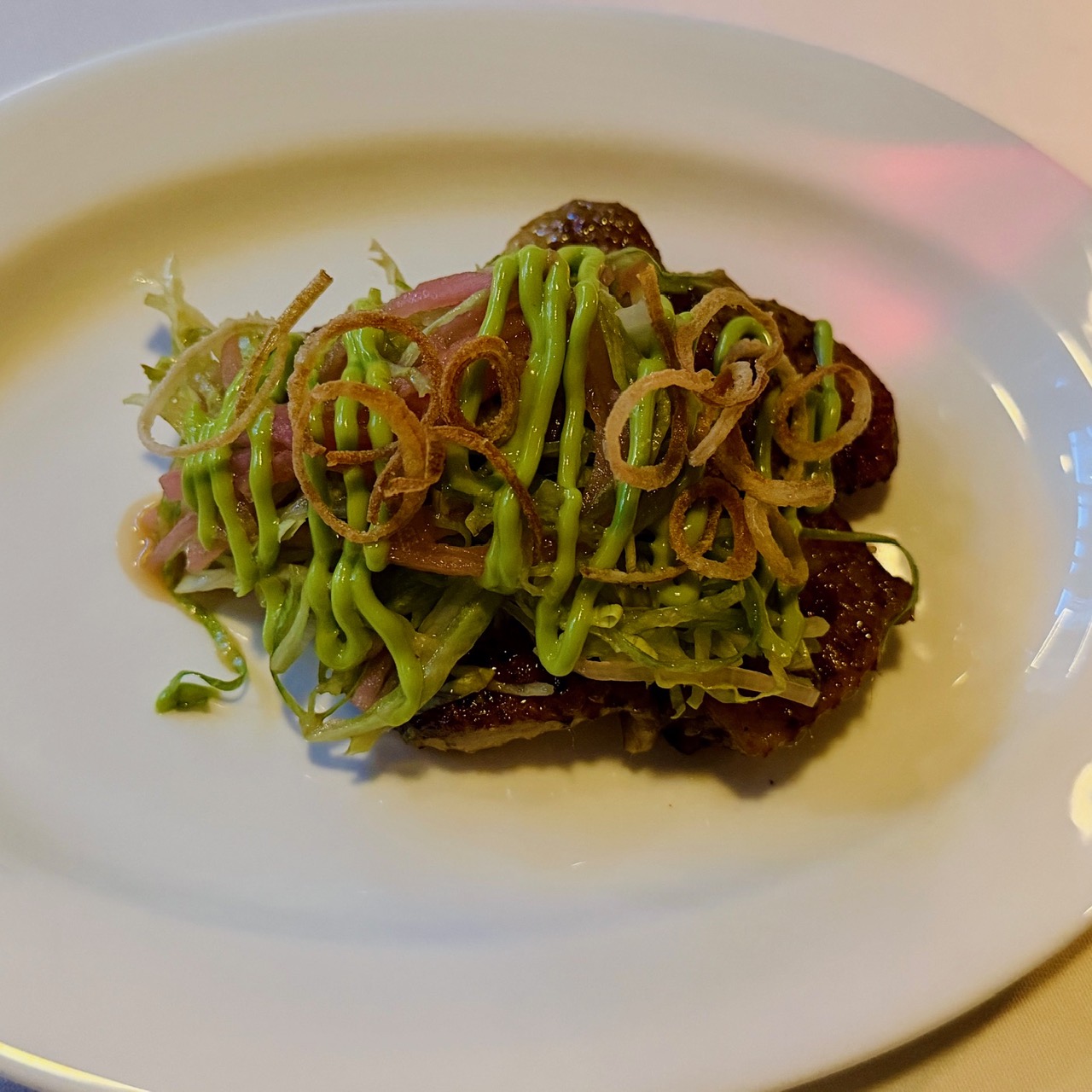
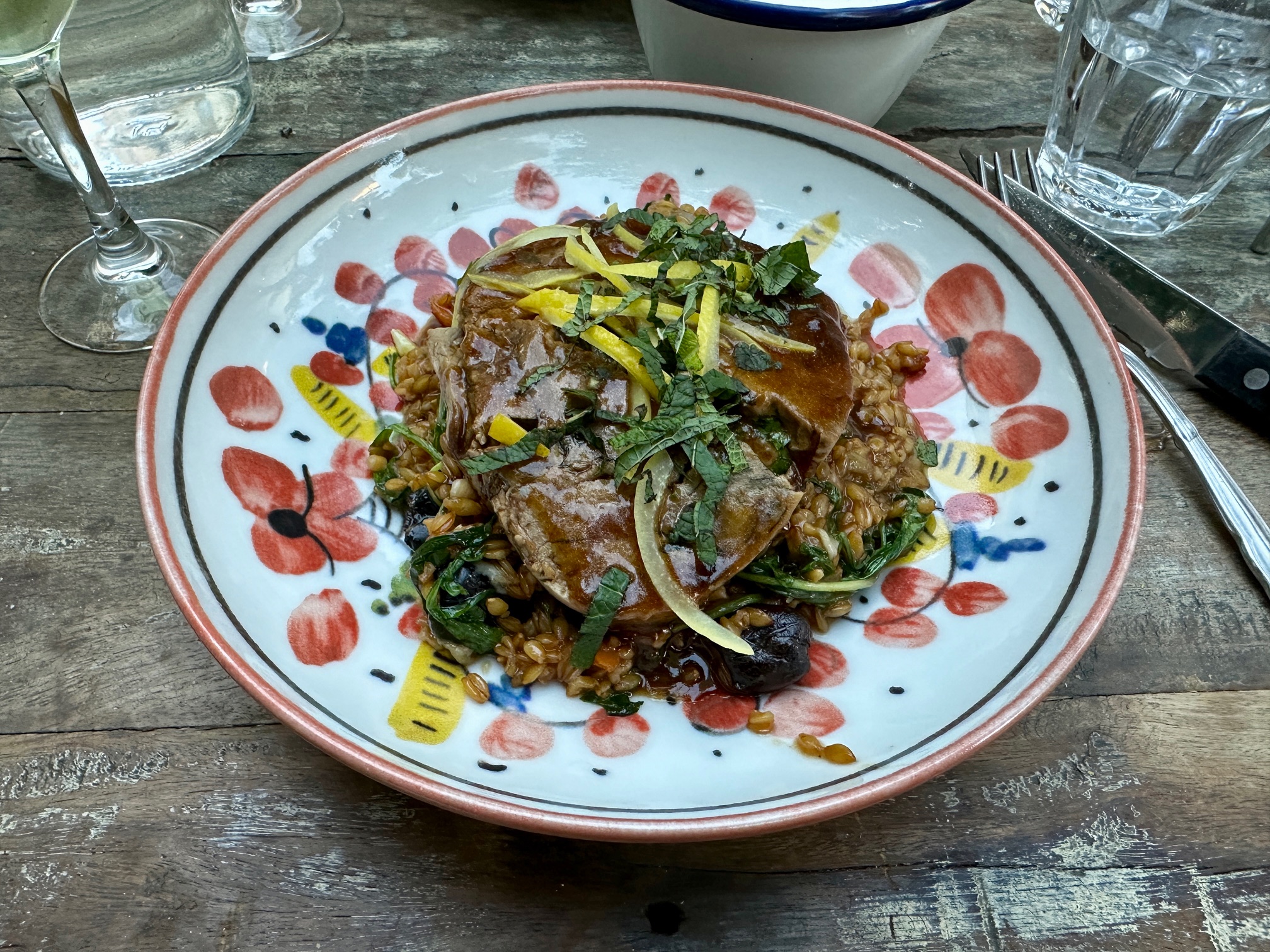
That wasn’t the highlight of my most recent meal there, though: that honour goes to a fluffy doorstop of brioche toast, almost impossibly airy, loaded with snow crab, iceberg lettuce and mayonnaise. Ambrosial, although my monkfish wrapped in guanciale and sage, served on discs of courgette and strips of roasted pepper with a pistachio and olive crust, the whole thing in a moat of verdant herb oil, ran it a very close second.
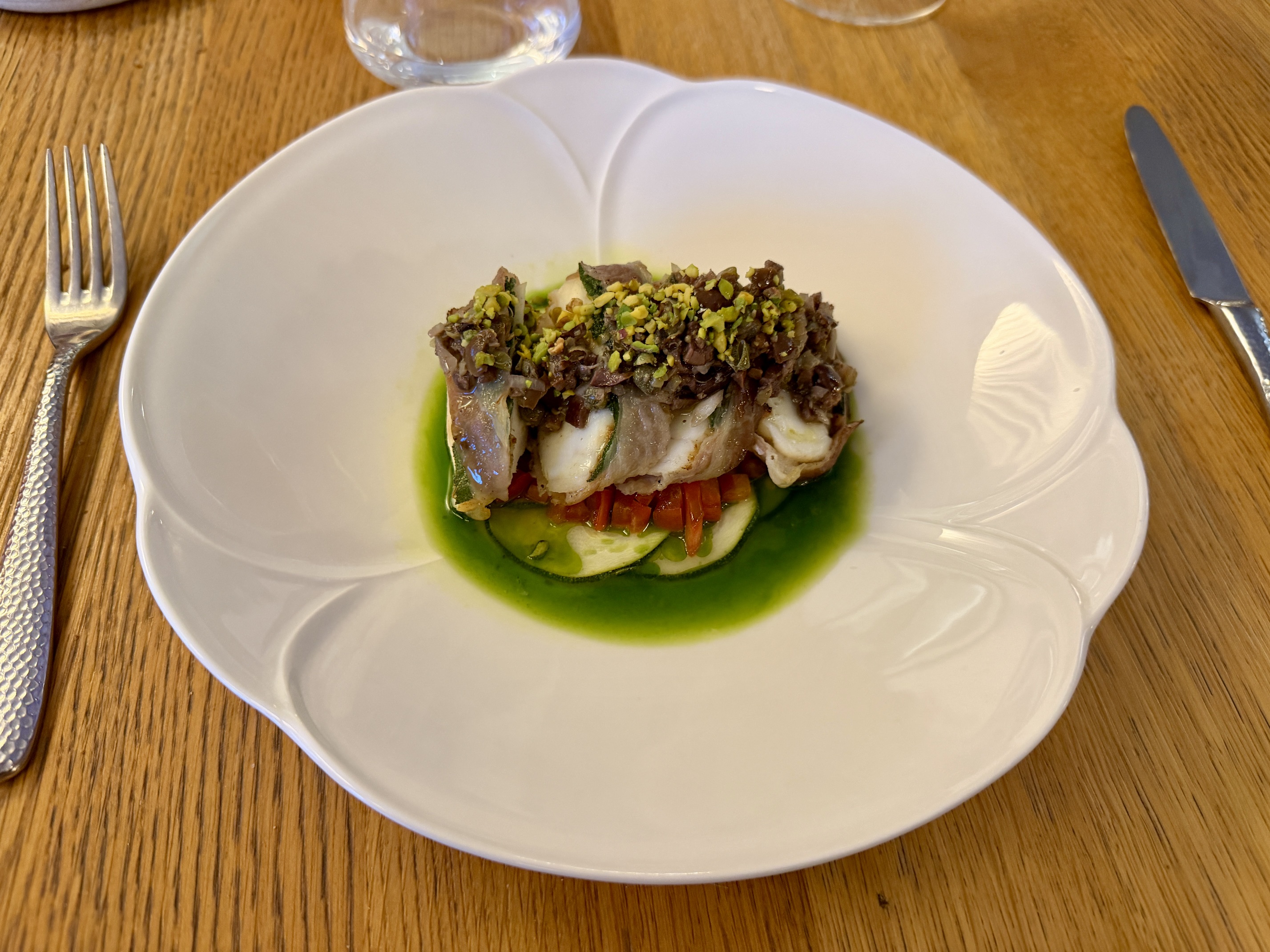
The same team has looked after us every single time we have been, and when I told the charming, authoritative front of house how much we’d enjoyed it she told us that Assiette Blanche opened in 2007. Quite amazing, really, to be so excellent for so long. I asked whether she had any advice for other places we should try on our visit and she calmly listened to the bookings we’d already made and said “you’re going to the good places”. I don’t know whether that reflects well on me, but if Assiette Blanche says somewhere is good you’d better believe it will be.

Assiette Blanche
Philipstockstraat 23, Brugge
https://www.assietteblanche.be/nl

2. Bruut (2026)
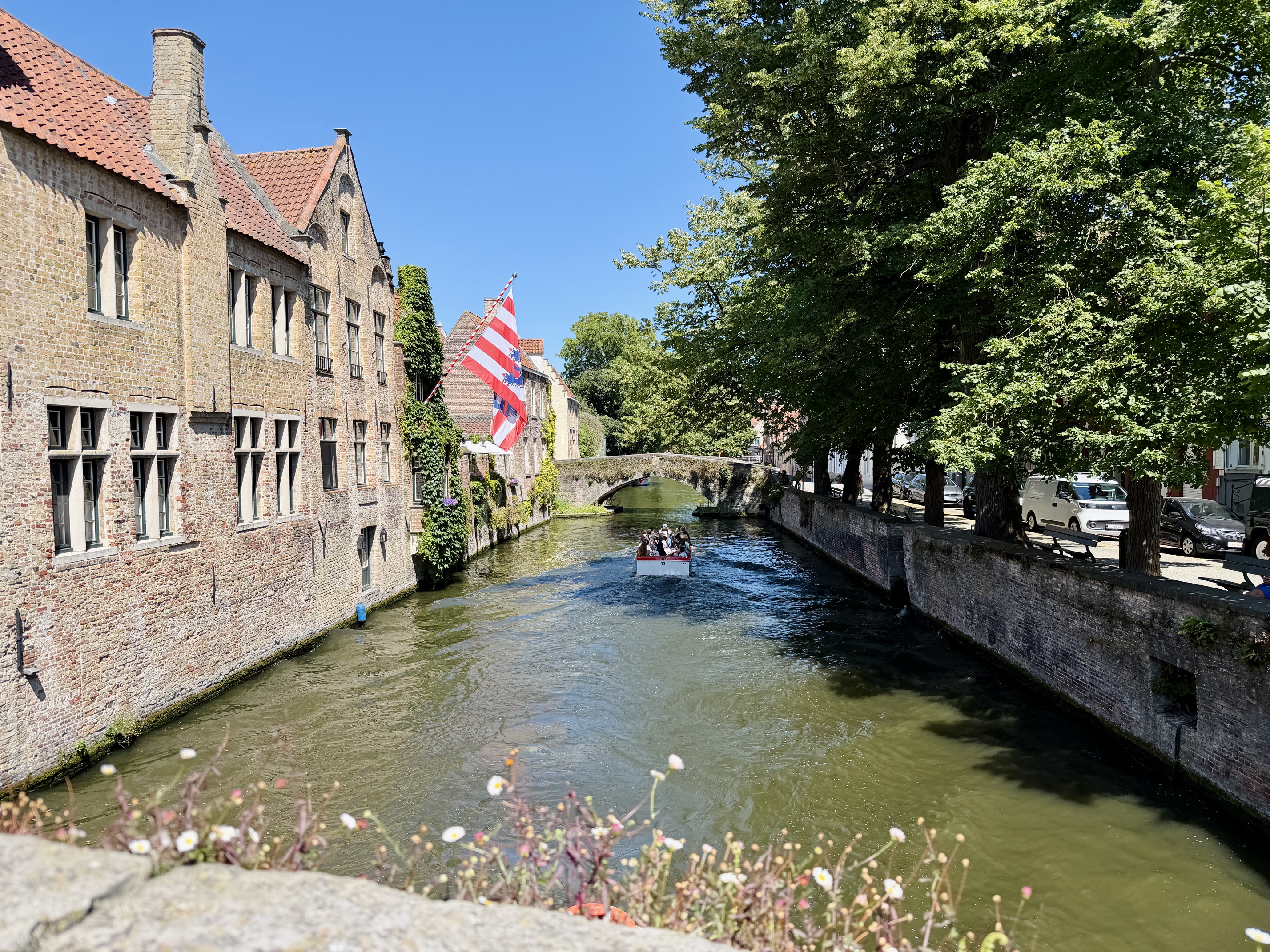
On my trip to Bruges this summer, Zoë and I made a deal that we’d eat in new restaurants with two exceptions: she could pick one venue we’d visited before, and I could pick the other. Her choice was Assiette Blanche, and now you know how that went. But Bruut was my selection, and I’m so delighted that I made it back there after over three years. Far too long, if you ask me.

It’s in a handsome building next to a little bridge overlooking the canal. And the dining room itself is very cool – I’ve eaten there, and if you visit in winter it’s a great place to dine. But in the summer, especially if you go for lunch, you snag one of the tables on that bridge, watching the boats drift past, and you can have two and a half of the finest hours of your entire year.

Bruut is chef Bruno Timperman’s restaurant and it is very much in his image – iconoclastic, charismatic, allergic to compromise and impossible not to love. If you have allergies or a restricted diet, Bruut is not for you: he doesn’t pander. But otherwise, you go, you put yourself in his hands and you get course after course of imaginative, unforgettable food at a restaurant with no set menu where he cooks whatever he wants, every single day.

He also does a fair amount of waiting on tables, even if he’s done one of his feet a mischief (he showed us a picture on his phone once of his latest kitchen injury: it wasn’t pretty), because he loves to explain exactly what you’re getting.

No two meals there are the same, even if you go the same time of the year more than once. I’ve had a couple of dishes twice – his phenomenal steak tartare, made simply with salt and milk to extract the purest flavour from a herd Timperman works with exclusively; cherries served with a blushed white chocolate, dotted with herbs and sitting in a limpid pool of cherry gazpacho – but otherwise it’s the gastronomic equivalent of listening to a jukebox owned by a person with outstanding, idiosyncratic taste. Nothing you quite expect, but everything simultaneously delicious and fascinating.

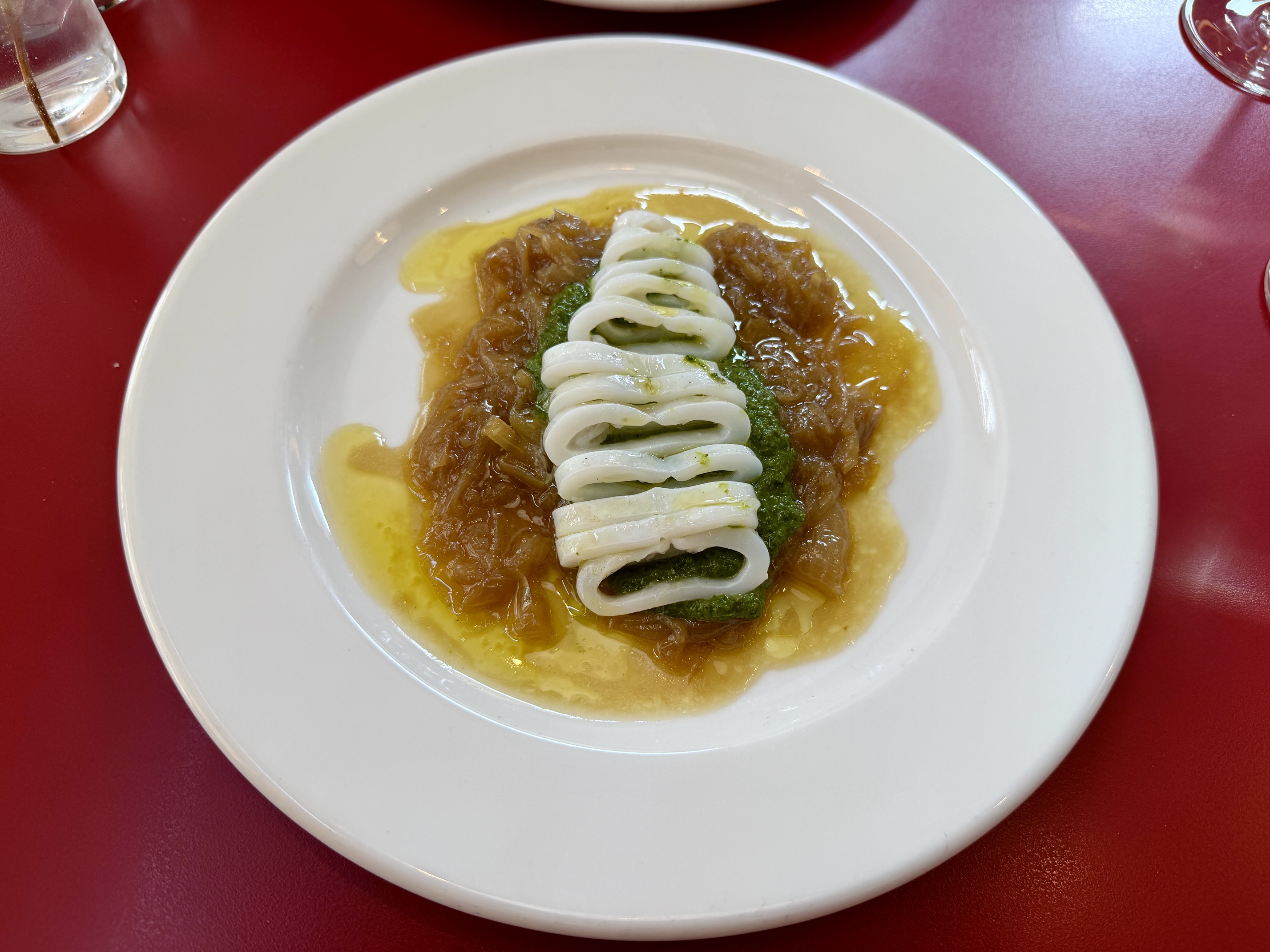
On the most recent visit that included something almost like a maki, outstanding high-grade fish in a roll studded with the crunch of green and yellow beans. It included an edible bouquet, the foliage harbouring a yellow core of whipped goats cheese. It included Timperman’s play on ravioli, where a langoustine crudo is held in a clasp of lightly pickled courgette, the whole thing in a sauce barigoule of incredible complexity. Then there was cannelloni of fish, a strip of sauce made with plankton running through it, a piece of monkfish baked in a sheaf of herbs, duck with an intense quenelle of deep, sweet beetroot.
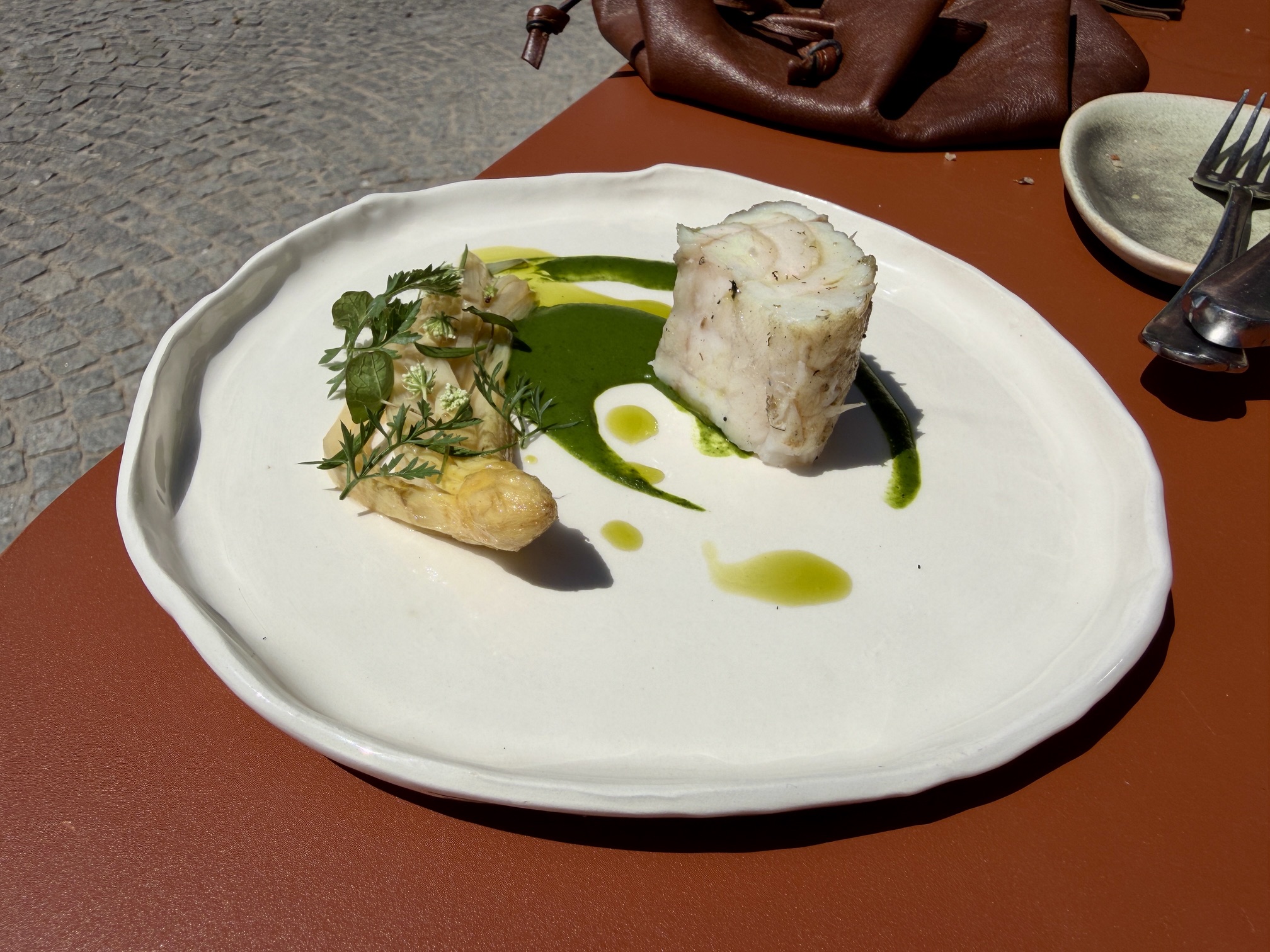
Honestly, it was part meal, part trance, part visit to another planet. And Timperman, charm himself, picked out a wine for us, suggested another to go with our dessert, joked, explained and scattered stardust every time he came to the table. In a previous guide to Bruges I called him a wizard, but on reflection genius is a more accurate description. It will undoubtedly be one of my meals of the year, as it would be any year, and I won’t want to leave it too long before I go back again.

Bruut is not cheap – it’s currently €89 for lunch or €145 for dinner, and if you go there for dinner you will be there all evening. But honestly, if you want a vision of what restaurants could be but almost never are, Bruut is a must-visit, and I feel very privileged to have eaten there three times, let alone once. Best of all, despite all kinds of acclaim Bruut has never been awarded a Michelin star. I don’t think Timperman cares in the slightest, to be honest. I’m not sure he’d want to join any club that would have him as a member.

Bruut
Meestraat 9, Brugge
https://bistrobruut.be/en/

3. Bij Koen en Marijke (2025)
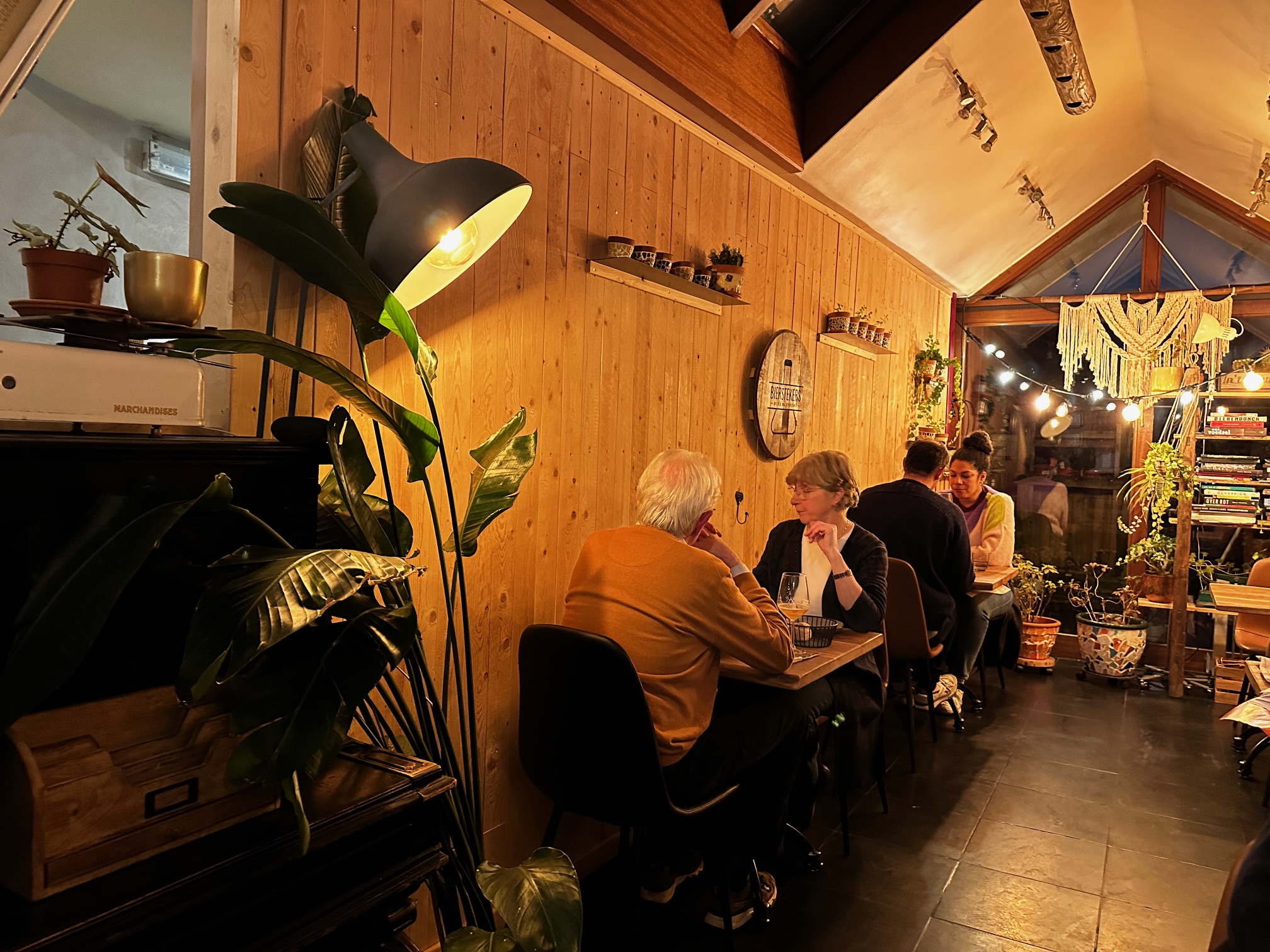
One of the highlights of my visit at the start of 2025, Bij Koen en Marijke (also referred to as In’t Nieuw Museum in some places) is a magical restaurant which does a handful of things absolutely brilliantly. Run by married couple Koen and Marijke, both larger than life and exceptional at service, it has the perfect division of labour: he tracks down the very best meat and cooks it superbly over fire, she selects outstanding and interesting beers to accompany them. They have sidelines, too – home cured charcuterie for one, a couple of beers Marijke has brewed exclusively with brewery Hophemel for the restaurant for another.

You may read that and check out immediately because you’re not a carnivore, or more of a wine drinker. But if not, go here when you go to Bruges. I had a riot of an evening, and everything was marvellous. It’s a lovely spot off the beaten track, in a corner plot which positively shone with welcoming light when we approached it on a dreich January evening. It has two rooms, a main dining room and a very tasteful extension – so tasteful, in fact, that I didn’t mind being seated there.

The food is really good. We were brought a little plank of home-cured coppa while we made up our mind what to eat and it was an eye-opening start, with accents of juniper and rosemary. A full charcuterie selection showcased gorgeous pancetta and a moreish fennel salami, and our other starter – plump home-made fennel sausages with the restaurant’s very own raspberry vinegar – made me very happy indeed.

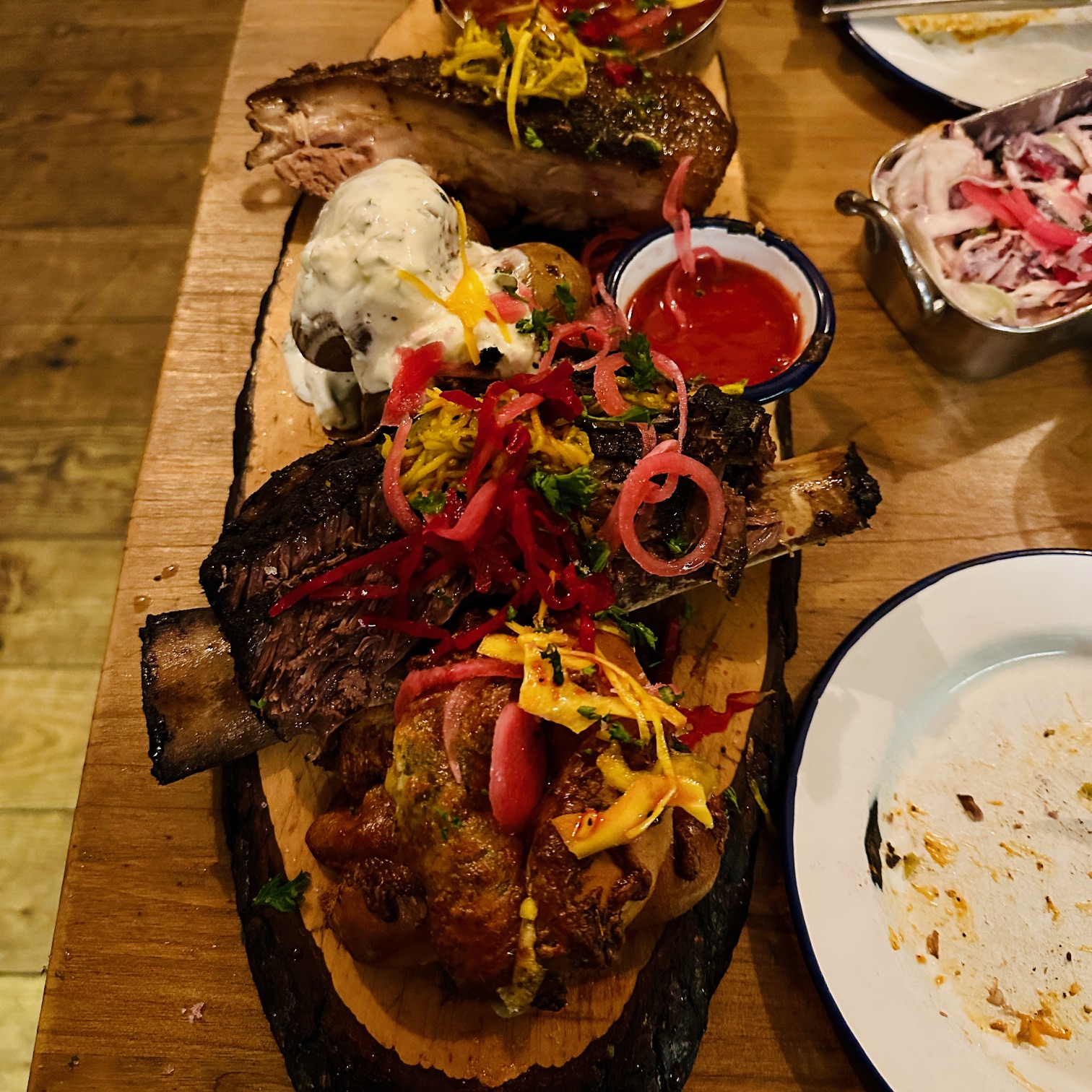
But the meat – well, the meat truly was next level. You can have smoked pork fillet, or châteaubriand, or crown of lamb, but the trick is to ask for Koen’s ribeye – for one person or two – cooked as the chef decides. And he makes excellent decisions: our ribeye was one of the best pieces of meat I can remember eating, beautifully marbled, perfectly buttery, medium rare and very special. A salad, dressed with more of that raspberry vinegar, was essential rather than garnish. And the potatoes, also grilled over fire, were truly gorgeous.
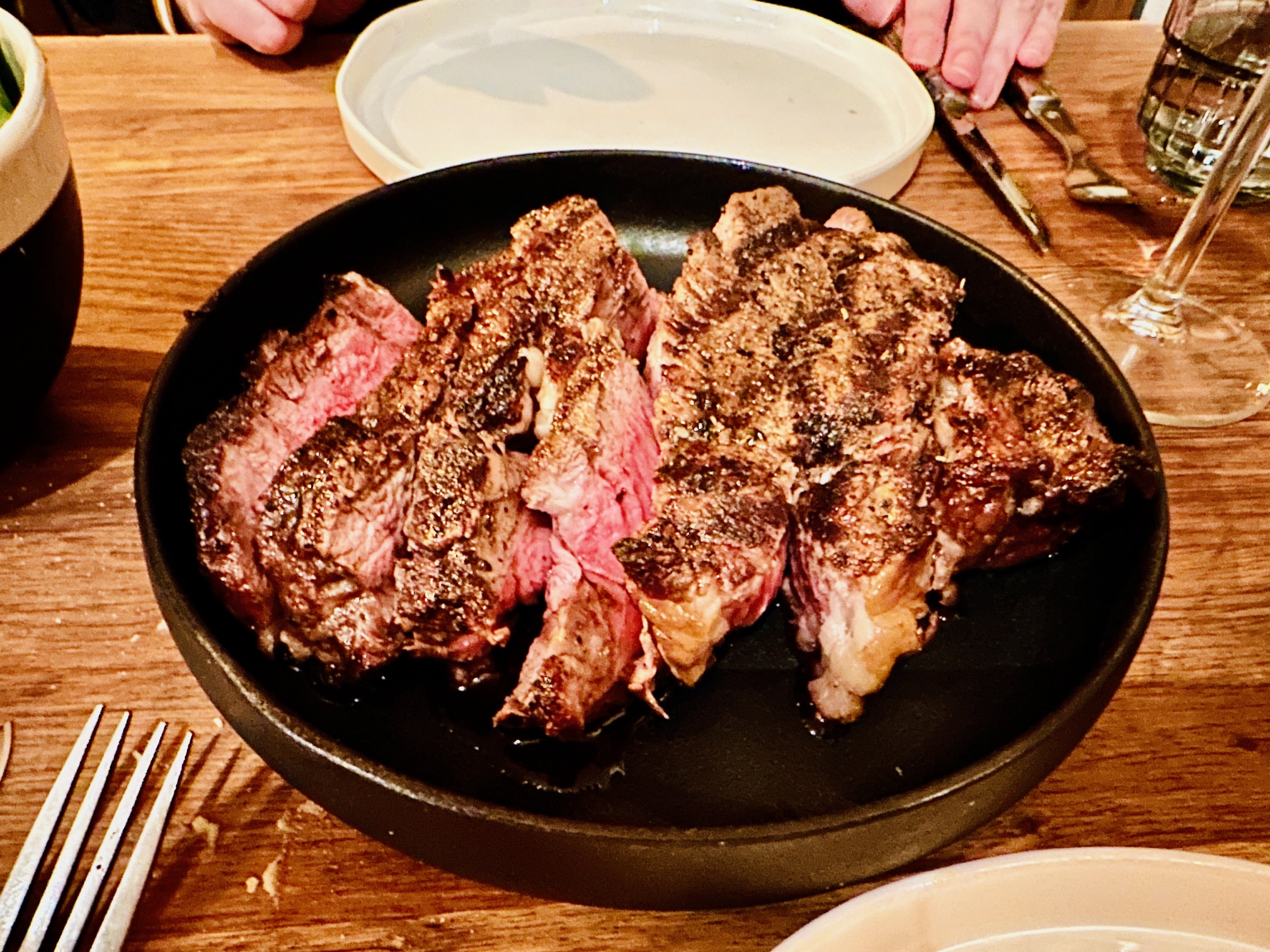
There’s a very famous restaurant in the Marais called Robert et Louise which does this kind of thing and is very popular with tourists; I ate there once, stuck in a joyless basement, and did not get the fuss at all. Bij Koen en Marijke is the restaurant Robert et Louise wishes it was. I should also mention that the tiramisu, shot through with Biscoff, was also exceptional.

But really, the other thing I should talk about is the other half of the restaurant, the beer. Marijke knows her beer, and her list features lots of excellent Belgian breweries you don’t see on many other beer lists in the city, like Hophemel, BramBrass and De Dochter van de Korenaar. The imperial stouts section alone is an absolute joy. I particularly enjoyed the milk stout brewed by the restaurant in collaboration with Hophemel, while De Dochter’s Fleur Sauvage – a barrel aged version of their Belle Fleur IPA – was possibly Zoë’s beer of the trip.

I didn’t get to return to Koen and Marijke’s place during my visit this year. But in the meantime, something sweet happened: two readers of the blog used it to plan a trip to Bruges and Ghent to celebrate a 50th birthday, and sent me a picture of them posing with Koen and Marijke after loving their meal. The couple at the next table were Australian, and they got to talking about how the Australian couple had chosen this restaurant for dinner. Apparently they’d found it on some little blog called Edible Reading; what are the chances?

Bij Koen en Marijke
Hooistraat 42, Brugge
https://www.koen-marijke.be

4. TouGou Fijnproeverij (2025)
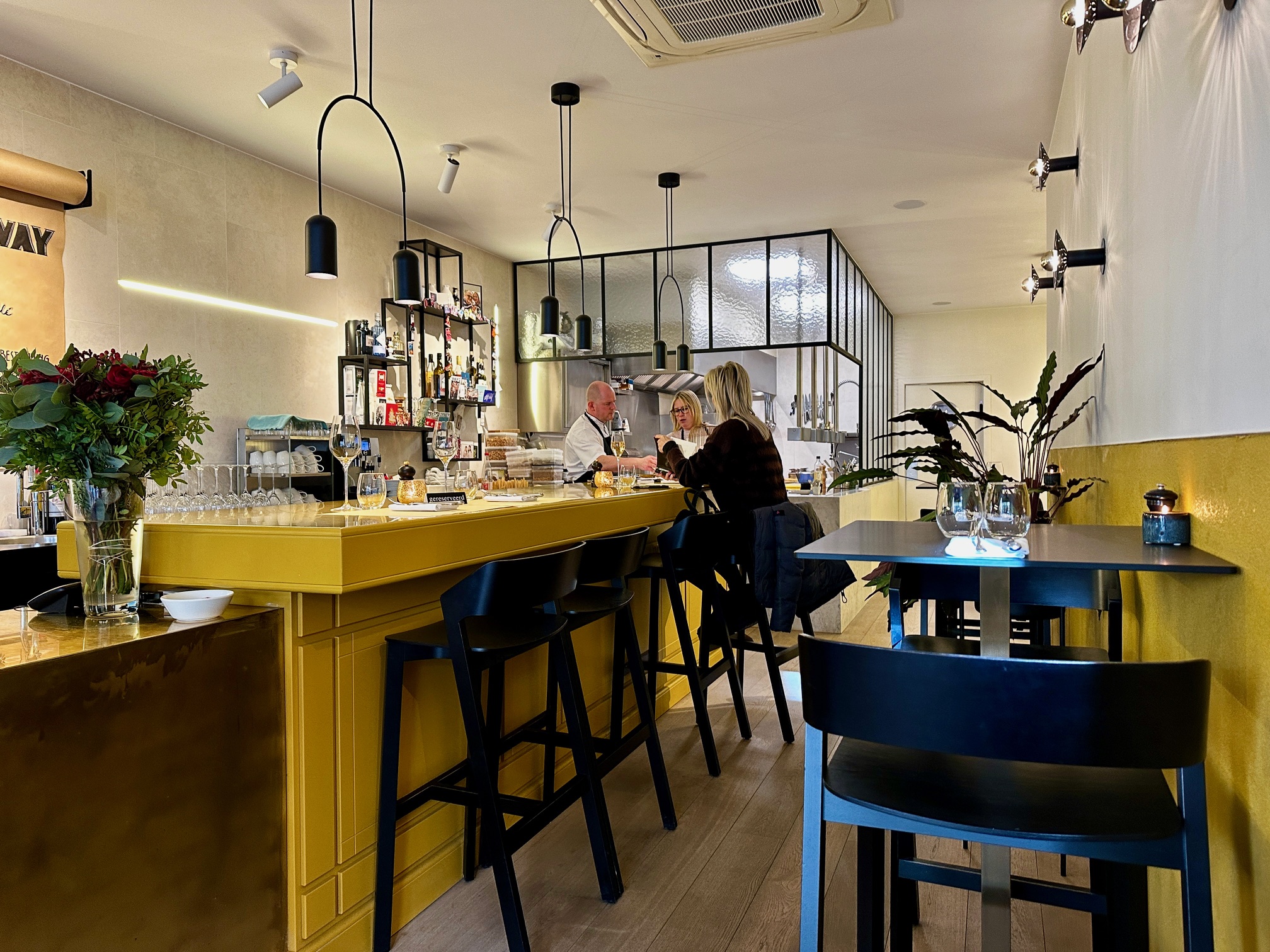
In the U.K. in 2024 the broadsheets all got their knickers in a twist about a restaurant called The Yellow Bittern that – shock horror – only opened at lunchtime. Big deal: TouGou, my other discovery of 2025, only opens at lunchtime and yet when I went it was full of people with the temerity to consider that perfectly normal behaviour.

I recommend making the time to have a lunch there if you go to Bruges, because it’s an exquisite restaurant that gets everything right, with a menu that will cause you serious anguish. The first section is made up of bites, both hot and cold, and you’re encouraged to order and share, tapas-style. And it is full of really clever touches. I enjoyed the lamb koftes, studded with pine nuts, and I loved the chicken samosas, crammed with minced, spiced chicken. 

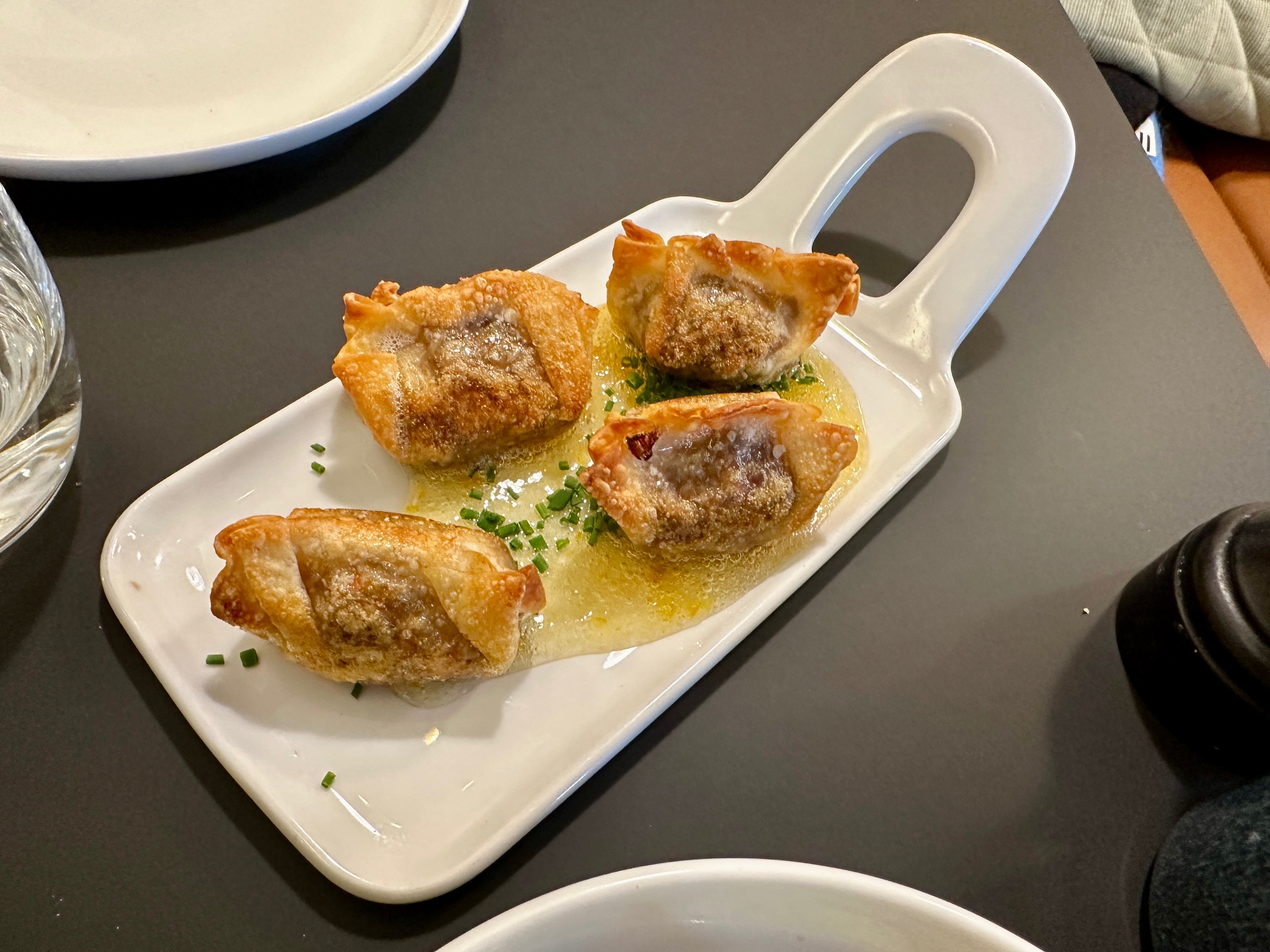
But I adored what were described as fried duck ravioli, which were actually a European gyoza, a fusion duck a l’orange stuffed to the gunwales with shredded duck and served with a tart orange sauce. And then, as if that wasn’t enough fun, a mini burger of black pudding and lobster: I didn’t have a better sandwich all year. By that point I felt like TouGou was almost more Andalusian than Flemish, with all those sharing dishes and little sliders. It reminded me, a little, of Malaga’s Gastroteca Can Emma.
All that would have earned TouGou a place in this guide, but then they sprang a main course which had all my favourite things in it. Four hugely generous ravioli, packed with crab, in a sauce with a hint of curry and a fair whack of Oud Groendal cheese. Samphire with beautiful saline firmness on top, a bed of sweet, buttery leeks underneath. I’m always loath to dust off the P word, but this was a perfect plate of food.

We were there on the restaurant’s second day back in the New Year, and they were buzzing, almost completely full and totally on it. TouGou is another husband and wife team – where would hospitality be without them? – him in the kitchen, her running the front of the house, both of them unerringly friendly and welcoming. 

At the start of 2025, I said: “Without any exaggeration, next time I go back to Bruges booking this place for lunch will be the first thing I do.” And when I went back that October, that’s exactly what happened. Many of those small plates were still on the menu, and I ordered them again, but my main – a delicate piece of swordfish on a bright lemon risotto – was new to me, and a doozy.

TouGou Fijnproeverij
Smedenstraat 47, Brugge
https://www.tougou.be

5. Más (2025)
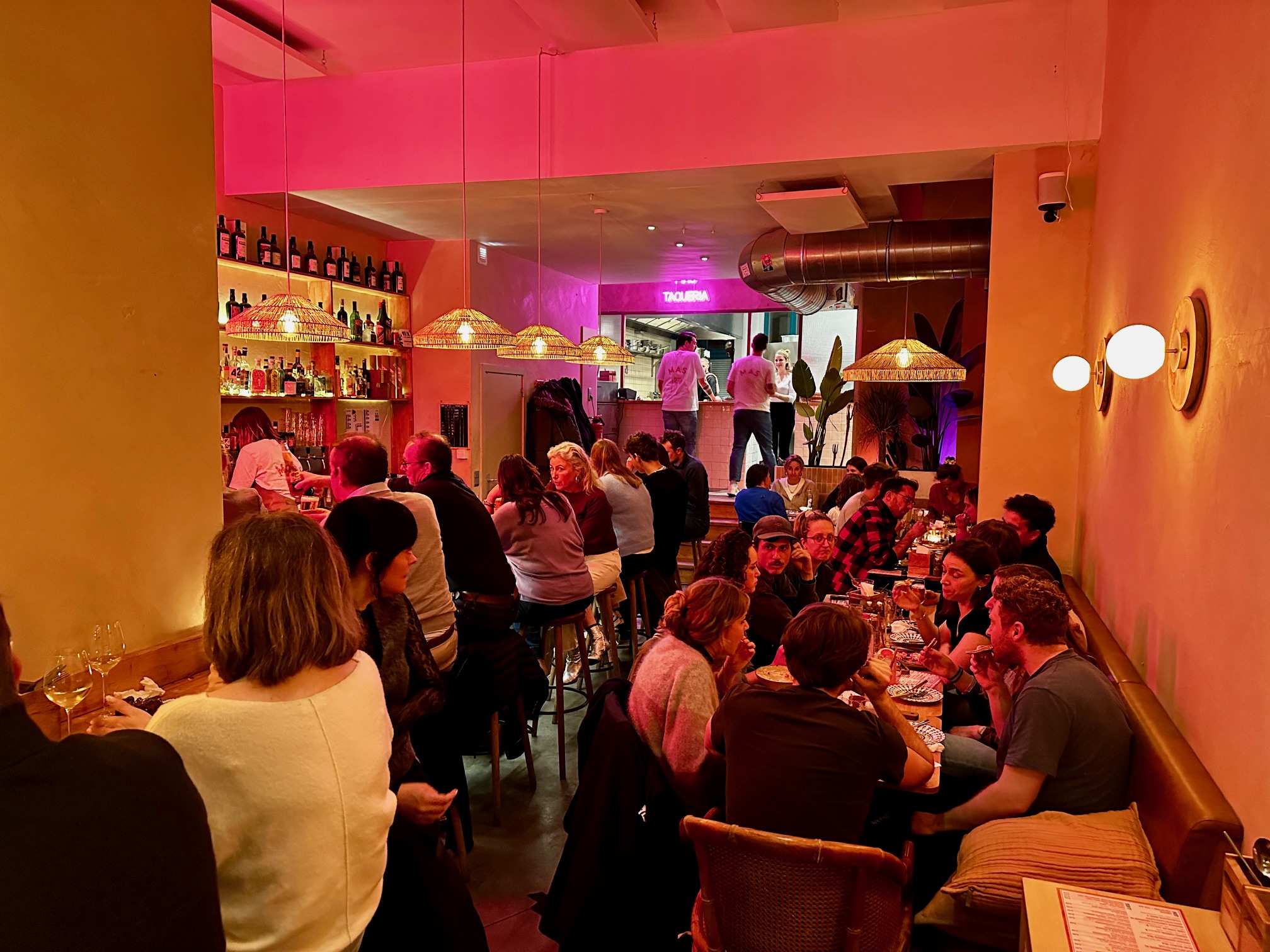
Más is only open evenings and is walk-ins only, although they very nicely take your number and ring you when they have some space, leaving you free to enjoy a beer somewhere (this guide has a couple of excellent options, De Garre and Cafe Terrastje, for that). It’s worth jumping through those hoops, because Más’ Mexican food is as delicious as it is incongruous, from beautiful cheesy quesadillas to pork belly skewers with salsa, from tacos to their excellent fried chicken.

On my first ever visit in 2023 I ate up at the bar, and it was reminiscent of some of my happiest meals in more Mediterranean parts of Europe. Returning in January 2024 I found that, if anything, the food had got even better. The fried chicken now came with a tomato sauce with a deep touch of mole about it, the quesadillas were even more decadent and all three types of taco I tried were stonking, although my favourites remained the shrimp, peppered with crunchy little nuggets of chorizo.
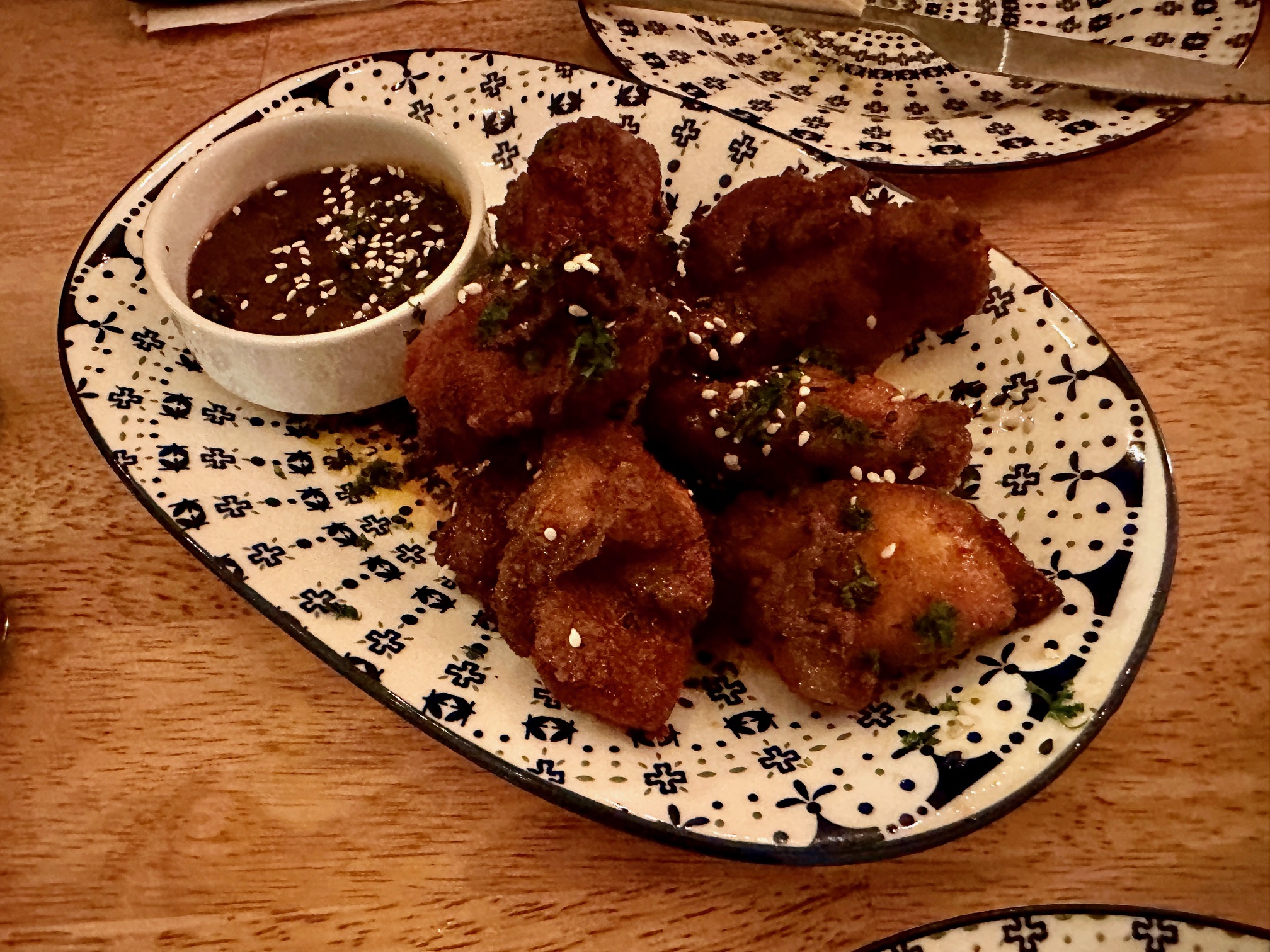
They have cocktails on tap too, apparently, although I’ve never given them a try. They have a good range of beers from Brussels Beer Project, though, which went nicely, and the excellent Lupulus NEIPA which has, to my palate, notes of mango. It pairs perfectly with one of the two desserts on the menu, the “Solero Solero” which tastes exactly as you would expect from the name, only more so.

I made another really happy return to Más in March 2024 when they looked after my combined stag and hen do party, fifteen very hungry and extremely grateful diners. As before, the food was fantastic but there were further revelations, like the fact that Más made what I think may be the only sweet potato fries I’ve ever truly enjoyed. The churros at the end, served with chocolate spiked with a little chilli, were joyous. But what I’ll remember most was the natural, charming service, making us feel incredibly welcome and no trouble – no mean feat when you’re handling fifteen raucous punters.

We went back in January 2025, eating at Más on our final night in the city. The room was jumping at half six on a Thursday night and the food was as good as I remembered, although if anything the fried chicken had got even better, something I’d not thought possible. The owner, who had gone to so much trouble to sort out our stag and hen do the previous year, recognised us and wished us a happy new year, ten months later. That’s the kind of place Màs is.

I didn’t make it there on my most recent visit to the city but that’s because, as you’re about to discover, some serious competition has sprung up literally next door. Fortunately for all concerned, its neighbour is owned by the same couple as Más, so you don’t have to feel like you’re betraying anybody by enjoying either.

Más
Academiestraat 10, Brugge
https://www.instagram.com/mas.brugge/?hl=en

6. Shibuya (2026)
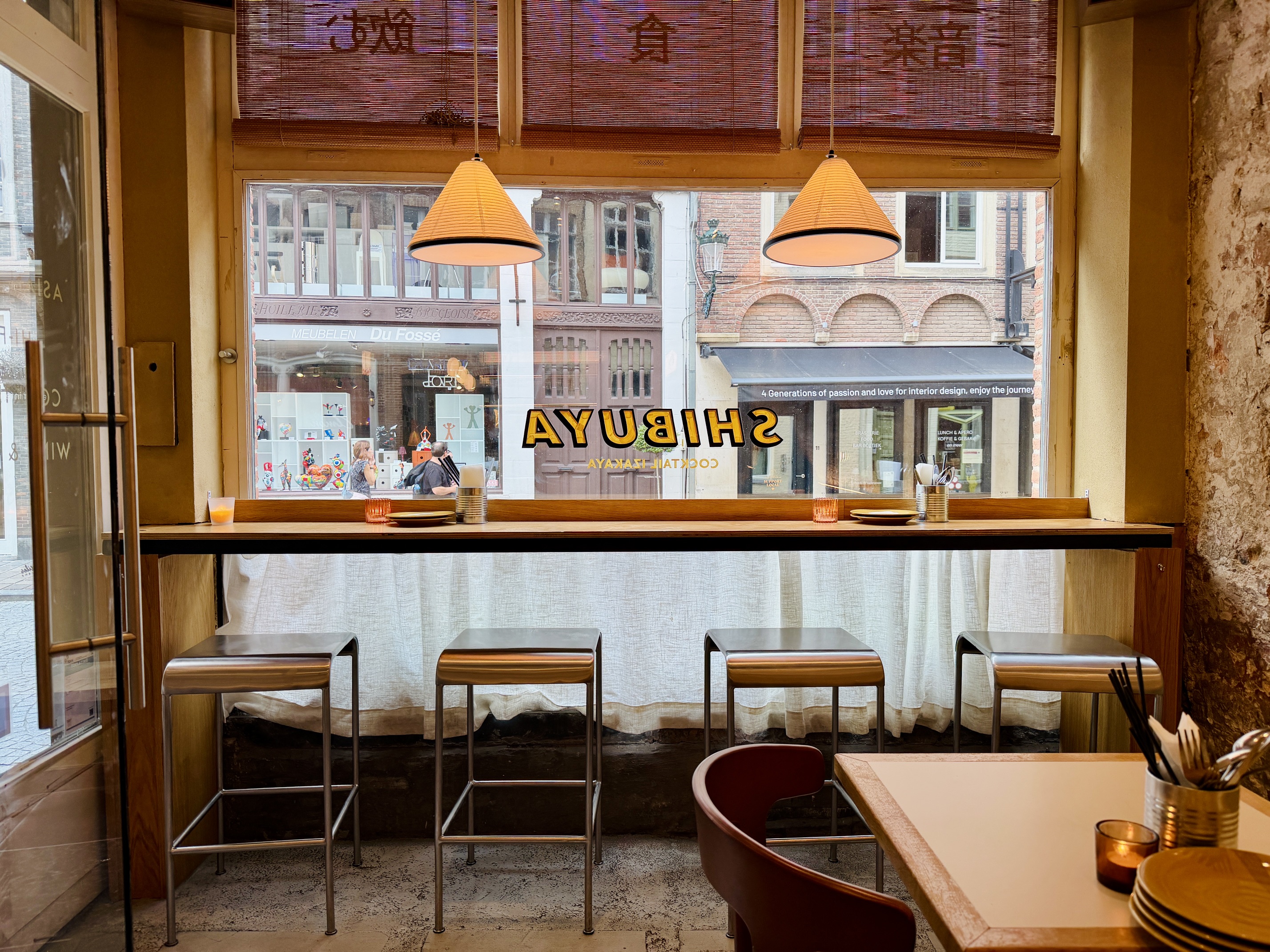
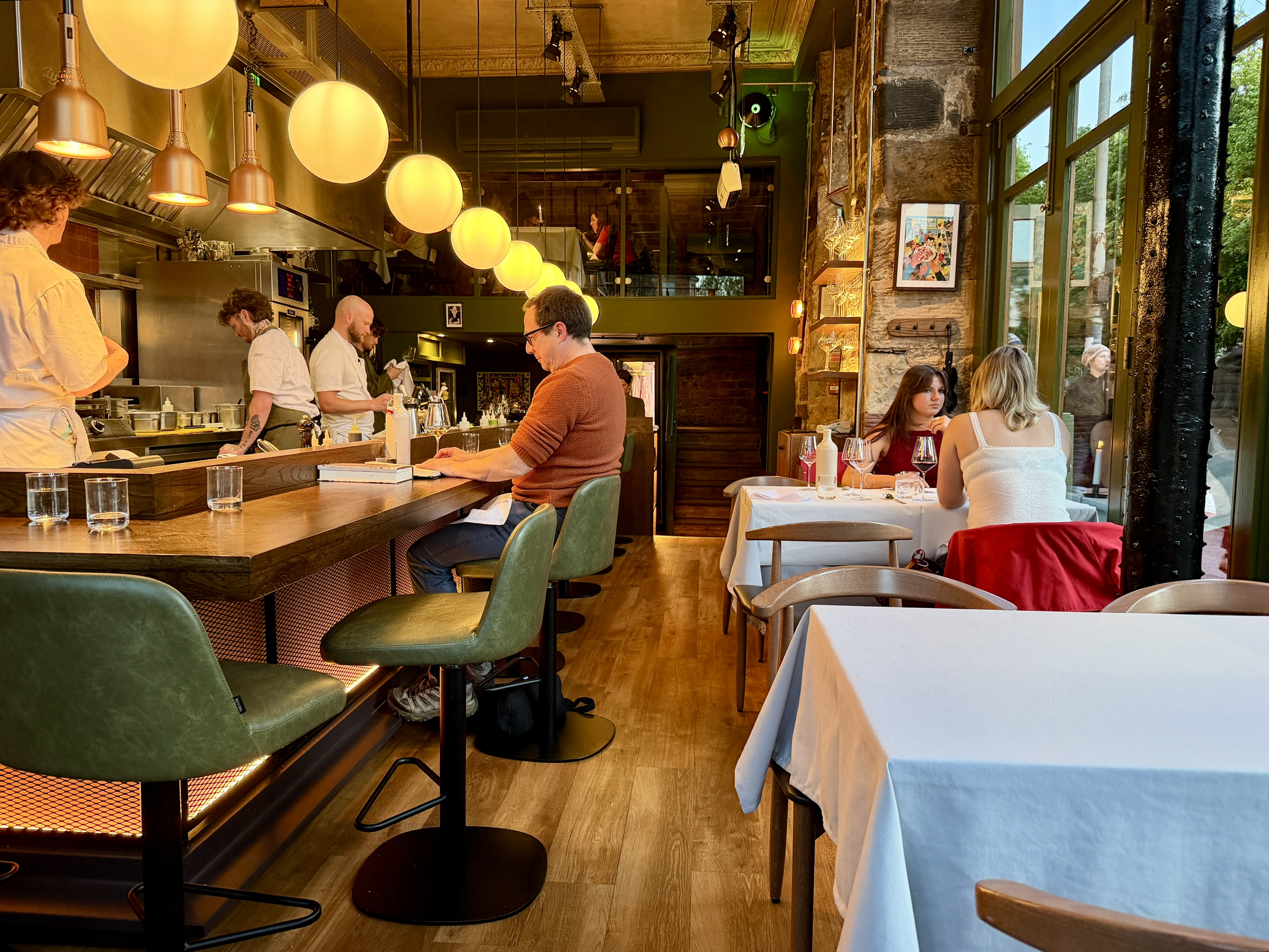
So yes, Shibuya – right next to Más – is owned by the same people, and was the best new discovery of my summer 2026 visit by a country mile. Shibuya is the Más team’s take on an izakaya, selling pan-Asian small plates, serving up cocktails and playing vinyl, and if that blend of mixing and mixology sounds very cool to you you would not be wrong. In fact I would have felt far too shabby and old to eat there, were it not for having a slightly (ahem) younger dining companion and but for Shibuya’s excellent and effortless service.

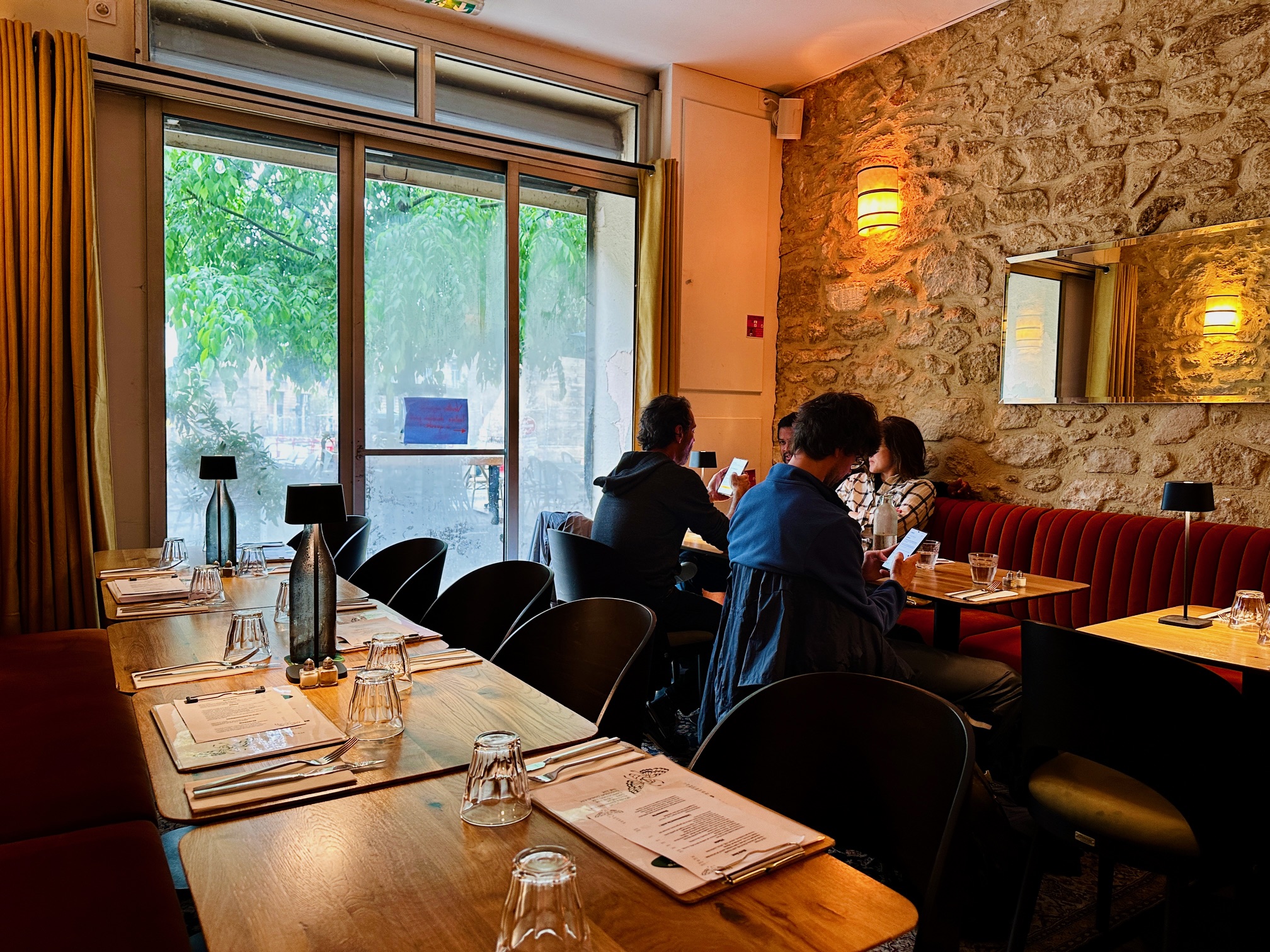
It’s a really stylish restaurant, all gorgeous muted colours, strangely both cutting edge and timeless, taking advantage of the room’s good bones, its huge windows and exposed stone walls. And the menu is difficult to choose from to a degree bordering on sadism, with Sichuan, Korean, Japanese and Thai influences all in the mix. Most of the dishes range between €10 and €20 and – get this – are both designed for sharing and eminently suitable for so doing. Which is good, because you want to try everything: I had a good go at ordering as much as I could.

Everything was pretty much superlative, from the nori crackers dusted with wasabi to a smacked cucumber dish with the restaurant’s own chilli crisp and peanuts, and confit pork belly yakitori skewers glazed and heaped with dukka. There is a lot going on in every dish, but never too much: every element has been composed, considered and balanced to create the platonic ideal of each.

The reason I know that is that Prasanth Murali, the chef, came out with every single dish and explained, concisely and winningly, exactly what was in it, and that was how you realised just how much thought and tinkering had gone into each one. The karaage chicken, genuinely some of the best I’ve ever had, was chicken thigh – of course – marinated and dredged in a kind of potato flour coating to create the pinnacle of fluffy crunch. And then of course it was anointed with not one sauce but two – a deep peanut sauce which would have been good enough on its own and a gochujang about which you could say exactly the same. Together, in audacious harmony, they made for a dish I could eat every week for the rest of my days.

But the dish that most demonstrated Murali’s talent and laser focus was the prawn gyoza. Effortlessly crunchy and generously packed with prawn, they would have been more than enough in a heavenly hoisin ginger sauce. But Murali explained that the whole thing had also been glazed in an oil, an emulsion, made from the head of the prawns, giving that deep and unmistakable savouriness without having to be confronted by how that flavour is normally experienced. Total obsession with flavour, inside and out, and with making each dish the apex of accomplishment: honestly, it was extraordinary.
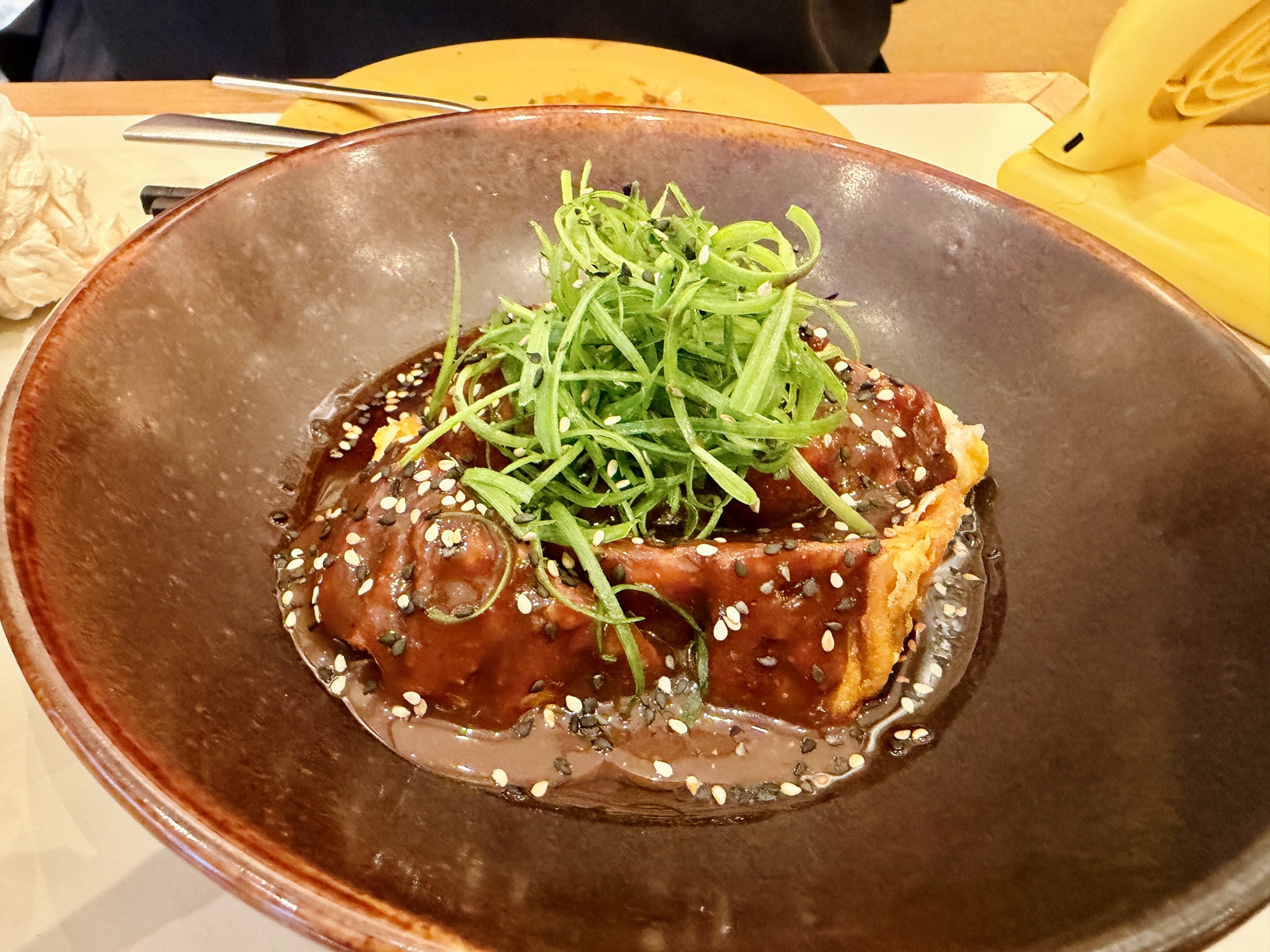
I could go on. The beef tartare, again humming with gochujang and topped with a yolk slow-cooked in smoked soy, was even better than the life altering rendition at Paris’ Double Dragon. The cocktails, and the AF beer by Dok Brewing, were top notch. The music was Shazammable from beginning to end. I want to go back, and then go back again. All that and, unlike Más, you can book.

Bruges has a reputation as a bit of a sleepy backwater with a lot of moules and ribs spots, catering to the people who come in by coach and leave by sundown. But Shibuya, more than anywhere else, embodies the changes I’ve seen in its dining scene since I first came here four years ago: the rising tide of innovation and entrepreneurial spirit gradually lifting all (canal) boats. If Shibuya opened in London, people would be talking about it. If it had, and I’d reviewed it, it would easily get a 9 from me.

Shibuya
Academiestraat 8, Brugge
https://www.instagram.com/shibuya.brugge/?hl=en

7. Brasserie Raymond (2025)
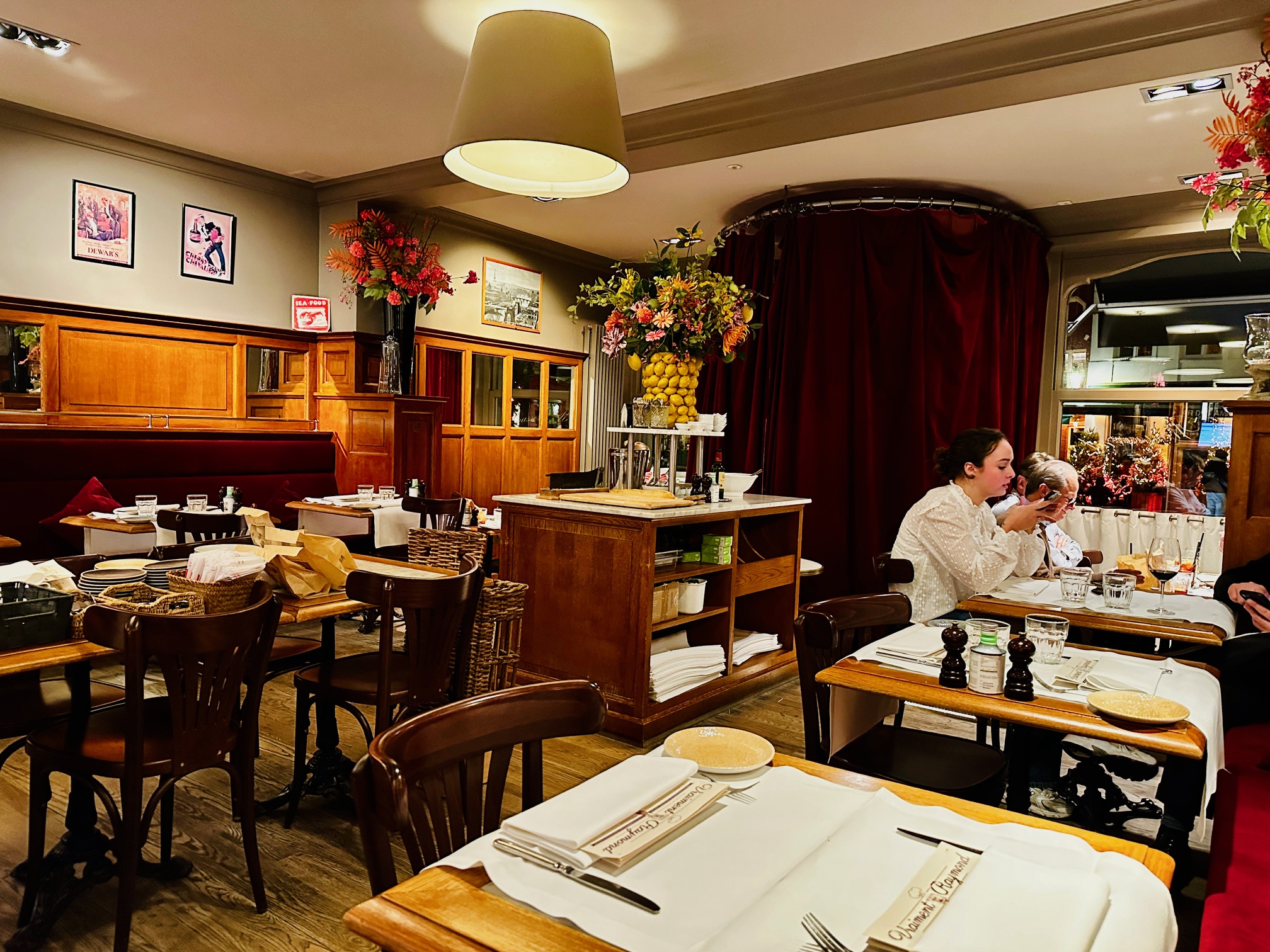
The one gap that used to exist in my Bruges repertoire was the traditional Belgian brasserie. It’s not as if Bruges lacks them – every pretty square is ringed with them – but I guess I was never fussed. I went to Gran Kaffee de Passage and found it hit and miss, the interior better than the food. But on my trip in March 2024 I had a booking for sixteen at Brasserie Raymond, and I came away really impressed with the place. It had been recommended to me over a year ago, by a couple sitting at the table next to us on a sunny afternoon, and I’d made a mental note but never got round to it.

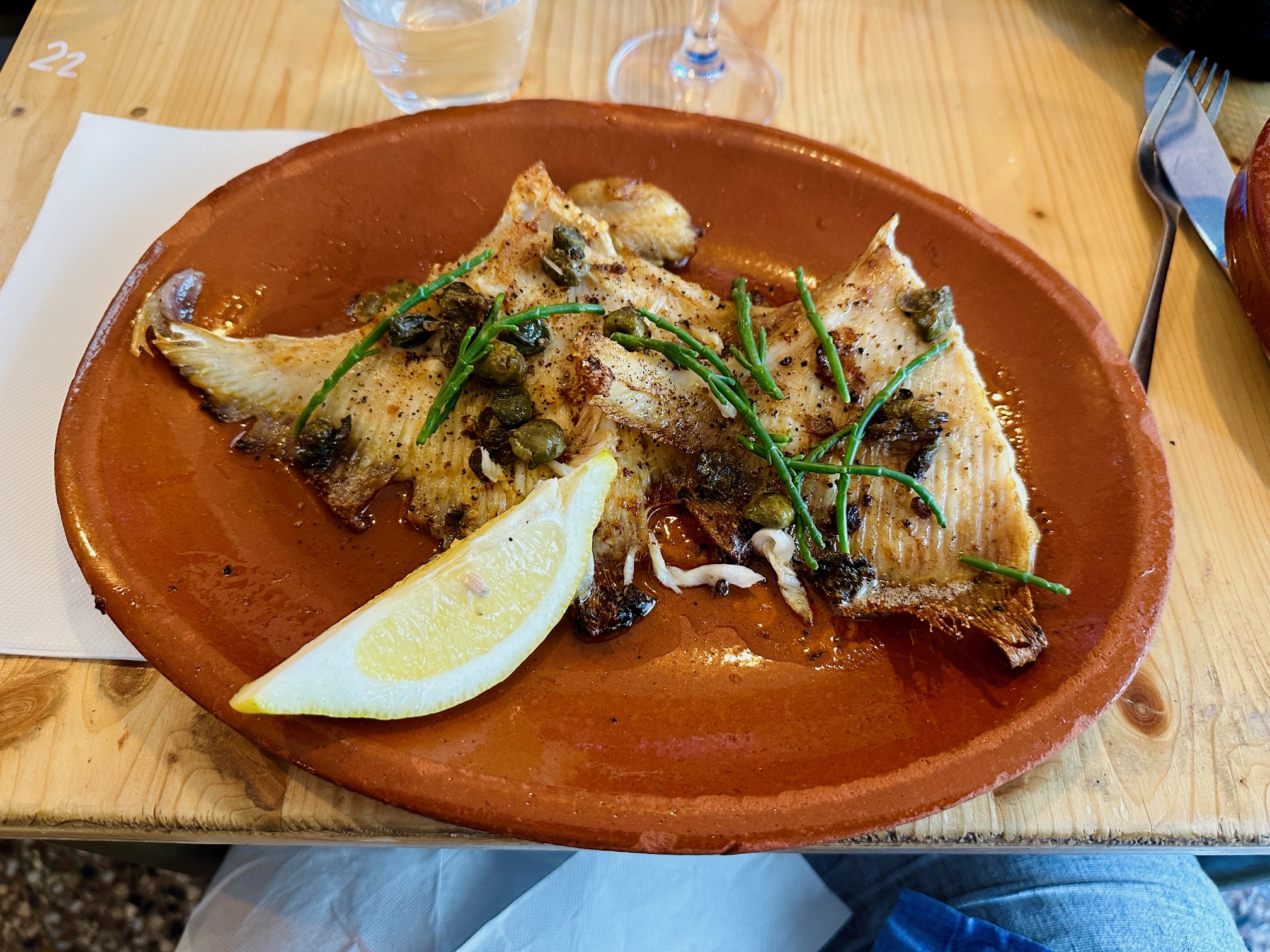
It’s squarely in the grand brasserie tradition, very much Franco-Belge with a huge and interesting menu that covers a lot of ground from lobsters and oysters to chateaubriand and steak tartare. I saw the chateaubriand arrive at my table for others and was more than a little covetous, especially of the gorgeous frites, but I felt a lot less resentful once a bronzed, fat skate wing was placed in front of me, covered with capers, glossy with beurre noisette, served with a salad and baby potatoes with more than a hint of smoke to them.
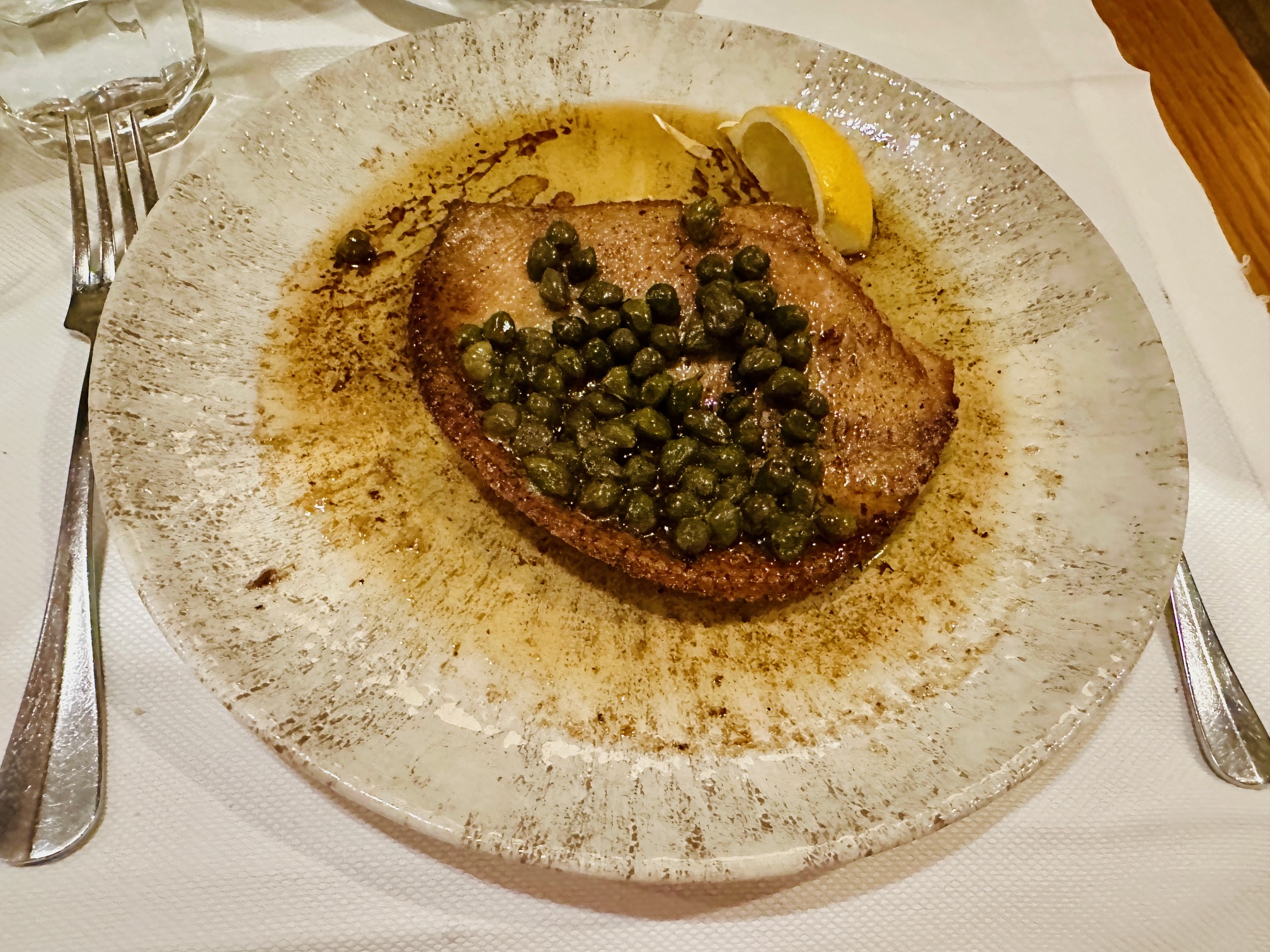
I was determined to return next time for the full three courses, the whole nine yards, the Mr Creosote Experience. So we went in January 2025 and were rewarded with a really stonking meal. My smoked duck salad with choucroute and sweet slivers of foie gras was a kaleidoscope of flavour, and Brasserie Raymond’s chocolate mousse is as smooth and glossy as any you’ll find anywhere. But I had the skate wing again, because I couldn’t not. I’ll try something different next time, and there will be a next time.

Again, on a quiet Tuesday night in the epicentre of the low season, the restaurant was properly bustling in a way that spoke of a great reputation. The staff were twinkly and at the top of their game, and there were several really gorgeous wines available by the carafe: restaurants should make a New Year’s resolution to offer these, if you ask me. At the table next to me, two preposterously foppish men and their debutante dates (who seemed to have wandered in from Whit Stillman’s Metropolitan) were part dinner theatre, part installation art and thoroughly watchable.

Brasserie Raymond
Eiermarkt 5, Brugge
https://www.brasserie-raymond.be

8. Locàle by Kok au Vin (2026)
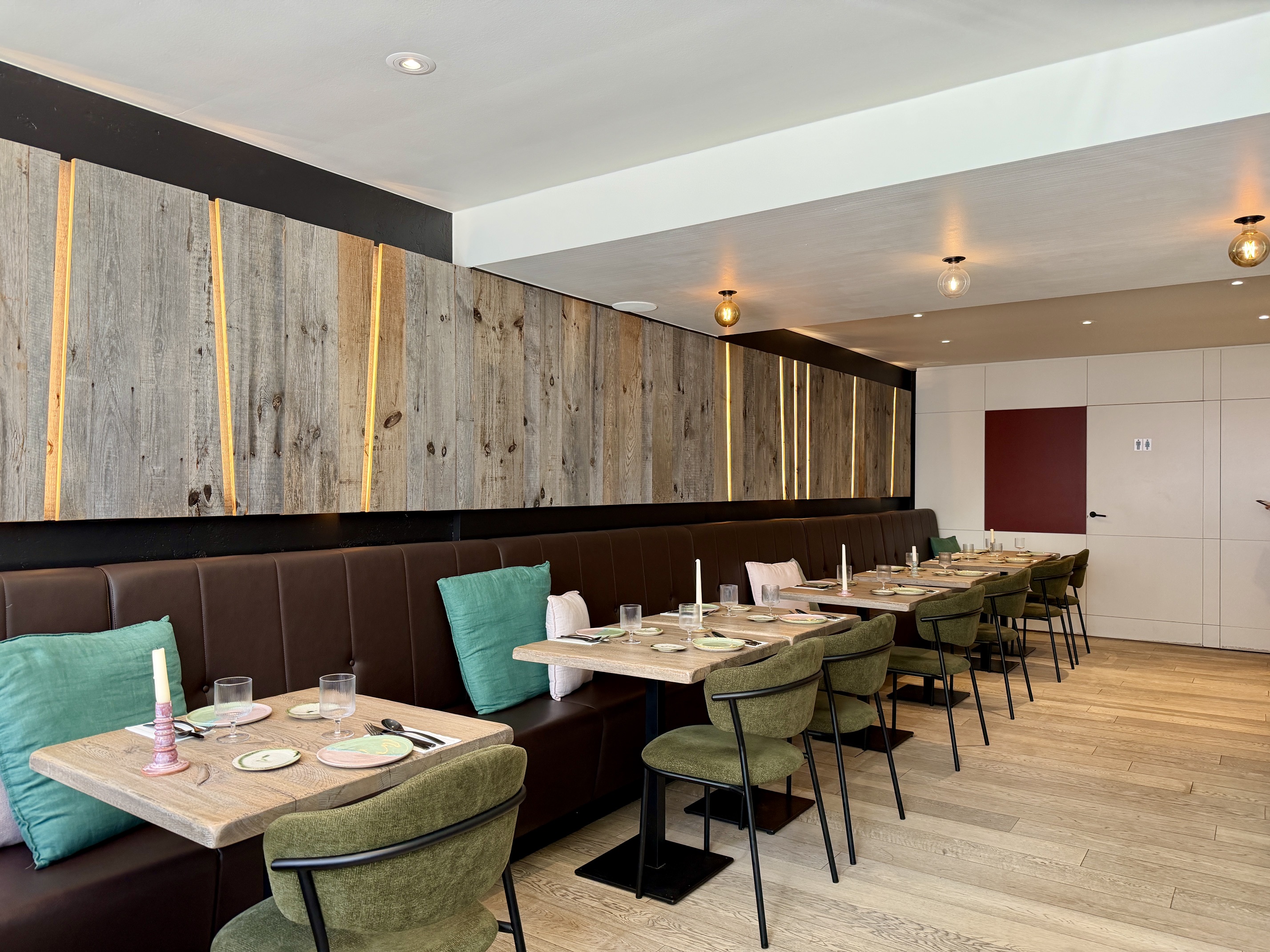
I’d been tempted to visit Locàle on many of my Bruges visits but somehow never got round to it: finally, on this trip I made it there for their set lunch. Better late than never, and this tasteful space at the bottom of Ezelstraat, a likeable street with a scattering of tasteful boutiques and wine bars, provided a very assured meal indeed.

They offer a “Lunch Experience” menu where you are charged differing amounts depending on whether you want 3 courses, 3 courses with an extra starter, 3 courses with dessert or 5 courses. Lots of Bruges restaurants like to structure their menus in this way, best described as needlessly ornate: it was all a bit beyond me so we went for the whole shebang, and added in one of the two other optional dishes, described as “amuses to share”.

So you can do it cheaper, but I’m glad I didn’t. That’s especially the case because that amuse, despite being something of a cross between various other dishes I ate that week, was delectable: a lean, almost mineral steak tartare on an ethereally light semi-circle of brioche, topped with a clump of caviar. A little bit Assiette Blanche, a little bit Bruut, a whole lot of gorgeous.
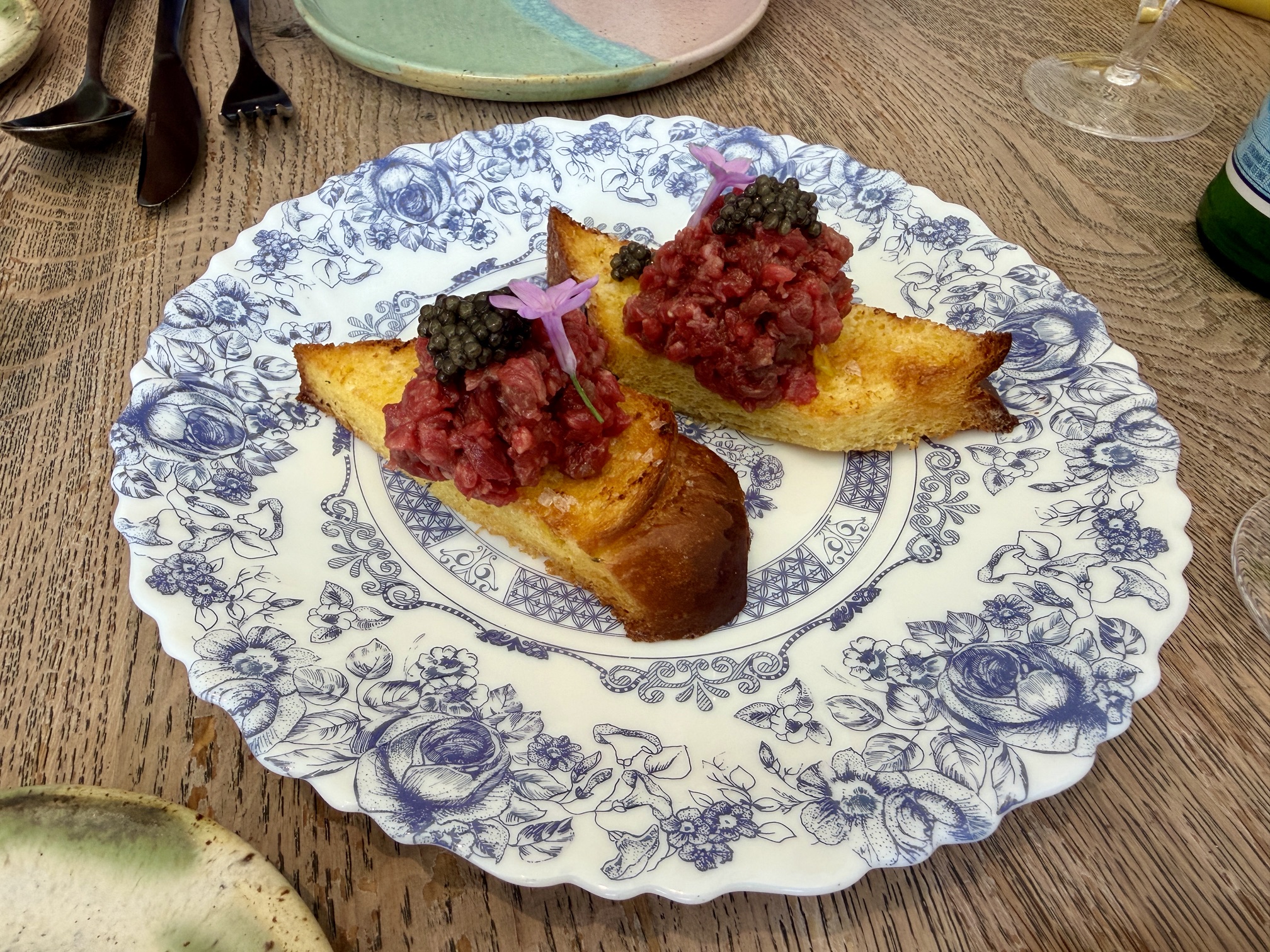
Everything else was pretty masterful too, from a bright and summery aubergine and cheese starter with delicate slices of courgette to a hugely appealing escabeche of redfish served in a curry and kohlrabi sauce that had no business working as well as it did.

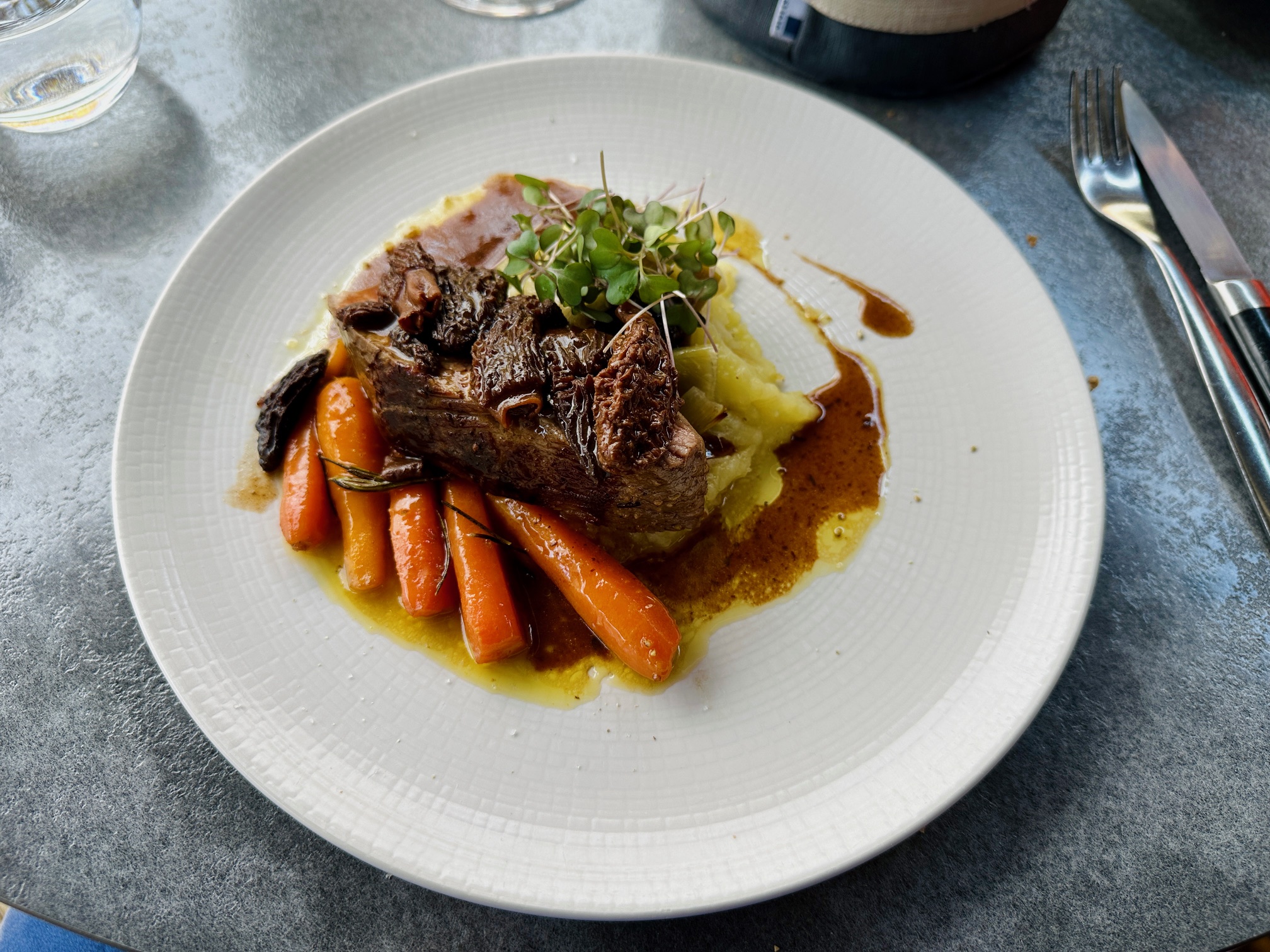
Pink-centred bavette tumbled with girolles and potatoes, served with an Andalusian sauce which was surprisingly like béarnaise was a big hit, and a strawberry dessert with meringue and hefty helping of sorrel sorbet was the Flanders mess I didn’t know I needed. Only the lobster with peaches in a sort of cold camomile soup didn’t work, a strangely cacophonous way to unnecessarily zhuzh up your most premium ingredient, but I sort of rolled with it because they’d more than earned my goodwill by then.

On a Friday lunchtime I was sorry to be only one of three tables eating there: service was outstanding, the mocktails and AF beer were a great excuse to give my liver a rest and the place felt like it deserved to be far busier than it was. One thing I did love, though, was that the front table in the other room was taken up by a bunch of tradespeople, hi-vis and all, taking a break from working nearby and also enjoying the “lunch experience”. It would never happen in Britain, would it?

Locàle by Kok au Vin
Ezelstraat 21, Brugge
https://www.locale.be/en/welcome/

9. Onesto Pizzabar (2026)
You can learn a lot from where chefs and restaurateurs eat, and last year when I saw that the husband and wife owners of TouGou had gone for dinner at Onesto Pizzabar I made a mental note to visit it at my earliest convenience. Maybe they should write a city guide to Bruges, because on this evidence their recommendations would be worth following.

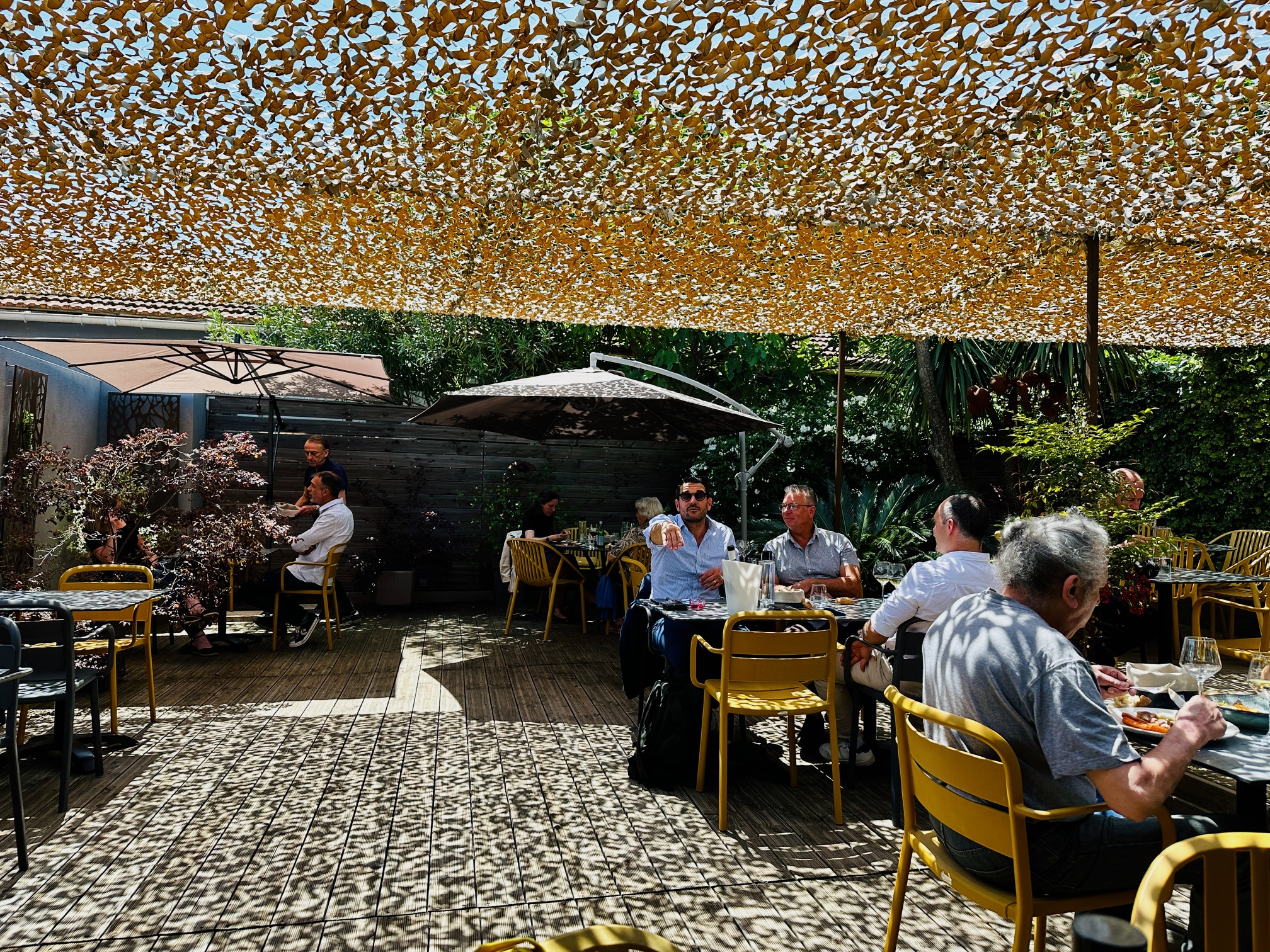
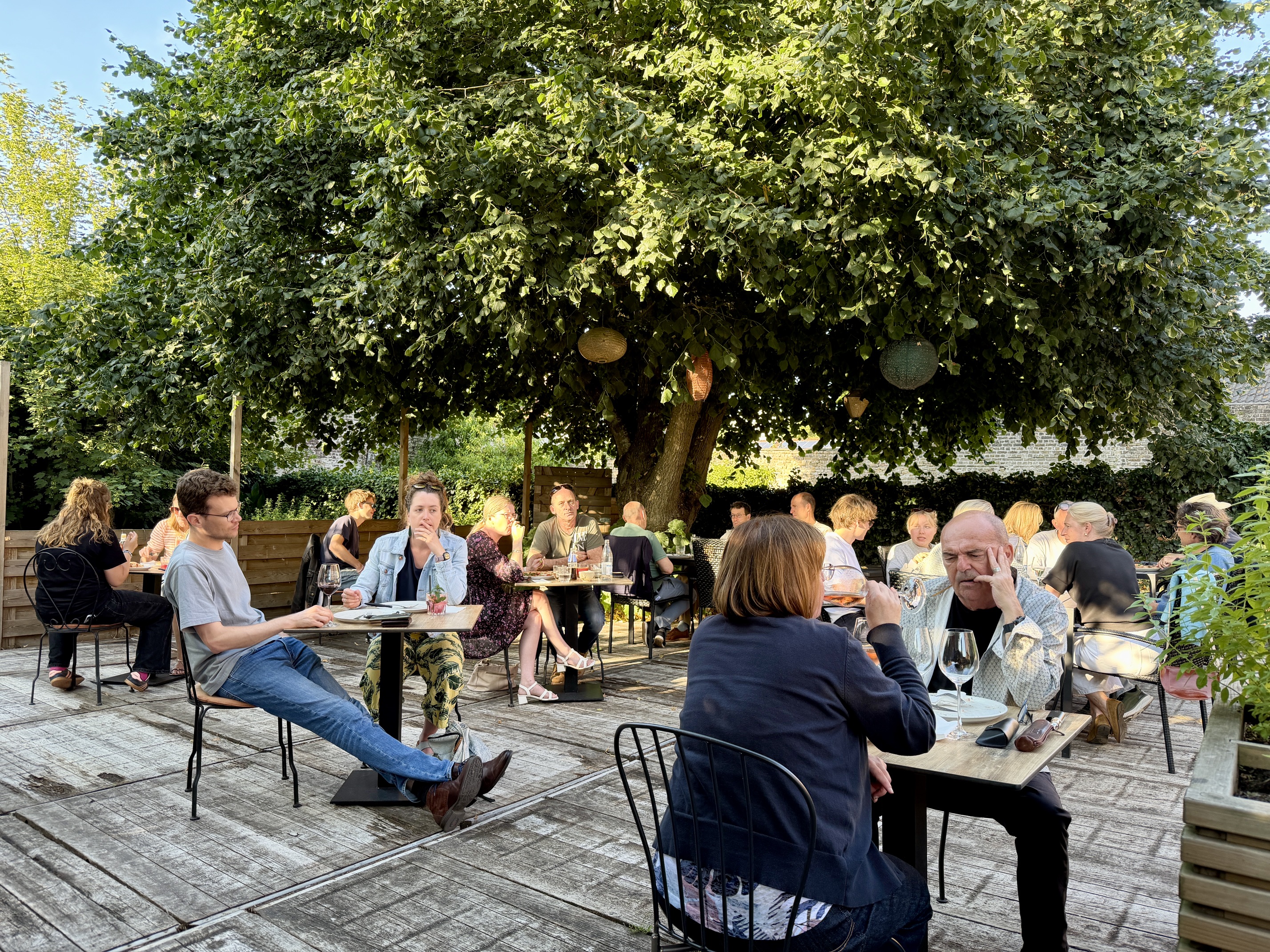
Onesto is out past the very end of Langestraat, past the windmill and through Kruisport, one of the city’s gorgeous fifteenth century gates. It’s nothing to look at from the outside but the dining room is very attractive, yet better still when they take you through it you wind up on a decked terrace, surrounded by trees hung with lanterns. On a summer’s evening it felt like all of Bruges’ coolest and luckiest people were there, chatting, drinking wine, eating well and exuding the kind of ease in their own skin British folk find so difficult. I loved it, and even though we both ended the evening absolutely peppered with insect bites I wouldn’t change a thing.

Onesto’s menu is very simple – antipasti, pizza, a couple of desserts – and it has decided to settle for just being stellar at a few things rather than merely good at many. That’s ridiculous, though, because there was no settling involved. We scooped focaccia through a genuinely surprising dip of stracciatella, spicy tomato sauce, sharp green tomatoes and toasted hazelnuts and toasted our good fortune with spritzes, before moving on to a carpaccio of beef which did the surf and turf thing, ribbons of smoked salmon strewn on top of it.
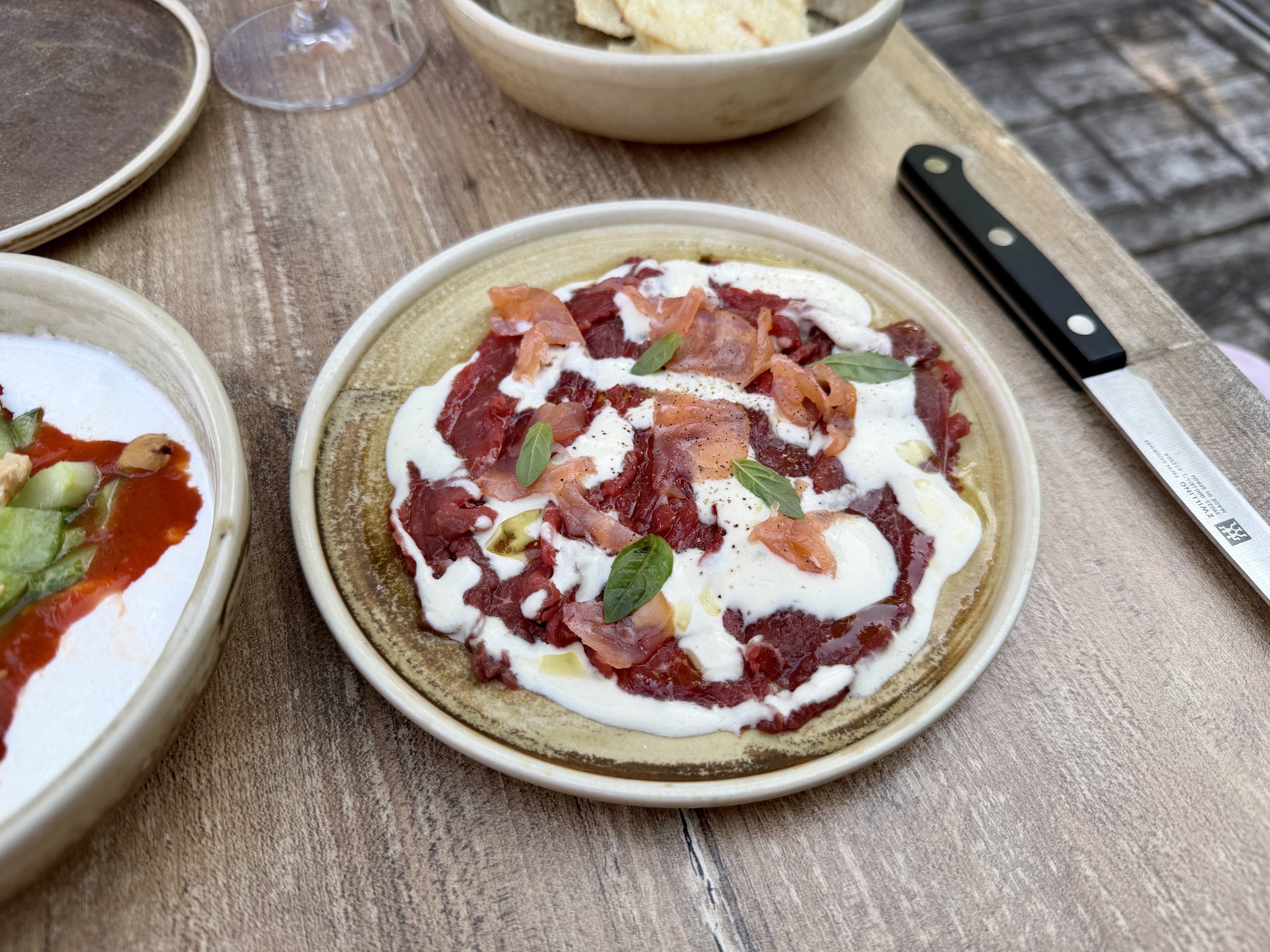
It was a risk that paid off: later the staff told us it had only gone on the specials menu that week, and they were keen to find out whether it worked. We told them they had nothing to worry about.

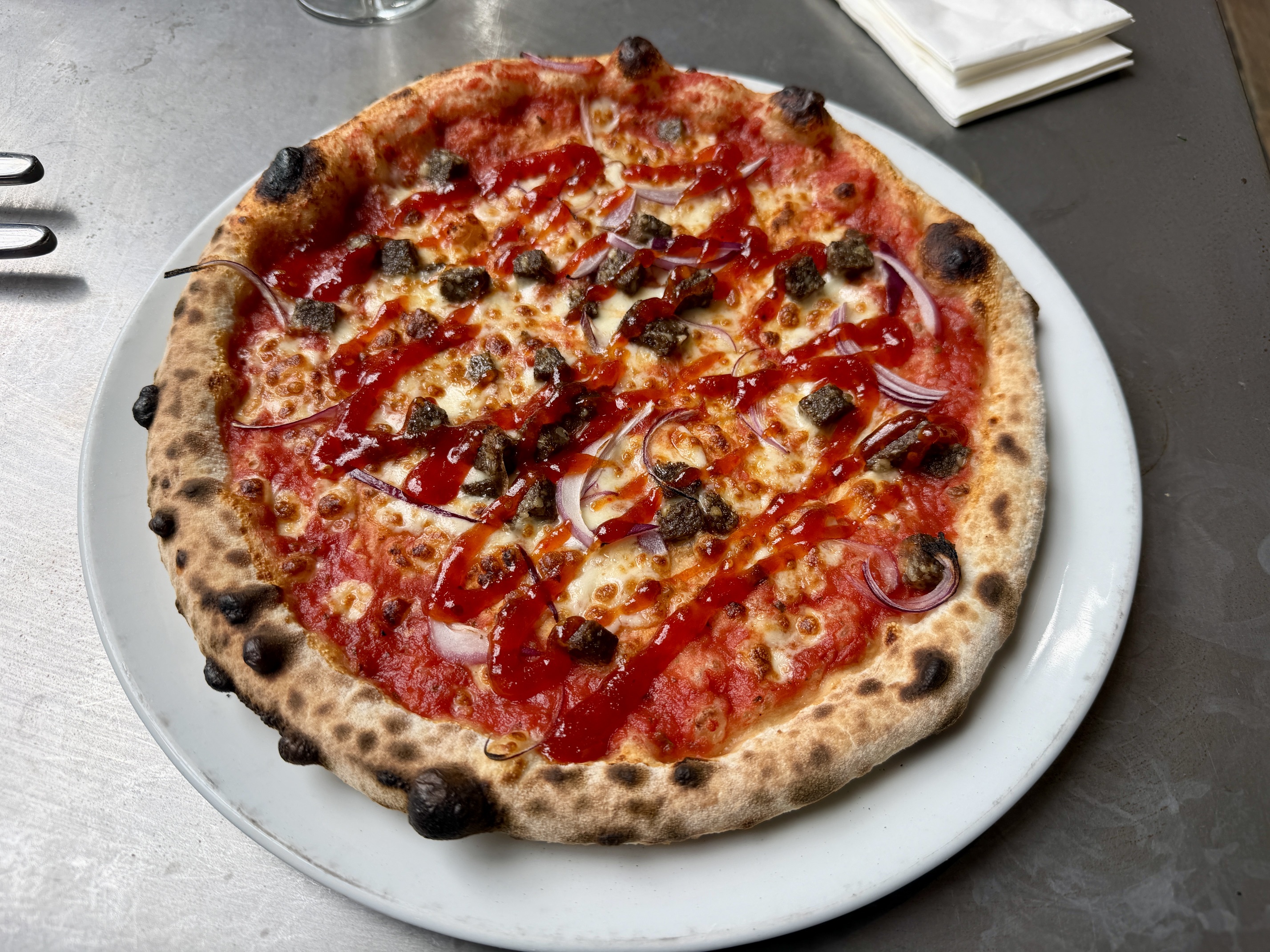
Onesto’s real strength, though, is its pizza: the best base and tomato sauce I’ve ever had in Belgium I think, even counting the sadly departed Superette in Gent, and easily better than other Bruges options like Otomat and Amuni. The “Diabolico” was a slight misfire (although the name was far from a Freudian slip) being a little too wet and somehow missing the advertised ‘nduja, but the finocchio more than made amends: coarse knots of glorious fennel sausage, pickled fennel and a pastis crème lifting it head and shoulders over any similar pizza I’ve had elsewhere.

By this point I was on the restaurant’s own recipe picon, a beautiful mixture of white wine and bitter orange, and wondering where Onesto had been all my life. I asked the staff, after finishing a textbook tiramisu, how long they had been open, expecting the answer to be a year or two, only to find that Onesto has been trading for over 6 years, since before I ever came to the city, having started out as a mobile van. It just goes to show: Bruges remains full of surprises, and probably always will be.

Onesto Pizzabar
Driekoningenweg 2, Brugge
https://www.onesto-pizza.be

10. Jacobin (2026)
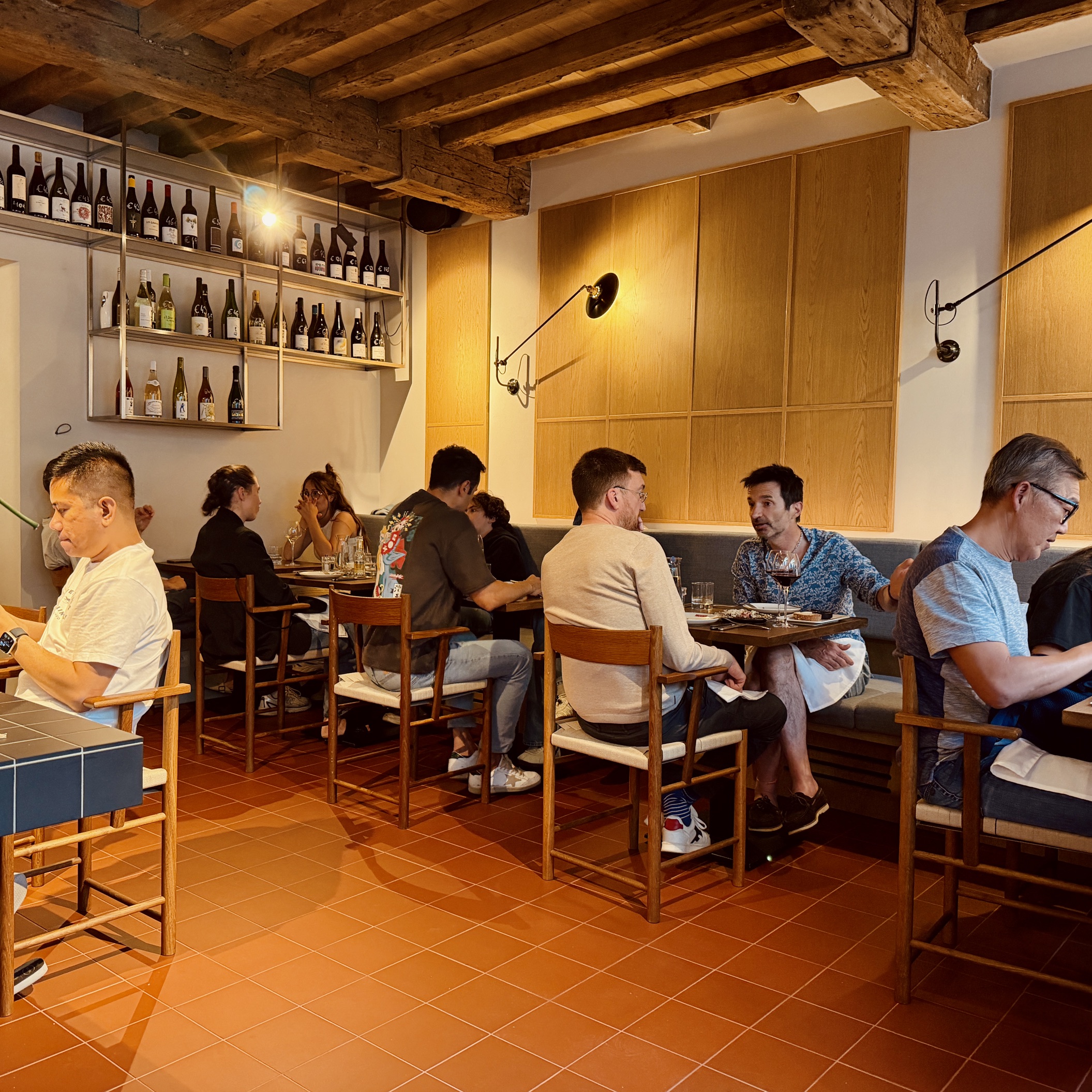
As I said close to the beginning, although Bruges has a good food scene it can sometimes feel like a homogeneous one: a lot of multi course set menus, a lot of small plates restaurants where everything is designed to share, a lot of tartare and gyoza and fried chicken and monkfish and so on. I’ve tried to capture as wide a range of types of restaurant as possible in this guide, across many visits across many years, but, however hard you try, that can still peek through.

And actually, Jacobin is as good an example of that as anywhere. I went there for dinner on my final night of my most recent visit to Bruges, and although everything was good it didn’t change the fact that I slightly felt I’d seen most of it before elsewhere, done slightly better or worse.

The interior is attractive – sort of a little Scandi meets Japanese, so a little like Onslow and a little like Shibuya. The menu contains a beef tartare, a Korean fried chicken and a monkfish dish with vadouvan, the French take on masala. Everything is very tasty and very competently done and you would have an excellent meal there, but it felt a little like some restaurateurs’ blog posts I read that have clearly been created with AI: it looks good, it looks like the work of others, I didn’t see a distinctive voice at play.
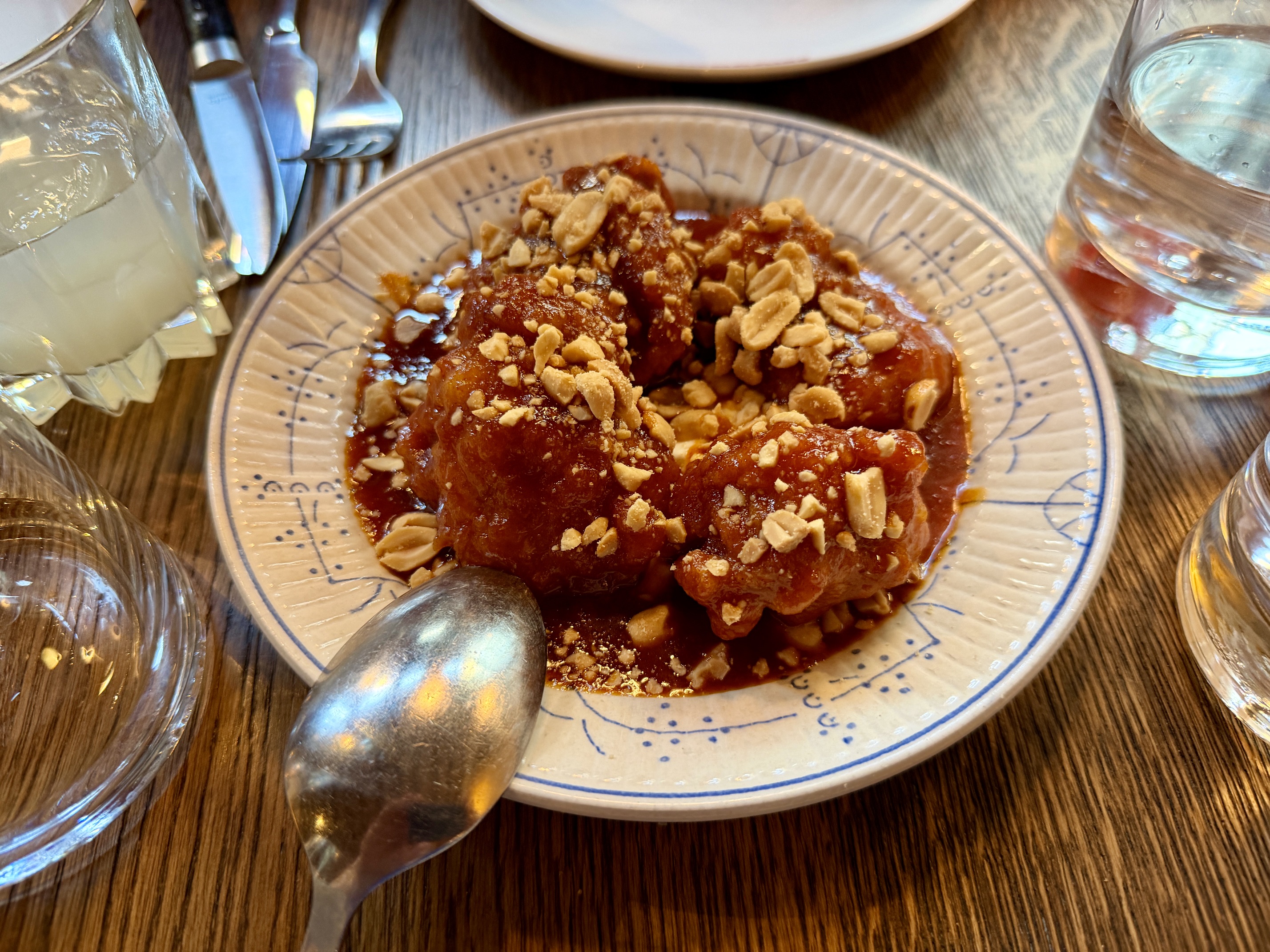
That sounds like faint praise, which is probably unfair. I went on the last night of the latest of many trips, and I wouldn’t say I was jaded but I came away unamazed. But restaurants don’t need to amaze you, and perhaps if this was your first meal on your first trip to the city you would be singing its praises the way I have Shibuya. Michelin likes it, anyway: they gave it a Bib Gourmand last year, a plaudit also awarded to Onslow.

Jacobin
Predikherenstraat 13, Brugge
https://www.jacobin-brugge.be/en/

11. Cuvee (2024)
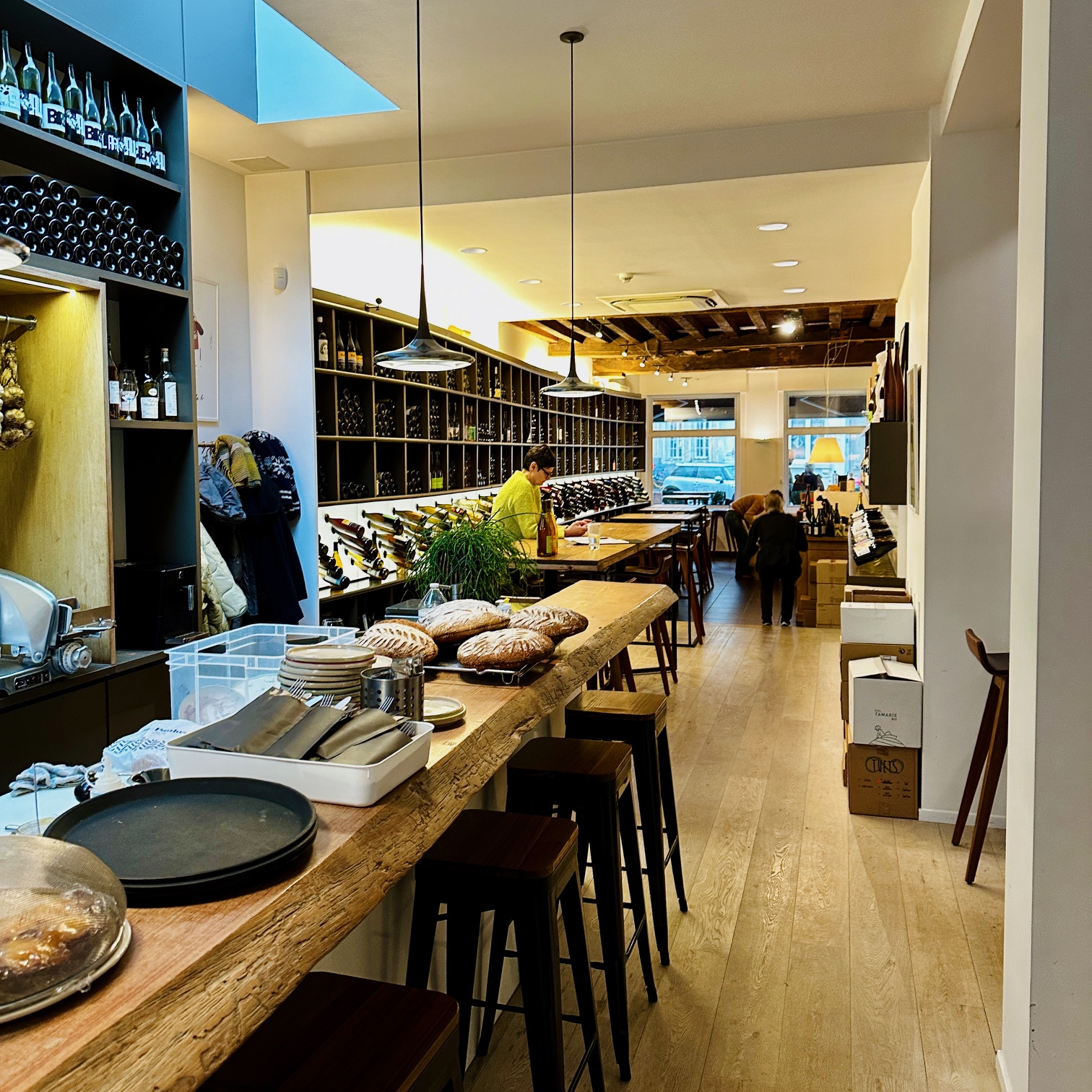
Bruges is a beer city, no doubt about it. So you really have to admire the pluck and persistence of Cuvee, a wine bar right in the centre which has been going for something like 20 years. Not only that, but for over 15 of those it has exclusively stocked natural wine, which makes it a trailblazer in more ways than one. The owner told me all about this as I settled our bill at the end of a hugely enjoyable lunch in January 2024.

She said it was especially tough when they switched to natural wine, and that this made them a bit of a figure of fun in Bruges’ food and drink fraternity. Well, to quote the great Alan Partridge, needless to say, Cuvee has had the last laugh. Because what they’ve built is really something: a deceptively huge, incredibly tasteful space packed with cool furniture and gorgeous bottles of wine. There’s space out front for groups, a little snug at the back which would be perfect for drinking with friends and some tables for dining, looking up at the counter. 

There is also, I am happy to say, a really terrific menu of the kind of food that goes well with wine. On my first visit I adored my duck rillette with piccalilli and thin melba toasts, and was blown away by a couple of enormous cheese croquettes, so glossy under their crisp shell, completely different from their Iberian distant cousins.

We made a mental note to return and descended on the place in a bigger group in March 2024 – ten of us, sitting at the long central table sharing small plates and tasting a range of very enjoyable natural wines, one sparkling, one white, one orange and one red. And the food was even better than I remembered. I loved the plate of capocollo, adored Cuvee’s marinated salmon with olive oil as much as I had on my previous visit.
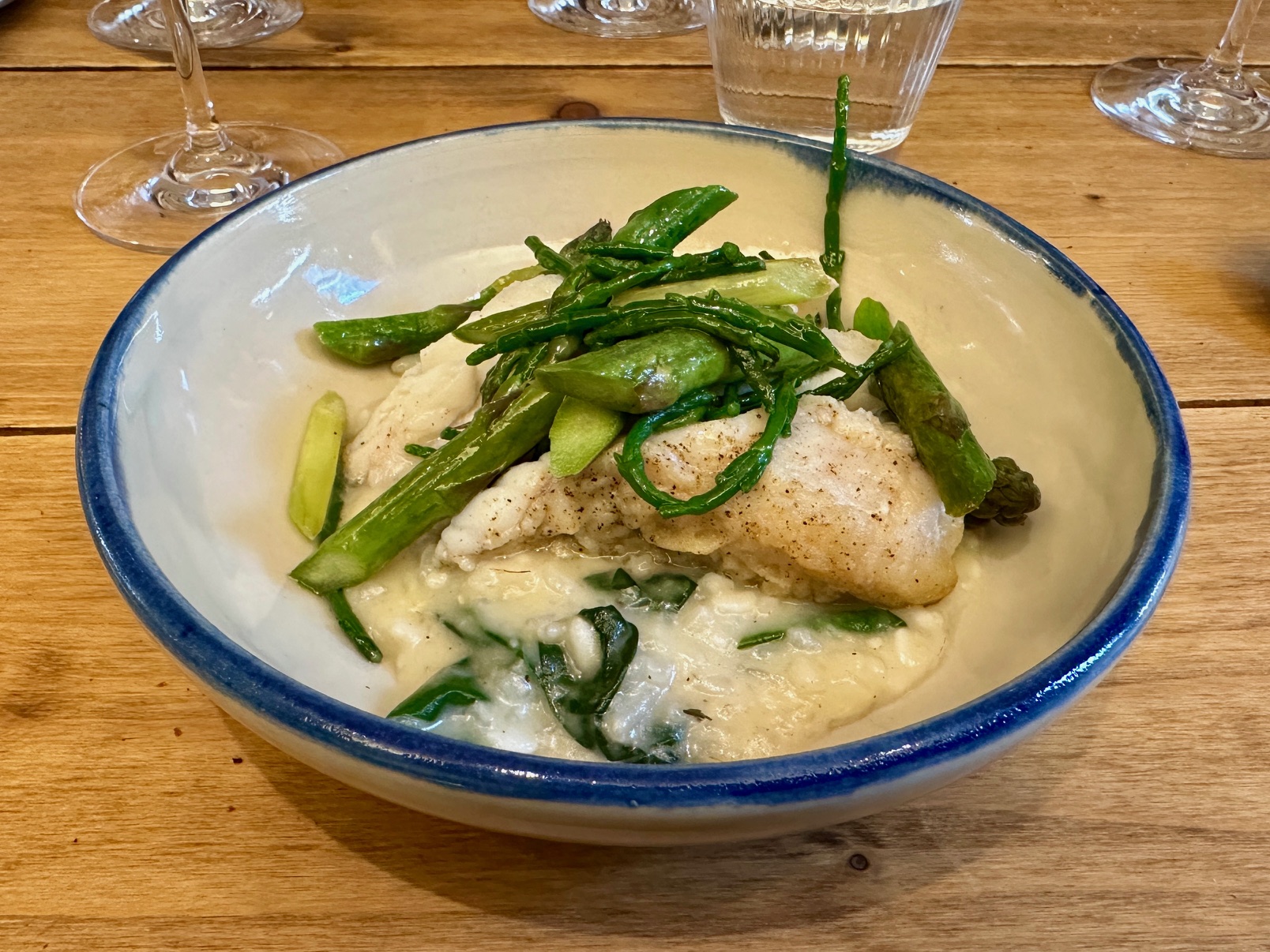
And then to finish, two knockout dishes. First, a nutty, just-right risotto with asparagus, samphire and beautifully done monkfish, and then a cracking chocolate mousse dressed with olive oil and salt flakes. Throughout we were treated so well, and the passion and energy the staff had for each of our wines was properly infectious. I was already a Cuvee convert, but that experience made me an evangelist.

Cuvee
Philipstockstraat 41, Brugge
https://cuvee.be/en/

12. Lion Belge (2025)
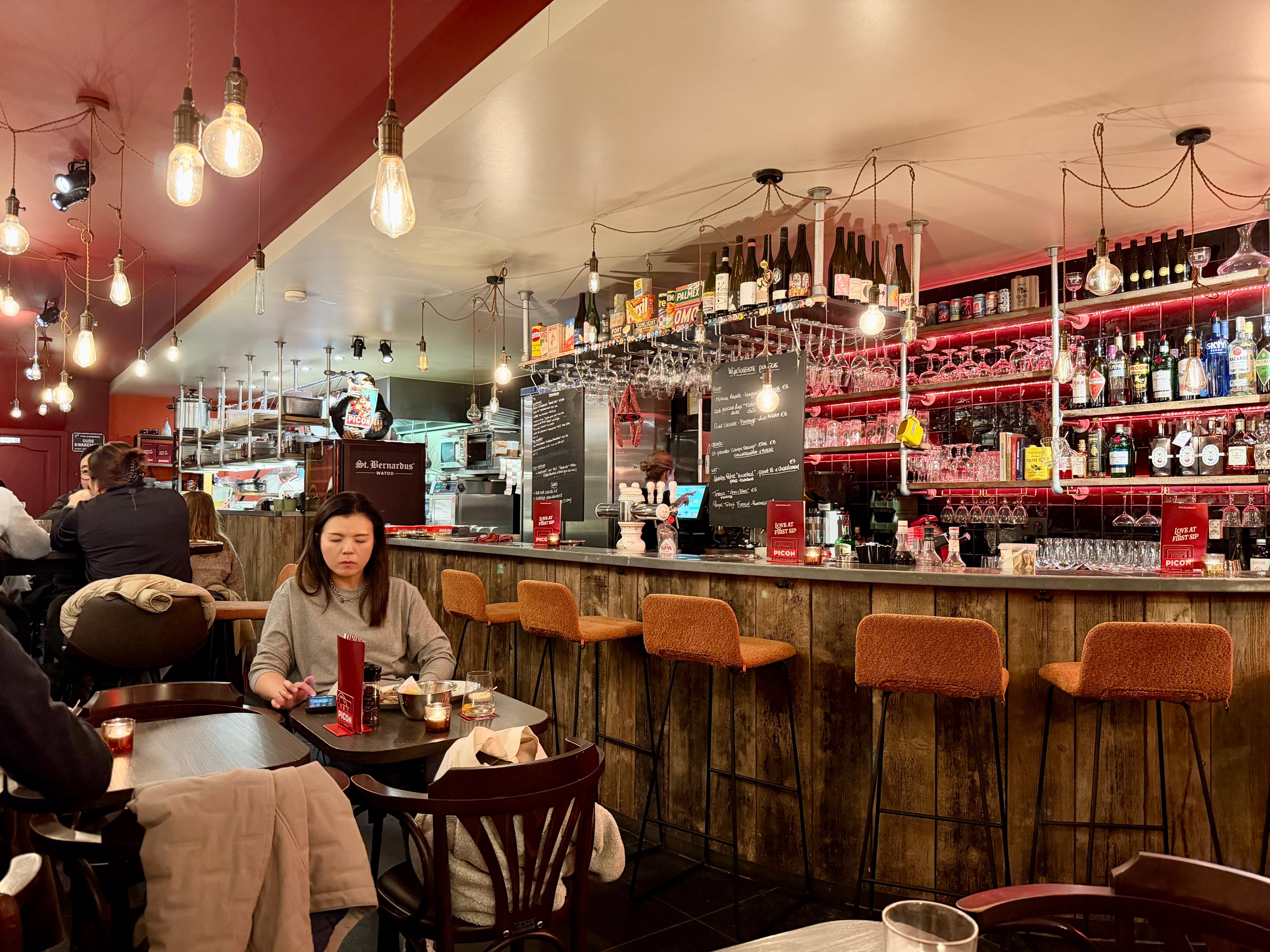
I think Langestraat is my favourite street in Bruges. It starts at Molenbrug, the Mill Bridge, and heads out of the city, getting less and less touristy, more and more interesting. Some of the other businesses in this city guide are on that street, others – like Rock Fort, Michelin starred Sans Cravate or Latin American street food spot WuaKmole – are on my to do list for future visits. Right at the other end you’re at the canal that rings the city, not far from the windmills.

Lion Belge was recommended to me by a regular reader of the blog, and I finally made it there on my visit in October 2025. It’s no reservations, and its fame must have spread because turning up at a deeply unfashionable half-five, when it opened, I was by no means first in the queue. Inside it was fetching, all deep red accents and cosy little tables. A neon sign on one wall glowed Sip. Eat. Share.

I’d thought Lion Belge was a trad place, but the menu did a great job of hedging its bets. Starters or small plates were pretty global, from sliders to grilled octopus with polenta and chimichurri, mortadella naan bread pizza or tuna carpaccio with mango. Mains were far more conventional – pork knuckle, meatloaf, hare and the like.

In that sense it felt like it was doing the same thing as TouGou, albeit in a slightly less coherent way. But actually, everything we ordered worked. I thought the pork dumplings, four of them in a brick-red miso sauce of astonishing depth, were a complete joy and the crispy chicken with kimchee and sriracha mayo, though not as good, was still respectable. 

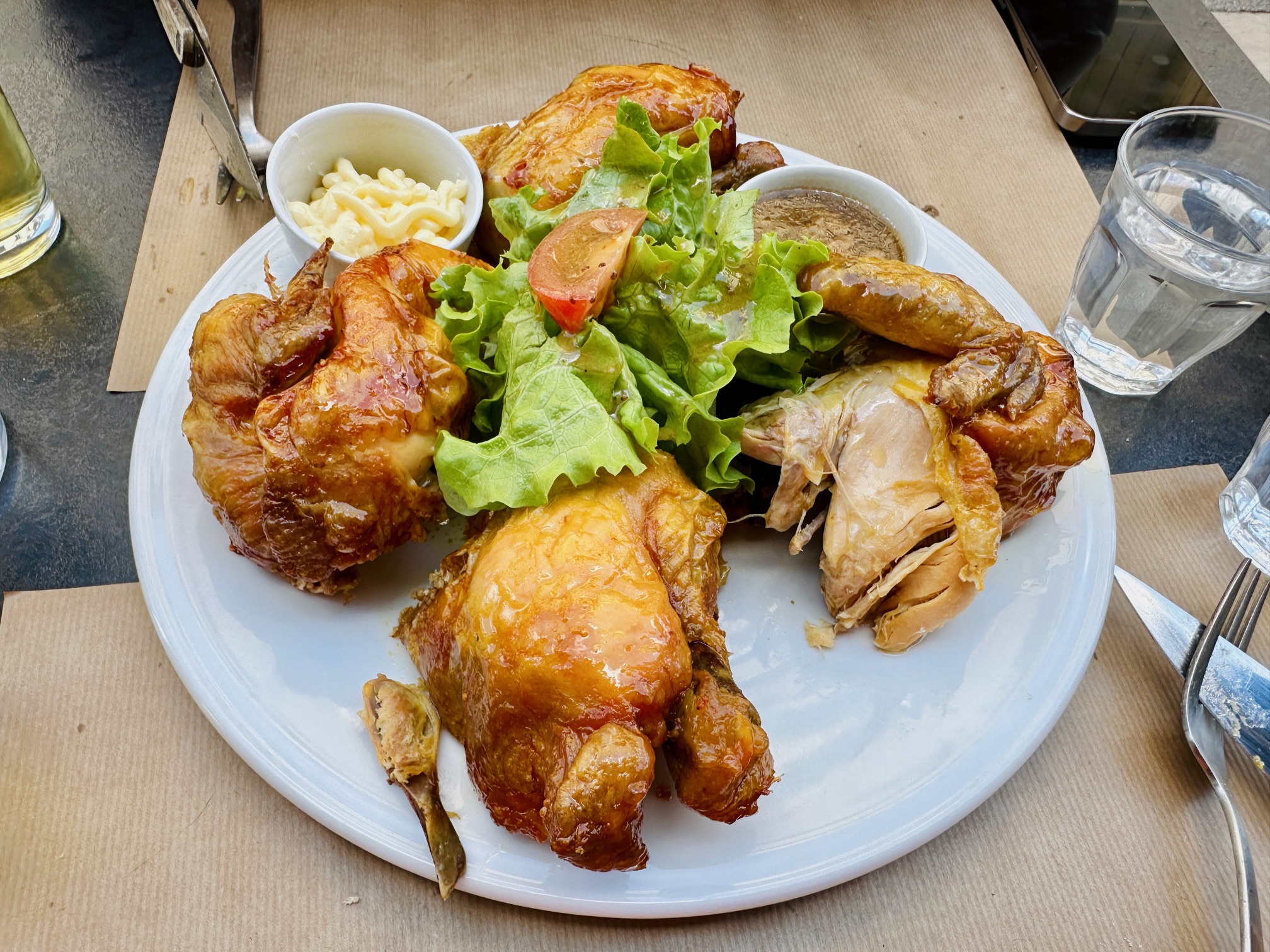
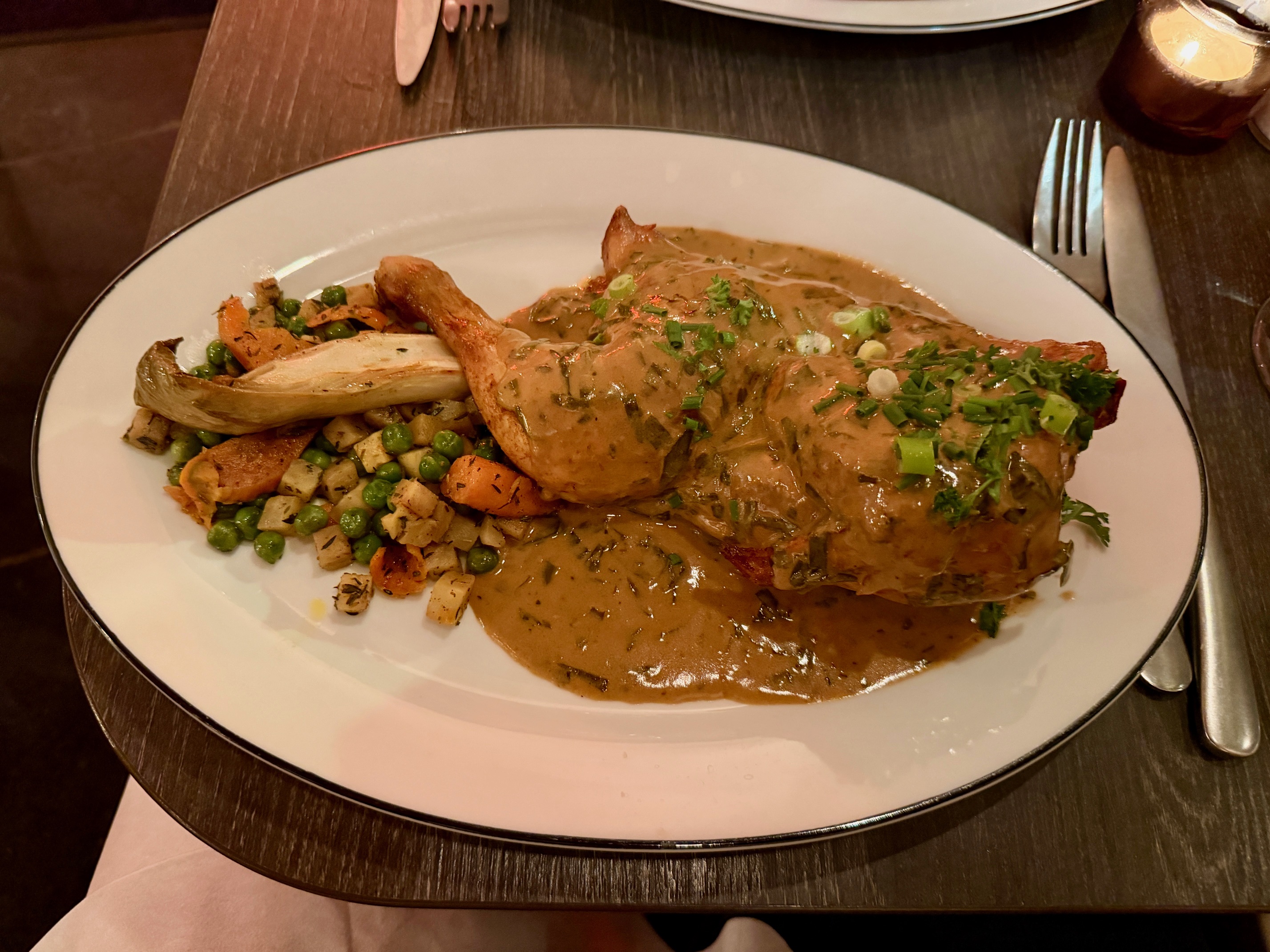
And the mains went down a treat: my half roast chicken came slathered in a sauce singing with tarragon, accompanied by some of the best rough-edged frites I’ve had in Belgium, or indeed anywhere else. My friend Dave, always a sucker for venison, had a stoofvlees made with the stuff, served with some potato croquettes that couldn’t match the frites.
I would definitely go again, although paradoxically the fact that you can’t book would make me less likely to go all the way out of town on the off chance (I suspect it’s easier to get a table in summer, when they have plenty of tables out on the pavement). Nonetheless this one is for you if you like an early bird dinner, so you can devote more time to post-prandial beer. Stop at De Kelk, as I did, on your way back into the centre – or, better still, head to my new favourite pub ’t Hof van Beroep, which is next door.

Lion Belge
Langestraat 123, Brugge
https://www.instagram.com/lion.belge/?hl=en-gb

13. Bierbrasserie Cambrinus (2026)
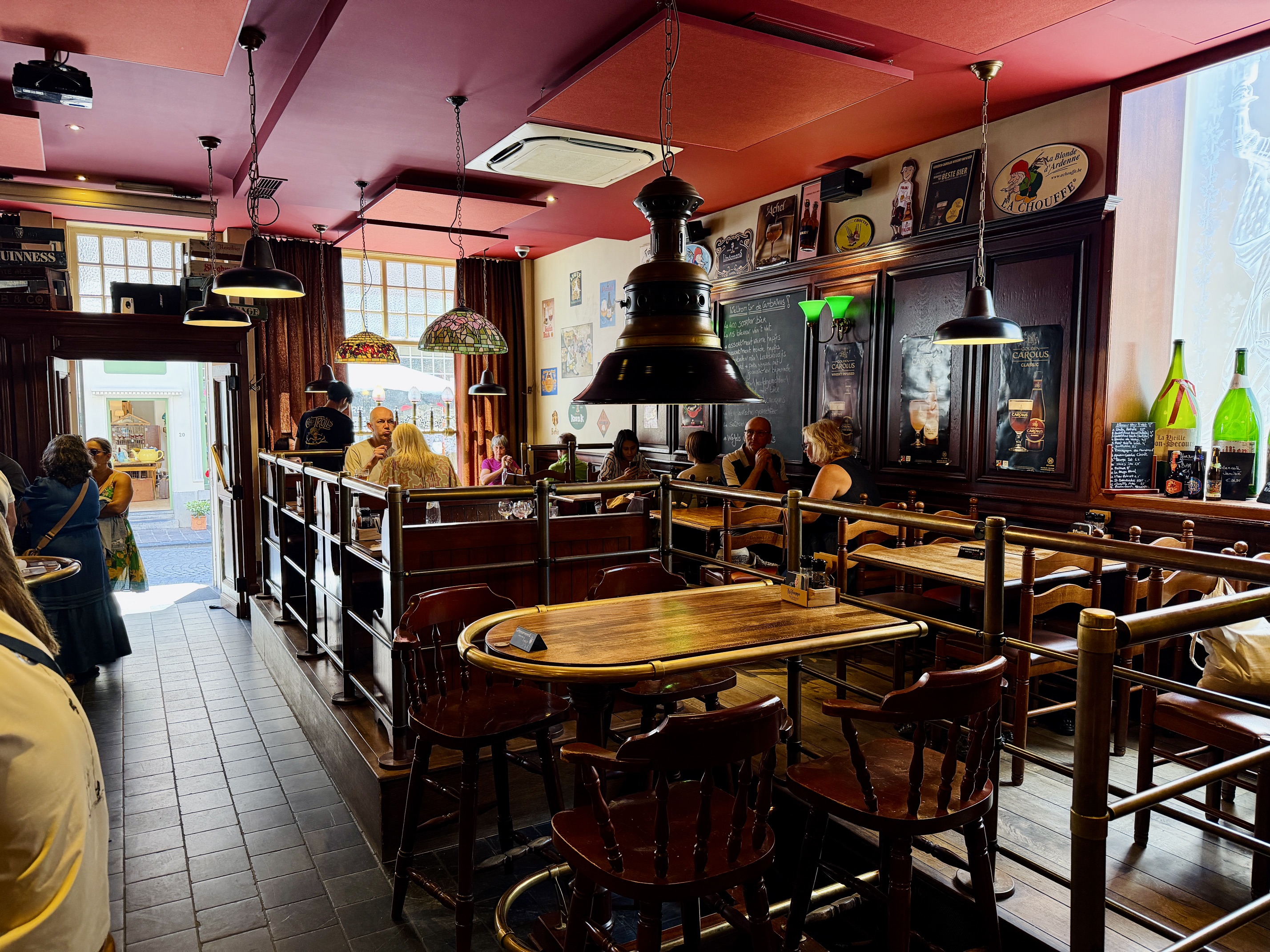
Cambrinus is one of those brasseries in the grand Flemish tradition, and probably one of the most touristy establishments in this guide. I’d never got to it on any of my previous visits, but thought I should tick it off this year because I’d heard multiple accounts that actually, the food was really very solid and probably better than it needed to be.

And all that is true, I think. My carbonnade, made with Cambrinus’ own beer, was very good stuff, extremely tender and enormous hunks of beef – cheek, at a guess – in a sauce with more depth than its thinness might suggest. I’m not sure I see the point of serving it with a puddle of apple sauce or a pointless pile of cress, but happily Cambrinus’ frites are also on the money. Zoë ordered better than me, I think: a half roast chicken with a nicely salty skin and more of those fries, more killer and less filler.
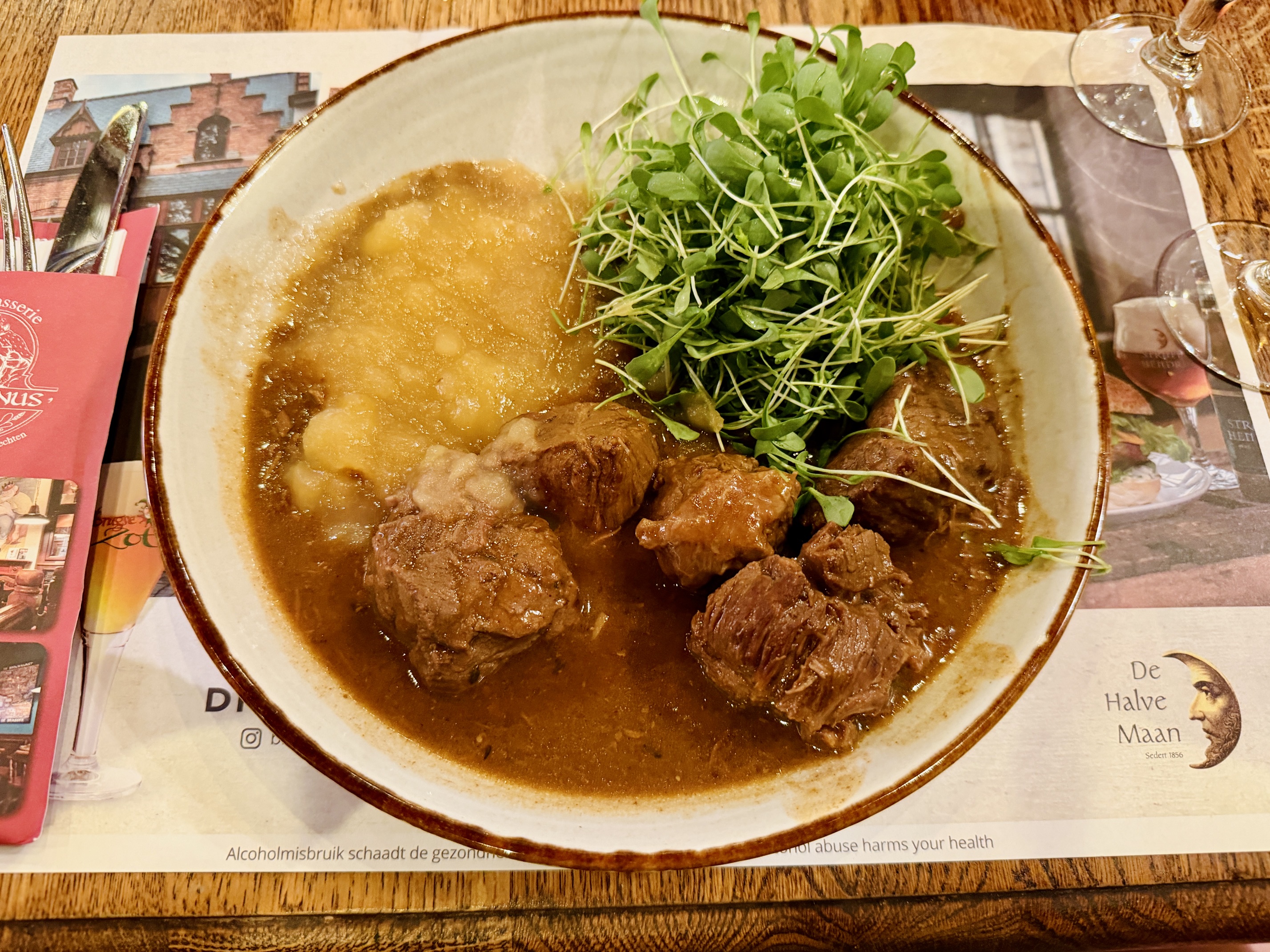
It’s also a really lovely main dining room, with little booths and panels and the kind of blood-red ceiling that seems à la mode in Bruges. Sadly I didn’t get to enjoy that because they did something that really irks me: we had a reservation, and they walked us past all those lovely, unreserved tables to an unlovely bit at the end, round the corner, near the bogs. They couldn’t have said “tourists” more if they’d made us wear dunce’s caps with a big T on them. Never mind: I sipped a fantastic Jack’s Precious IPA on draft, I ate my carbonnade and I resolved not to hold it against them.

Bierbrasserie Cambrinus
Philipstockstraat 9, Brugge
https://www.bierbrasseriecambrinus.eu

14. De Halve Maan (2026)
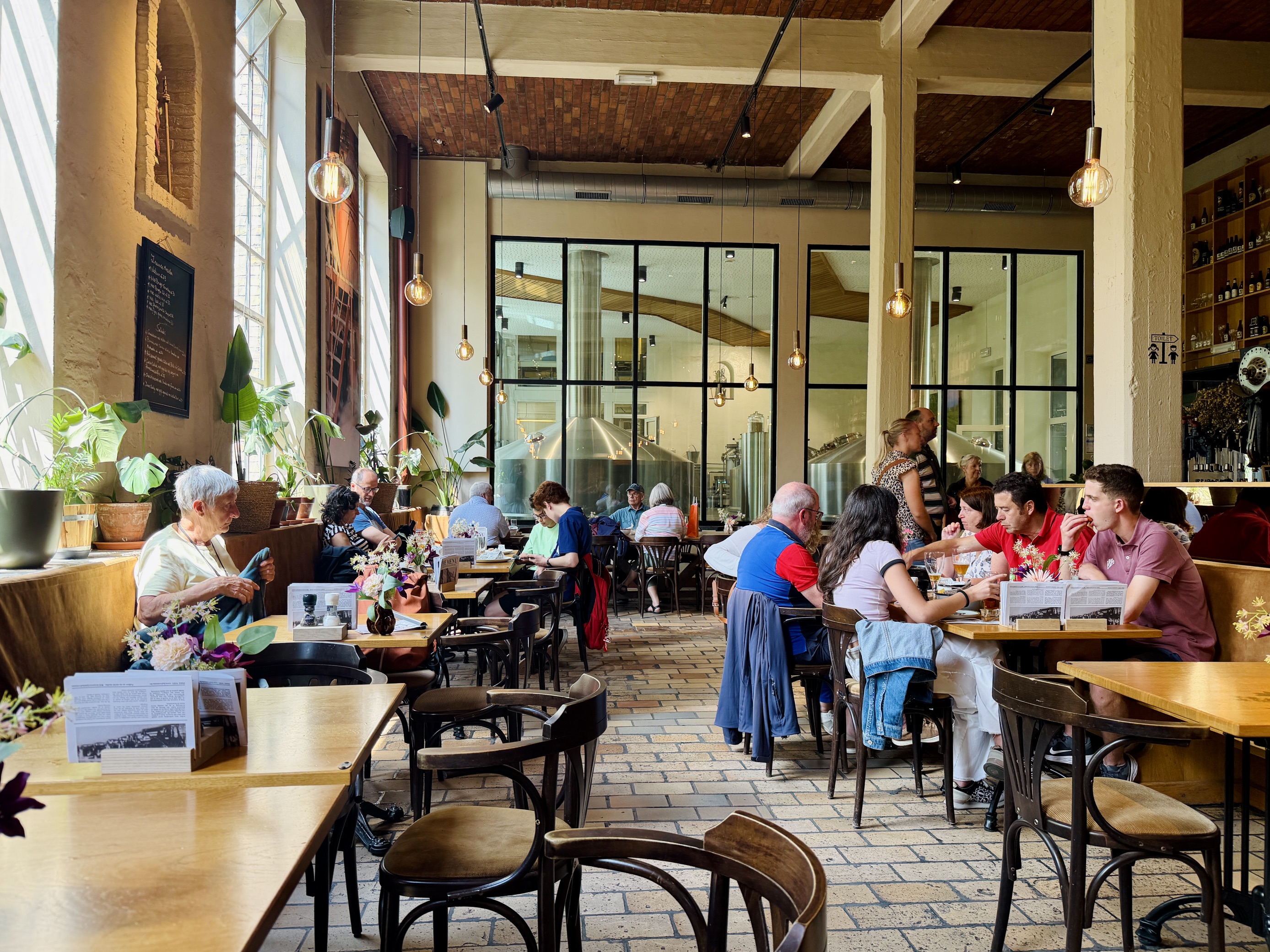
De Halve Maan – the half moon – is one of the two breweries inside Bruges’ city walls. I’ve done the brewery tour on a previous visit, and it’s quite an amazing way to spend an hour – the guide I had was a charismatic livewire, and it’s quite mind blowing that all the brewery’s beer, drunk in Bruges and around the world, is brewed on the premises and then transported to a plant via a specially constructed pipeline running under the streets of this medieval city to be pasteurised and bottled two miles away.

The courtyard outside is a great place to have a beer in the sunshine, but the brasserie on the premises is truly impressive in its scale and polish. It’s an extremely handsome and buzzy place, and it’s worth visiting even if you just have a drink: the brewery is the only place where you can enjoy an unpasteurised Brugse Zot or Straffe Hendrik right from the tank, the only beer that doesn’t travel down that pipeline. Maybe it’s the power of suggestion, but I thought both beers tasted even better.

But the menu, which is packed with classics much like Cambrinus’, is also worth trying. They do try hard to flog you the stoofvlees – the Dutch term for carbonnade – so I felt like I should have it for comparative purposes. I think it’s better than Cambrinus’, with more meat and a thicker sauce with miles more character: it is, of course, made with their own Brugse Zot Dubbel. Still a bit of pointless garnish in the shape of a salad that doesn’t go, but never mind: the fries are better, the mayo is better. It’s just better.
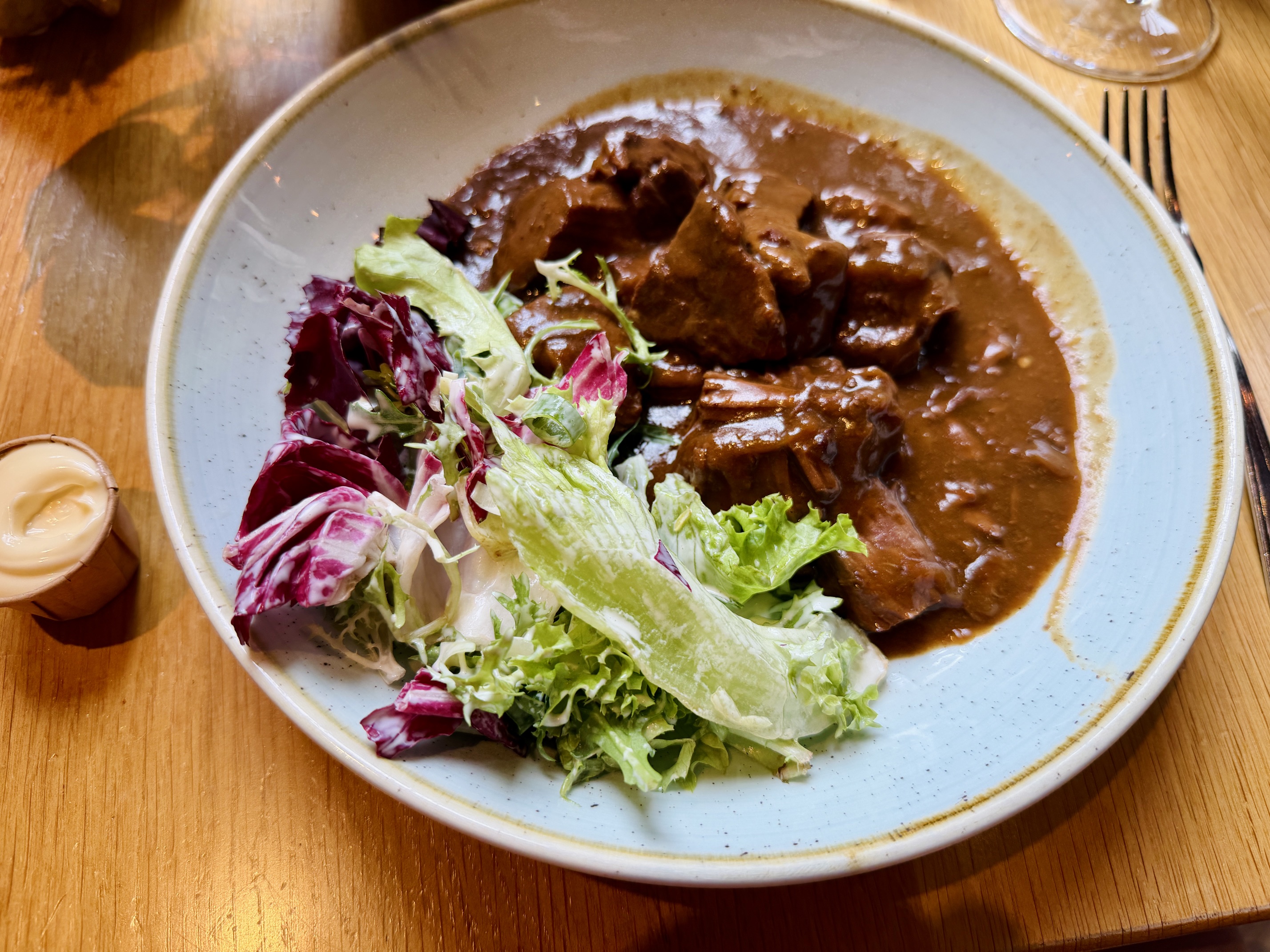
Everything else was also dependable to a fault. Zoë’s quail looked fiddly but tasted extremely good, coppa might not have lived up to the standard elsewhere in Bruges but was still streets ahead of most of what you’d get in the U.K., Brugse Zot croquettes were deep-fried orbs of decadence. Service was a little brisk for my liking, but most of the mains are south of €25, it does a roaring trade and you felt in very safe hands.

I know it’s not fair to compare this kind of offering to craft breweries in the U.K., because almost none of them have the funds to pull off this kind of operation (or to build a two mile pipeline under the city: Reading finds it hard enough to build a cycle lane that isn’t a laughing stock). But even so it felt great to drink amazing beer in such an immaculate space, without any chipboard, car parks, trestle tables or street food trucks in sight.

De Halve Maan
Walplein 26, Brugge
https://www.halvemaan.be/en/visit/restaurant

15. Onslow (2025)
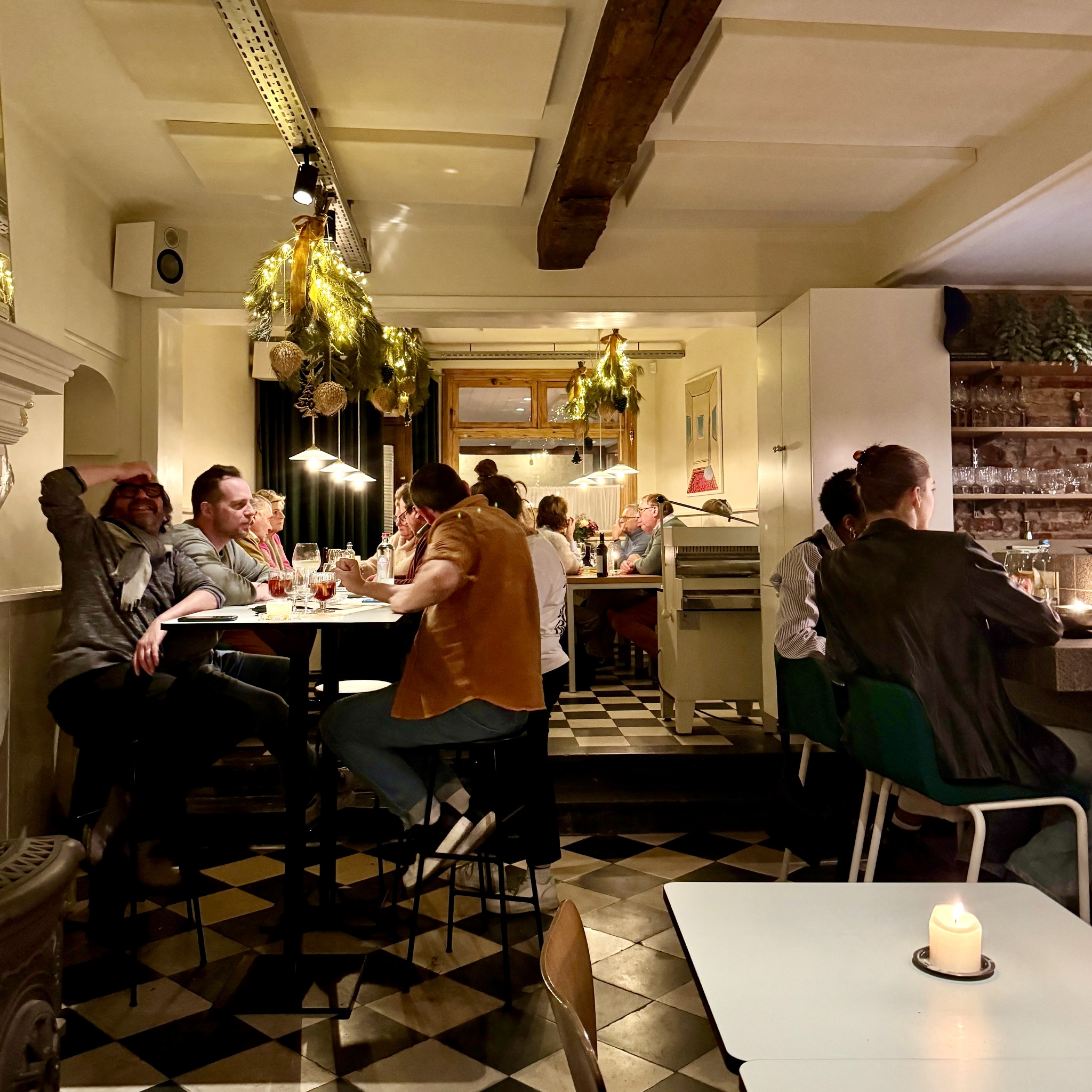
Onslow was the discovery of my trip in January 2024. I absolutely loved it there. Slightly off the beaten track in Bruges’ Sint-Anna district, it’s the kind of achingly-cool-without-trying restaurant you wish was just around the corner from you, and I detected some similarities with some of my favourite places in the U.K., like Bristol’s Marmo, along with Ghent’s sadly-closed and much missed De Superette. It’s all plain unshowy tables and bare white walls, but the place had a real verve when I visited.

The menu is made up of a handful of snacks and a bunch of sharing plates, and the enormously personable staff tell you to aim for about two sharing plates per person. I over-ordered on my first visit and returning in March 2024 for lunch in a bigger group we stuck firmly to that approach. It paid off handsomely, and across both meals the food was outstanding.

Actually I’d go further than that and say that even in a few short months the food had gone up a level. Since my first visit to Onslow it had been awarded a Bib Gourmand by Michelin and it showed, especially when comparing dishes common across both visits. Onslow’s fried chicken back in January was some of the best I can remember eating but in March, with the addition of lemongrass and an even crunchier coating, it was improved further.

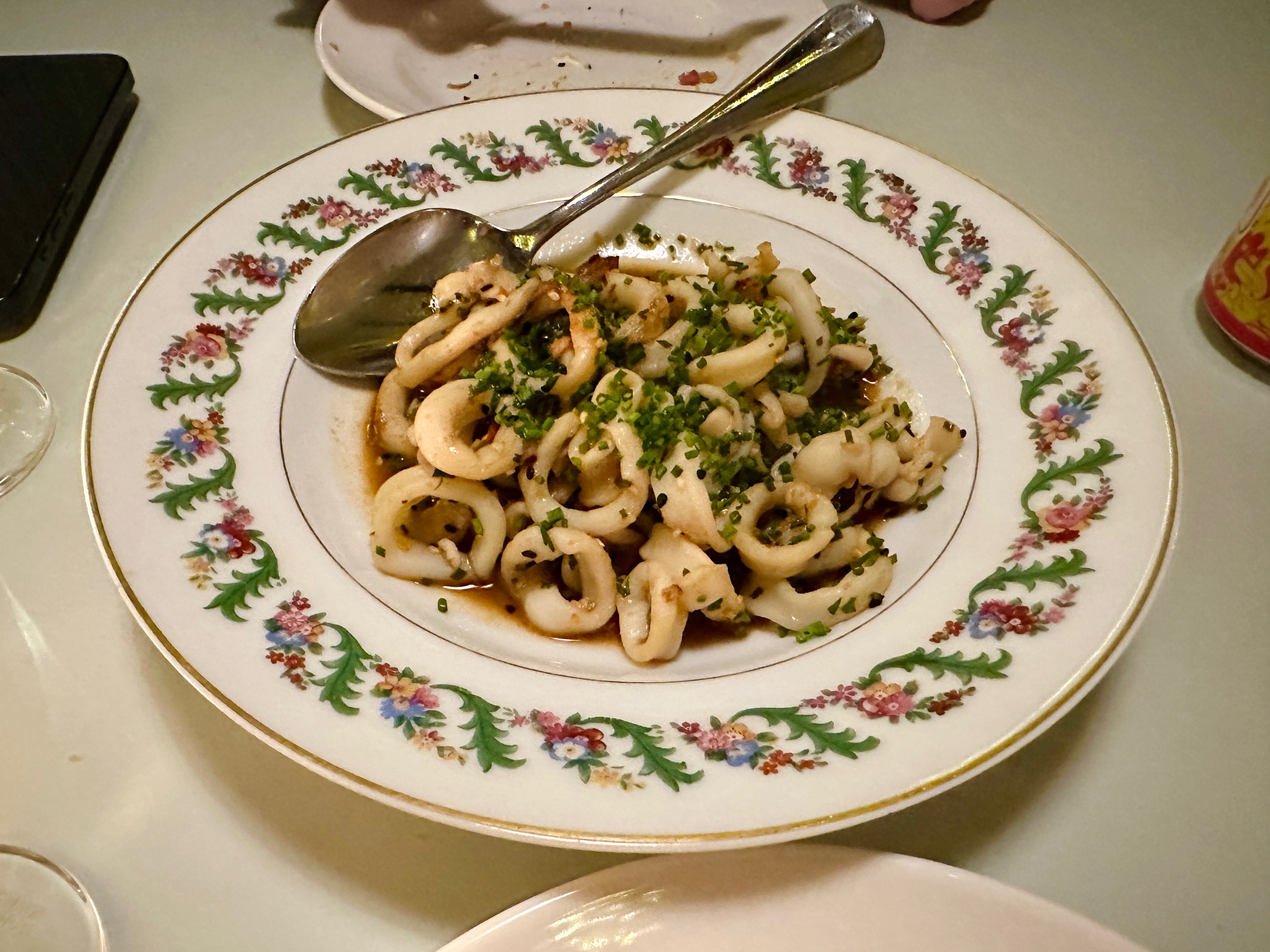
There were other stupendous dishes both times I ate at Onslow, from a yoghurt dip smothered in gochujang to top-notch salmon sashimi topped with something like smacked cucumber. Calamari were light, tender and so moreish we ordered a second portion. Pork belly came with kimchee, a really exceptional steak tartare was strewn with enoki and coriander and broccolini was better than broccoli has any right to be. “Why is it never like this when we cook it at home?” asked Zoë – a very fair question, even if it sounded more like an accusation. It’s also worth mentioning that although the wine list was good the beer list, including some excellent sours from Dust Blending, matched it glass for glass.
As a result it was the first place we booked for our return visit in January 2025, and I do have to sound a note of caution, because it wasn’t entirely up to its usual standard. Some of the dishes felt smaller, or had been tamed and toned down or, in the case of the yoghurt with gochujang, both. The fried chicken, though, remained almost worth a visit in its own right.

Onslow
Jeruzalemstraat 53, Brugge
https://www.onslowbrugge.be

16. Goesepitte 43 (2025)
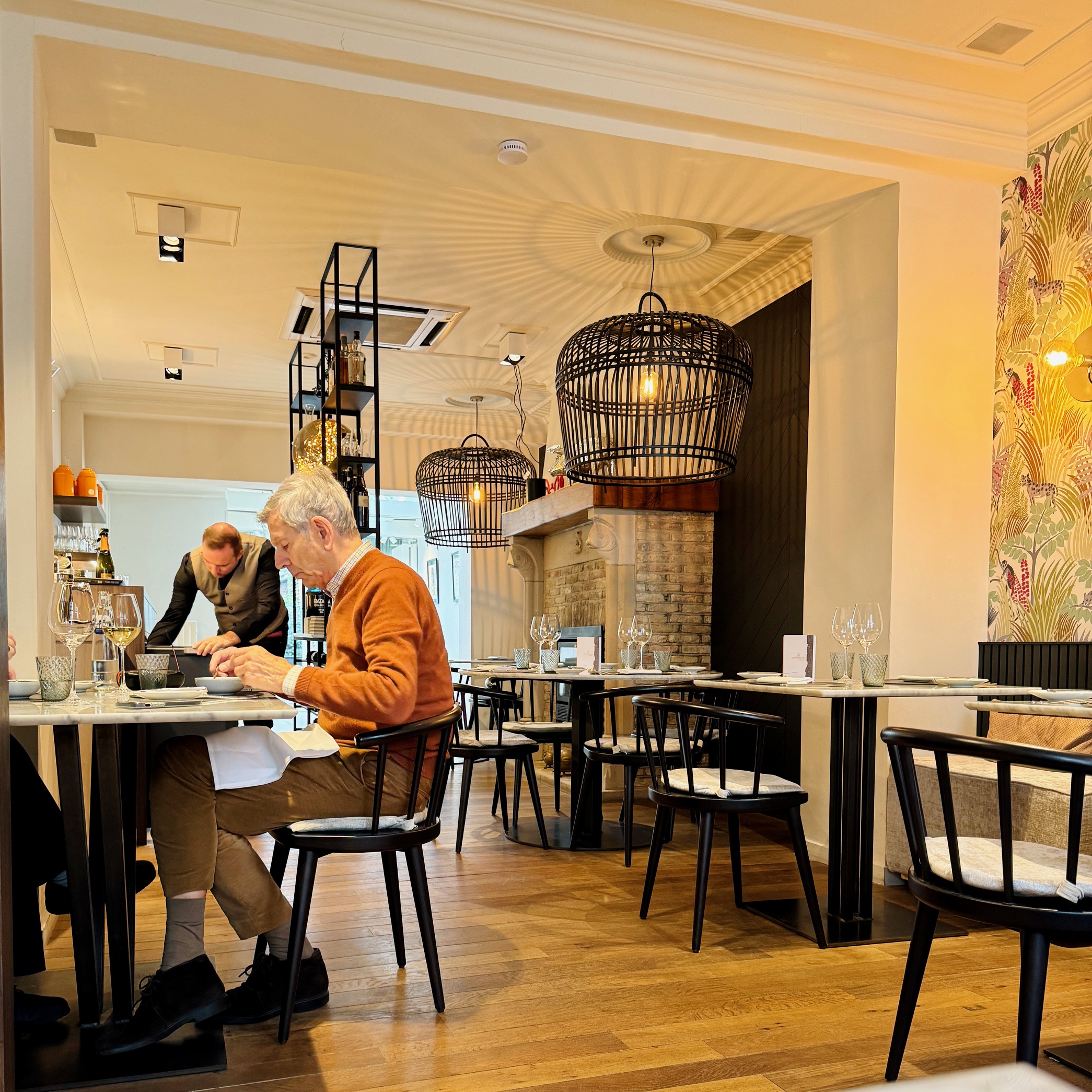
Another January 2024 discovery, Goesepitte 43 is a very accomplished restaurant in a handsome townhouse in the south-west of the city. I went there for my final lunch of that holiday, partly because chef Jan Supply offers a no choice 34 Euro set lunch even on Saturdays and I wanted to see if it was any good. It really is, and you eat it in a really beautiful dining room with top-class service: one man covers all front of house, is perfectly bilingual and charm personified.

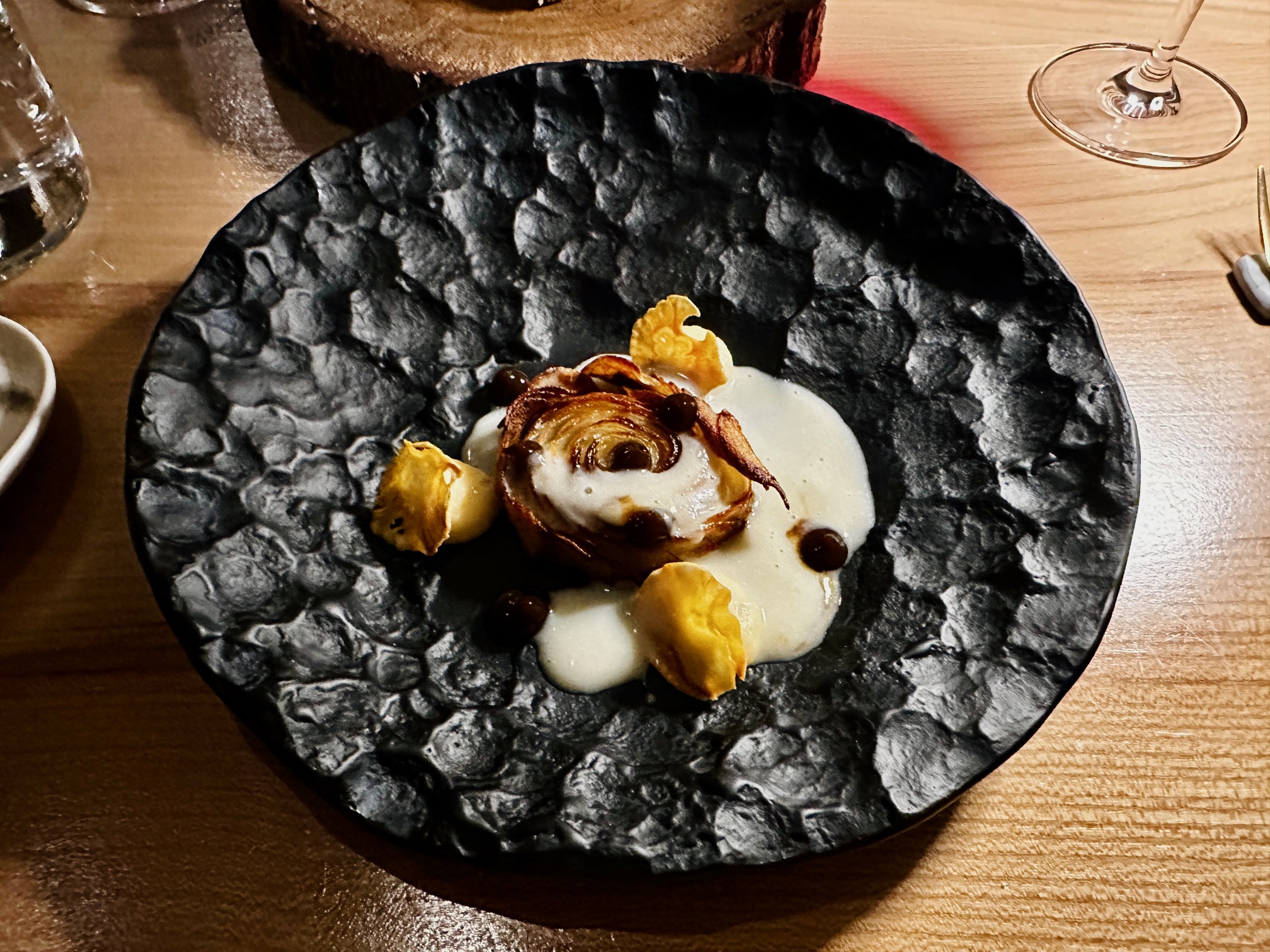
It’s so nicely judged and a great place to go if you want an excellent lunch where you leave thoroughly satisfied but not stuffed. An amuse bouche a little like a mushroom duxelles set the scene nicely, but far better was to come: a risotto with fine herbs, edged with olive oil, was topped with a beautiful slice of parsnip, cooked on their Mibrasa oven, carrying a precious cargo of toasted pine nuts and dill. Pork was served pink on a slab of charred cauliflower, its fractal edges blackened and savoury. 

And if I was a little underwhelmed by my chocolate and coffee ganache, it might mostly have been envy from staring at the dame blanche opposite me. Even so, my meal was easily enough of a treat to make me want to explore the à la carte next time. Not only was the wine list great, and the aperitif cocktail equally so, but the drinks list also contained some excellent beer – especially Dupont’s Avec Les Bons Voeux – if that’s more your scene.

As luck would have it, I went back in October 2025 for that rare thing, a solo lunch. I had been intending to repeat that set lunch menu but I suspect Goesepitte might have done away with it, because only the à la carte was available. But I really enjoyed everything I had – from a focaccia-style pinsa topped with ricotta, iberico ham and wild mushrooms to a very good piece of chicken bathed in a vin jaune sauce so good I wished I’d held back some bread.
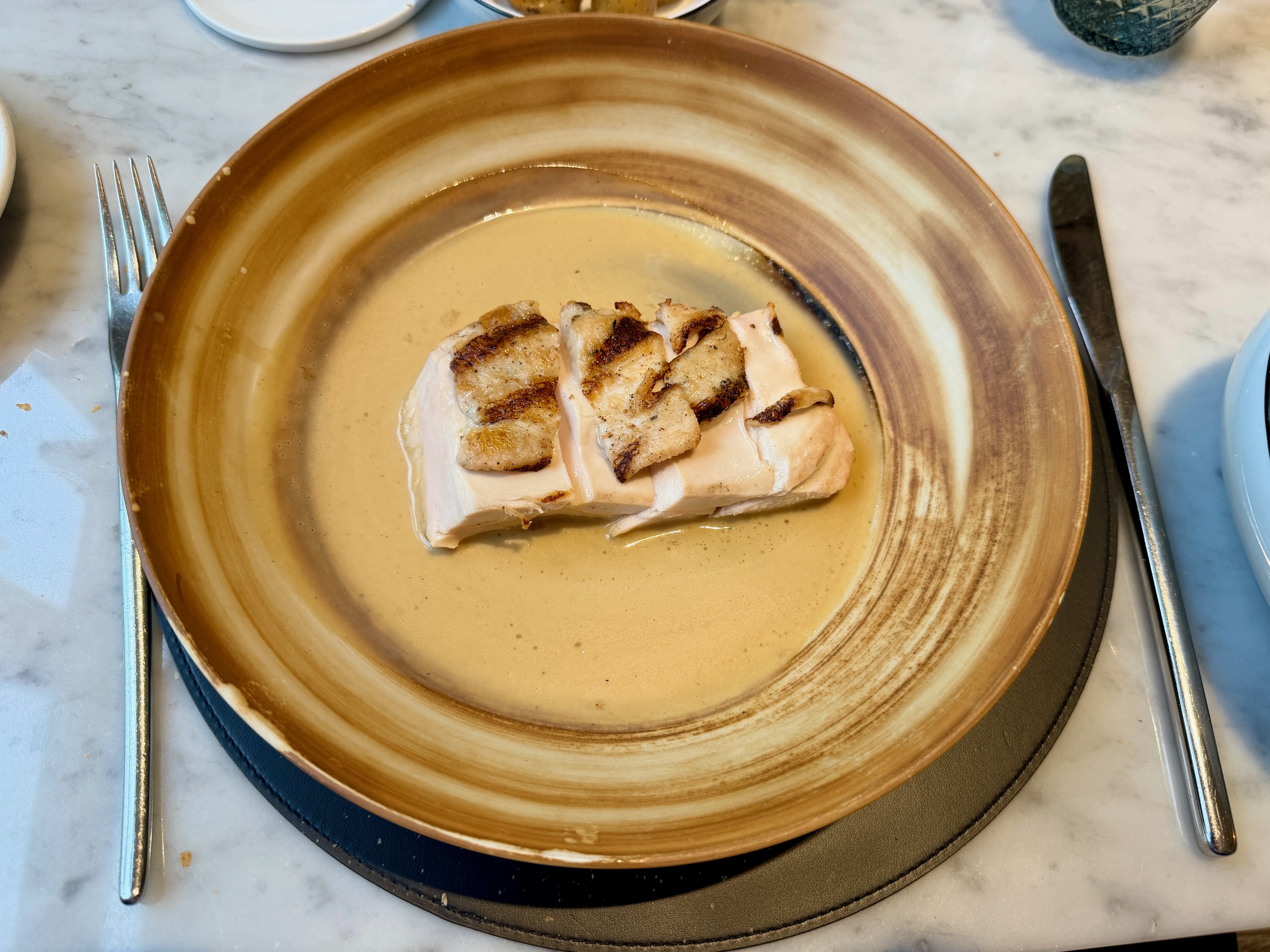
Some things never change, though, so this time I made a beeline for the dame blanche and was a completely FOMO-free zone. Oh, and the service is just as good as I remember: the same chap, still effortlessly hyper-competent. I did him a disservice, though, because watching him charm the socks off the French couple dining opposite me it turns out he’s at least trilingual, if not even more of a polyglot than that.

Goesepitte 43
Goezeputstraat 43, Brugge
https://www.goesepitte43.be/en

17. Ribs ’n Beer (2025)
On my trip in October 2025, I went to Bruges with my old friend Dave. He fell in love with the city when he came to my stag and hen do the year before, and had been back since with his wife, and one of the things Dave really loved was a ribs place called Mozart where they do bottomless ribs. Yes, it turns out this is a thing: servers roam the restaurant with trays of extra ribs, dishing more up on request with tongs. This might surprise regular readers, but even I can see the appeal of that.

So we nearly booked at Mozart but a Bruges mole told me that Ribs ‘n Beer was even better. That was good enough for both of us, so we had an early dinner there on a buzzing Saturday night. It really was packed which was nice to see, even if some of the tables were occupied by the kind of dreary British lads who cheer every time a server drops something. That’s not the restaurant’s fault, after all.

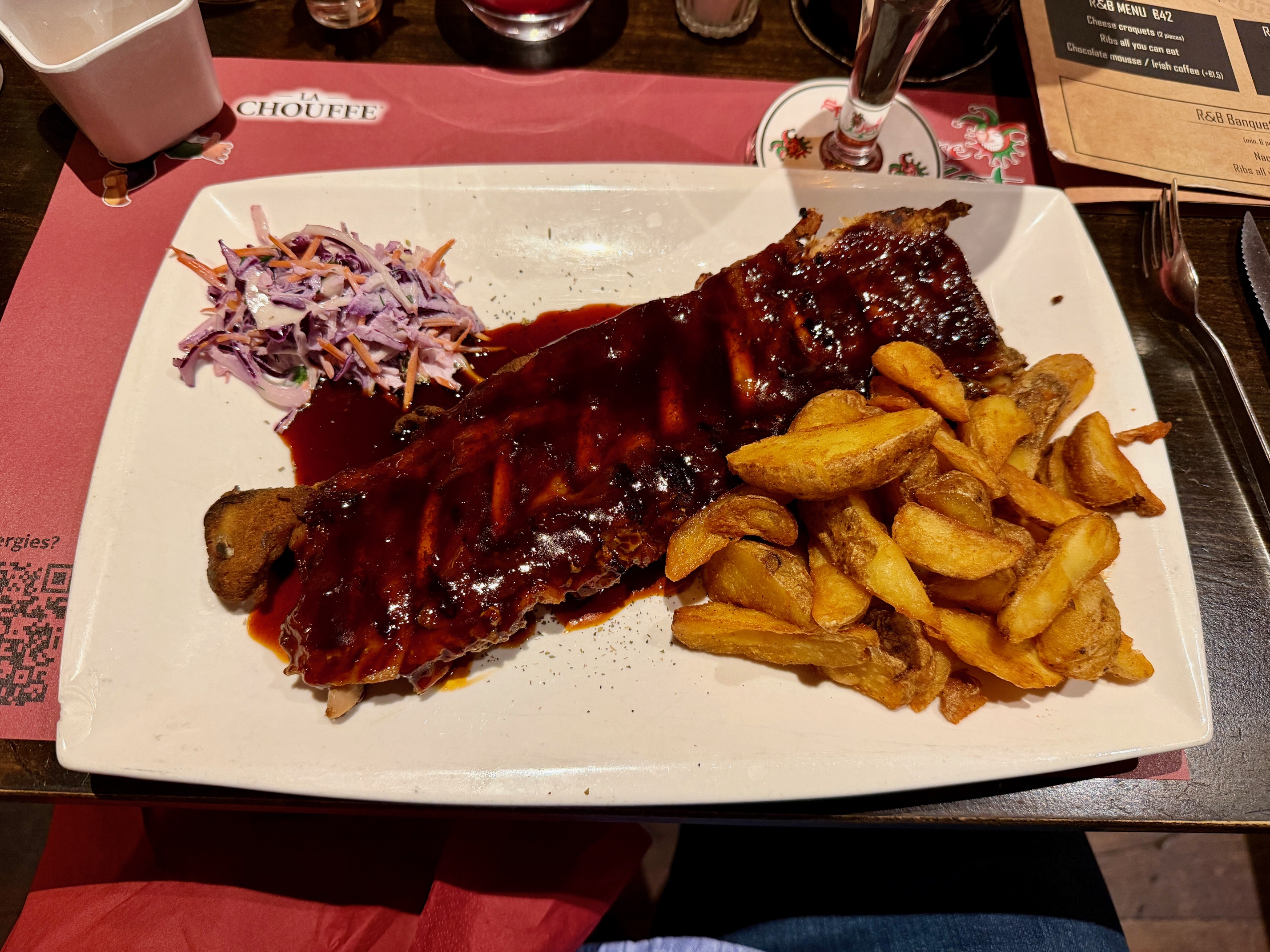
In the world of Bruges dining, Ribs ‘n Beer is very much a value proposition: all you can eat ribs along with potato wedges and coleslaw will set you back something like 26 Euros, although they do have set menus too if you want to add croquettes and a dessert (although why would you, when you’re giving away valuable space in your rib compartment?). 

What distinguished Ribs ‘n Beer from Mozart, Dave told me, was that not only could you have your ribs grilled, as they are at Mozart, but you can also opt for them to be slow-cooked. And really, that’s the way to go because the meat slumps off the bone, leaving you with a row of piano keys on your plate waiting to be chucked into the tall tin they give you to dispose of them. 

You can have them drenched in smoky or spicy barbecue sauce, or some wasabi and apple concoction which sounded modish to me, or a chocolate and beer sauce which managed to be very nice without tasting hugely of either. It’s not a dinner to linger on – we were out in just under an hour – and there is a little bit of a sense of diminishing returns with your top-ups which maybe aren’t as heavily sauced as they could be. But it’s still a very good cheap and cheerful option and if you do wander away from the Sports Zot I was on, the beer list is pretty decent too.

Ribs ‘n Beer
Ezelstraat 50, Brugge
https://ribsnbeer.com/home-brugge

18. Kottee Kaffee (2025)
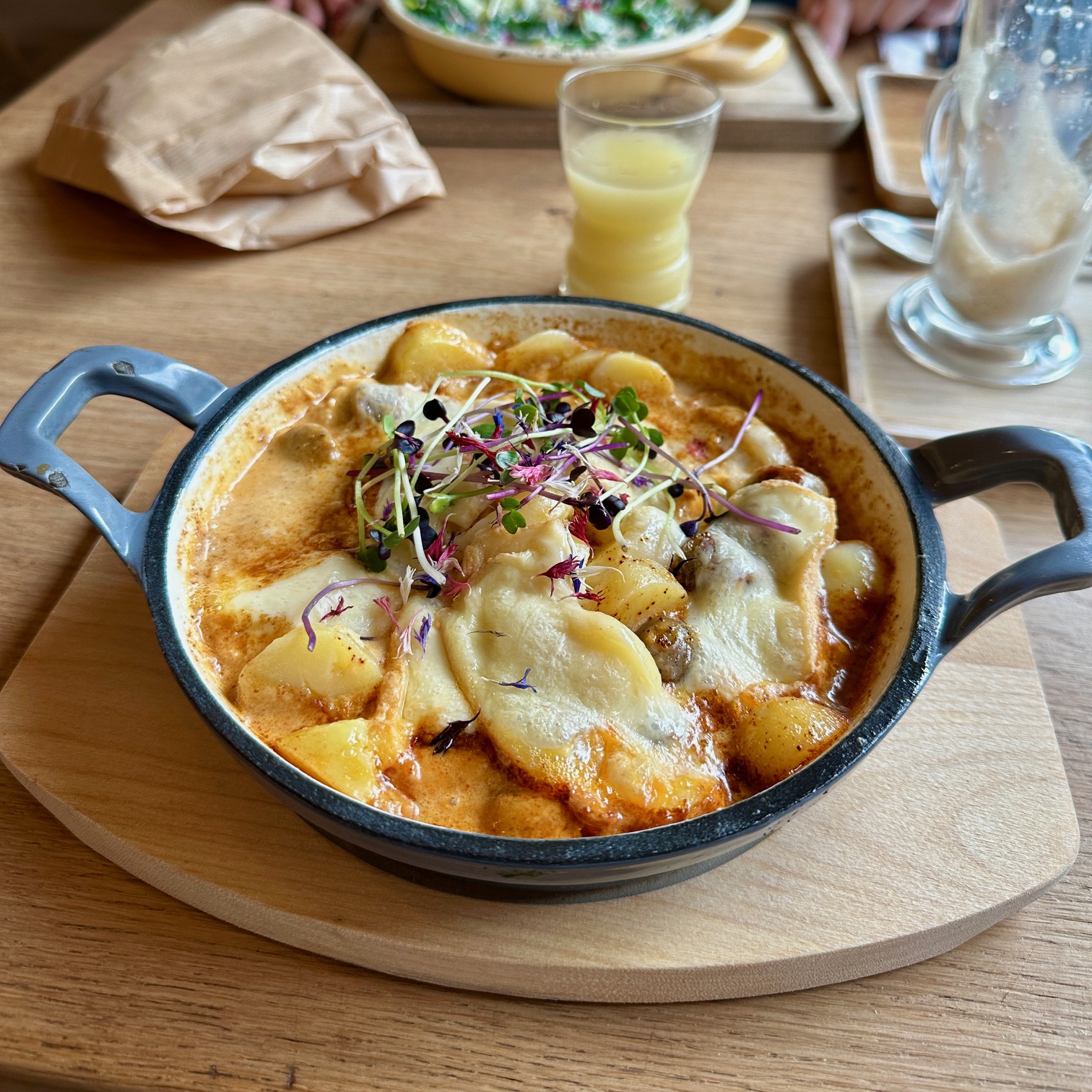
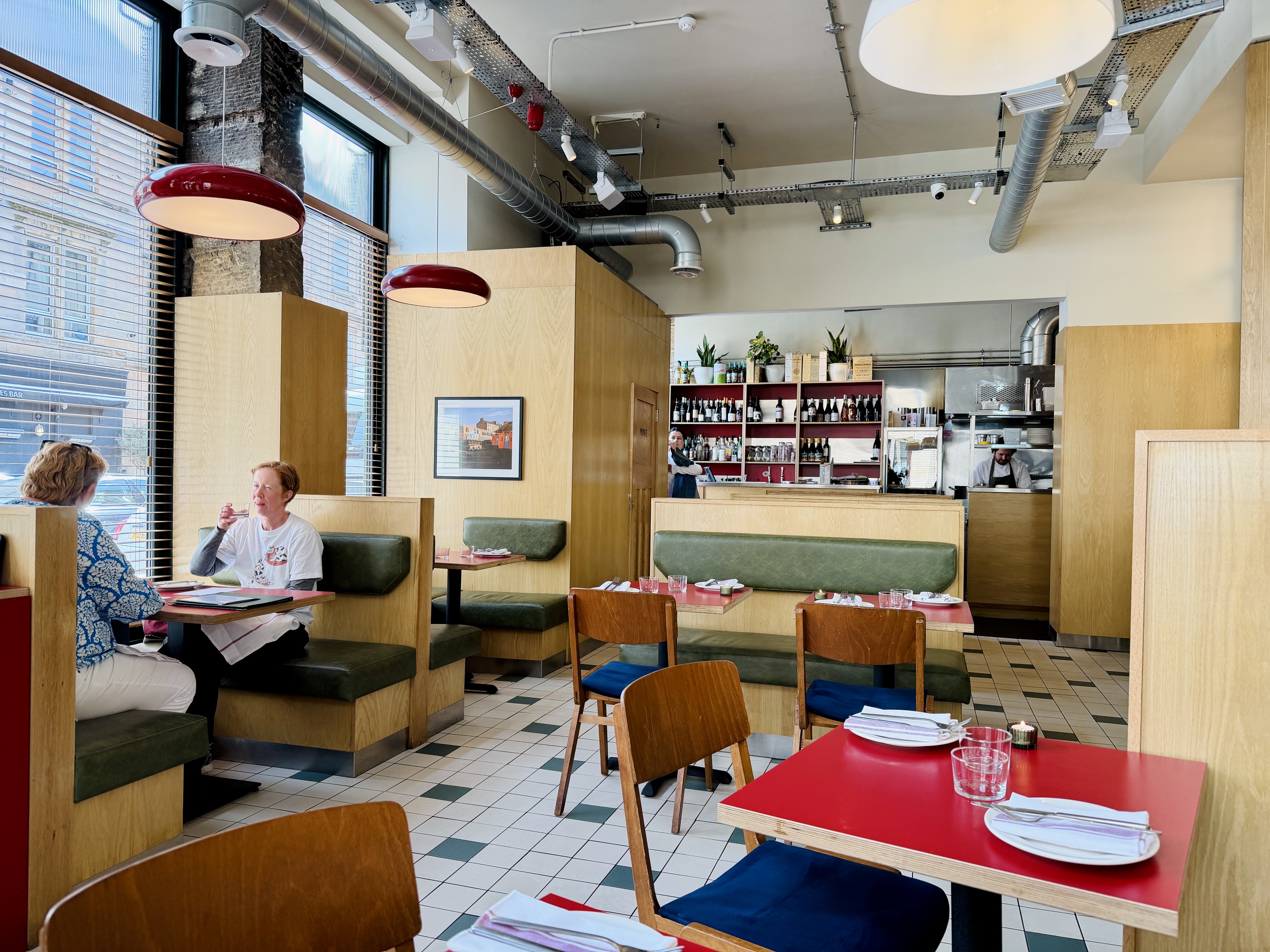
For an actual lunch, instead of a pizza or small plates, I highly recommend the muted but chic Kottee Kaffee. It’s just past Ribs ‘n Beer on Ezelstraat, and it offers a menu which is sort of like Le Pain Quotidien but independent. So there’s lots of good bread and salted farmhouse butter, cheeses and charcuterie but the menu offers lots of more brunchy stuff if that’s your bag. Very fetchingly put together, decent value and there’s good coffee too. But perhaps just as winning were the staff and the constant playlist of 90s music, most of which they enjoyed singing along to. 

On my first visit at the start of 2023 we asked how long they’d been there and apparently they’ve been open less than a year. You’d never have known. Returning a couple of times in 2024 I was delighted to see it thriving, and as stylish and buzzy as ever. I enjoyed both their tartiflette and their baked eggs, and enviously eyed the waffles with halloumi materialising at a neighbouring table. The coffee is better than you might expect from the tall, old-fashioned latte glasses, and if you feel even remotely sub-par their ginger shots are a positive tonic.

Naturally I went back in January 2025 and enjoyed that feeling that comes from knowing somewhere is an absolutely safe bet. I had a ham pizzette with a little spiced oil drizzled on top, which was solid and reliable, a good latte and a better ginger shot. Zoë had some kind of croque monsieur made with waffles instead of bread, an inspired if slightly nuts concept, and I resolved to pick it next time.

Kottee Kaffee
Ezelstraat 68, Brugge
https://kotteekaffee.com/en

19. Sanseveria Bagelsalon (2026)
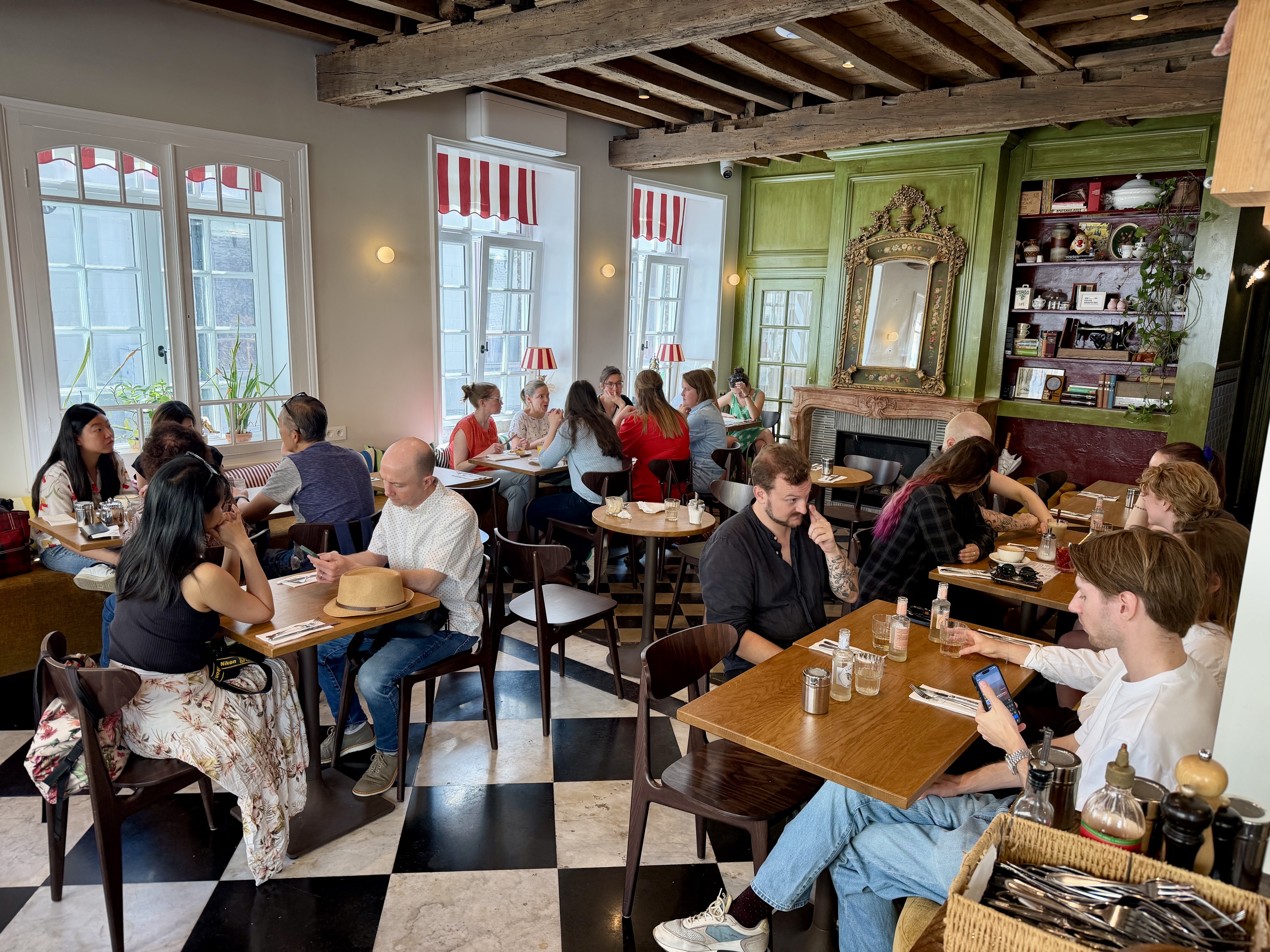
The thing my Bruges guides had always lacked, with the exception of Kottee Kaffee, was places to go for lunch. Not a three course lunch, or a set menu, but a genuine lunch: you know, a single dish, a sandwich or a salad, with coffee. So in January 2025 I endeavoured to redress that by heading to Sanseveria Bagelsalon, a place I’d heard of many times but never got round to visiting.

It was just round the corner from my hotel, and I loved it. It was small and cosy and yes, it only really did bagels. But beyond that the number of variations on that theme is impressive, with good options for vegetarians and vegans. I think bagels have fallen out of fashion somewhat in the U.K., but my lunch at Sanseveria made me think we were missing out.

This wasn’t a mingy, dense supermarket bagel. It was a huge, golden, sesame-speckled brute of a thing, and mine came with very good, buttery avocado and crispy ribbons of hot, just-fried streaky bacon. The menu said it also came with black pepper, which I thought nothing of, but the way it had been deployed managed, in the immortal words of Brazzos, to send the investigation into a whole new direction. Zoë’s bagel, with brie, bacon, walnuts, apple and honey, was apparently equally ambrosial.

The coffee was decent, if not top tier, and the freshly squeezed orange juice was sweet and very welcome. But the other thing I have to say about Sanseveria is that the chap’s work ethic was amazing. Just one guy, taking orders, making drinks, prepping bagels and then scuttling into the tiny kitchen out back to cook bacon, or toss cubes of butternut squash in a frying pan. I felt a little tired watching him, but also grateful and, if anything, slightly in awe.

I have been back on every Bruges trip since. In October 2025, battling what I thought was a hangover but turned out to be a cold, I had a solo lunch there on my last day in the city. And then this month I returned with Zoë, again on our final morning, to discover that they’d moved across the street into a much bigger site, but one retaining all the charm (and plenty of the objets) from where they’d started out. I had exactly the same bagel, the same freshly squeezed OJ, the same coffee. They’ve still got it.

Sanseveria Bagelsalon
Predikherenstraat 10-12, Brugge
https://www.sanseveria.be/en

20. Bar Lowie (2026)
One of the reasons Bruges doesn’t really have many pure cafés, with the exception of the ones in the second half of this guide, is the popularity of brunch spots. Honestly, Bruges has loads of them, and after a while they seem to be interchangeable. They all do sandwiches and avocado toast and waffles, and sometimes the only thing that seems to be different is the name. There are the prosaic (That’s Toast: it does toast), the pretty (Blackbird), the nominative (Balthasar, or Margritte) and the slightly ludicrous (one is honestly called The Novel).

I walked past a spot on my recent trip where a bar used to be, and it had reopened, with the same Kartell furniture, as “Toast by Liza”. And I’m sure it’s nice and all, but I looked at the name and thought you really want to be eponymous with toast?

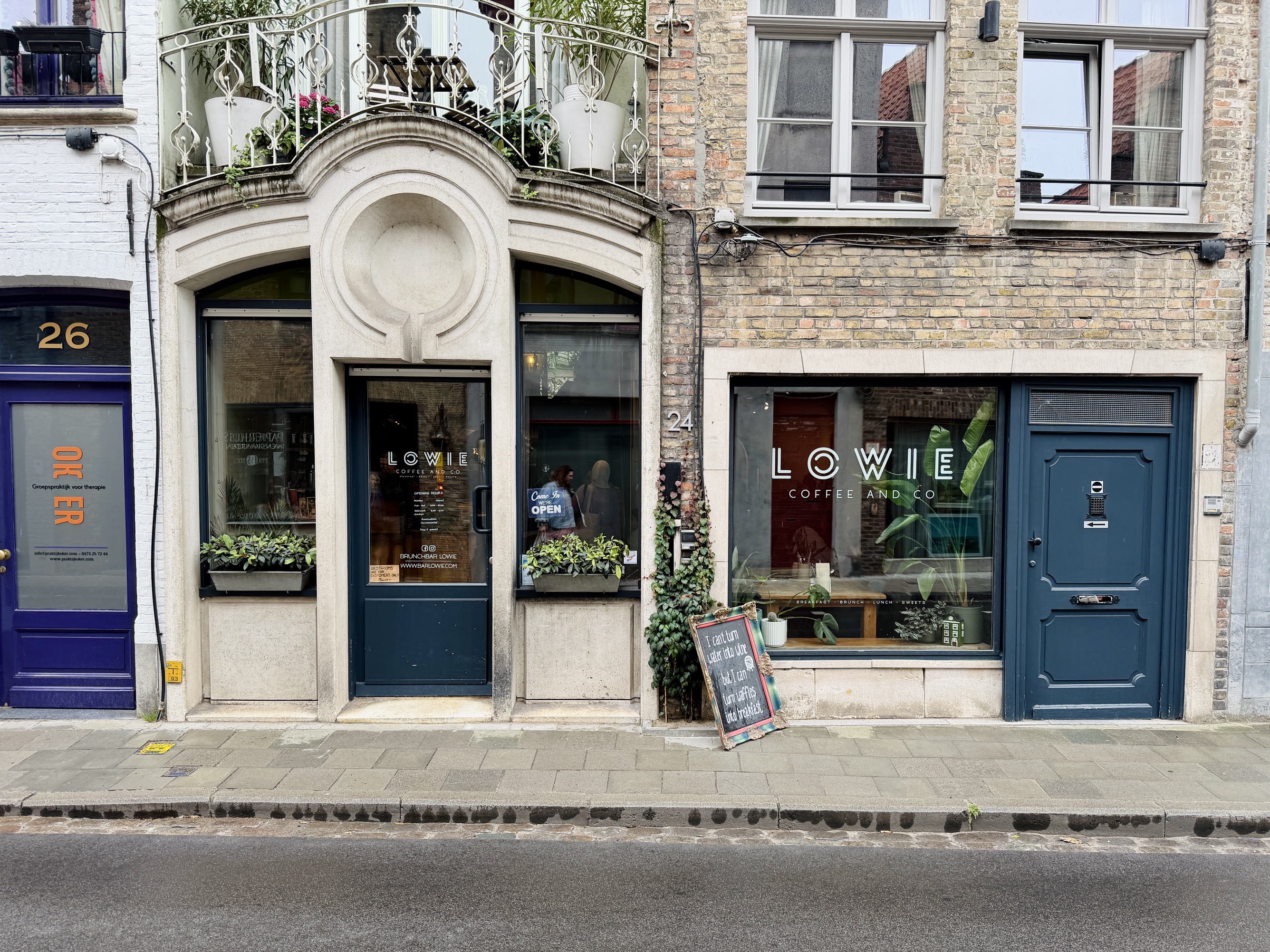
Anyway, I had brunch on this trip at another of those places, Bar Lowie, and it made me wonder whether this whole genre exists because plenty of places are very good at it. Because Bar Lowie was lovely: it had a very tasteful inside space and a courtyard for the sun (which we had) and a retractable canopy (which we soon needed, because the heavens opened).

And the brunch options were by and large pretty good. I rather liked my barbecue chicken waffle, although it was slightly undersauced, underchickened and overwaffled, if you catch my drift. But Zoë had a tuna and sriracha thing on toasted sourdough, and she enthused about this comparatively humble lunch for the rest of the holiday. She would have gone back, if she could. 

Add in bright and effervescent service, thoroughly decent coffee, delicious ginger shots and an outrageously good hot chocolate that we only ordered because we were waiting for the rain to abate, and you have a winning formula. I’ll tick off another brunch place in Bruges next time, but Bar Lowie has set a standard that will be hard to beat.

Bar Lowie
Eekhoutstraat 24, Brugge
https://www.barlowie.com

21. Oyya (2026)
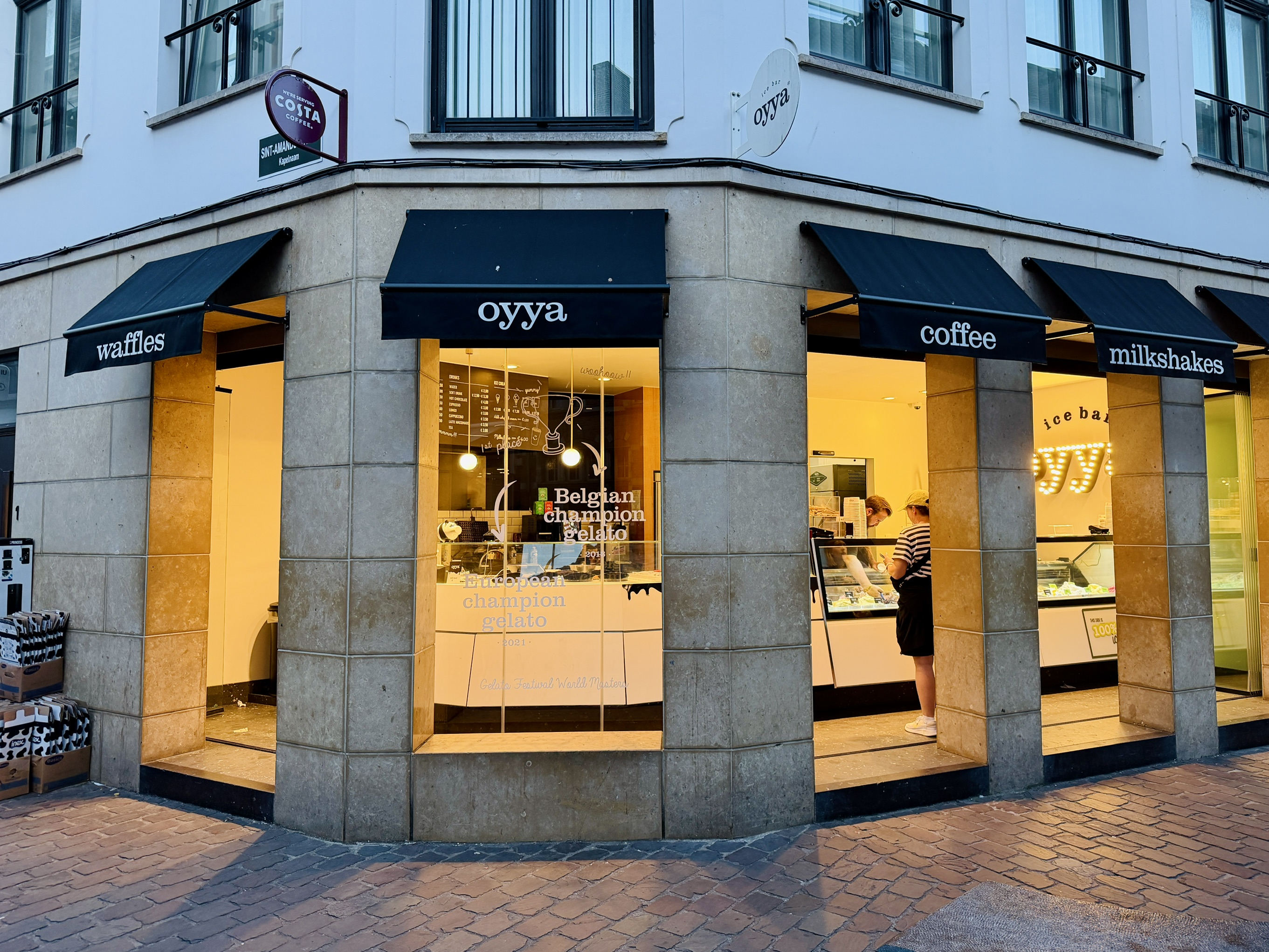
I always like to include an ice cream venue in my city guides but, until this year, that’s always eluded me for Bruges. You actually have the Bruges subreddit to thank for this recommendation: I asked them where the best spot in the city was, and everybody was really helpful and friendly. The two recommendations I got are opposite one another in the main shopping centre of the city, old-school Da Vinci and up and coming Oyya. Both stay open until late – god bless the continent – and when I reached them with dairy on my mind the queue for Da Vinci was huge, so Oyya it was.

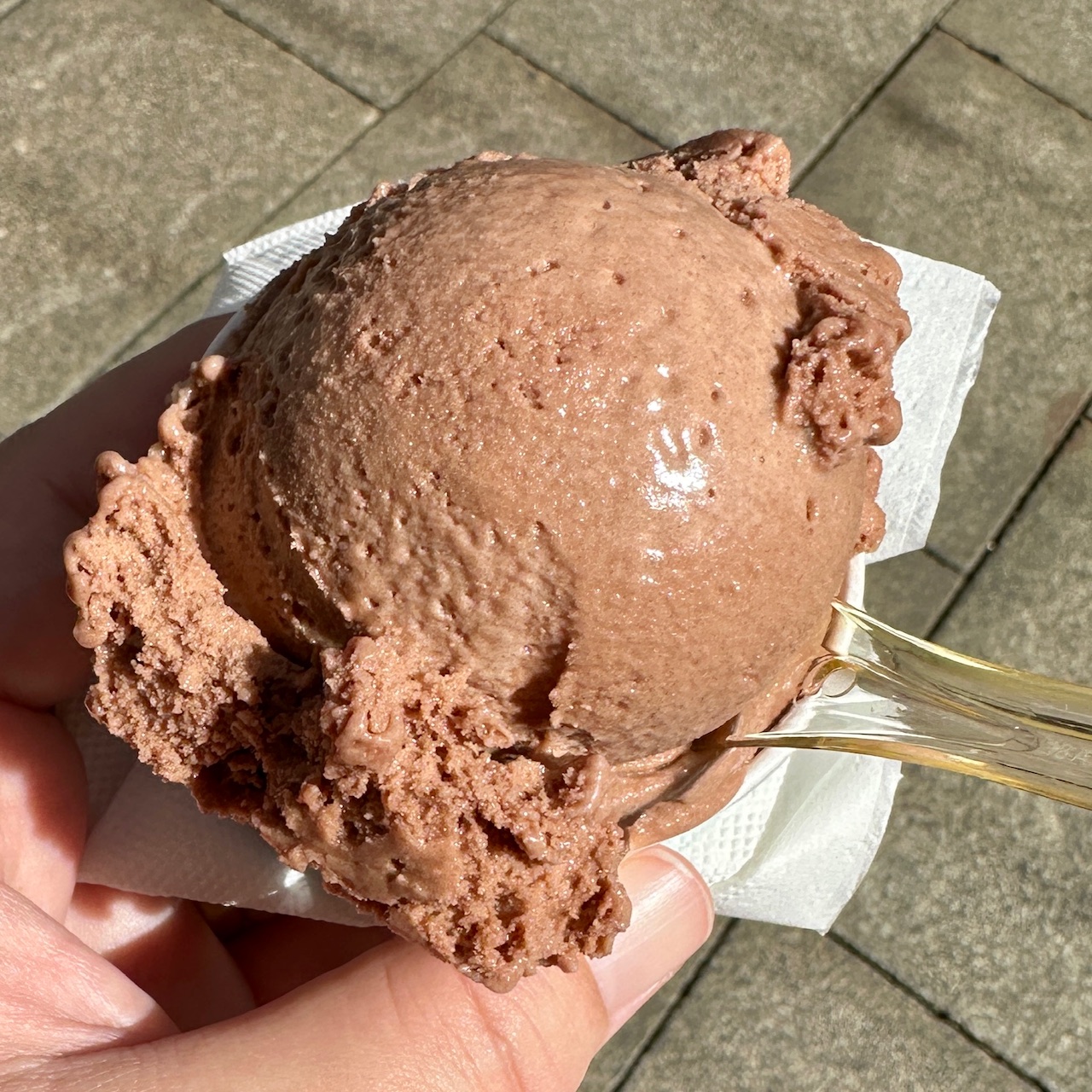
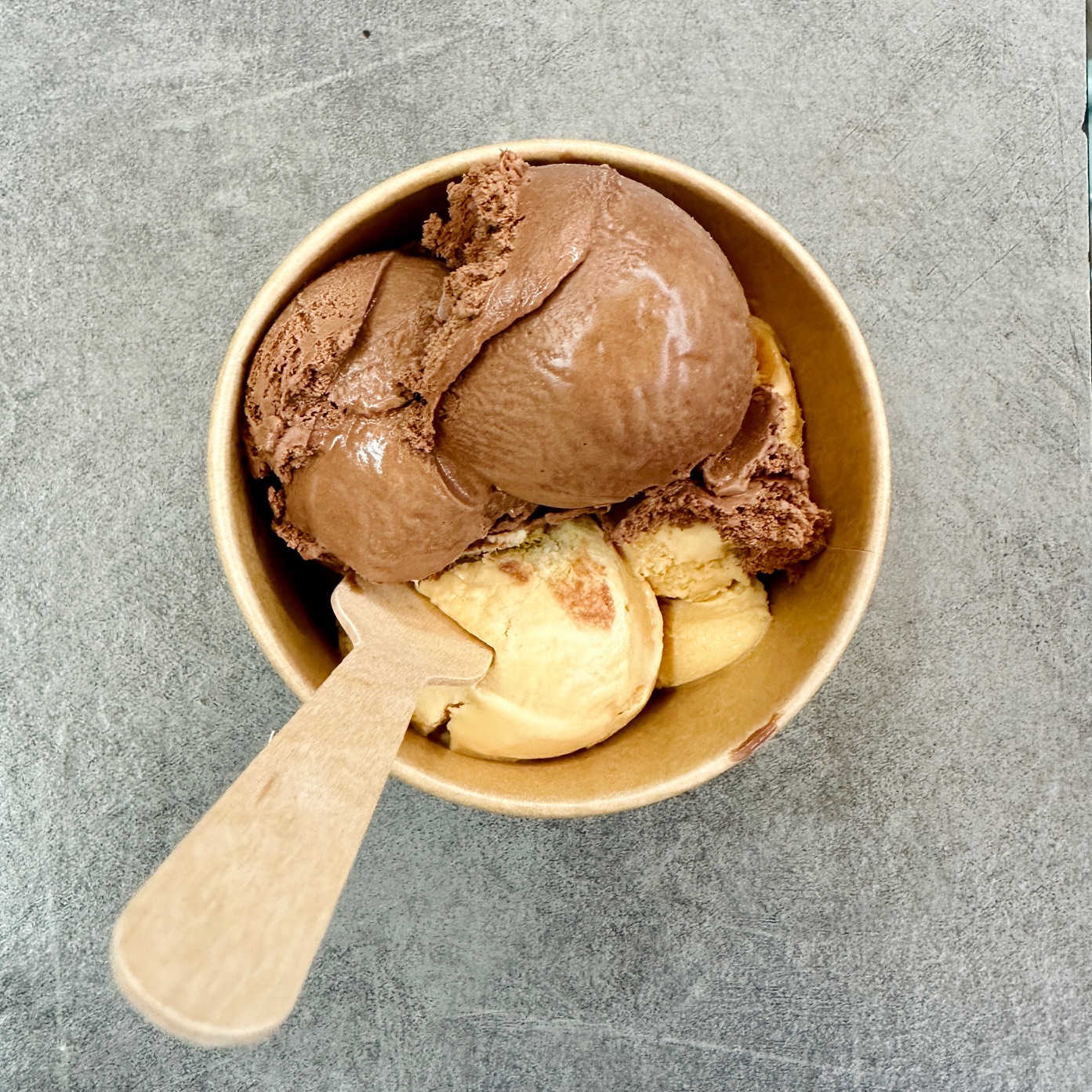
I have no complaints, though. Oyya’s chocolate and salted caramel gelato were both up there with the best of what I’ve had on my travels, and Zoë raved about her chocolate brownie gelato – as in, would go back and try it again at the drop of a hat, no need to sample other flavours. Oyya is a small chain, with two branches in Ghent and a truck in the summer months, and I was delighted to be eating there rather than some generic waffle and squirty cream emporium.

Here’s how small a world it can be: I put a picture of Oyya up on the Bruges subreddit to say thank you for the advice, and I got a message from a chap called Fred.

“Super random but I just saw your post asking about the best ice cream in Bruges. I’m the guy with the beard in the picture you posted in the comments! Hope you enjoyed your icecream!”

I did, as it happens, and Fred was quite lovely.

Oyya
Noordzandstraat 1, Brugge
https://oyya.be

22. Frisson (2026)
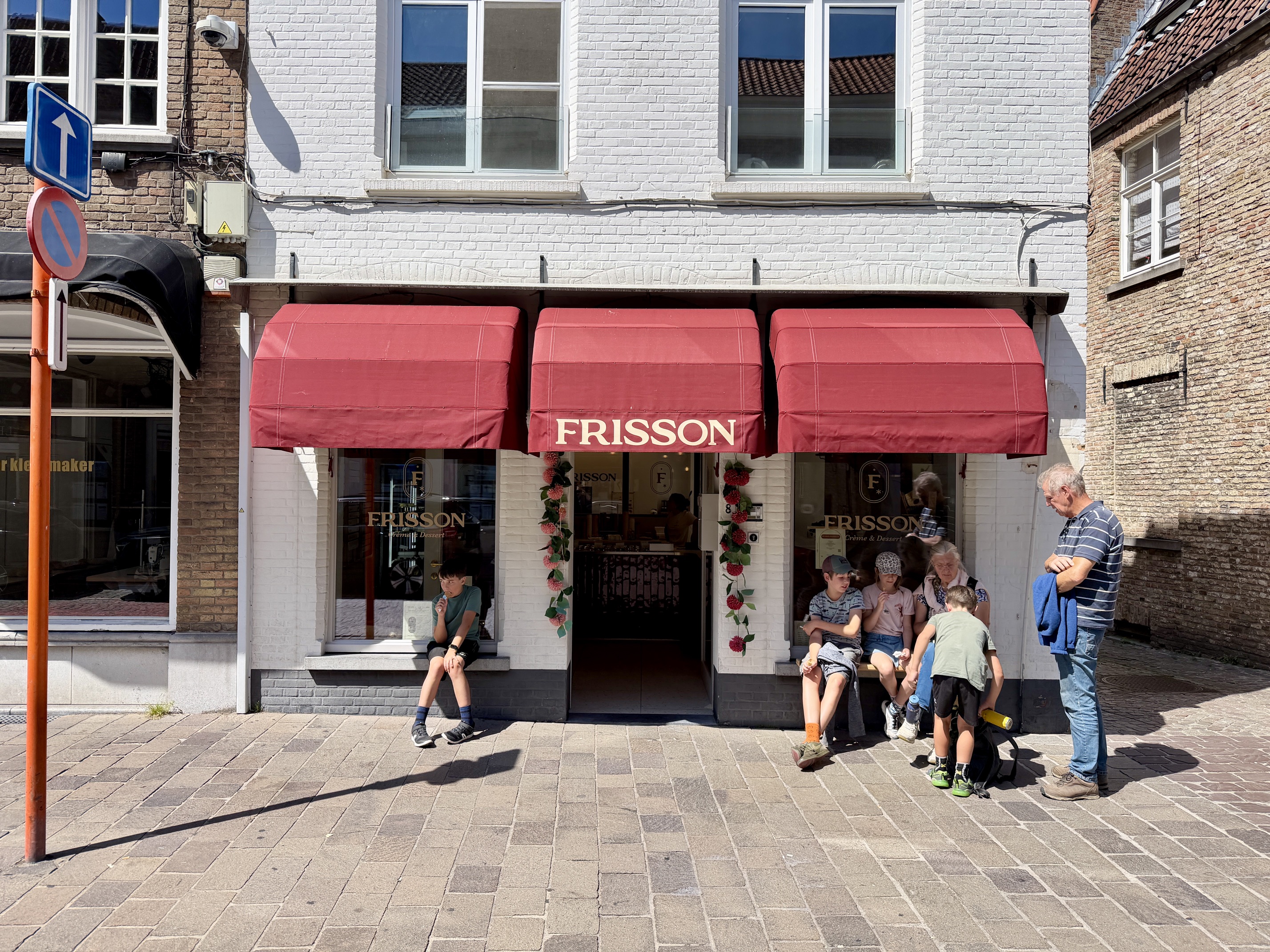
I always like to include an ice cream place in my city guides and, to make up for letting Bruges readers down to date, in this guide you get two. The splendidly named Frisson is just the other side of the Zand, not far from the likes of TouGou and Bernie’s Beer Bar, and is excellent and enormously likeable. It looks like it’s been there forever, but actually it only opened last year at the bottom of Smedenstraat, one of my favourite little pockets of Bruges.

Like Oyya and Da Vinci it opens late (until 10pm in this case) but I went there mid afternoon in the blazing sun with Zoë and we ate our bounty in delighted silence on a bench a little further up the road. I think Frisson’s chocolate ice cream might have been even better than Oyya’s, but just as impressively they served a fior di latte gelato, which I always take as a sign of supreme confidence in your product. It was utter bliss.

I might go back even in the winter and, if I do, I promise not to smirk at the fact that they sell a product that looks like a jar of chocolate truffles under the name Crème-Knikkers (on reflection, I may not be able to promise that).

Frisson
Smedenstraat 8, Brugge
https://frissoncreme.be/eng/

Where to drink

1. ’t Brugs Beertje (2026)
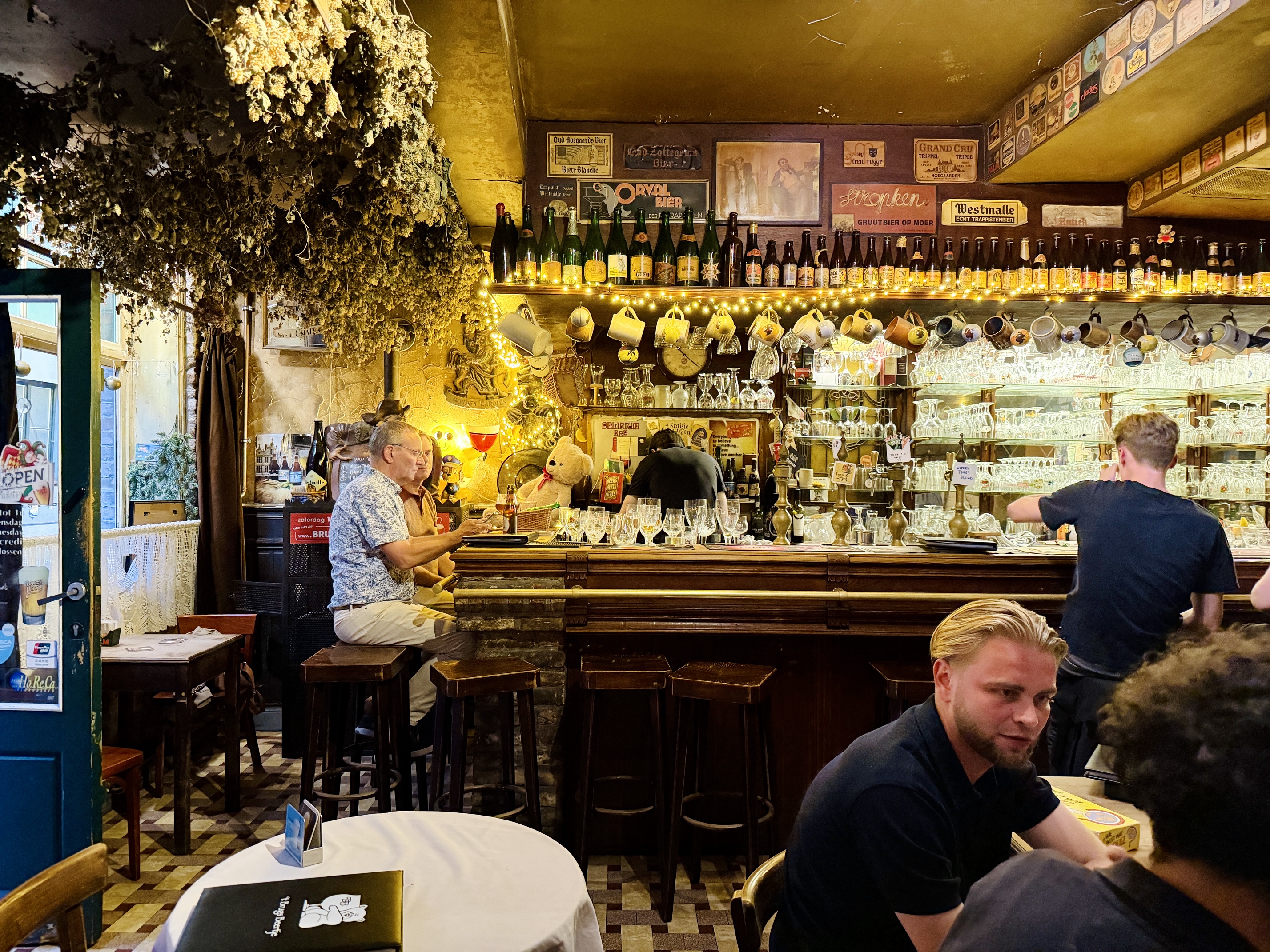
It’s criminal, really, to wait this long in the city guide to introduce the best pub in the entire world. I can only apologise. ‘t Brugs Beertje, The Little Bear, is the Belgian pub elevated to its ultimate form, a miracle of a place seemingly plonked on a side street out of nowhere. You could think it was a mirage, wandering up to it. And it makes me positively aggrieved that anybody might visit Bruges without having at least one drink there, if not more, so I am determined to make sure, if I can, that this doesn’t happen to you. It’s closed Wednesdays, by the way, so don’t go then.

It is a cathedral of Belgian beer, more so than anywhere else on this list. It usually has half a dozen interesting choices on tap but the real motherlode is the bible, the eye-wateringly huge and brilliant list of bottled beers which, on my last visit, had been treated to a makeover and a jazzy new dark cover. It includes nearly all the beers you can get in all those other places, many Belgian breweries I’d never heard of and a “vintage” section which gives you the chance to try dark beers and lambics which have been properly nurtured and sheltered across the best part of a decade.

My favourite drink on their list, since you asked, is an aged imperial stout, a Cuvée Delphine from 2013 by De Struise which has the kind of depth and complexity the uninitiated – which, for a long time, was me – wouldn’t necessarily associate with beer. I make sure to have one on nearly every trip to Bruges, and I’ll be sad when that well runs dry.

But the Little Bear is more than its beer. It is decades of tradition and reverence, now under the custodianship of owner Dries. And it’s random conversations and people watching and, for me, it’s also now the accumulation of every happy evening I’ve ever spent there. And there have been many: I visited on my first ever trip to Bruges and, apart from one time when I took ill on holiday, I’ve been back on every trip since, usually more than once.

The other places in this guide are great for a beer, better still for two, but the Little Bear is where you go for all the remaining drinks before you wend your way back to your hotel. It doesn’t have lock-ins per se, but I have no idea when it closes. I’ve never been the last to leave, which is a life goal to leave on the list. On one particularly beautiful evening there we settled up, well past midnight, put our coats on, stepped through the front door, looked back at the golden light shining out of the windows and thought what the fuck are we doing? We went back in for one last nightcap.

You can nearly always find space in there, because it’s a little like a Tardis. They have a back room they open up when it’s busy, and I’ve spent several boisterous evenings there in bigger groups – with my combined stag and hen do, or that time a bunch of us surprised our friend Brendan for his fortieth birthday, all turning up in the pub when he thought he was just having a romantic break away with his wife. I’ve loved that, sitting with a raucous gang of beer obsessives, all picking their deep cuts from that gigantic beer list, congratulating one another on their choices, swapping anecdotes and jokes. Those nights are the very best of life.

The middle room – complete with plaque to original Belgian beer spod Michael Jackson (not that one, a different one) – is nice, but the front room is my favourite place in Bruges. It’s where I love to be, at a table with my favourite person, making inroads into that excellent list, in no hurry to be anywhere else. It reminds me of the Retreat, Reading’s iconic pub, in its previous incarnation under Bernie and Jane when it stocked shedloads of Belgian beers, and always the right glasses to go with them, and it made me miss all that. If only I’d been a Belgian beer fan, back then.

Before I went I don’t think I understood the hushed tones with which Zoë and her beer fraternity referred to it. How good can it be? I thought. It’s just a pub. Well, that shows what I know because it’s not a pub, it’s the pub, and since I’ve been I’ve compared everywhere else to it, in some way.

Some places, like Oviedo’s Cerveceria Cimmeria, Granada’s Capitan Amargo, Glasgow’s Laurieston – or Reading’s very own Nag’s Head, for that matter, share its lineage and have echoes of its magic. All those places are my kind of wonderful, and I can’t wait to go back to each and every one of them. But there’s only one Little Bear. I’m fairly sure that if George Orwell had got to visit, through some wormhole in space and time, he would never have written “The Moon Under Water”. Instead he would have penned a paean of praise to the Little Bear, one far better than this. But he’s long gone, so this will have to do.

’t Bruges Beertje
Kemelstraat 5, Brugge
https://www.brugsbeertje.be/en/home-2/

2. De Garre (2026)
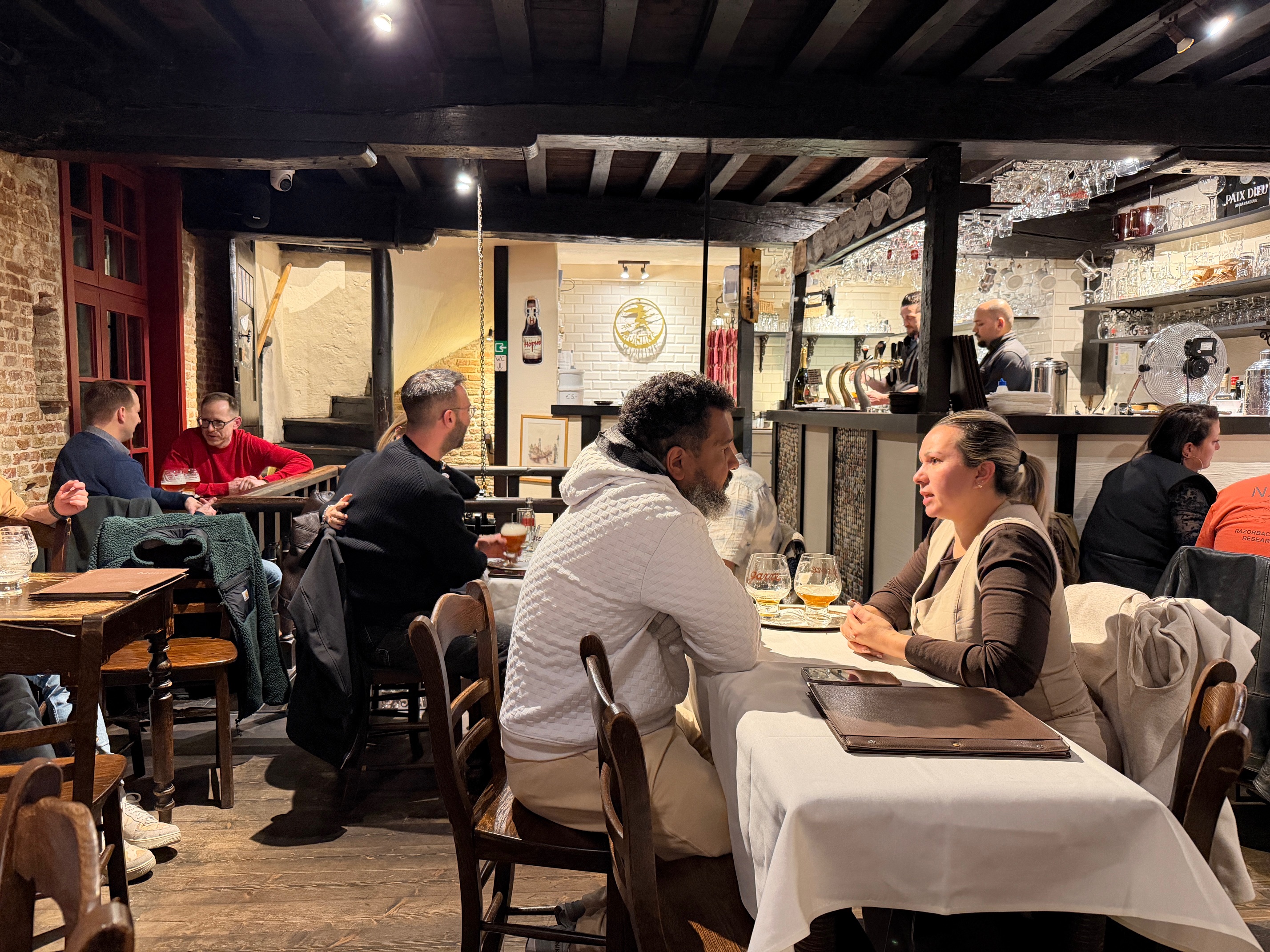
De Garre is right in the centre of Bruges, up a little alley just off Breidelstraat, the road that connects the city’s two grandest squares, the Markt and the Burg. That’s what ‘de garre’ means: the alley. It feels completely hidden away, hiding in plain sight in the heart of tourist territory and yet somehow not sullied by the droves flocking to the chocolate and waffle spots metres away on the main drag.

Head through that unremarkable door in the alley and you can grab yourself a table on any of their three floors. Make your way up the steep stairs and you’ll be rewarded with a drinking experience unlike anything else. Classical music wafts through the rooms and most tables are enjoying the Tripel De Garre, a house beer brewed exclusively for the pub by Brouwerij Van Steenberge and only available on draft there (a few select Bruges restaurants offer it in bottle, but not many).

The likes of Pellicle have already waxed lyrical about De Garre, and that beer and its distinctive, fishbowl-like heavy-bottomed glass. They’ve done all the stuff about how the beer is poured effortlessly so the name of the beer appears as if written in the foam of the thick, creamy head, in prose purpler than I can manage, or would want to.
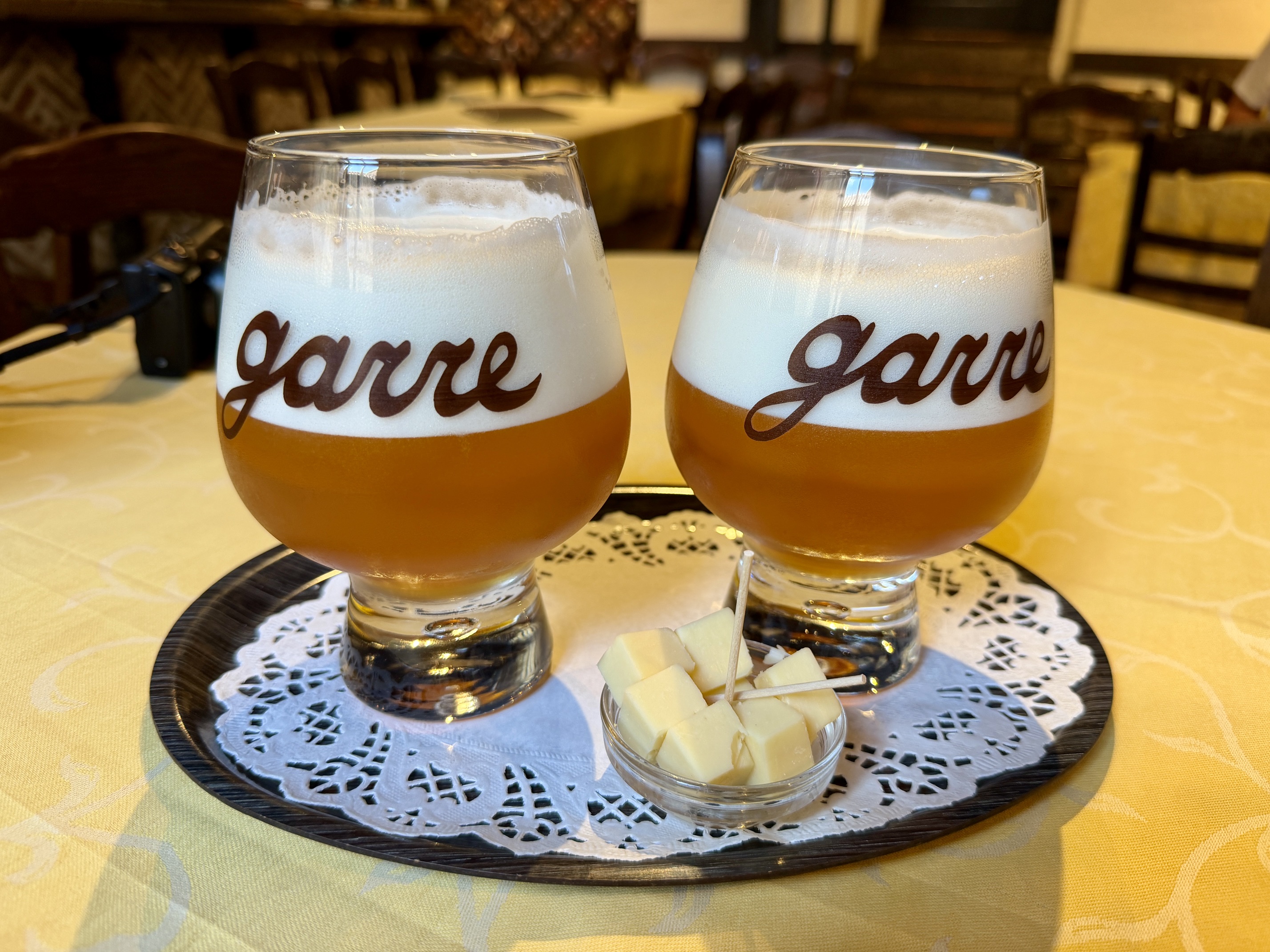
But they, and everyone else who raves about De Garre, are right. Because there is something about that beer, only available in that place, in those rooms, in those glasses, that is somehow magical, like you are experiencing one of the wonders of the modern world. It’s wickedly strong stuff – 11% – and they limit you to three of them, but there is something about seeing that oval tray turn up, complete with paper doily, two spectacular glasses and a little dish of cubed cheese that feels like the most incredible still life you’re not only allowed but positively encouraged to consume.

I have to be honest and say that although I’ve been to De Garre many times, usually for just the one, I don’t think I ever really “got” it. It was only on my October 2025 visit when I went with Dave, a De Garre fanboy and a Tripel De Garre addict, and we spent a proper evening settled in on the first floor that I finally appreciated what the fuss was about. I do think, really, that you have to like that beer – I don’t think I saw a single table without at least one of those telltale glasses on it – but if you do, De Garre is positively unmissable.

Remember what I said at the beginning about Bruges’ erratic opening hours? De Garre is a prime example, and many’s the time I have wandered up the lane to find the Doily Of Despair stuck to the door announcing that the owners are on holiday. On my most recent trip it was there, announcing that they were closed due to extraordinary circumstances, but the rest of the week they were open, although for reduced hours because, well, De Garre does that kind of thing. If you go, and you find it open, make the most of it because that, like the ready availability of beer as good as their tripel, can’t be taken for granted.

De Garre
De Garre 1, Brugge
https://degarre.be

3. ‘t Hof van Beroep (2026)
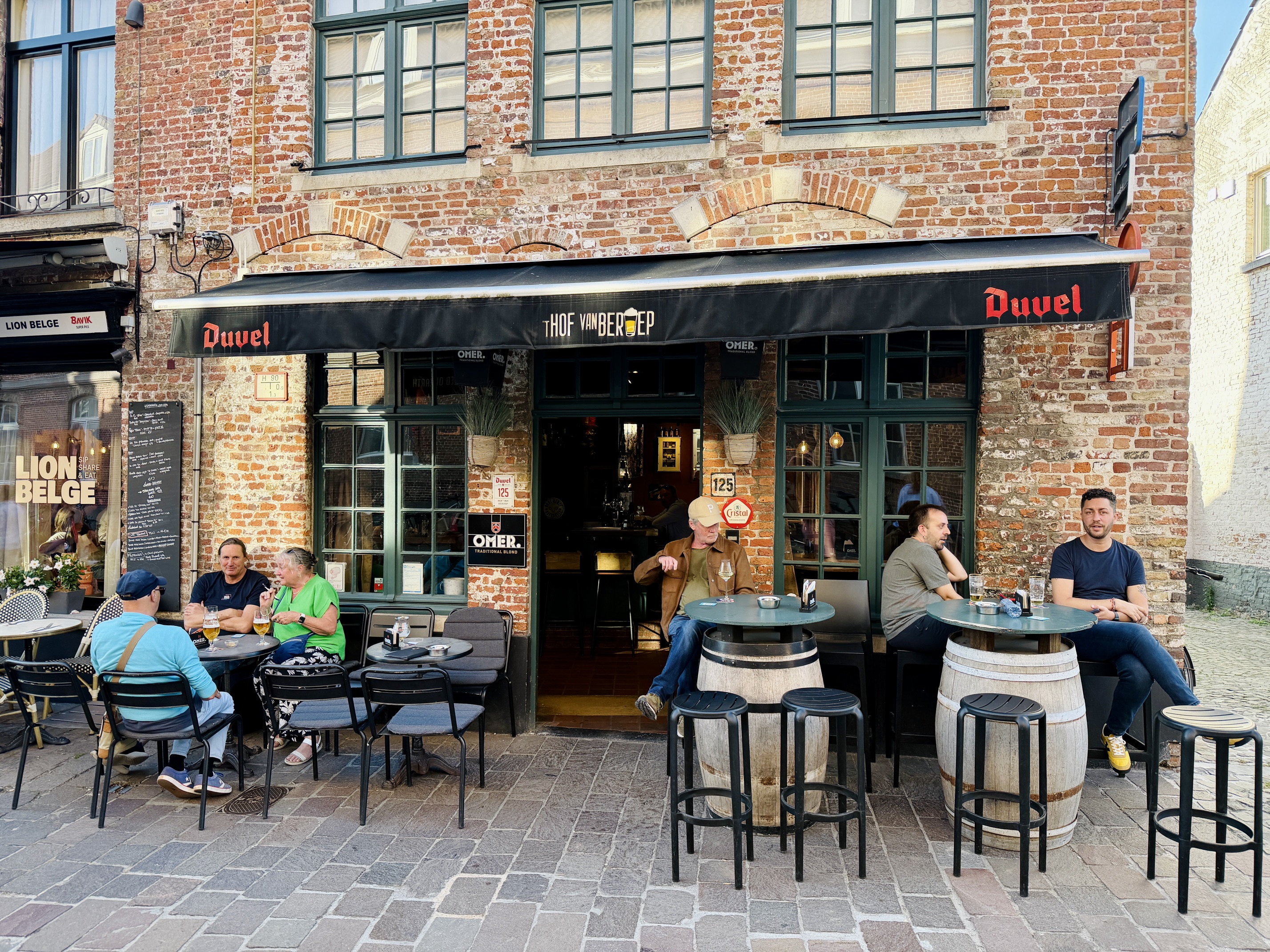
On my visit to Bruges in late 2025 I ate at Lion Belge but I didn’t check out ‘t Hof van Beroep, the pub next door. Returning this summer, I’m convinced that I missed out. My research suggested that it was more of a locals pub, with perhaps limited appeal, but that was mistaken.

It is in fact a properly gorgeous spot, and a triple threat. In summer, sitting outside on the pavement with a beer affords you some of the best people-watching opportunities in Bruges with people ambling or cycling past in the sunshine, into the city or out past the canals. There’s a beautiful enclosed terrace out back, another of those pleasant surprises that places in Bruges seem to revel in concealing. And the inside is really easy on the eye, warm green and brown panelling, handsome high tables and stools with backs.

The beer list is excellent too – well-curated with an eye to some of the more interesting breweries that Bruges’ mainstream crowd-pleasers sometimes overlook. They have a pale brewed especially for them by Circus Brouwerij, but when I went I tried beers from some of my favourite more modern Belgium breweries: BramBrass; Dok Brewing; Brouwcompagnie Rolling Hills. All of it was fabulous, and because they are verified on Untappd I had the whole of their extensive list at my fingertips.

It reminded me, in some ways, of one of my very favourite Belgian pubs, Ghent’s peerless Gitane, and If I’d discovered it earlier in the holiday I would have gone even more often. Maybe not a locals pub, but a pub where you could kid yourself that you, too are a local. I’ll be back next time, when the nights are shorter and that inside space looks even more inviting.

‘t Hof van Beroep
Langestraat 125, Bruges
https://www.thofvanberoep.com

4. De Kelk (2025)
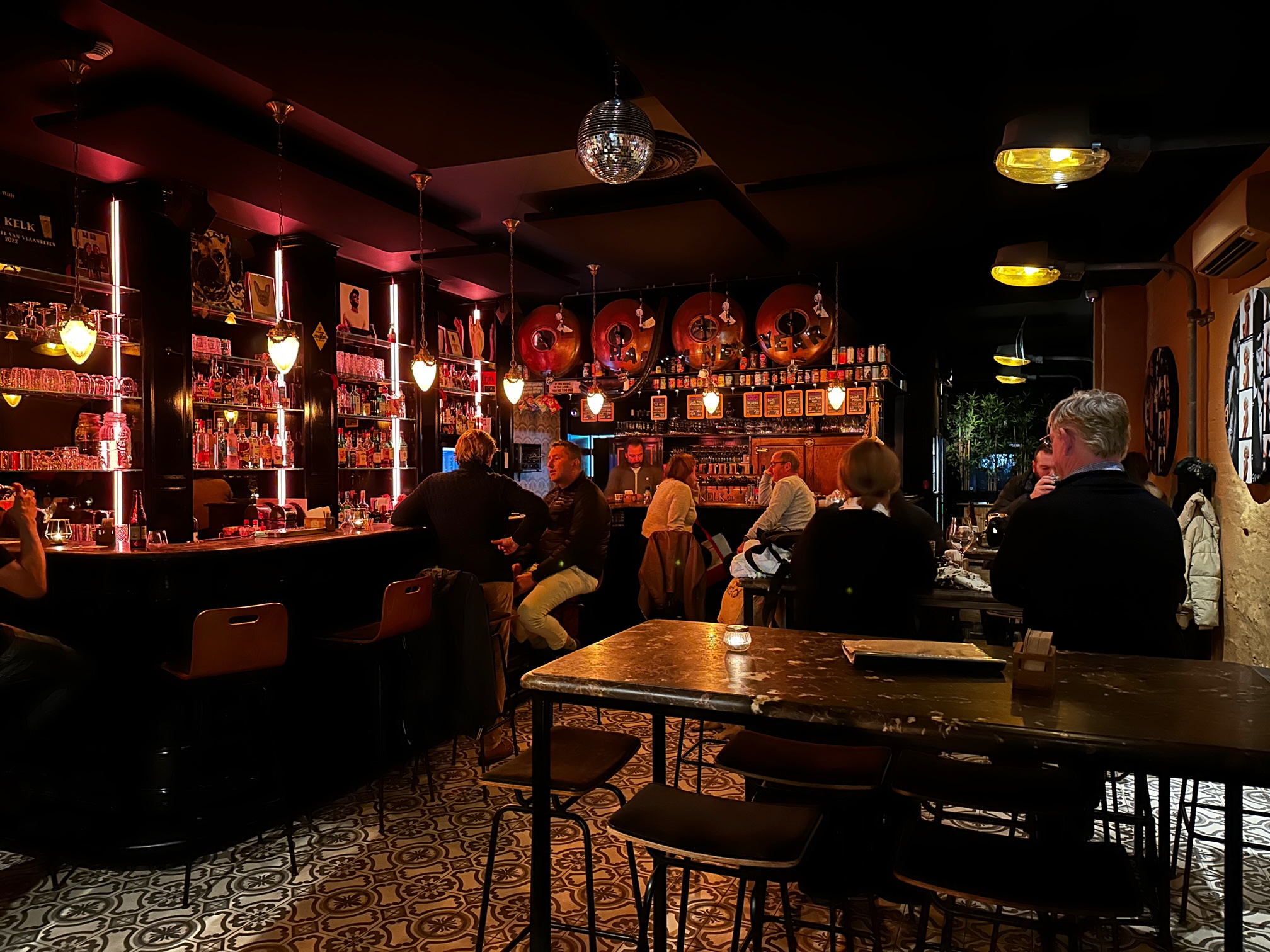
De Kelk, closer to town than Lion Belge and on the other side of the road from Cherry Picker, further down this guide, isn’t like the other beer places on this list. Although it does have an excellent range of Belgian beer, the list leans more towards the wider craft scene with fascinating beers from breweries I’d never come across before. I tried a couple of beautiful DIPAs from Madrid’s Cerveceria Peninsula and Latvia’s Ārpus, and if I’d stayed longer there was plenty more to explore. Their bottle list contained countless imperial stouts I would dearly have loved to try.

The interior is striking too – a far cry from Belgium’s more traditional pubs with a tiled floor, high leather stools and lighting that’s more speakeasy than boozer, with some random streetlights used to good effect. I also loved the bar snacks, which included some disgraceful keesballen and very creditable jamon serrano. I went back in January 2024, January 2025 and October 2025 and if anything it cemented its place in my affections. I was especially delighted to see a beer by Spanish brewery SOMA, from Girona, whose IPAs I have loved in both Granada and Oviedo.

Normally I go to Bruges with Proper Belgian Beer Enthusiasts and it’s hard to lure them into De Kelk because it’s more my bag than theirs; I think they feel like going somewhere that does the cream of European craft beer when you’re literally drinking in the OG of craft beer is missing the point. I get it. It’s brave to be like De Kelk in a city full of brown pubs and Belgian beer. But personally, I wish them every success.

De Kelk
Langestraat 69, Brugge
http://www.dekelk.be

5. Bernie’s Beer Bar (2026)
It can be a challenge getting a decent beer before around 4pm in Bruges. Many of the places in this guide open around that time – De Garre notwithstanding – and if you want a beer just before or after lunch it can be tricky. On previous visits I’ve tried a place called The Pub, which is central and has a decent range but wasn’t my kind of thing, or De Windmolen, which has featured in previous editions of this guide.

But De Windmolen is on the edge of town, and an afternoon tripel at De Garre might wipe out the rest of the day. So where else? I faced this exact dilemma in October 2025 when I reached the centre of the city with my suitcase, fresh off the train from Brussels Midi, keen for a sharpener before checking into my B&B. Fortunately Bernie’s Beer Bar – a spot off the Zand, the large linden-lined square with the concert hall at one end – came to the rescue.

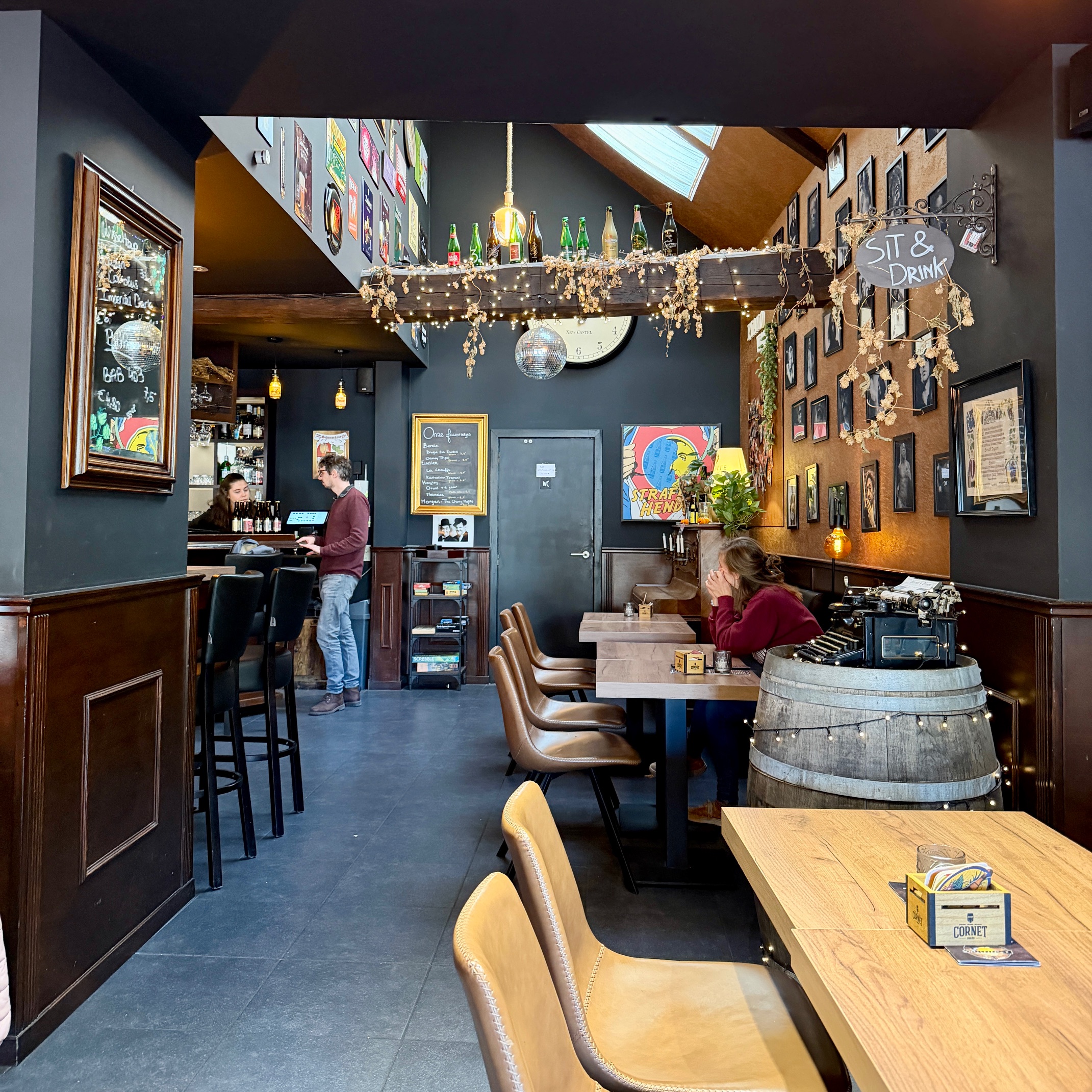
The interior had plenty of character, like a modern updating of the traditional brown pub that didn’t veer into kitsch or airport Wetherspoons – far more the thing than, for instance, The Pub had been. The range of beers was excellent with a good range on tap, many of them from De Halve Maan, so my first beer of that trip was their iconic triple. But there was also a regularly rotating guest tap and, if you’re into your lambics, a great range of sharing bottles from the likes of Cantillon and 3 Fonteinen. 

Returning this summer, I liked it even better. Service was just a little bit sharper and even more friendly, and sitting outside with a beer looking out on all those long shadows was a fantastic way to while away the first hour of the evening. My bottle of Jack’s Precious IPA slipped down nicely, and when we moved on to another bar to explore it wasn’t entirely without regret.

They also do light nibbles – the keesballen are good – and to put this in context it’s not far from TouGou, if you fancy a pre or post-lunch drink, or Frisson, if you fancy a pre or post drink gelato.

Bernie’s Beer Bar
Vrijdagmarkt 16, Brugge
https://bernies.bar

6. Cafe Vlissinghe (2026)
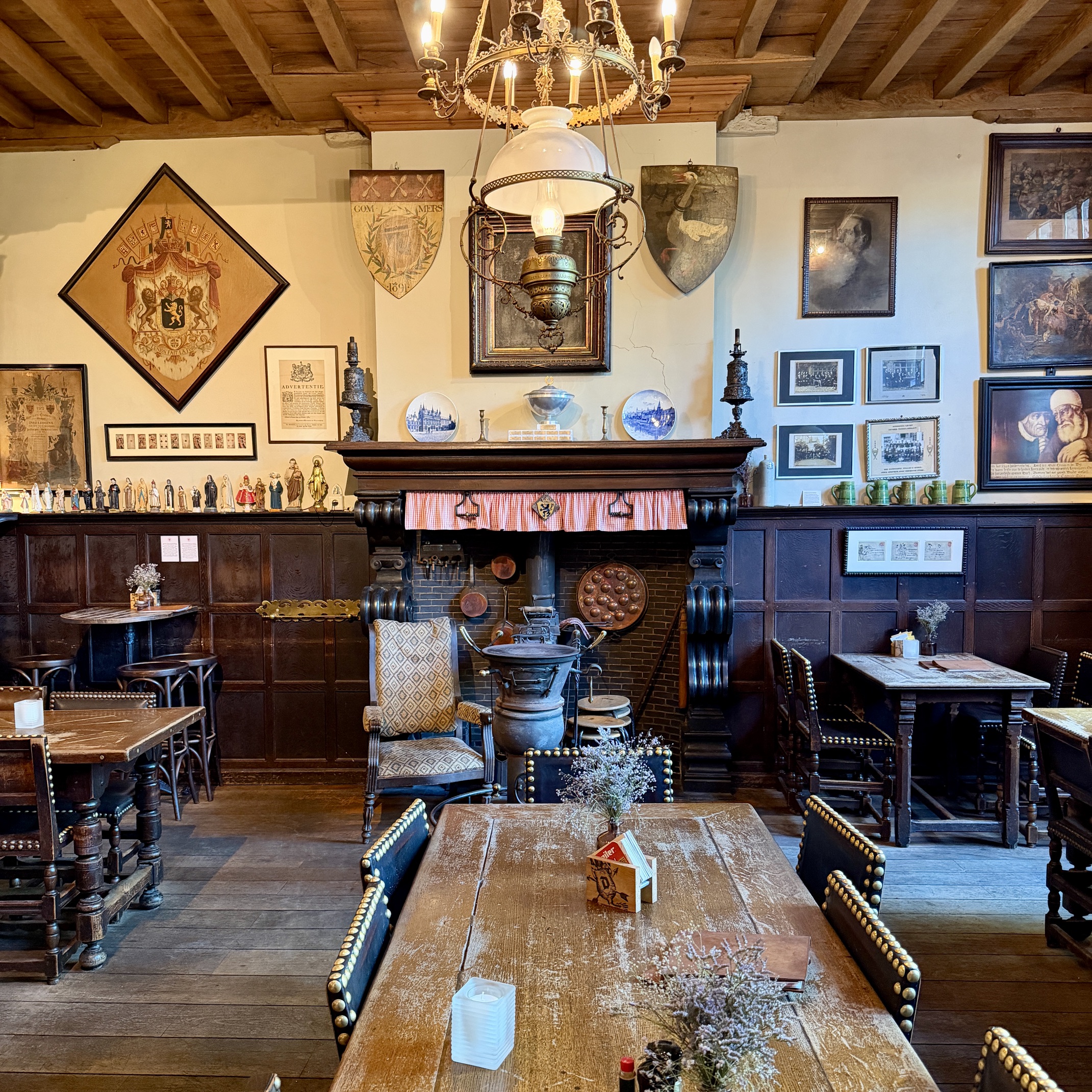
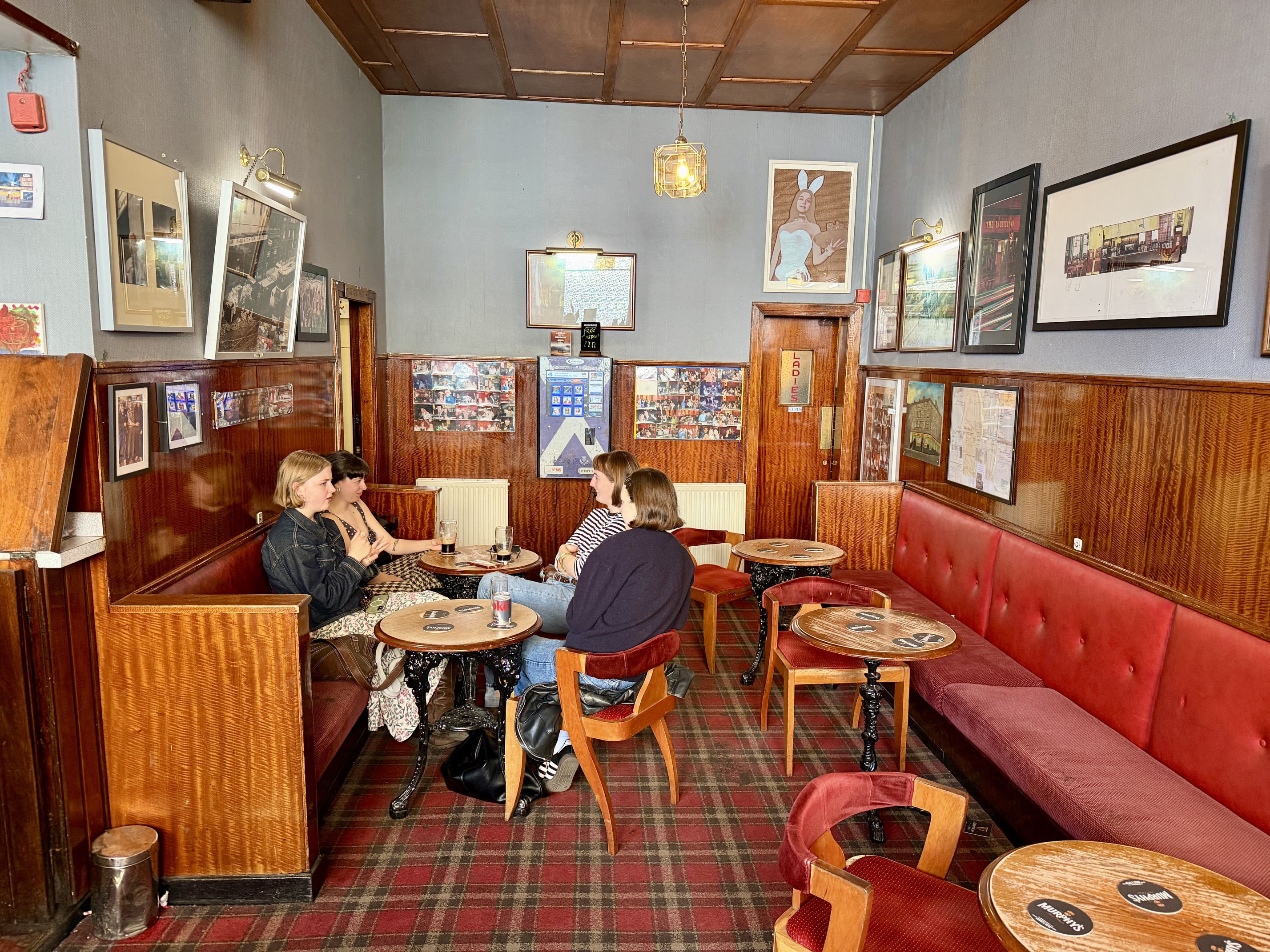
Café Vlissinghe (pronounced ‘fliss-singer’ – you’re welcome, I got it wrong many times) is famous for being Bruges’ oldest pub and one of the oldest pubs in the world. It’s been there since 1515, and the inside is so attractive that the staff have to put signs up reminding you that it’s not enough to wander round taking photos: they do rather expect you to have a drink.

Which is fair, I think. Although it’s beautiful inside it’s also a lovely place to stop for a beer. They have one brewed especially for them by Bruges brewery Fort Lapin – you can only get it there – and it, along with the interior, is reason enough to stop there. I’ve done so before, on my many winter visits to Bruges, and I quite liked Vlissinghe but I didn’t love it. I think that’s because, during the day at least, the place is invariably rammed.
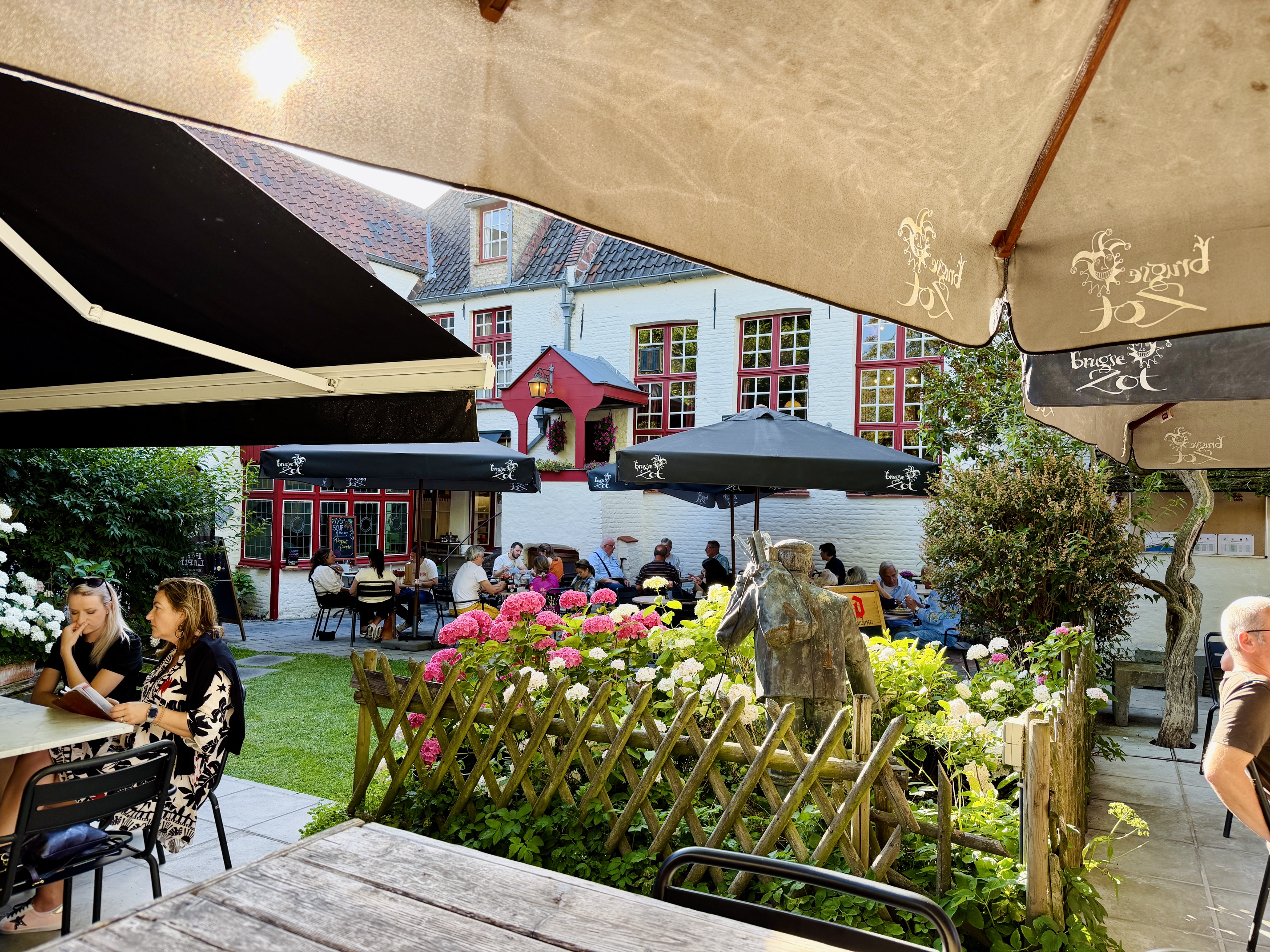
All is not, however, entirely what it seems. The interior was extensively renovated in the nineteenth century, so it’s old but not old like Nottingham’s Ye Olde Trip To Jerusalem, or The Royal Standard Of England in Beaconsfield. And it’s an urban myth that Rembrandt used to drink there: he could have done, but there’s no evidence that he actually did. Sorry to piss on your frites.

It’s in the summer this time that I grew to love Vlissinghe, though. Because that garden out back, which I’d only seen misted in the cold or lashed with drizzle, emerges from its cocoon in the summer months as a beautiful butterfly of a place. Plenty of tables in the sunshine, people outside having a wonderful time in one of the most venerable boozers in Europe, with great beer and a view of a very attractive building in the sunshine. Just don’t eat there: it’s not worth using up one of your lunches or dinners there, because the food is no great shakes.

Cafe Vlissinghe
Blekersstraat 2, Brugge
https://www.cafevlissinghe.be/vlissinghe_UK.html

7. Parazzar (2026)
If you walk west out of the centre, over the Zand, past Bernie’s Beer Bar and Frisson and TouGou (assuming you can avoid the temptation to stop in any or all of them) and you keep walking down Smedenstraat, within a couple of minutes you will reach Smedenpoort, another of the surviving ancient city gates: this one was rebuilt in the fourteenth century. And if you walk through it and keep on going, in a little over five minutes you reach another fantastic spot where you are unlikely to find any tourists, Parazzar.

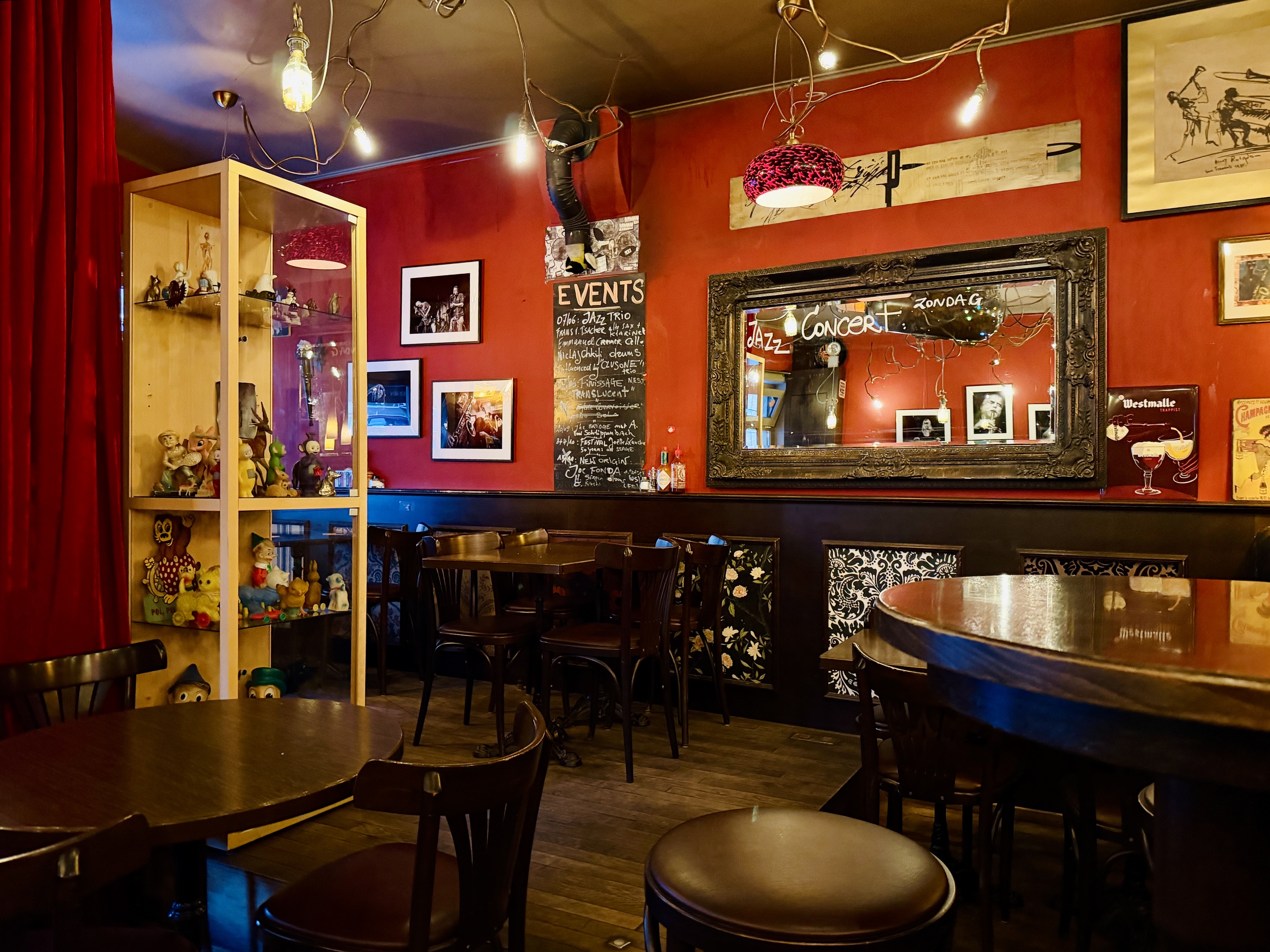
It’s a lovely little pub, as cosy as they come, a classic brown café with deep red walls, jazz paraphernalia everywhere and, rather incongrously, a yellow display cabinet with the Teletubbies in it for reasons which never became clear. But ignore the Teletubbies – I rather wish I’d never mentioned them – and focus on the welcome and the beer, both of which are worth the walk out of the city. Again, we are in locals Bruges here but we weren’t made to feel anything less than regulars.

The owner who served us – immaculate, gorgeous spectacles, a touch of James Hoffman about him – looked after us brilliantly and, not for the first or the last time in Bruges, I wished I had a local back home that felt like Parazzar to drink in. The beer list isn’t half bad either, and I enjoyed a Dulle Teve by the inimitable De Dolle before finally trying Fourchette, the more available, more accessible, slightly less strong beer by the makers of the Tripel de Garre.

I was at Parazzar on a warm, sunny day, but I can easily imagine what a marvellous place it would be on a cold night, a live band playing jazz up on the little stage. Hopefully next time I update this guide I won’t have to imagine.

Parazzar
Torhoutse Steenweg 10, 8200 Brugge
https://www.parazzar.be

8. Avenue Bar À Vin (2026)
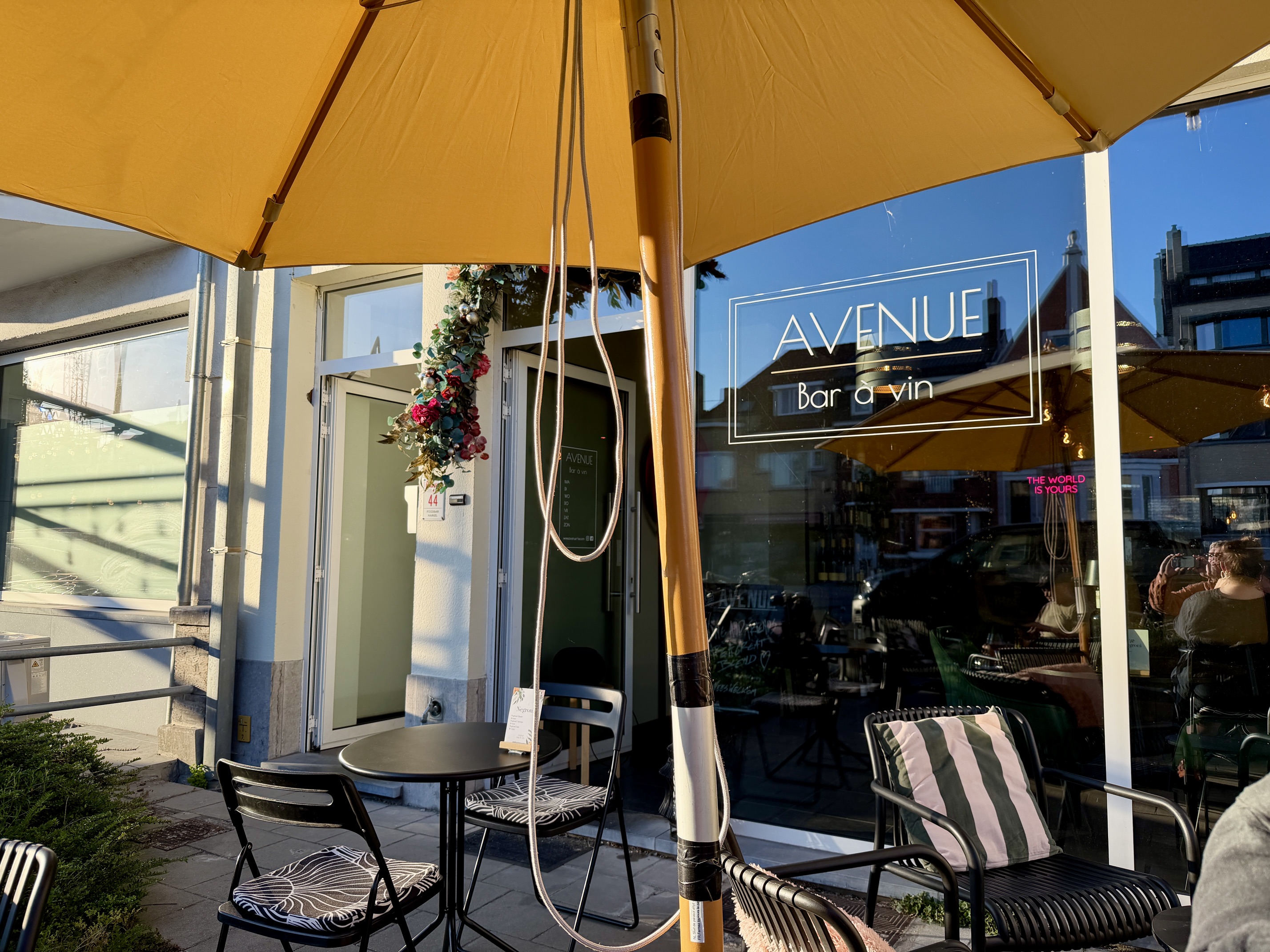
On this trip I wanted to try another wine bar – just having Cuvée on the list made wine look a little underrepresented – so I considered a couple of options. Two spots on Ezelstraat tempted me – namely Lucy, which does natural wines and a stripped back range of snacks and Cavelia, which is further out of town and offers more sharing plates. Next time, perhaps.

But instead I took an Uber a little further out, past both those places, to Avenue. This far out you are definitely not in tourist Bruges, and Avenue had a feel of being something somewhere else entirely. It had a handful of outside tables under golden parasols, the owner Pete and some friends were drinking and chatting out front and a speaker, propped up in the doorway, was spilling out mellow, sun-bathed beats. The feel was far more Balearic than Flanders.

Sometimes in a spot like that you can feel like a nuisance or a distraction rather than a customer, but the welcome at Avenue was warm and genuine and we had a super time on their terrace for a couple of hours. There is an excellent list of wines by the bottle, with plenty of representation from Germany; Pete told us that German wine is having a real moment, and not yet getting the credit it deserves for that. In addition, the compact menu contains exactly the kind of things you’d want to eat outside on a sunny evening with wine: cheese and charcuterie in abundance.
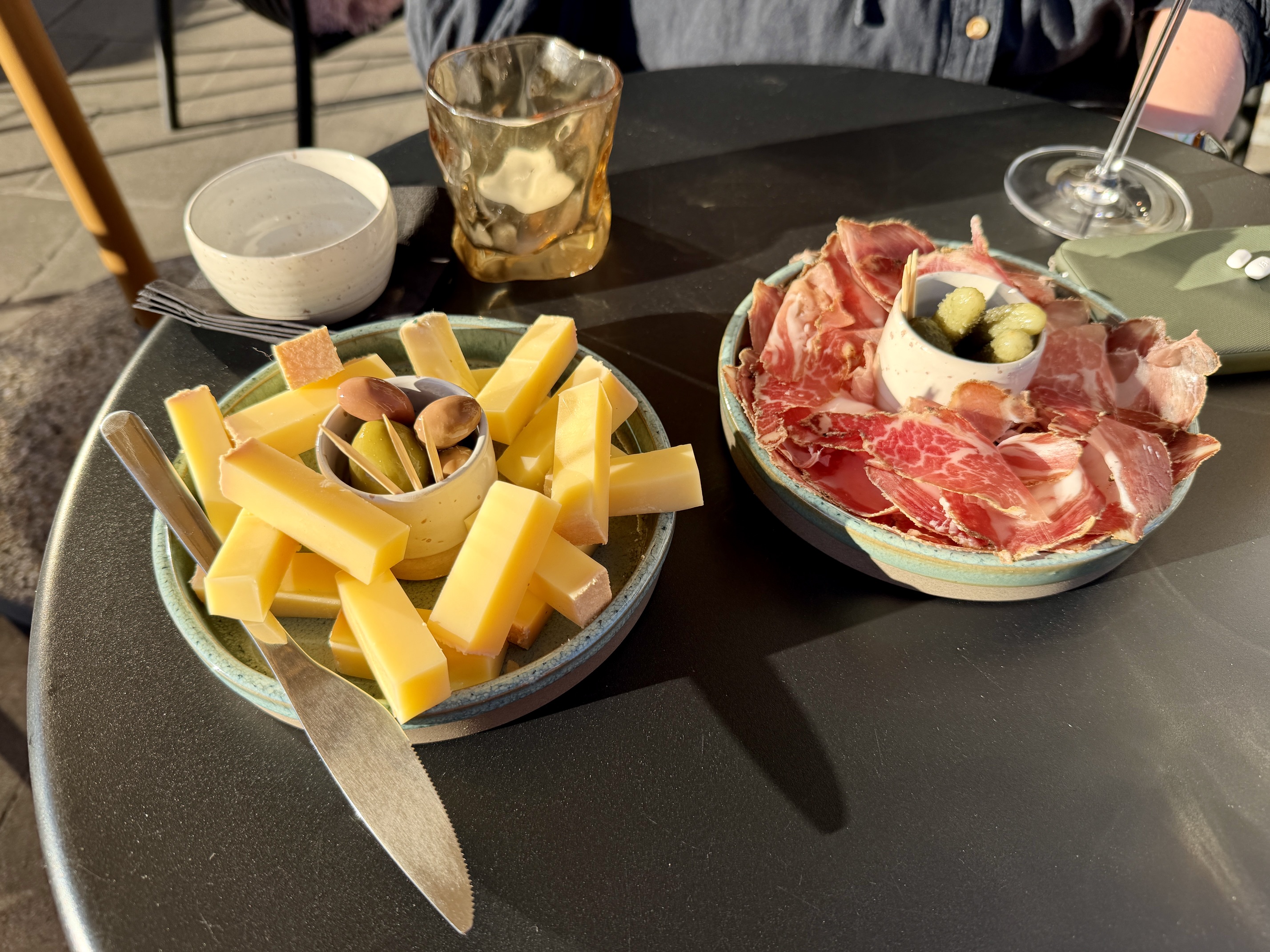
And everything was so good. One of the best coppas I’ve had in a very long time, infused with fennel and served correctly with plenty of tart, crunchy cornichons. A young Comte, fresher and less gritty than I’m used to, was a revelation, and a wild boar rillette was perfect slathered on thick slices of bread. The wine was superb too: a German Riesling vindicated everything Pete had said, and my white Bordeaux was almost as spectacular. The list of wines by the glass changes weekly, but it was hard to believe any of it would be less than delightful.

As we settled up, Pete told us their story. Pete and his partner Valerie’s main business is as wedding planners: she does the event, he provides the wine. They ended up needing a space where they could consult clients and get them to sample wines, and the bar span out of that. What a happy, harmonious pair of businesses: I think their brides and grooms are a lucky bunch.

Only after I left did I remember that I’d mentioned Avenue to Bruno at Bruut and he’d told me to say hi to Pete from him. And in a pleasing daisy chain of paying it forward, when I posted about Avenue on Instagram Pete messaged me to say that I should eat at L’Aperovino, and at La Tache, which had the best wine cellar in the city. That’s the food community in Bruges, over and above all the great beer, all over: interconnected, friendly, loyal and tirelessly promoting one another.

Avenue Bar A Vin
Scheepsdalelaan 44, Brugge
https://www.avenue-lw.com/general-clean

9. Cafe Terrastje (2025)
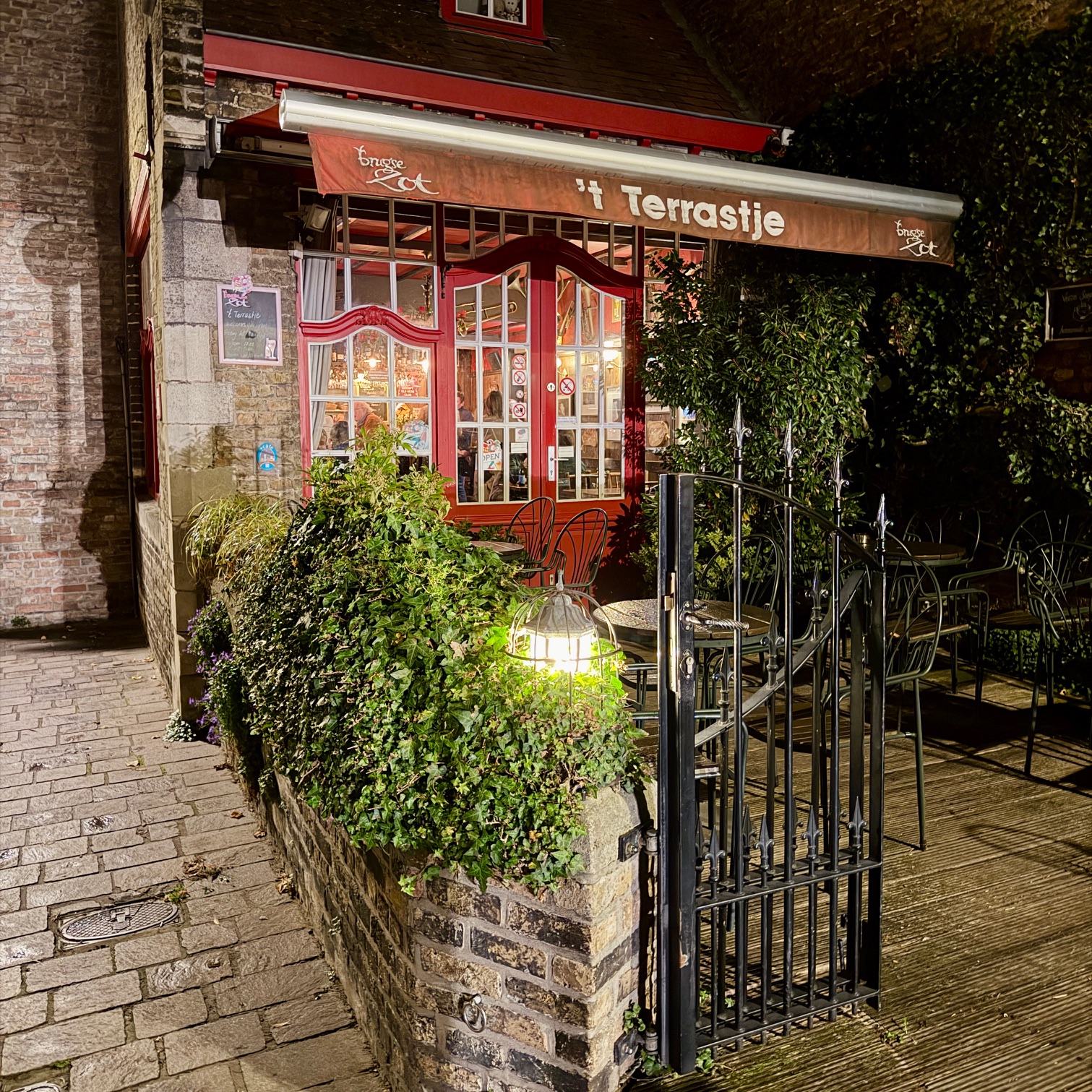
I always wanted to make it to Cafe Terrastje, a picture-perfect pretty spot on the edge of the canals not far from Jan van Eyckplein. But I generally visit Bruges annually in early January, when it is invariably closed, so it wasn’t until my trip in October 2025 that I finally managed to drink there. It’s hard to imagine a more welcoming vision than the light coming through those scarlet doors, though I imagined its eponymous terrace would be a great place to drink on a summer’s evening.

Inside it positively exuded ‘what took you so long?’ vibes. It was snug and cosy with wood-panelled walls, a red ceiling and beautiful beams, and felt like a place to settle in and shut out the cold outside. Jazz seeped through the speakers, everybody was chatting and having a thoroughly agreeable time and my Brugse Zot on draft was a positive joy. I had been missing out, I decided.
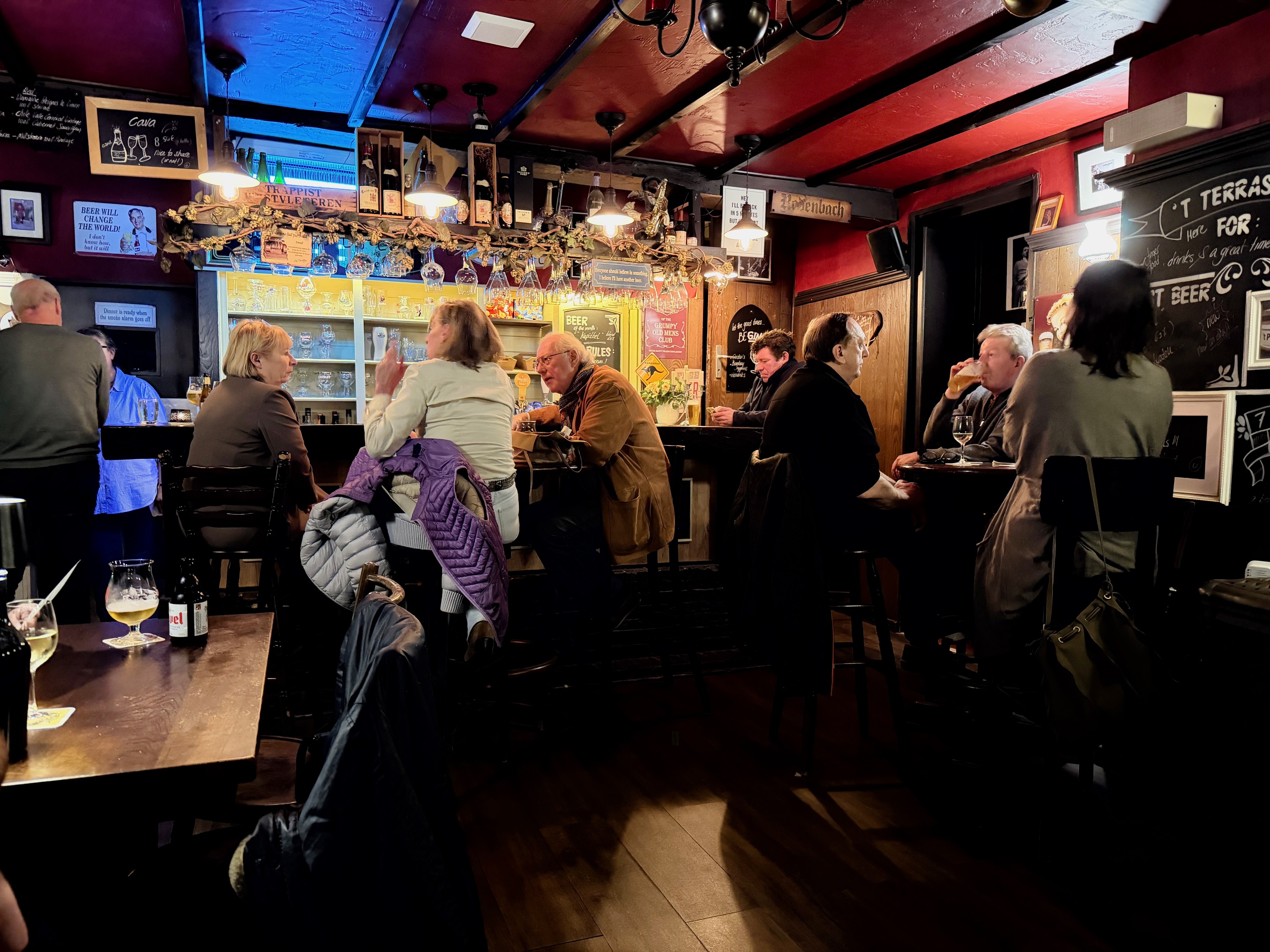
The landlord and landlady, another husband and wife team, were really friendly, so Dave and I decided to fortify ourselves with some of the tapas available on the menu. The landlady was refreshingly honest that “he makes some of it and we buy the rest in” and we fared well enough: bitterballen were crisp-shelled and enjoyable, kibbeling was good, although I’ve had better in Bruges. Only the chicken satay skewers were swervable, the peanut sauce rather good but the chicken itself bouncy and homogeneous.

Nevertheless I loved Cafe Terrastje and it could definitely do you a turn: space for an al fresco beer when it’s clement, or a comforting boozy cocoon when it’s not. And if you need somewhere to drink while you’re waiting for a table to come free at Màs, it’s hard to imagine you could do better. 

I had every intention of returning on my most recent visit but it was closed, yet again (as I said, this is always a problem in Bruges). Sadly, that’s because it is under new management: their brand new Instagram account suggests the incoming owners were doing some work on the interior. I hope they manage to improve the place without losing what made it cosy and special. And that they elevate the food somewhat.

Cafe Terrastje
Genthof 45, Brugge
https://www.instagram.com/terrastje.brugge/

10. Dees Speciality Coffee (2026)
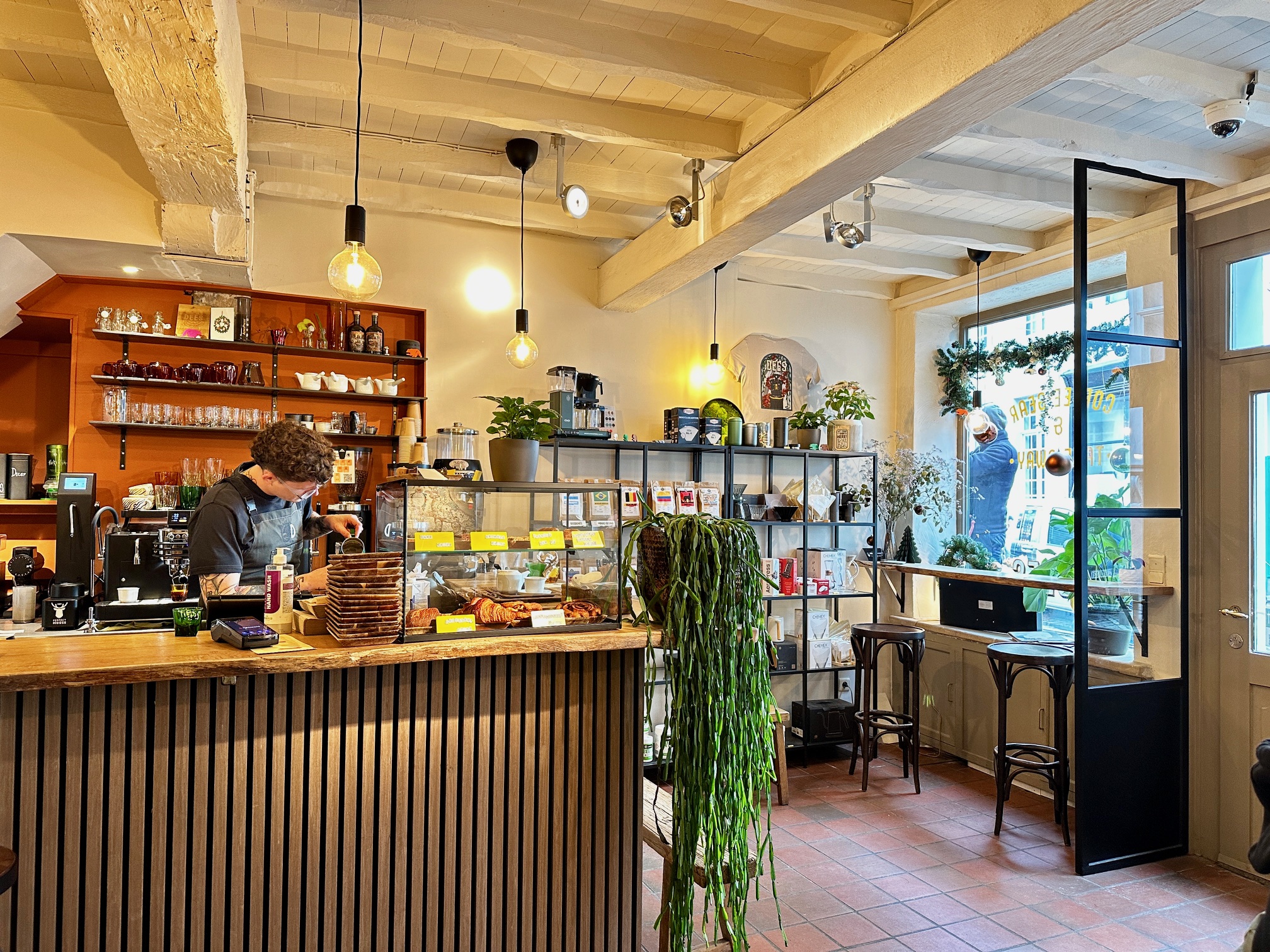
There are four other Bruges coffee places in this guide, garnered over the course of going to the city many times over the space of four years. They’re all good in some ways, less good in others. They’re invariably small, or rammed, or out of town, or not entirely comfortable, or erratic with their opening hours. And then in January 2025 I checked out Dees, not far from where I was staying, and I thought oh, perfect, I’ll just come here then.

They’ve been roasting for something like four years but only opened the café in October 2024, in a spot which used to be a wine bar called Riesling & Pinot that I never got round to visiting. When I went you would never have guessed it was three months old, it had that feel of somewhere that had been open forever. Comfy, cosy, not too packed in, well lit, tasteful and making amazing coffee (which comes served in tinted glass beakers that I coveted immediately).

I went every single day, and might have gone multiple times in a day if that wasn’t so ridiculous. The coffee was gorgeous and mellow, and of course they sell beans to take away, along with brewing kit. I became really attached to the place, and almost sad that I was leaving the city before the English language barista lessons advertised on their blackboard were due to take place, and that’s before we get to the chess tournament they had scheduled at the end of the month.

In case I haven’t lavished enough praise on Dees, I noticed on their Instagram stories, towards the end of my stay, that the default milk they used in their lattes was oat milk: they’ll give you dairy, if you specifically ask, but otherwise it’s oat. I didn’t feel conned, or ripped off, or tricked. I just thought good for you, because your coffee is magnificent

I returned multiple times on my most recent visit, being fortunate enough to stay just around the corner, and nothing had changed. It was where I had my first coffee on arrival, and where I squeezed in one final latte on my final day, before trudging despondently back to my B&B to call an Uber to the station. Once, just for experimentation’s sake, I had a latte with dairy milk: it was nice enough, but it just didn’t feel right.

Dees Specialty Coffee
Hoogstraat 33, Brugge
https://deeskoffie.be

11. EspressoBar I Love Coffee (2026)
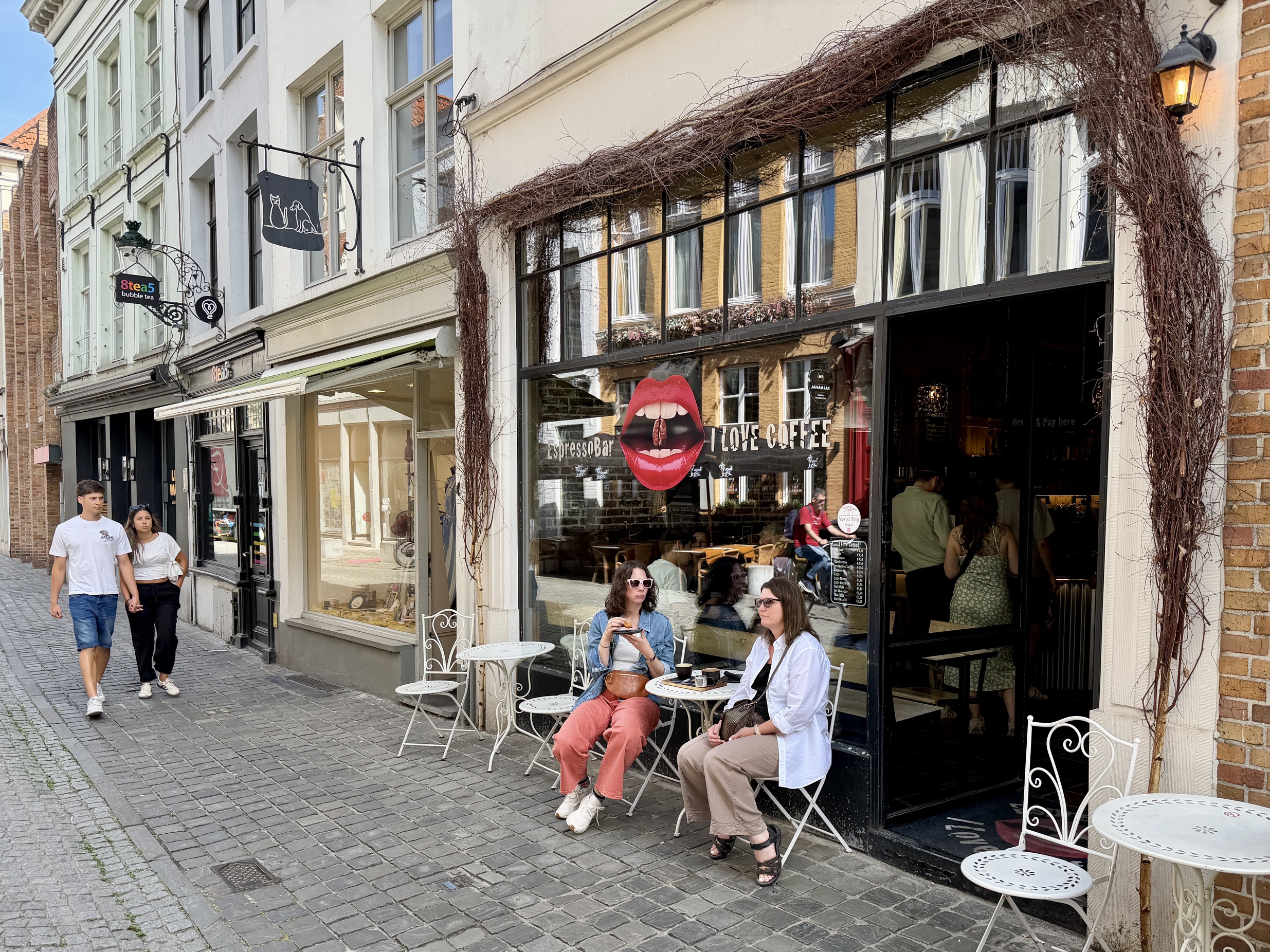
EspressoBar I Love Coffee – they love a literally named café in Bruges – has been trading for over ten years, and yet it was only on this trip that I finally gave them a whirl. I think I was put off by the uncomfortable tables outside, the slightly OTT Rolling Stones logo-a-like, plump lips parted, holding a single coffee bean between bared teeth. It seemed a bit, well, tacky.

But I finally gave it a go on a bright summer morning and discovered a couple of things about it which revised my opinion entirely. One is that it has a really pleasing and spacious terrace out back, something you would never know from the entrance on Sint-Jakobstraat, which transforms it as an option for an al fresco latte. The other is that the latte really is extremely good: it’s almost as if being there for more than a decade has made them very good at what they do.

So a salutary lesson in not judging a book by its cover, and another excellent spot for caffeination in Bruges, in a very handy central location. The seats inside looked pretty comfy, too: I’ll be back in the winter to test them out.

EspressoBar I Love Coffee
Sint-Jakobsstraat 10, Brugge
https://ilcoffee.be/en

12. Cherry Picker (2026)
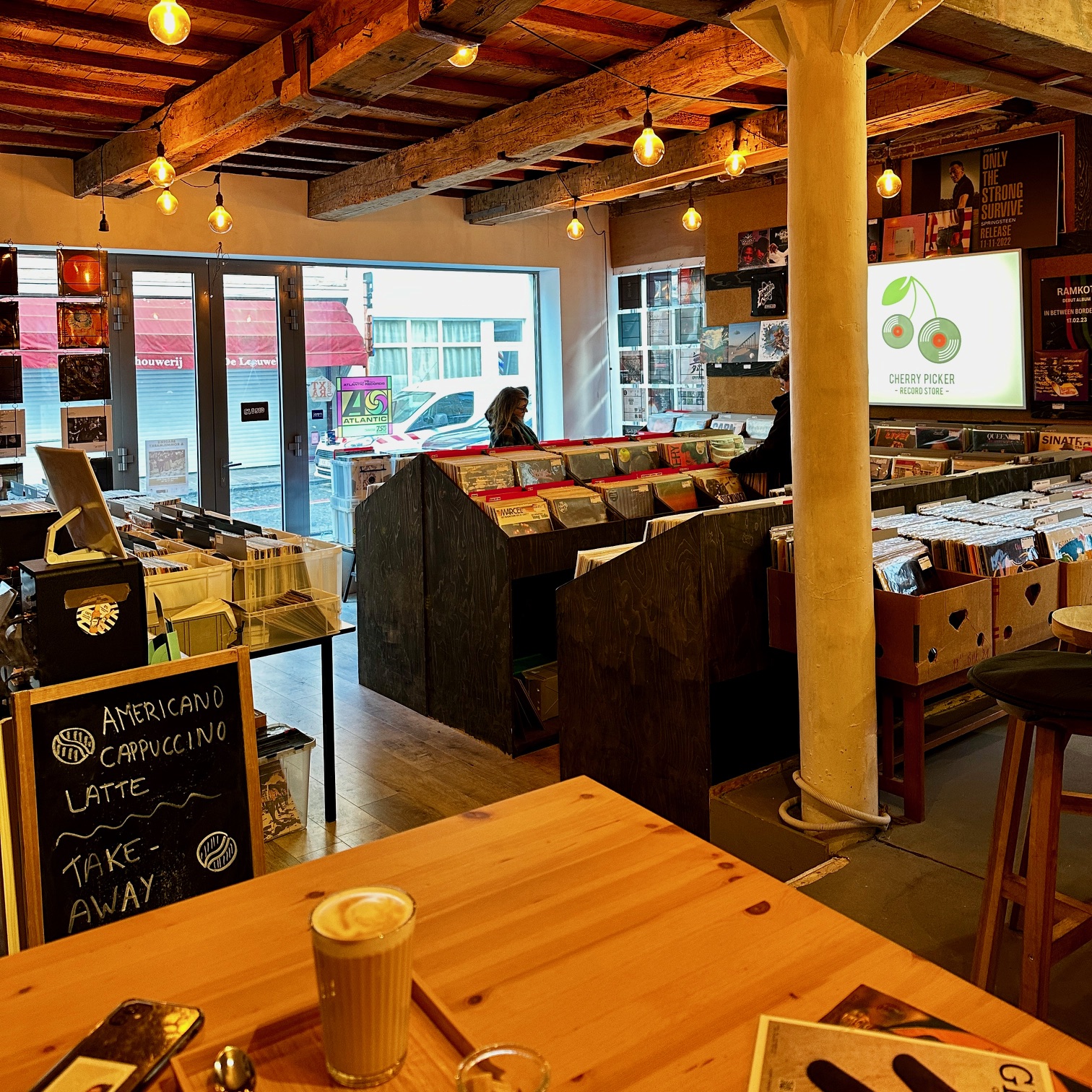
Come for the music, stay for the atmosphere! is the slogan of this record shop on Langestraat. Come for the music stay for the coffee, more like, because it serves one of my favourite coffees in Bruges. I love places like this – it reminded me of Truck Records, out on Oxford’s Cowley Road – and I’d have happily whiled away longer sitting outside or inside with a good book.

Multiple return visits have confirmed that it’s simply one of the nicest places to sit nursing a coffee, and I simply love the fact that the coffee is so much better than it has to be. Make sure you have Shazam installed on your phone before you go to Cherry Picker, because you will end up using it. And it can be full of surprises: I found myself enjoying some stuff by Jack White, and I would never have put money on that.

I make a beeline there at least once on a trip to Bruges and it was in January last year that, when I complimented the chap on the coffee, I discovered that they buy it in from Dees, above on the list. Makes perfect sense. So of course I went back again on the following trip, drizzle spattering the streets outside, and enjoyed coffee, good company and blues on the stereo, knowing I intended to do a long walk to a beer shop out beyond the canal but, somehow, not quite ready to leave.

Change happens slowly and incrementally at Cherry Picker I suspect, and on my most recent visit the coffee was as good as ever. But I also discovered that, even though they are only open during the day, they’re building up a compact and interesting list of beers for day drinkers, including some excellent pales by Brussels’ excellent Brasserie Surrealiste. If they ever decide to open in the evening and put a few small plates on they could seriously challenge many places on this list: perhaps next time. I can dream, anyway.

Cherry Picker
Langestraat 74, Brugge
https://www.cherrypicker.be

13. Coffeebar Adriaan (2024)
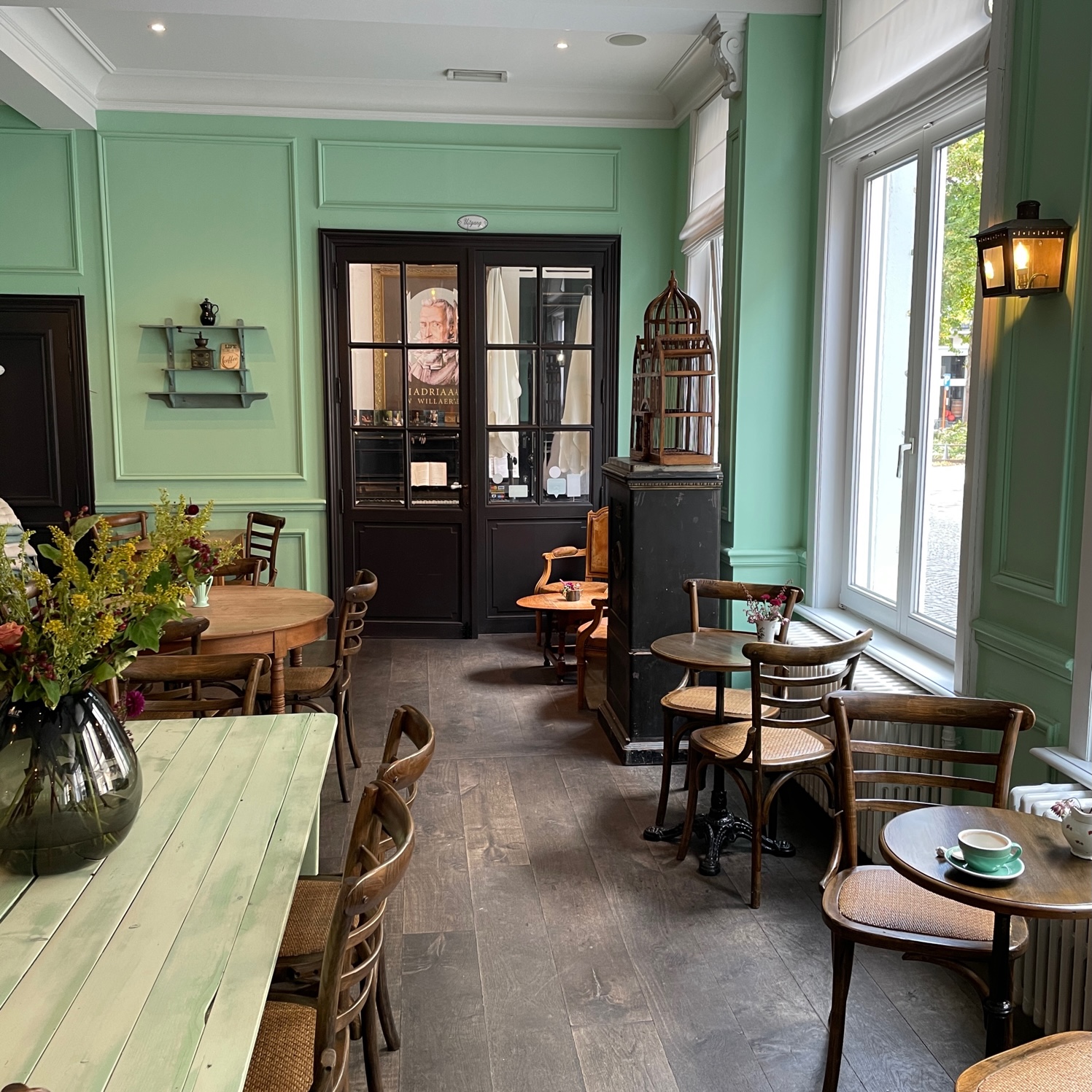
On my visit in October 2022 I became a regular visitor to Adriaan for the first coffee of the day and I became thoroughly attached to the place – it’s a tasteful, classy spot, all muted mint green and comfy furniture, the antithesis of craft coffee places in the U.K. (and abroad) which so often look rough and ready. The coffee was pretty good, the pastries spot on, the service friendly and speedy.

I went back multiple times across my 2024 visits and if it isn’t Bruges’ best coffee it might still be one of Bruges’ more reliable place to find one – it’s open when it says it is, including on Sundays, whereas some of the other coffee places I like do seem to be closed on random days, or shut early just because they feel like it.

Coffeebar Adrian
Adriaan Willaertstraat 7
https://coffeebaradriaan.be

14. AVI ’38 Speciality Coffeebar (2026)
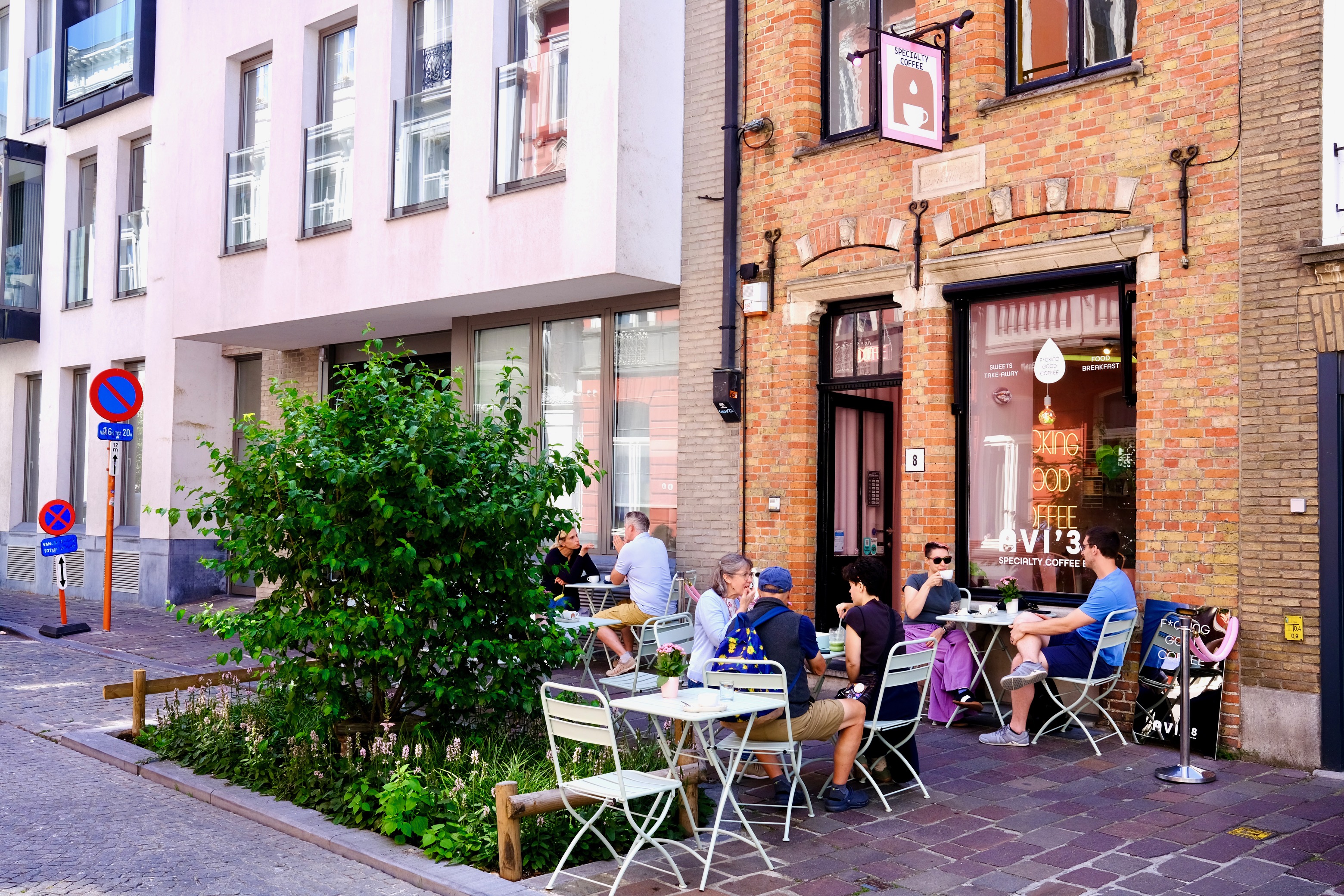
The final spot on my guide for coffee used to be taken by a place called Cafune, which then changed its name to We Are Coffee Makers (see, another literal name). I loved their coffee, but they were frustrating: they couldn’t decide on a name, or when they were open, and sometimes it felt like they didn’t want to be open at all. So I wasn’t hugely surprised when I got to Bruges in October 2025 and found they had closed for good: Shibuya occupies that site now. Where to go instead?

I tried out a couple of options. One was a place called Two Point Oh Coffee, off one of the main shopping streets, which I rather liked. It was very pink – so pink your phone camera thinks its white balance must have gone for a Burton – from its chairs to its seat cushions to its banister and the glittery herringbone tiling on the bar, and the music was somewhat relentless. But I liked their flat white, and I noticed a tin on one of the shelves: their coffee was by We Are Coffee Makers.

But in the end, I opted for AVI ’38, discovered by Dave on our last morning in the city. It’s also very pink – though more muted, dusky pinks – and that potential tastefulness is slightly offset by the glitterball hanging from the ceiling and the neon sign on the wall, promising F*CKING GOOD COFFEE (the mugs say that too: the slogan reveals itself on the inside as you work through your latte). 

The chairs were Tolix, the walls racing green metro tiles, the overall look confusing. Dave, I should add, loved it. He said that the loo was a whole other matter: “they even have different music playing in there”, he said. But Dave also told me that AVI ’38 made the best coffee he’d had in Bruges, and that claim deserved to be tested. 

Actually, he might have been right: it was a really silky, very enjoyable latte. The provenance probably had a lot to do with that, with beans from Antwerp roastery Kolonel, who I hadn’t heard of, and Rotterdam’s Manhattan, who have roasted some of the best coffee I’ve tasted anywhere on the continent. 

So all told, I don’t think Dave was miles wide of the mark. For the overall ambience I would still pick Dees but I do think that if you’re a coffee purist, AVI ’38 might well serve the single best latte you’ll have on your trip. I returned this year, to find that AVI ’38 was even better in the sunshine, with tables out front to sit, sip and observe folks wandering by. F*cking good people watching, too.  

AVI ’38 Specialty Coffee Bar
Niklaas Desparsstraat 8, Brugge
https://avi38.be

(Click here to read more city guides.)

Since January 2025, Edible Reading is partly supported by subscribers – click here if you want to read more about that, or click below to subscribe. By doing so you enable me to carry on doing what I do, and you also get access to subscriber only content. Whether you’re a subscriber or not, thanks for reading.
City guide: Glasgow

I first visited Glasgow over a decade ago, twice in quick succession, and came away thinking that it was absolutely one of my favourite cities I had ever been to. I loved the grand scale of its streets, the friendliness of its residents, its grit, its culture and its vitality. I’d been to Edinburgh several times before that and, truth be told, I thought Glasgow showed it up as a little pristine and joyless, chocolate-boxy and prissy.

On those two visits, I tried a bit of everything. I wandered round the People’s Palace, where the first exhibit I saw when I came up the stairs was a TV showing Rab C Nesbitt. I wandered up to the Necropolis and saw the beautiful vista of the city below.

My friend Nicola took me to the Barras Market, unlike any market I’d ever visited, trestle tables groaning with goods of debatable provenance. Inside, I reached a stall which could only be described as an Aladdin’s cave of pornography: every medium, every genre, almost a museum in its own right by the year 2014. I explored Merchant City and the West End too, all these very different parts of a captivating whole.

I went to see A Play, A Pie and A Pint in Oran Mor, the beautiful and iconic arts venue: back then it set you back a mere tenner to eat, drink and be culturally stimulated. I sat in the Three Judges at one end of the Byres Road on a Sunday afternoon and drank pints of stout while enjoying the delights of live jazz played by a bunch of septuagenarians with more get up and go and joie de vivre than I managed when I was half their age.

In the interval, one of the jazzmen told my friend Nicola and me how he’d gone on tour with Paolo Nutini, which had provided a nice little nest egg. We bought him a pint. Another gent wandered in off the street and tried to sell us supermarket meat from a carrier bag, still in its packaging, provenance again unknown. Truly all human life was there in Glasgow. I could live here, I remember thinking: the city, not the pub, although in truth probably both.

I drank cocktails in Chinaskis, and fancier cocktails on Blythswood Square – I was a cocktail drinker back then, far more than I am now – and every kind of booze in Nice N Sleazy on Sauchiehall Street, which Nicola told me absolutely had to be done if you were visiting Glasgow. It was like the Purple Turtle only brasher, and like everything else about the city I loved it.

And I ate, my goodness I ate. I ate in some magnificent restaurants which, to my pleasure and surprise, are still going strong today, institutions like Stravaigin, Number 16 and the Finnieston, along with some which to my equal sadness have closed, like Hanoi Bike Shop in the West End and Merchant City’s Guy’s. I came back from both visits saying that Glasgow was one of the best food cities I had ever been to. I swore to return and finally this month, over twelve years later, I did.

I was delighted to find that the city had lost none of its charms. It is still a marvellous, vibrant place with an awful lot to see and to do and, of course, brilliant places to eat and drink. It doesn’t, by and large, trouble the Michelin guide the way Edinburgh does, but its priorities feel different. It’s packed with great restaurants with beautiful dining rooms doing all manner of fascinating food and not so fussed about guide-chasing accolades.

It has old, ornate, gorgeous pubs – some of which are especially a joy for whisky lovers – and a coffee scene as good as anywhere’s. It has brilliant independent retail, particularly slightly out of the centre. And it has a perfectly circular metro system, the Subway, where your fares are capped at £3.40 for a day. It’s a pleasure to use.

Yet I came away from my four day visit frustrated that I had only scratched the surface of the tip of the iceberg: my list of restaurants to visit next time was infinitely bigger than the list of the ones I managed to check off. I never made it to the Southside, which means I didn’t get to buy coffee and fragrance at Godshot, eat at Big Counter, knock back wine at Made Of Grapes or sample Errol’s Hot Pizza.

I also didn’t get to try the craft beer at Drygate or sample some of Glasgow’s most iconic boozers: places like the Pot Still, The Lismore, Scotia Bar, the Horseshoe. When I put it like that my FOMO kicks in and for a moment, despite having a lovely time, I feel like I barely went anywhere at all. I should have been up and about earlier, cramming in brunch, checking out the street art, spending the afternoon in a museum rather than having a delightful hotel siesta.

But that all would have required me to be a different, better person than the one I actually am (it would also have required me to not wake up hungover on any of my mornings, which was never realistically going to happen). And yet when I put pictures from my travels on Threads I got the most lovely comments from Glaswegians which fell into two categories, either Yes, isn’t Glasgow amazing? or When you put it like that Glasgow is actually amazing. I could identify with them: living in Reading makes you good at rooting for the underdog, if nothing else.

“I’m biased, obviously, but it’s the best” said one person. “Glasgow’s food is truly incredible!” added another. “You’ve chosen some excellent places” said a third, which was a huge compliment to my extensive research, as was “can confirm you went to the best spots”. Perhaps my favourite comment was “Never seen Glasgow in this way”: sometimes it’s lovely to have that experience, to have an outsider swoop in and highlight that your city is rather marvellous. But then I sense that Glasgow is a proud place, but not a boastful one.

So, all that road less travelled hogwash aside, let’s focus on the places in which I was lucky enough to eat, drink and shop. This city guide comes with the same caveat as my guides to Paris and Lisbon: I’m not pretending for a minute that this list is exhaustive, and even the multiple future visits I am planning could never make it so. It’s just a selection of restaurants, cafes and pubs that I loved on my recent trip, as kindly validated by some very agreeable people on Threads, and I hope it gives you some idea of where to start if you make your own journey to Glasgow, or makes you consider it as a candidate for your next city break.

I guarantee that if you do go, I’ll be deeply envious.

1. Brett

I did want to treat myself for at least one of my meals in Glasgow because, technically, the trip was partly to celebrate my wedding anniversary. Initially I considered Cail Bruich, the West End institution which is now Michelin starred, but eventually I decided instead to visit its less formal sibling Brett. It’s also on the Great Western Road, a great thoroughfare that reminded me of Bristol’s Whiteladies Road, but closer to the centre: let’s just say you know you’re in a fancy part of town when you alight from the metro and are almost immediately faced with a Farrow & Ball showroom.

Anyway Brett was a superb choice on every level, a classic example of a great neighbourhood restaurant whose only crime was not being in your neighbourhood. We had a wonderful table in the window with a great view of passers-by on one side and customers sitting up at the bar watching the open kitchen on the other (it also has a mezzanine, but I think the ground floor is the place to be).

Unlike some of the places on this list which are very much ‘order small plates to share and they’ll come in whatever order we decide’ – which you may or may not care for – Brett is very much a starters, mains and desserts kind of place, with an optional course which I very much recommend ordering. But really, everything was magnificent. I started with an outrageously good snack, a giant chicken wing boned and stuffed with haggis, sort of like a sausage roll if it was (a) amazing and (b) had the pastry swapped out for chicken.

It set the tone for a parade of stone cold brilliant dishes. Aged raw beef was like a tartare made with cecina, the whole thing punctuated with sweet, almost sharp apple and covered in shavings of ethical foie gras. That optional course I mentioned, which I think has been on the menu for ages, is linguini with a rich and salty mushroom XO sauce, topped with a single anchovy and a sheaf of crispy leeks, a foam of aged Parmesan on the side: not the easiest thing to eat, but quite the easiest thing to order.

The high standard continued for the rest of the meal. I liked my saddle of lamb with crispy lamb breast, cavolo nero and a bright green tomato salsa, but Zoë won the battle of the mains with an extraordinarily good dish of monkfish tail in brown butter, festooned with crispy Jerusalem artichoke, the sauce dotted with trout roe.

And then a dessert with a supplement, one you need to preorder: an absolutely faultless tarte tatin with vanilla ice cream and a sticky caramel sauce. I’ve seen other reviews say it’s a must-have but I don’t know: looking back at the menu I can’t help but wonder what the burnt honey and cardamom ice cream would have been like, and how it went with caviar.

But no matter, because Brett was just a wonderful meal from start to finish. The staff were bright, happy, authentic and brilliant at what they do, the room was wonderful – as we will see from the first four places on this list, Glasgow seems to specialise in stunning dining rooms – and the people watching was fantastic. I even enjoyed the willy-waving of the lone diner at the bar, trying to namedrop all the Michelin starred restaurants he’d been to in his conversation with the chef opposite him. There’s always one.

Brett’s à la carte is £59 for three courses, although if you’re anything like me and you have the snacks, the extra course, the supplementary dessert, welcome cocktails, a corking bottle of white and some really superb rosé dessert wine the damage will creep far higher into three figures, as it did for us. But it was worth every penny. Next time I go to Glasgow I might book Cail Bruich. But it’s hard to imagine I’ll enjoy it more than I did Brett.

Brett
321 Great Western Road, Glasgow, G4 9HR
https://www.brettrestaurant.co.uk

2. Corner Shop

Corner Shop is in Yorkhill, a bit of Glasgow I’d never previously visited, west of the more famous Finnieston and south of Kelvingrove, with its stunning art gallery, museum and park. It’s been open for a year but with its gorgeous, bright, almost midcentury dining room, its considered design and its thoughtful menu it has the air of a place that has been there far longer. It was, however, the source of one of my biggest disappointments of the trip.

The thing is, I had been admiring it and its well-curated social media, its gorgeous-looking menu, from afar for weeks in the run-up to my visit. And then we got there on a sunny Tuesday to find that they had just introduced a lunchtime menu del dia, £20 for two courses with only two choices of starter and main. Having eyed up their huge albondiga on a skewer, their squid pil pil, I was gutted.

But that shows what I know because that menu is both phenomenal and an outrageous steal, and deserves to be spoken of in the same breath as bargains like, say, Quality Chop House‘s lunchtime offer. Plus, it’s only two courses if you decide it has to be. Once you’ve snaffled a pair of exemplary jamon croquetas with an apéritif and added on a puffy-crusted flatbread slathered with braised leeks and buried under an avalanche of cheese you really don’t feel like anything is missing.

That’s before we get on to the main attractions, a starter and main as delicious as they were plentiful and both superb value. The tenderest squid cut into ribbons came on stewed sweet onions, finessed with a textbook salsa verde and a bright lemon vinaigrette, and I could have eaten it all the live long day. Zoë’s in season asparagus looked gorgeous too, but there was no way I could forego the squid.

We both picked a standout main, though, an immensely generous pork chop sitting on a layer of spinach, the whole thing resting on a caramelised cauliflower purée that simply had no right being so savoury. I asked the restaurant on Instagram later what magic they had worked on it, wondering if something like miso had found its way in there, only to be told that the secret ingredient was what the secret ingredient always is: more butter than you could possibly imagine.

All that and a wine list full of treats by the glass in – I’ll be saying this a lot – one of the nicest dining rooms I’ve eaten in for a very long time. When I go back to Glasgow I will make sure I snag an evening booking at Corner Shop, but I hope their lunch menu has the success it deserves: by the end of my meal I was aggrieved on their behalf that they weren’t turning people away.

Corner Shop
45 Old Dumbarton Road, Glasgow, G3 8RF
https://www.cornershopglasgow.co.uk

3. Eleven Fifty Five

When I visited Finnieston back in 2014 that area was at the vanguard of Glasgow’s gastronomic advances. It’s still home to the Finnieston and Crabshakk, widely heralded as some of the best places in the city to enjoy fish and seafood. But I never made it to high end small plates restaurant The Gannet, on the same stretch, which closed last December after a brilliant 12 year run which included plaudits in the Guardian.

What that means is that I approached Eleven Fifty Five, its reincarnation in the same site with the same team, without any preconceptions or sadness about what had gone before. It had been open less than 3 months when I dined there on a Tuesday night, and if you’d told me it had been open for 12 months I would absolutely have believed you.

Apparently the intent was to change the venue from a fine dining restaurant to a neighbourhood bistro, which I can completely understand: I sense that Glasgow is a city that will wrap its arms round a neighbourhood bistro but might not feel quite so strongly about a plating with tweezers establishment. And whatever it was before, what Eleven Fifty Five is now is a beautiful, very accomplished restaurant. It’s almost like the people running it have been doing this for ages.

It’s another standout space – as I keep saying, it seems, about everywhere. Another grown up, sophisticated dining room, impeccably furnished and beautifully lit, with tasteful comfortable furniture, attractive banquettes and booths, bare floors, wood panelling, exposed brick and blood-red walls. In that sense, I don’t remember many neighbourhood bistros looking half this fetching.

But the menu is where you know you’re not in fine dining territory: you are instead in fine pricing territory. A couple of magnificent pig’s head croquettes, magnanimously portioned things, for £7 to go with your negroni? Why not. A pile of deboned, smoked chicken wings striped with tarragon and topped with crispy shallots? That will set you back less than £15, as will a beautiful puck of white pudding topped with a quail’s egg, perched on mushrooms and draped with lardo, the distillation of an all day breakfast into an all smiles starter.

Mains are equally good value: Zoë had the best of it with a Himalayan salt aged ribeye with sauce Bordelaise, but I couldn’t complain about my lamb shoulder, braised to soft surrender, served with poached vegetables and crispy sweetbreads. There weren’t enough of the crispy sweetbreads – but there never are, and at £22 it was still very hard to quibble anything about that dish.

Cheeses, from Glasgow’s preeminent cheesemonger George Mewes, were unimpeachable, and the “chocolate bar” – praline, caramel, dark chocolate and a really terrific Guinness ice cream – is pretty much my idea of the perfect dessert. We pushed the boat out with a bottle of dessert wine into the bargain, and had a long and happy time trying, and failing, to be the last table to leave.

We had Kevin Dow looking after us – he has been running front of house for first The Gannet and now Eleven Fifty Five for over a decade – and to say service was silky-smooth would be an understatement. I absolutely adored my meal at Eleven Fifty Five, a class act that felt to me like an institution in the making. It makes you think, that Corner Shop is barely a year old and Eleven Fifty Five is only three months into this incarnation. That says to me that although Glasgow is already great, its best days may well still lie ahead.

Eleven Fifty Five
1155 Argyle Street, Glasgow, G3 8TB
https://www.bistroelevenfiftyfive.com

4. Margo

Here’s an illustration of the illusion of choice, Glasgow-style: there are four restaurants in Glasgow that all have a Michelin Bib Gourmand: Ox and Finch; Ka Pao; Margo; and Sebb’s. For all their differences – Ka Pao serves South-East Asian food, for instance, and Ox and Finch is more contemporary European – they are all small plates restaurants and they’re all owned by the same people. That isn’t of itself a bad thing, but it probably gives you a decent idea of what’s in vogue in Glasgow right now.

We ate at Margo on the first night, which was the place I most liked the look of on paper. And although I liked it, I liked it less than I expected to.

That’s not the room’s fault. I’ve said this already in this guide and I’ll say it again before we’re done but my goodness, the interior is beautiful. It’s dark and conspiratorial, simultaneously cosy and spacious, all gorgeous tables and even more luxe booths, and as sophisticated a dining room as I could recall – a position it held until the following night, I seem to remember.

It wasn’t the food either, because it was gorgeous stuff. Coppa came thick but expertly sliced, smoky and just waiting to be crinkled up and popped in your mouth. Really exceptional sticky merguez were topped with charred peppers and toasted seeds, curls of squid were served with thick slices of morteau sausage on a bed of Puy lentils.

The pricier plates had an awful lot to like about them too, whether it was a round of confit lamb shoulder with salsa verde or pork belly with crispy skin, morcilla and black garlic ketchup. Skate wing with kumquat was an intriguing combination of flavours I had never imagined, let alone eaten, and the single best thing we had was barbecued hispi cabbage. I know everybody sneers at hispi cabbage but this, charred and served with castelfranco and caesar dressing, was one of the nicest things I ate all week.

So what was the problem? I suppose it was that Margo, for all its talents, epitomised everything that irks me about small plates culture. Most of the plates, really, either weren’t big enough to share or didn’t lend themselves to being shared: when you’re dividing a single piece of morcilla in half something has gone wrong. Service was polite and friendly but maybe a tad cool, and asking to order in waves – my usual way of trying to apply structure to this kind of menu – was brushed off straight away as not an option.

That meant you were constantly loading half of a not very sharable dish onto a plate which was never changed, accumulating all the residue of dish after dish, sauce after sauce. And “they’ll come out when they’re ready” meant, it turns out, “they’ll all come out in the space of five minutes”: that old chestnut again. So although I liked Margo, and its food definitely deserves a mention here, it’s the one place in this guide where I would say: go if that’s your kind of thing, but consider the alternatives first.

Margo
68 Miller Street, Glasgow, G1 1DT
https://margo.restaurant

5. Sebb’s

Sebb’s is a basement bar and restaurant right next to Margo and, as we’ve established, owned by the same people. I didn’t really want to go to two places in the same empire but Zoë insisted because she thought there was something special about Sebb’s from her look at the menu.

Annoyingly, she was right.

Somehow everything Margo got wrong, Sebb’s got right. It’s instructive to think about why. First of all, the dishes were actually better suited to sharing and secondly, the service – which was warm and likeable and couldn’t do enough for you – was more than happy for us to order in bits and bobs as we went. The dishes are, on the whole, a little cheaper than Margo’s but with no discernible difference in quality. Sebb’s is more of a speakeasy, they have their own superb IPA on draft which is brewed for them by Pilot and it is, in short, an awful lot of fun.

All the dishes were cracking, too. Sebb’s shtick is cooking things over fire, and I loved practically everything I ate, from spongy lamb meatballs with a proper whack of heat to a fluffy flatbread covered in feta and sobrasada. My absolute favourite thing was Sebb’s pakora, served with a little piccalilli and a snowdrift of Spenwood, one of Reading’s finest cheeses.

But we also found space to have one of Sebb’s signature dishes, a gigantic and not-remotely-phallic Texan hotlink, coarse and moreish, with gold sauce, a Caroline barbecue sauce with more than a hint of mustard, and some life-affirming pickles.

At the end we chatted to our server, who was delightful from start to finish, and he explained that the menu had only just changed with some dishes, like their lahmacun, coming off for the first time. I got the impression they were braced for a backlash from regulars, but all I saw was stuff to love: he did say, though, that the pakora and the hotlink had been there from the start and probably always would be.

Anyway, I think they have nothing to worry about. Sebb’s only picked up its Bib Gourmand this year, and on this evidence it just needs to carry on doing what it’s doing. I would love to have dinner there next time, and to emerge from its depths at night rather than blinking into the daylight: while you’re down there time does rather lose all meaning. Interestingly, when I posted pictures of my travels on Threads, prior to writing this guide, the one place that got the biggest, warmest, most immediate response was Sebb’s. I can 100% see why.

Sebb’s
68b Miller Street, Glasgow, G1 1DT
https://sebbs.com

6. Shilling Brewing Company

A happy set of circumstances led us to Shilling Brewing Company. The bus from the airport into the city stops a stone’s throw away and, as luck would have it, we stepped down from it just in time for lunch. And it had been recommended by friends who’d visited Glasgow not long before, so what were we to do?

It’s a really gorgeous, high-ceilinged space that once, before being defiled as a horror-themed pub called Frankenstein (just imagine) used to be a bank. And for ten years or so now it’s been Glasgow’s first central brewpub, offering four Shilling beers along with over twenty-five others from breweries across the U.K.

Whoever is picking their line-up has seriously good taste. Across two visits I enjoyed sours from Dundee’s Holy Goat and Somerset’s Yonder, a great pale by New Bristol Brewery, very far from home, and another by Weekend Project that I’d previously enjoyed at the Castle Tap, of all places, last summer.

That would be enough to earn a recommendation, but Shilling Brewing also has a kitchen knocking out pizzas and they are very, very good. In truth mine, with haggis and Irn Bru chilli jam, didn’t manage to transcend being a gimmick. But Zoë’s, honking with ‘nduja and blue cheese, was the real deal. I didn’t get to try Paesano, one of the contenders for the city’s best pizza, but I didn’t feel short changed.

Shilling set rather an unrealistic standard, in terms of beer, for the rest of the trip. It’s not a huge craft beer city – and the other craft pub, The Raven, was closed for refurbishment during my visit – but rather a city full of gorgeous pubs that prefer cask to keg. In that sense it reminded me a little of Belfast, although Belfast’s craft scene felt more developed. But, as we will see next, if the pub is good enough the beer can feel decidedly secondary.

Shilling Brewing Company
92 W George Street, Glasgow, G2 1PJ
https://shillingbrewingcompany.co.uk

7. The Laurieston

The only time I crossed the Clyde was on my first night to go to the Laurieston, a pub Zoë and I had read much about and were keen to visit. It’s a flat roof pub next to a railway bridge, its name spelled out in a retro typeface on the front, and nothing about its exterior gives you much of a clue about just how special it is. As we approached it we saw a sign on the front, saying CASH ONLY and cursed, but a friendly chap sitting out front told us that there was a SPAR just up the road with an ATM at the back.

I had my card with me, and I took out some notes there, cursing under my breath the £1.75 charge for doing so. Who uses cash any more, or ATMs? On any other evening neither of us would have had our wallet, and I would have been writing about a different pub here. But fortunately, I’d brought my wallet and so I got to drink in one of the most incredible pubs I’ve ever visited.

The inside is quite amazing. Both rooms are, actually. The lounge bar, all red banquettes and plush chairs, wood panelling and tartan carpet, looks like a Martin Parr photograph brought to life. But it’s not a time capsule, as the array of art on the walls, some created and donated by patrons, shows. And that contrast is the Laurieston writ large, it looks in some ways like it probably always did but is a living, breathing thing, a pub that is bigger than every person that has ever drunk there and all their accumulated stories, but is also the encapsulation of them.

I liked the public bar even more, with its horseshoe bar and little formica tables, walls groaning with art and photos. The Laurieston isn’t a craft beer place – it is completely separate from such concepts – but it does offer a fair few beers by Fyne Ales including their totemic Jarl on cask. They also have Guinness on tap, at three different temperatures. The regular and extra cold are par for the course but the mythical middle tap is the one, serving the black stuff at cellar temperature, smoother than any nitro could ever be and a hundred times more enjoyable.

I only know about the middle tap because we sat up at the bar and got chatting to Michael next to us, an ex-military physiotherapist who lives in the Gorbals and drinks at the Laurieston fairly often. The absolute picture of welcome and charm, he bought Zoë and I our second drink in the pub and an hour later we were chatting away about all sorts, sharing jokes, talking beer, talking about Glasgow and how magical the Laurieston is.

Meanwhile a couple of emo twentysomethings came in, took the stools next to us and we all started talking about the gig they were off to. The old boy a few stools along from Michael joined in, and the next thing I knew the bar staff were telling Zoë and I where else to eat and drink in the city. A pub called The Griffin was mentioned, and an Eritrean restaurant on the Byres Road called Massawa, and Michael said there is a Lebanese restaurant called Damasqino on Saltmarket which is incredible.

By the time we wandered off, two hours later and three pints to the good, I had no idea why anybody would think Glasgow isn’t a friendly city, because I’ve rarely walked into any pubs I can think of and felt so welcome and included. And there was nothing special about me or Zoë – not in this way, anyway – this is just what the Laurieston is, and what it does. I liked it very much, although I’ll leave pontificating about what makes it so amazing to the likes of Pellicle. I just know that I wouldn’t go to an ATM for almost anything else.

Michael summed it up best without meaning to as we were about to leave, pointing to a sign on the wall saying IT’S JUST A PUB. That’s it in a nutshell, he said. But the twinkle in his eye told me he didn’t entirely believe it, and for what it’s worth neither do I.

The Laurieston
58 Bridge Street, Glasgow, G5 9HU
https://www.instagram.com/thelauriestonbar

8. Outlier

Outlier was on the edge of Merchant City, and we went there for coffee on our first morning in the city. It’s impossibly cool – I’m going to be saying that a lot, which exposes how uncool I am – all exposed brick, bare wood floors and tiled walls which have a touch of vintage Portmeirion pottery about them.

Add in floor to ceiling windows, heaps of natural light and a steady procession of the young and beautiful coming in for coffee and baked goods and you have another of those places that makes you understand why people go on bakery pilgrimages these days.

The coffee was excellent, Zoë’s cheese twist with chilli and hot honey even better. And I had a sausage roll full of dense, sage-infused pork that set me up nicely for the short wait until lunchtime (don’t judge, I was on holiday). But the more we looked at Outlier’s brunch menu the more it rankled with me that all our lunches and dinners were already booked up in the city. And then we looked at our flight time home, and the checkout time at our hotel and thought… breakfast on the last day?

So we did, and it was a capital idea. Zoë had a ham and cheese croissant – their pain au chocolat are epic too, by the way – but I really went for it with their conventional breakfast. A huge slice of toasted sourdough, crust surprisingly unlike cardboard, was topped with soft scrambled egg enhanced with caramelised onion, like a sort of reimagining of a tortilla. The bacon was smoked and streaky, as it always should be if you ask me, brushed with honey and grilled and the oyster mushrooms I’d asked for as a side were dry, meaty and remarkable.

But that’s not all: Outlier’s hash browns, a snip at a fiver, were sort of halfway between hash browns and Quality Chop House’s confit potatoes, salty golden bricks of shredded potato that defied both description and resistance. All that and a home-made brown sauce which was rich, fruity and many miles from the Houses Of Parliament. I don’t think I’ve ever had a breakfast with so many things going on, or so many imaginative things at that. It was almost – and I never say this – too much.

Next time I’m having the leek rice with Arbroath smokies, clearly their take on a kedgeree, and one of those cheese twists. And another pain au chocolat. And, and, and… I’m going to have to visit more than once again, aren’t I?

Outlier
38 London Road, Glasgow, G1 5NB
https://www.instagram.com/outlier.gla

9. Spitfire Espresso

I first encountered Spitfire after my first coffee at Outlier: their roastery is on Osborne Street, which curves away from Saltmarket and ends up at Bare Bones (at the end of this list). We stopped by, bought some beans for home – they’re great, by the way – and I nabbed a takeaway latte which I loved. But we also discovered they had a bigger premises, an actual cafe, in Merchant City, so we resolved to go there the following morning.

I’m really glad we did: it’s another really handsome space – those Glaswegian buildings are big-boned, and they’re good bones at that – with a striking red white and blue colour scheme which carries through the whole space beautifully. Their coffee, as I already knew, is extremely good but I was also struck by the chance to tick off another item on the gastronomic checklist, a morning roll.

It was a corker: a floury bap crammed with soft black pudding, crispy back bacon and brown sauce, and it set me back just over a fiver (Zoë, a black pudding skeptic, said the Lorne sausage was equally fine). I really wanted to try a morning roll on this trip: I hear the dead fancy ones are to be had at Cottonrake Bakery, out on the Great Western Road, but Spitfire’s rendition made me very happy indeed.

Spitfire Espresso
55 High Street, Glasgow, G1 1LX
https://spitfireespresso.com/pages/locations

10. Amulet

Amulet, cyan-fronted and too cool for school, is out in Partick, just west of the Byres Road, and I actually visited it after Nowita, a couple of places down this list, which makes it slightly arse about face. Sorry about that.

It is in an area rich with cafés: just across the street you have Kaf, who some say are Glasgow’s best bakery, and Revival, who do coffee and vinyl, that classic hipster one-two. Further up you have Hyndland, an area which sports a branch of 1841, which some people think serves Glasgow’s best coffee. And the other side of the Byres Road you have Hinba, which also has its champions.

So competition is fierce, and within a 15 minute walk you have more top-notch coffee than you can find in the whole of Reading. That rather puts it all in perspective.

I didn’t go to those other places, so I can’t rank Amulet against them, but I did like it very much. It’s an attractive space – how many times have I said that now? – with exposed brick painted white and a big central island with stools, a few more in the window and a handful of low tables along one side. The welcome was friendly and the music was excellent, although I Shazamed one track to find it was by a band described as simultaneously post hardcore, punk and emo, which I took to mean that I was far too antediluvian to add it to my library.

On my visit there was no “handbrew” – I had to look it up, it means pourover and the like – because one of the team was at the London Coffee Festival, so I had to settle for a latte. It was up there with the other excellent coffee I had on this visit, without a shadow of a doubt.

The whole thing did make me roll my eyes a little, though, which just goes to show that as a fiftysomething scruffy grump I am not the kind of customer Amulet is that bothered about attracting. The hours painted on the front say 8-4 maybe in a way I found needlessly wacky, and lettering underneath said amulet is not a cafe.

‘Well, what the hell is it then?’ I wanted to ask someone, although I thought better of it because it was the definiition of a me problem. But I maintain that if it looks like a café, it sells you coffee for money like a café, it gives you somewhere to sit while you drink it like a café and plays you music like a café, in my book it’s a fucking café. For whatever my two pence is worth, I reckon Amulet is a very good one.

Amulet
38 Mansfield Street, Glasgow, G11 5QW
https://www.instagram.com/amuletamuletamuletamuletamulet

11. Laboratorio Espresso

Laboratorio is just round the corner from Shilling Brewing Company, which means that they served my first latte of the holiday. It’s been open for nearly 13 years and is an excellent spot, although that didn’t surprise me because they get their hands on some seriously good beans: I recognised superb Barcelona roaster Nomad from my travels, and we made sure to pick some up to take home with us.

It’s an arresting if minimalist space inside, with a handful of tables and high stools up at the full length windows looking out on the world, and I can imagine it would be excellent for people watching on a good day or sheltering on a bad one. On this visit to Glasgow we got more bad weather than good, but a latte like Laboratorio’s would make that, and life in general, infinitely more bearable.

Laboratorio Espresso
93 W Nile Street, Glasgow, G1 2SH
https://laboratorioespresso.com/index.html

12. Nowita Ice Cream

The reason I was in Partick wasn’t to grab coffee and listen to post-hardcore music at Amulet. It was because I’d heard good things about Nowita, an ice cream place opposite. I always aim to include one ice cream spot in my city guides, come hell or high water, and I didn’t want to let anybody down on this visit to Glasgow. Nowita is the creation of married couple Jill and Jamie Inkster, and it celebrates its fourth birthday this summer.

It’s bloody good, let me get that out of the way now. But Nowita makes you work for it. Its opening hours are slightly erratic: they weren’t open on Monday or Tuesday and on Wednesday, the day I dropped by, they didn’t start trading until 3pm. There’s no seating inside, just a solitary bench outside. And the day I visited, arriving 10 minutes after it opened, the rain had been constant, the clouds mutinous. It didn’t bode well for my Nowita experience at all.

There were ten flavours, all handmade by Jamie every week, and they were a fascinating mix of the staples – raspberry sorbet, vegan dark chocolate, strawberry ripple – and more leftfield options: cardamom and white chocolate or pineapple upside-down cake, anybody? But I kept it simple, placed my order and then something magical happened. The sun came out, the rain held off, the bench outside was vacant and welcoming. It was, I decided, a sign.

I tried one classic and one curveball, and both were exquisite. I liked Nowita’s salted caramel a great deal, getting the balance bang on with a very pleasing stripe of caramel, almost elastic, running through it. But the real eye opener for me was Nowita’s dark chocolate with chilli peanuts, deep and rich but with bite and spike coming through, both in terms of texture and temperature.

It made me wish I had been more experimental and tried some of the more left of centre flavours on offer. It made me wish I’d gone for three scoops instead of two. It made me wish they’d been open on Tuesday, too, but you can’t win them all.

Nowita Ice Cream
51 Hyndland Street, Glasgow, G11 5QF
https://www.nowita.co.uk

13. Tantrum Doughnuts

When I went to Corner Shop I would quite have liked to try their dessert selection. But I think that option is best explored at dinner time, because I’m not sure how much dessert they’ll realistically shift at lunchtimes. The reason for that, a few doors down, is Tantrum Doughnuts.

Tantrum is one of the more famous places in this guide, because it appeared on Somebody Feel Phil, which means it doesn’t really need exposure from anyone. It’s been going for over 10 years, having started out at food markets, and although it now has a branch in the centre and on the Southside the one in Yorkhill is the original and the one I wanted to visit.

These are proper doughnuts, not the Krispy Kreme variants that still seem to be so popular in the U.K., and to have them in they’ll set you back between £2 and £5 depending on whether you’re going for a more spartan glazed ring or the full monty filled and topped with all manner of decadence. I had managed to save room after lunch for the ‘Chocolate Millionaire crémeux”, filled with chocolate and caramel, topped with more chocolate and finished with shortbread crumbs and chocolate pearls.

It was everything I hoped it would be, and then some: it reminded me of Pipp & Co doughnuts, back when they used to be better, only better even than that. I have no idea where the name comes from, unless it involves someone turning up to find that they’ve run out.

Tantrum Doughnuts
27 Old Dumbarton Road, Glasgow, G3 8RD
https://tantrumdoughnuts.com

14. Bare Bones Chocolate

Bare Bones Chocolate is a bean to bar chocolatier – try saying that sentence a few times in a row after you’ve had a few – at the end of Osborne Street, just down from the Spitfire Espresso roastery. It sells an array of its tasteful, beautifully packaged, utterly delicious chocolate and – perhaps just as importantly – invites you to try before you buy from the thoughtfully arranged wooden bowls, using the tongs provided.

I’d like to say I bought so much chocolate because I felt guilty about wielding those tongs with abandon. But really, it’s because Bare Bones know what they are doing and their chocolate is almost improbably good. The milk chocolate, the reference bar, is exceptional. But the dark chocolate – not too dark, mind – with a hint of sea salt is one of the best bars I’ve ever sampled. Not too much sea salt, mind: do you see where this is going? Bare Bones, like I said, know exactly what they’re doing.

There’s a little table outside and they serve hot chocolate, which I’ll absolutely try next time. But more widely, Bare Bones realise that a shop just selling their six different chocolate bars would be a bit of a one note retail experience, so they have curated a selection of other lovely things – drinking chocolate, olive oil, blankets, greeting cards and so on – making it a genuinely idyllic place to wander and browse, pausing only to check another chocolate bar, just in case it needs to be added to your shopping bag.

The other thing worth saying about Bare Bones, which is a tribute to how good they are and how good some of the other places in this guide are, is that their chocolate is used across the city. If you order the chocolate nemesis at Margo? That’s made with their chocolate. If you have a mocha at Outlier – which, by the way, you absolutely should if you ask me – that is made with their chocolate too. That cross-pollination, that culinary scene where everything is supportive and interconnected, is as good a closing image of Glasgow as a food city as any I can think of.

Bare Bones Chocolate
111 King Street, Glasgow, G1 5RB
https://bareboneschocolate.co.uk/

(Click here to read more city guides.)

Since January 2025, Edible Reading is partly supported by subscribers – click here if you want to read more about that, or click below to subscribe. By doing so you enable me to carry on doing what I do, and you also get access to subscriber only content. Whether you’re a subscriber or not, thanks for reading.
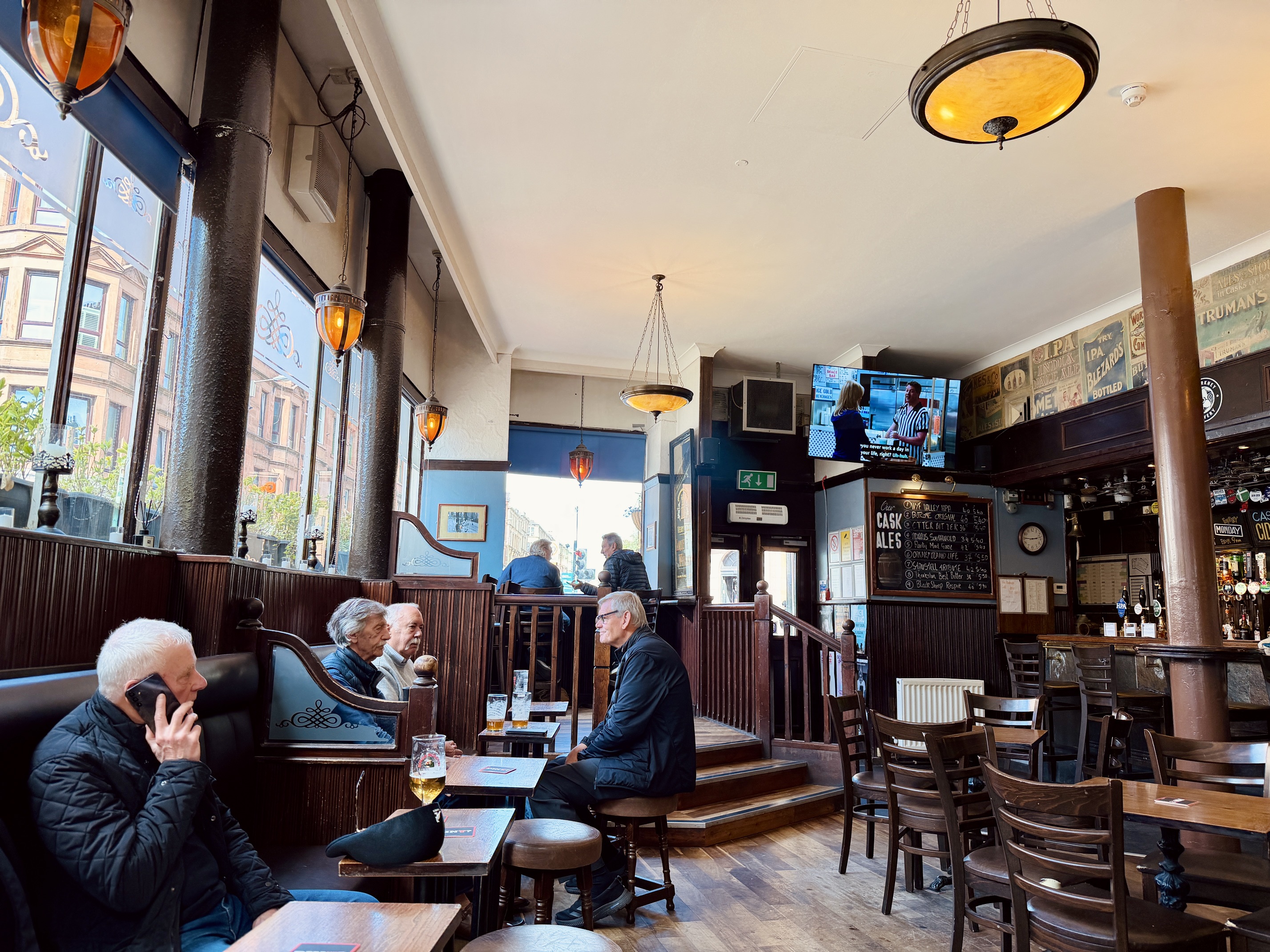
City guide: Oviedo

If you find yourself deciding to spend a city break in Oviedo, as I did, in the run-up to your holiday you will invariably be asked the same question by everybody you tell. Where? they will all say.

And you might well struggle, as I did, and wind up explaining that it’s sort of west of the Basque Country, but near the coast, in a region of Spain called Asturias that is still largely untroubled by tourists. You’ll probably, as I did, say that it’s famous for cider and blue cheese, and for fabada, a bean stew packed with pork which has a revered status in the city.

You might also mention that Oviedo features in the Woody Allen film Vicky Cristina Barcelona, and that Woody Allen loves the city and that there’s even a statue of him which, this being continental Europe, nobody has defaced or pulled up and lobbed into the nearest body of water. Actually, you might not mention that, because you might not know it. I knew it and I never mentioned it, because advertising that you’re a Woody Allen fan just isn’t done these days.

But in the run up to your trip, if you’re asked, you’ll probably just say that it’s west of Bilbao and mention the cider. And people will generally say “okay” or “I’ve never heard of it” and all of you will get on with your respective lives.

Having returned from Oviedo, if asked, I would instead say, firstly, that it’s one of the best cities I’ve visited for food and drink. At the end of a holiday Zoë and I always play a game where we both list the five best things we’ve eaten on the trip. Sitting having a beer on our final day in Oviedo we had to conclude that it was rarely this difficult to narrow it down, and then we went and had one last dinner which, if anything, made it even more complicated.

Asturian cuisine – and yes, it does at least slightly revolve around fabada and cachopo, an enormous slab made of two pieces of veal, cheese in the middle, breaded and fried – is very hearty indeed. Forget going to Malaga or Granada and picking over lots of small dishes: in Oviedo even a main course might be big enough that two people can quite easily share it. I am rarely defeated by meals, but even I had to wave the white flag a couple of times in Oviedo.

That might make it sound like it’s wall to wall gut-busters, but that doesn’t do the food justice. I had plenty of interesting, intelligent food across the city, and I also discovered – beyond the cider – great beer and coffee and a scene that had something for everyone. It was named Spain’s city of gastronomy last year, but even so it still feels like a relatively well-kept secret.

Not only that, but Oviedo is a handsome place. The old town is exceedingly pretty, steep streets meandering from one square to another, and there’s a beautiful cathedral, an imposing monastery and a picture perfect pastel-shaded food market. But there are also wide boulevards and, right in the centre, the Campo de San Francisco, the lungs of the city, a gorgeous and spacious park which lends itself gladly to a happy meander. On one side of its perimeter there are beautiful, brightly coloured houses on a sloping hill and you get a sense, almost, of another San Francisco.

Oviedo is not buzzy or boastful the way Malaga or even Barcelona is: it is a much more stately, sedate place and over the best part of a week I came to like it very much. It’s a grower not a shower, with nothing to prove, and it had a certain ease with itself that I very much admired. So different from many of the places I tend to visit on holiday – less scruffy, somehow more grown-up. On most of my holidays I come home with dozens of pictures of street art, snapped with my proper camera like the wannabe hipster I am. In Oviedo, there was comparatively little that I saw.

I must admit, though, that my first impressions of the city were distinctly mixed. The first day of my holiday, nothing went right. The shitty train to cruddy Gatwick decided to stop at Redhill and spit us all out with, it seems, no suggestions about how we should reach our final destination. Our plane sat on the runway for almost an hour because, and this appeared to be news to people, it needed a full tank to get to Spain and didn’t have one. The bus from Asturias airport felt like it took an eternity: the airport is far closer to Aviles than Oviedo, it turns out.

And then we decided to grab a late lunch on Calle Gascona, Oviedo’s famous cider boulevard, the one that features in every newspaper article about the place. Somehow it felt a little tired and unlovely, and grabbing a table outside at one of the places recommended by one of the broadsheets, a little too late for lunch, we felt like an inconvenience.

I won’t mention the place, although maybe I should, to encourage you not to go there, but it was not an experience for the ages. The croquetas were decent enough, the big slabs of cheese fridge-cold, the bread rock hard. A twenty Euro plate of calamari were thick bouncy straps of the stuff, no lightness or delicacy. And the American at the next table talked volubly and relentlessly at her tablemates, who appeared to be a captive audience. I think she might have been doing part of the Camino de Santiago, and I could picture her husband, back home, having a very pleasant fortnight in relative peace and tranquillity.

It turned out that she was a vet. I know this, because she mentioned it roughly half a dozen times in the space of thirty minutes, and as I dipped a piece of particularly rubbery squid through the crust on top of a purgatorial dish of alioli she started talking about prolapses and fistulas in more detail than I would personally have liked, i.e. in any detail at all. The squid bordered on inedible, the grey clouds overhead threatened rain. This doesn’t bode well, I thought to myself.

Anyway that was the last time I had a bad meal for a whole week, although it did put me off returning to Calle Gascona, and from that point onwards it was sunshine and strolls, coffee and cakes, beer and cider and terrific meal after terrific meal, and I was relieved to find that first experience a passing aberration, the exception that proved the rule, the rule being that Oviedo rules.

When I returned from holiday, thoroughly passionate about telling people why this grand yet modest city deserved more credit, I realised that because I’d been unable to find a decent guide to Oviedo in the run-up to my trip I’d just have to write one. So here it is, and I hope that if you’re considering an expedition to this most classy of cities – or have already decided on one, and have come here through the vagaries of Google looking for advice – it helps you to make the most of what I found to be a downright wonderful place.

And when you fly home, tell people that it’s not all about cider and blue cheese, because there’s miles more going on than that. Oviedo deserves a legion of ambassadors, and I for one am proud to be one. Fingers crossed this piece helps to create a few more.

1. La Corte de Pelayo

The evening after that awful lunch on Calle Gascona we had dinner at La Corte de Pelayo, on one corner of the Campo de San Francisco, and my holiday experienced the great reset.

It’s one of those places where from the moment you walk through the front door, you know that everything will be absolutely fine until the moment you leave: smooth, attentive service, a cosy, classic dining room and pockets of delighted diners everywhere you look. It’s been going for over 20 years, although that makes it a positive newborn compared to some of the businesses that feature in this city guide, and it had that air that it was probably exactly the same when it first opened and would be exactly the same in 2045. I loved that about it.

I was determined to immerse myself in Asturian food, so I ordered their fabada – which, I should add, is on the menu as a starter. I haven’t experienced anything quite like it: the pot of beans was brought to the table and ladled, with great ceremony, into the bowl in front of me before being set down on the table, in case I wanted a top up. The compango, a long plate with pork, pork sausage and morcilla, was placed nearby, looking for all the world like a carnivore’s idea of the best petit fours ever, for you to cut and add however you liked.

It was truly heavenly: the beans firm and creamy, the pork lending smoke and salt, the whole thing giving me complete clarity on why this dish, in this region at least, has attained a mythical status. I understood why every year they give out awards for the best fabada Asturiana (they also do this for cachopo, as we will see, and for Pote Asturiano for that matter), and why La Corte de Pelayo had been a finalist in those awards several times.

Don’t get me wrong, the meal had other dishes in it too. Zoë ate gorgeous jamon ibérico, sliced by hand as it should always be, and we shared some pixin, pieces of fried monkfish. She had secreto ibérico as a main, and I had an extraordinary shoulder of lamb, presented on the plate like one of those flying birds that adorned the walls of so many Seventies living rooms. There was an apple tart that made me very happy indeed, and a glass of ice cider – a drink I came to love far more than cider itself during my time in Oviedo.

But it was the fabada I have thought about countless times since. I put pictures of the meal on my Facebook page and a reader who knows Oviedo well told me to enjoy the city. I asked him if he had any recommendations and he said “I’m afraid you’ve been to the best place already!” I don’t know about that, because it turned out that there were many other superb meals to be had. But I didn’t order fabada again.

La Corte de Pelayo
Calle San Francisco, 21
https://lacortedepelayo.com

2. Cocina Cabal

Cocina Cabal, where I had lunch on my second day in Oviedo, was a thoroughly sophisticated spot. From the very start, when we waited by the gorgeous bar out front and had cold beer straight from the tank, to the bit where we were led into a tasteful, muted dining room and given a menu awash with temptations I liked it very much. It’s named after chef Vicente Cabal and most of the tables have a view of the open kitchen, although I had an even better view of my wife.

Everything was clever, pretty and carb-free – qualities I have aspired to for many years but seem fated never to attain – and although I found the plating somewhere between “fussy”, “geometric” and “designed by a serial killer” I thoroughly enjoyed all of what I ate. Octopus and stellar pork, edged with exceptionally light crackling, was a new take on surf and turf for me, and although I wasn’t entirely sure any of it went with celeriac purée or mango chutney I was happy to spend a few minutes eating (and completely failing to make sense of) it.

My veal with sweetbreads and salsify showed similarly worrying presentation, all parallel lines and artful smears, but I rather liked it, even if it could have done with more sweetbreads. But then, what dish couldn’t? Dessert was a white chocolate sphere full of passionfruit mousse that melted away when dark chocolate sauce was poured on it, an idea which I think was cutting edge quite some time ago, but I appreciated the execution all the same.

But perhaps the trick was in how you ordered. Zoë enjoyed two colossal ingots of foie gras with apple and Pedro Ximenez, and outrageously good suckling pig with a bright and moreish kumquat purée, so arguably the menu just had cheffier and less cheffy stuff, and I, ever the ponce, had skewed towards the former. Nevertheless it was a very good meal, and even pushing the boat out with wine and (more) ice cider it still cost us something like £160. When I consider some of the meals I’ve spent that on in the U.K. of late, I start to have dark thoughts.

Looking at Cocina Cabal’s menu again now, I see that their fabada was the best in the world back in 2022. Next time, I’m having that.

Cocina Cabal
Calle Suárez de la Riva, 5
https://cocinacabal.com

3. La Puerta de Cimadevilla

Although that fistula-ridden experience on my first day put me off Calle Gascona, it didn’t put me off sidrerias in general. It did, however, make me a bit more discerning about which ones to try, which is how we ended up at the more modern, more interesting La Puerta de Cimadevilla on Thursday lunchtime. On the edge of a pretty square in the old town, it was much less frowsty than some of its Gascona-based peers and was thoroughly fizzing with custom throughout my lunch there: we turned up early, without a reservation, but later on saw people getting turned away.

The staff at La Puerta de Cimadevilla were lovely, and brought us much more into the whole cider-pouring experience, and it was a real joy to watch them pouring it from a great height into the corner of our wide-bottomed glasses in the traditional style, the practice of escanciar or ‘throwing’ the cider, in order to aerate it. Zoë was a little more sceptical – “they’ve all got one wet shoe” was her take on this venerable custom – but even she got into the swing of it, I think.

Incidentally, we saw next to no British tourists in our week in Oviedo and I wonder if the cider has something to do with it: imagine our nation of binge drinkers having to attract the attention of serving staff every time you wanted another sip of your drink. It would never catch on. The thing to pair cider with in these parts is blue cheese, and La Puerta de Cimadevilla’s cabrales croquetas, sweetened with honey and topped with a walnut, were a properly knockout combination.

But really, the reason we were there was to try the other pillar of Asturian gastronomy, the cachopo. La Puerta de Cimadevilla is proud of theirs, with no less than four different ones on their menu. Not only that, but they include two that have been decorated: the cachopo that was declared the best in Spain back in 2023 – there’s a poster proclaiming this on the outside of the restaurant, no less – and another that was a finalist as recently as this year.

We ordered the 2023 champion because you would, wouldn’t you? And I loved everything about it, from the slightly preposterous presentation to literally everything else. It comes on its own special bespoke board, loudly proclaiming that it is indeed the ‘El Capricho del Rey Ramiro I’ and, just as endearingly, the restaurant’s other celebrated cachopo has its own unique, subtly different board. I don’t know how you can’t slightly love a place that gets so proud of its achievements: it was certainly beyond me.

But more than that, it was simultaneously delicious and colossal. There is no question at all that you couldn’t take one of these down on your own, and even between two it almost proved beyond us. The restaurant has a whole separate page on its website talking about every painstaking element of this, from the meat that’s used to the paleta ibérica laid on top of it, from the mixture of cheeses in its gooey core to the blend of breadcrumbs, corn and cheese that make up its ultra-crunchy coating. There’s even chestnut purée in the mix somewhere, the kind of thing some dullards would describe as the hero ingredient, no doubt.

All that sounds great, but the proof is in that moment when you make your first inadequate incision into the gigantic slab of Asturian food history and understand the fuss. Before that, my only experience of this kind of dish was the Andalusian flamenquin, a cigar of pork loin, jamon and cheese that I used to think was the best breadcrumbed thing ever. The cachopo has forced me to revise my opinion somewhat, but I also suspect more research is necessary.

Equally brilliant and frustrating was the fact that the menu contained countless other things I would have loved to try that were rendered impossible by the sheer volume of cachopo you had to put away. Of all the restaurants in the guide I think this was the one Zoë most wanted to return to, to eat their tomatoes with bonito. The table next to me was so struck by a neighbouring table’s ensaladilla russa that they specifically asked what it was and I could see them making a mental note for next time. They even do a fabada – who doesn’t? – and you wouldn’t bet against it being marvellous.

La Puerta de Cimadevilla
Calle Cimadevilla, 21
https://lapuertadecimadevilla.es

4. Gloria

The night I ate at Gloria, the heavens opened and the stars aligned: it was the one time during our stay in Oviedo that it properly chucked it down, which just so happened to be the night we had a reservation at the restaurant two minutes’ walk and a few doors down from our hotel.

Not just any restaurant, though. Chef Nacho Manzano has Oviedo’s only Michelin starred restaurant, NM, situated in the El Vasco mall, a huge shopping centre I really struggled to like. But Gloria is the restaurant he shares with his sister Esther, less showy but properly lovely. Strangely I can’t tell you what the main dining room looked like because we were seated in the front room, by the bar, with just one other table, occupied by a pair of friends catching up. But actually that made it feel intimate, like private dining almost, and if I was in the zone allocated to tourists I soon found I didn’t mind one bit.

Gloria’s was another of those menus – Oviedo seemed to be full of these – where the starters and main courses cost pretty much the same, leaving you with little or no idea how to structure a meal, what was to share and what was to eat on your own; I sometimes suspected that most of the servers in Oviedo thought we should share everything and couldn’t understand why we wouldn’t. But we were helped by a brilliant server at Gloria who very firmly told us when something was too big for us to order one apiece, and everything was so delicious that we ended up sharing it all anyway.

That meant, unusually, tuna two ways – an exquisite tataki just-cooked, dressed in impeccable extra virgin olive oil and strewn with garlic, and a hefty piece of loin halved and served blushing with gorgeous tomatoes sharpened with citrus, nutty beans like edamame and crispy onion. The former was maybe too delicate to share, the latter quite the opposite, and one of the best things I ate in the entire trip.

Our server talked us into splitting arroz con pitu de caleya between us, which was probably wise but did leave me wanting more at the end. Pitu de caleya, or roadside chicken, is a noted Asturian free-range chicken, and serving it with rice in this way is something Manzano reintroduced first at his three-starred restaurant Casa Marcial. If this was the diffusion line, it felt very far from being short changed: the rice was rich beyond measure with the juices from the chicken and the chicken itself – darker, leaner and gamier than the usual fare – was glorious.

Having been restrained thus far we earned the right to spoil ourselves for the rest of the meal, so we did. A cheeseboard full of Asturias’ finest completely redeemed the dismal Calle Gascona selection from our first meal in the city, and then a chocolate cremoso topped with the smoothest hazelnut ice cream, ringed with olive oil – yes, a whole one each – brought matters to a resoundingly successful conclusion. I probably don’t need, by now, to say that the latter was accompanied with another glass of ice cider but there you go, I’ve said so anyway.

The rain had died off by the time we walked back to our hotel to do some serious digesting. How could it have persisted, after a meal so good it had the power to banish pathetic fallacy?

Gloria
Calle Cervantes, 24
https://www.estasengloria.com

5. El Fartuquin

Let’s get this bit out of the way first: no, I don’t know where the name comes from, yes, it sells the bean dish and no, I didn’t order it. So snigger if you must, but El Fartuquin was possibly the most traditional sidreria we ate at, and a very successful and popular one at that. The basement room looked like the picture above when we sat down at 9 on a Friday night, but within half an hour every table was packed. Everything about it had that assured air which seemed to permeate much of the city, and everybody was having a terrific time; I heard no English spoken anywhere.

If it was only solid by the standards of this holiday, that didn’t mean it wouldn’t have been an outstanding meal in any other context. I really liked the pixin, nuggets of fried monkfish with a little pot of alioli, and I quite admired the brave plating choice to serve the skeleton of the monkfish next to it, like something cooked up by H.R. Giger, to leave you under no illusions about where those delectable morsels had come from.

I also rather enjoyed yet more pitu de caleya – I’d got a taste for it by then, you see – this time in a dark and potent stew which contained maybe a tad too much mustard for my personal liking, although I found a way to see past that. Zoë decided, more out of hope than expectation, to have her own personal cachopo and was even more defeated by it than she had been the last one. This is as good a point as any to reiterate that Asturias doesn’t do small portions: Oviedo would not, for instance, be an Ozempic-friendly city break.

I felt a little like El Fartuquin only really suffered by comparison with the other meals we had in Oviedo, rather than anywhere else, so it’s still one to consider if you find yourself in the city for an appreciable length of time and you’re disinclined to eat at the same place twice. I’d also add that, despite being a sidreria, it had an excellent list of reds, including many I’ve sampled on previous visits to Malaga. The kind pricing of wine in the city is another reason why the bill never stings anywhere near as much as it would back home.

El Fartuquin
Calle Carpio, 19
https://elfartuquin.es

6. El Ovetense

We had lunch at El Ovetense on our final full day of the holiday and it was a place I discovered entirely by chance that very morning.

How it happened was this: we were still buzzing from a very happy evening spent drinking at Cerveceria Cimmeria (number 10 on this list, just down there) and, following them on Instagram, I saw that they’d shared a beautiful picture of the place on their Instagram stories. The person who took it was a very talented local food photographer – I forget her Instagram handle – and all the photos in her grid were of food she’d cooked herself with one exception, a couple of dishes from a place called El Ovetense. And they looked good. Drop-everything-change-your-plans good.

So I did some more research, fell well and truly down the rabbit hole and found an article from last year in El Pais which left me with no doubt in my mind that I needed to snag a table there. El Ovetense, in the old town, is technically a hotel restaurant, and has been trading since 1959. The founder’s daughters Natalia and Ana run the place now, and it has achieved legendary status for two dishes. So naturally, after turning up at noon to ask Ana nicely for a table on the terrace, only to be told that they didn’t open until 1pm, those dishes are exactly what we (eventually) ordered.

One was the pollo con ajillo – chicken with garlic – which doesn’t begin to explain how incredible this dish was. Tons of the crispiest jointed chicken, skin cooked until brittle, the whole thing issuing a siren song to be parted from the bone, came festooned with industrial quantities of crunchy fried garlic, the whole lot sitting on a layer of the finest chips, which slowly became permeated with all that garlic and all those juices as the meal went on. Seventeen Euros for this, and it could easily have served two on its own. Seventeen Euros! I could honestly weep.

But the other dish, which is even more the signature of the restaurant, is their jamon asado “Serafin style”, named after the restaurant’s founder Serafin Garcia. I never got to try jamon asado when I visited Granada last year, and I felt like I’d missed out at the time, but I know now fate was keeping me waiting for this, a rendition which I can’t imagine being surpassed.

Picture a plate groaning with gorgeous sliced ham – apparently there are 16 slices per portion, carved with a special knife so fine and sharp that it’s like playing the violin. Picture that ham draped over a rubble of crunchy potatoes, and then picture a rich sauce, somewhere between a jus and a gravy, poured liberally over it all. Only Natalia and Ana handle the preparation of this dish, and they cook up to 20 kilos of ham a day for the purpose. It is the kind of dish that not only the restaurant, but also the city, deserves to be famous for.

The ham, the spuds, that gravy, the many phenomenal forkfuls made up of those elements… it was, as with many dishes in Oviedo, not for the faint hearted but one for the memory banks and the record books. We also had yet more spuds, this time in a salty and arresting cabrales sauce and we didn’t need them, with all that other food and all those permeated potatoes, but we ate them all the same because they were as fantastic as everything else.

It is probably for the best that I discovered El Ovetense on my final day, completely by chance, because if I’d been there on my first day I might not have gone anywhere else and then you wouldn’t have this guide to read. But if you decide you want to visit Oviedo, this is the place to make sure you visit and these are the dishes to make sure you have. And yet, I found myself wondering – if they are this good, what other unsung gems are hiding further down the menu, when they stick two absolute showstoppers right at the top?

El Ovetense
Calle de San Juan, 6

7. Casa Fermin

My final meal in Oviedo – unless you count something wolfed down at the airport the next day, which I’d rather not – was at Casa Fermin, just down from La Corte de Pelayo and so very near to the park. It was, I suppose, the Big Fancy Meal of the holiday, and after lunch at El Ovetense I was worried our trip would end with a whimper rather than a bang.

I worried needlessly, because although Casa Fermin was very different to El Ovetense it was, in its way, as good a meal as any we had on the trip. The dining room looks a smidgen sterile in pictures but was actually a very striking one to which photographs possibly don’t do justice. The enormous tablecloths that get caught under your feet seem to be a Spanish thing – Cocina Cabal had these too – and they’re a bit Total Eclipse Of The Heart, but the space was peaceful, hushed, luxe and poised.

And the food was very good indeed, in the same kind of bracket as Cocina Cabal but with, for my money, everything taken up a notch. We eschewed the tasting menu for the à la carte and were again rewarded with a slightly confusing range of options where some dishes were small and clearly to be consumed solo, others were big and clearly designed to share and, well, with the rest it was anybody’s guess.

This, though, is where the serving staff really came into their own. We ordered a few individual things, a few dishes to share which were brought to the table already divided and what that meant, all in all, was that we kind of designed our own tasting menu with the help of our server, very much the best of both worlds.

So we had a croissant each, deeply flaky and buttery, crammed with tuna tartare and we shared a feather-light rectangle of brioche topped with a translucent film of Iberian pancetta and piled with caviar. An arroz con pulpo, similarly, was divided into two bowls and was extremely generous for two: god knows how they expected one person to polish that off as a starter and have room for everything else.

I lucked out, though, with the suckling pig. Pressed into the most divine oblong, the meat all succulent and the crackling onomatopoeically doing exactly that, it was superlative stuff. I liked the hazelnut pesto they served it with perfectly fine, but I loved the smoked pineapple purée, something I would never have anticipated in a hundred years and which was an eye-opener and a half. It even made me think that possibly, just possibly, there might be a place for pineapple on pizza, provided you smoked it first.

All of that went beautifully with a white wine from the Canary Islands which was complex with almost oxidised notes, and even though everyone at the surrounding tables seemed more classy, more genteel and an awful lot more Spanish I had an absolute whale of a time throughout my meal.

Dessert was the best way I could imagine to finish a week of miraculous meals, a sort of ice cream cheesecake made with a local cheese called Gamonèu; I’d forgotten how the Spanish love to include savoury notes in cheesecake, and this had a little pungent punch which elevated it far above the workaday. It came with a tiny moat of ice cider: I took this as a cue to have one final golden glass to match.

Casa Fermin
Calle San Francisco, 8
https://www.casafermin.com

8. Casa González Suárez

I had no real concept, before I went to Oviedo, of how different Asturias would be to Andalusia, where I’ve spent far more time. So I was expecting that, like Malaga or Granada, Oviedo would be awash with jamon shops with stacks of bocadillos in the window, ham shining under the spotlights, churrerias left right and centre and vermouth bars here and there.

Well, in my experience Oviedo is not like that. There is jamon, and I eventually chanced upon a couple of shops, and I didn’t make it to either branch of the only churreria, Churreria Guty, that I came across online. Next time, perhaps. And Oviedo is a cider city first, a wine city second and although it has a little grid of streets – the Ruta de los Vinos – around Calle Manuel Pedregal, I didn’t make it there either. I know, I know, what kind of a guide is this?

So the closest I got was Casa González Suarez, a little spot celebrating its centenary this year. It served vermouth, and had a limited menu of ham, cheese and bocadillos, and it was the perfect place for a short, casual pit stop after the morning coffee and before the afternoon amble. The ham was cut by hand, and came on a paper plate – it wasn’t bad, but I’ve had better. The cheese, also on a paper plate, was more refrigerated than I’d have liked.

The vermouth, though, and the service were splendid, and I liked the room. Lunch for the two of us cost less than twenty quid. Asturias is almost different enough to Andalusia to be a different country – they worship different ways to eat a pig there – but I enjoyed my brief, affordable excursion to the south.

Casa González Suárez
Calle Ramón y Cajal
https://casagonzalezsuarez.com

9. Cerveceria l’Artesana

If Oviedo is cider first, wine second, where does that leave beer? Well, from my homework and exploration, in a limited number of very safe hands.

Cerveceria l’Artesana, on a street parallel to Calle Gascona, was a really fun and rather popular craft beer bar which very much lived up to the usual aesthetic of those places – a long thin corridor of a room with high tables against the wall, and a bigger room up the stairs at the back which had more room but less personality. I was heartened by how many people were in there on a Wednesday night, and I liked many of the beers I had.

Some of those, like piney pale ale La Vuestra, were brewed by the venue, and others, like a very drinkable DIPA called FOMO, are by other Spanish breweries – Bilbao’s Luagar in that case. An excellent can fridge gave me the chance to reacquaint myself with the Girona brewery Soma, whose beers I’d so enjoyed the previous year in Granada.

Having got there, we were having such a good time that we stayed for food. L’Artesana’s Instagram makes much of the fact that they make all their food on the premises, and I very much got that – everything was robust, substantial and frighteningly good value. Empañadas were Venezuelan rather than Argentinian, so made with corn dough rather than pastry, more like an arepa, and were colossal and stuffed with chicken. We got two for a price you’d gladly pay for one, and both were impressively sturdy.

Fingers de pollo (for some reason they preferred fingers to goujons when lifting a word from a foreign language) were actually really good chicken tenders, again absolutely whopping and brilliant dunked in a pot of moreish honey mustard dip. The only thing that defeated me was their burger. It cost something like twelve Euros and was a behemoth, and it was the first but not the last time I didn’t clear my plate in an Oviedo venue.

You couldn’t dispute the quality, and l’Artesana even makes its own buns and burger sauce, but it was a little too thick for me, and a little too pink in the middle: close to tartare, really, underneath the crust. Never mind. I would go back, I would pick dishes that looked more like snacks and beer food and I would still leave full and happy, wallet far from dented. It was another illustration that when it comes to what you should eat with craft beer, the U.K. still has plenty to learn.

Cerveceria l’Artesana
Calle Santa Clara, 8
https://www.instagram.com/lartesana_oviedo/?hl=en

10. Cerveceria Cimmeria

My homework had identified Cerveceria Cimmeria as a place to try for beer, and early in my time in the city I clocked that it was on the same hill as La Gente – number 13 on this list – a few doors down. It was closed during the day, so it was impossible to tell what it would be like. There was a Löwenbräu sign outside, and the name of the pub was in that sort of Celtic, sort of Advanced Dungeons & Dragons font I remember well from my misspent teenage years. I couldn’t possibly have known, at that point, that I was gazing upon one of the best pubs I’ve ever had the luck to drink in.

Returning on a week night, minutes after they opened, it was a revelation. A beautiful spot with some low tables in the window and along one side, a bar and stools taking up the other half of the room. Lovely wood panels, walls covered with beer swag and everything scrupulously clean. Twelve beers on offer – including one cask handpull – and a dizzying array of styles and breweries, from Spain and beyond. The lager was Löwenbräu, the cask beer was Shepherd Neame’s very own Bishop’s Finger, but beyond that it got really interesting.

That meant excellent IPAs from Spanish giant Garage, Asturian brewery Caleya and Malandar, from Cadiz. There was an imperial stout by renowned Basqueland Brewing and, from far further east, a delectable sour by Latvia’s Arpus and another corking pale from Berlin’s Fuerst Wiacek. Not only that, but Belgium was well represented with a Lindemans and the Straffe Hendrik Tripel on the board.

I don’t think I have ever seen such a canny but compact selection of beers, such a well balanced lineup of countries and styles where I wanted to try nearly all of it. I resolved to try nearly all of it.

I didn’t realise at the time, but now I do – Cimmeria is the kingdom featured in the Conan The Barbarian stories, which might have explained the font on the outside. The place was filling up with the kind of diverse craft beer drinking crowd you never see at these places in the U.K., and Def Leppard was playing on the stereo. It was how my corner of our sixth form common room would have been back in 1991 if (a) we had been cool; (b) we’d lost our virginity; and (c) we’d been allowed to drink on the premises.

I looked at Zoë, and I could tell she was in love with the place. Maybe it was the beer, maybe it was the Leppard. It was probably, in truth, a bit of both. But I was in love with it too.

All that and snacks – a bowl of crisps, popcorn or nuts with each round, and a simple but effective menu of cheeses or empañadas. We ordered a mushroom and cheese empañada each and were told they wouldn’t come out for a while because they needed to be baked properly, which is exactly the answer you want to hear, and when they arrived they were gorgeous.

We liked Cimmeria so much that it was a huge wrench to leave for our dinner reservation, and we resolved there and then to move a few things around so we could do it all over again the following night. So the next evening we were stood outside at 7, when it opened, we grabbed the same table and it was, if anything, even better than before.

Cimmeria was following both Zoë and me on Instagram by then and one of the owners, who was charm personified, told us that we had been spending our time wisely from what she could see of our travels. That was lovely of her, but none of it was spent quite as wisely as those happy hours in Cimmeria.

We left for our final restaurant of the trip happy to have found possibly the only pub I’ve been to that comes close to rivalling Bruges’ magisterial ‘t Brugs Beertje and devastated that we’d only had two short evenings there.

Cimmeria celebrated its thirteenth birthday the month before we arrived in Oviedo. I wish it many, many more very happy returns – and, speaking of returns, I can’t wait to go there again.

Cerveceria Cimmeria
Calle Martínez Vigil, 8
https://www.instagram.com/cimmeria_oviedo/?hl=en

11. El Lúpulo Feroz

El Lúpulo Feroz is on the outskirts of the city, out past Calle Gascona and the El Vasco mall, in the only bit of Oviedo I visited that felt decidedly residential. I wanted to try it as the third in my trilogy of craft beer places and I found that, aesthetically at least, it had much in common with l’Artesana. Their back room was a very attractive spot – blood red walls, beer memorabilia everywhere, from Belgium, Czechia and even dear old Blighty. It was oddly pleasing to see an illuminated Bass sign on the wall, the beer free from its usual connotations of little Englander pubman gammonistas.

Speaking of beer, the venue had a tap takeover by Danish brewery Amager Bryghus the night I visited, and I liked what I had. Oviedo has no verified Untappd venues for beer – not that kind of city, not yet – but I later discovered, once I’d got home, all the places I hadn’t made it to: Bär Berlin, Vivalabirra and the courageously named Cerveceria Lord Vader (let’s hope Disney never find out about that one). Plenty kept in reserve for, hopefully one day, an updated version of this guide.

El Lúpulo Feroz
Calle Indefonso Sánchez del Rio, 8
https://www.instagram.com/ellupuloferoz/?hl=en

12. Pionero Coffee Roasters

I suspect that the coffee scene in Oviedo isn’t quite as advanced as in other Spanish cities I’ve visited. The Best Coffee app, a regular staple for me on my travels in the U.K. and overseas, drew a complete blank on the city, and even further research only threw up a handful of places. One, Pionero, was in the northwest of the city, the other side of the Campo de San Francisco from the old town and so very close to my hotel, which meant a couple of very happy contemplative coffees there in the mornings before heading off to explore.

It was a very nice spot with extremely friendly, helpful staff and although the inside was quite serviceable they had a couple of tables outside with a view out onto the street, and thus people-watching, so I tended to plonk myself there. No sunshine, really, so al fresco potential was strictly limited but all the same I found it a brilliant spot to start the day. Coffee was decent – definitely a step above the generic cafe con leche – if not top tier, but Pionero also roasts and sells beans to take home. I’m very looking forward to that first V60 with them.

Pionero Coffee Roasters
Calle Marqués de Pidal
https://www.pionerocoffee.com

13. La Gente Café

La Gente is on Calle Martinez Vigil, the steep street by the monastery that is also home to Cerveceria Cimmeria. For both those reasons, it probably became my favourite street in the whole of Oviedo over the course of the week. La Gente has a lovely little terrace, overcoming the gradient of quite a challenging hill, and was far and away my favourite spot to sit, drink coffee and take in the surroundings.

I think I liked La Gente’s coffee slightly more than Pionero’s, possibly influenced slightly by the fact that their lattes are tall and generous, so more my personal thing than a cortado or a flat white. I found out from the owners of Cimmeria that La Gente had only opened at the start of the year, and what impressed me was just how part of the community it already felt, full of brunchers, chatters and even dog walkers (owners Kate and Andrew own a miniature schnauzer, Lando, who features in much of their branding).

They are brunch specialists, which means that if you go there around lunchtime you’ll struggle to get a seat and, if you’re not eating, you might well feel guilty about depriving them of a table with a higher spend. But the rest of the time it was just a brilliant space to sip latte and make a plan of attack for the day’s wandering, sightseeing and eating. The interior was absolutely lovely too, although it was a tad too warm to spend time in there.

I also liked the sense that as a business it was still evolving. On one visit I heard one of the owners and a member of staff discussing the menu for the season ahead, and I got the impression from the blurb and postings on social media that La Gente either offered, or was looking to offer, natural wine on selected evenings. Other than that, it’s worth pointing out that, like Pionero, La Gente closes pretty early during the week – so if. you do want an afternoon flat white make sure you get there before the shutters go down at 4pm.

La Gente Café
Calle Martínez Vigil, 6
https://www.instagram.com/la_gente_cafe/?hl=en

14. Diego Verdù

One thing you can rely on from a city guide of mine is that if I go somewhere in summer, I’ll find somewhere for you to eat ice cream. To be honest, even in the less clement months I can usually snaffle one but on a sunny day in Oviedo my thoughts turned to tracking down a tarrina – that is to say a tub – of something cold and captivating.

Enter Diego Verdù, an Oviedo institution which has been trading for nearly 150 years; as we’ll see in the remainder of this list, the people who make sweet treats in the city have had a very long time to become excellent at it. Diego Verdù started out making turron, but by the 1930s it had also decided to turn its hand to ice cream. And thank goodness it did, because both of its branches – the very pretty almost-original premises on Calle de Cimadevilla and the second more modern one just down from the Woody Allen statue – sorted me right out on this trip.

All the flavours that I tried were magnificent although, as befits their vintage, most of them kept it fairly establishment. I loved their chocolate, and their pistachio, but the most leftfield I tried on this visit was chocolate with pimento which I thought downright bloody great. For all I know they may occasionally experiment with yuzu, cinnamon or even cabrales – just imagine – but I didn’t see any of that on my travels.

Sitting on a bench – both branches are takeaway only – and attacking a massive tub filled with two generous scoops for less than four quid, I was quite unbothered by that. Oviedo just isn’t the kind of city for off the wall stuff, and is none the poorer for it. Unlike with coffee, Oviedo is positively enlightened when it comes to helado, and both shops are open until 8.30pm. There’s also a little kiosk on the edge of the Campo de San Francisco, which boasts many benches perfect for sitting, eating and sighing.

Diego Verdù
Calle Milicias Nacionales, 5/Calle Cimadevilla, 7
https://www.diegoverdu.com

15. Camilo de Blas

Diego Verdù is not the only Oviedo institution that’s been brilliant for longer than any of us have been on the planet. Confiteria Camilo de Blas has been in the city since 1914, although they were trading in Leon for another forty years or so before that. The thing they are most famous for, and possibly the emblematic goodie most associated with Oviedo, is the carbayon.

Now, carbayon originally referred to a huge oak tree, beloved by and symbolic of the city, to the point that natives of Oviedo called themselves carbayones. It was felled in 1879 to make way for Calle Uria, the ‘modern’ street connecting the old town to the train station which is now home to department store El Corte Ingles. That’s progress for you. That tree, I suppose was the Metal Box Building of Oviedo (one for my Reading readers there) but in 1924, the mayor of Oviedo commissioned the confiteria to create a sweet treat and this new incarnation of the carbayon, an incredible sweet pastry named after the tree, was born. That is also progress for you.

And what a treat it is. A lozenge of puff pastry filled with almond cream and then topped with a glossy layer of an exceptionally sweet coating which, depending on who you Google, either involves egg yolk or egg whites or both. Either way it also includes a lot of sugar, and makes for a very satisfying shell. This is one for those of you with a sweet tooth, like me. Zoë and I picked a couple up from their second branch on Calle Jovellanos and inhaled them on a bench in the Plaza de la Constituciòn and they were, to my mind at least, unimprovable.

“It’s like a cross between a yum yum, a frangipane and an éclair” was Zoë’s verdict, and I made a mental note of her saying that because she summed it up better than I could. All that for about £2.80 each, so cheaper than a Picnic brownie and even more indulgent. My boss likes to quote Philip Pullman, repeating the definition of an éclair as a cake that is “long in shape but short in duration”: I brought him back a carbayon and he loved it, although he was even more delighted that it was far less short in duration.

Camilo de Blas
Calle Jovellanos, 7/Calle Santa Susana, 8
https://camilodeblas.es

16. Confiteria Rialto

The third of Oviedo’s amazing venerable confectioners is Confiteria Rialto, which celebrates its hundredth birthday next year. It also has two branches in the city centre and it also sells carbayones. But the thing it’s synonymous with is Moscovitas, thin almond biscuits half coated in chocolate, to the extent that even its domain name references Moscovitas, not Rialto.

When I put some pictures on Facebook regular reader Rodrigo – the chap who told me I’d eaten at Oviedo’s best restaurant on my first night – asked if I’d tried Rialto’s Moscovitas, and fortunately I was able to post a photo of me holding one of Rialto’s distinctive red and gold bags, containing two luxurious-looking boxes of the things. But actually, I didn’t try them until I got home, when I was glum about being back in Reading and wanted a taste of elsewhere.

And once I did, I was crestfallen that I’d limited myself to just the two boxes, because they were extraordinary. Every single one irregular, every single one made by hand, each one thin and light, with just enough crunch and just enough substance, each one making you want another. Imagine the most rarefied chocolate Hob Nobs you could imagine, square it and you still wouldn’t be close. Rodrigo also told me that he has a recipe for Moscovitas which approximates to the Rialto classic, and I churlishly pooh-poohed him. Now I’ve tried them, I may have to ask him nicely.

One last tip, which is both about Rialto and Oviedo more generally, is this: Asturias Airport does a better job than nearly any airport I’ve been to of celebrating the region it serves. So you can buy – and not at exorbitant prices either – some of the city’s greatest hits, whether that’s more carbayones from Camilo de Blas, beautiful ice cider, compangas and chorizo from Calle Gascona stalwarts Tierra Astur or, last but not least, more of those Moscovitas. So if you don’t get to Rialto, you can still pick some up for your journey home. If you do, can I trouble you to get an extra box for me?

Confiteria Rialto
Calle San Francisco, 12/Calle Bermúdez de Castro, 2
https://www.moscovitas.com/en/home-2/

(Click here to read more city guides.)

Since January 2025, Edible Reading is partly supported by subscribers – click here if you want to read more about that, or click below to subscribe. By doing so you enable me to carry on doing what I do, and you also get access to subscriber only content. Whether you’re a subscriber or not, thanks for reading.
City guide: Montpellier (2025)

With the exception of Bruges, Montpellier is the city I’ve visited most in the last three years. I went pretty much on a whim back in 2022 and loved the place – so much so that I went again later in the year for my big summer holiday. And I loved the city so much that, less than two years later, it wound up being the place where Zoë and I went on honeymoon last May. We both loved that so much that we went back again this year, that same week in May, for another idyllic week eating, drinking, soaking up the sun, people watching and taking photographs.

All of this only happened because at one of the lunches I organise for readers of this blog, regular readers Phil and Kath waxed lyrical about Montpellier, giving me the clear impression that it was the best city break I’d never had. They’d stopped there almost by chance themselves, years back, and become regular visitors as a result. They got the bug. Having had that conversation with them I became a regular visitor myself, and here I am writing this. I got the bug, too. So be warned: if you get to the end of this guide you too might end up developing a fun, if costly, habit.

It does feel though like a city not many people know about, not an obvious candidate for a trip in the same way as Paris, Nice, Bordeaux or Lyon might be. So here’s my attempt to sell it to you: it is an absolute beauty, with a gorgeous old city full of winding lanes and sun-washed squares, wide palm tree-lined boulevards with trams whooshing past. It is a fantastic juxtaposition of old and new, with all that grandeur coexisting with a young, vibrant, metropolitan populace and a lively craft beer scene. It has wine, if you like that, and natural wine, if you like that too.

It has its own Arc de Triomphe and a fantastic neoclassical district, Antigone, built in the Eighties, which looks like it has been there for centuries. It has scruffy street art and plenty of fine art, it has galleries and churches and a thoroughly charming botanical garden. It has little squares like Place de la Canourgue filled with green space, lined by mansions and pavement cafes, and it has Les Arceaux, a grid of little streets under a huge and handsome aqueduct. The food market there during the week is a phenomenal plethora of everything you could want to eat and drink, at night people play skittles in the square or dine outside La Cigale.

It has two excellent indoor markets too, and those trams – in an impressive four-line network that is free for residents and a crazy twenty Euros a week for the rest of us – cover plenty of the city, heading almost all the way to the sea out east. I have never in all my time in Montpellier felt like going somewhere else, but if you do the trains are quick and easy to the likes of Nimes and Avignon – or the port of Sète, which remains on my list to visit some day.

My sales pitch doesn’t scratch the surface. I’ve not mentioned the street food scene at Marche du Lez, or gone into detail about the paintings at Musee Fabre, nor have I mentioned the rue de l’Ancien Courrier, possibly the most beautiful shopping street I have ever seen, like the Marais transplanted somewhere that is nearly always sunny, nearly always warm. I’ve not talked about the splendour of the Promenade de Peyrou, the attractive square with an incredibly photogenic water tower at one end, the Arc de Triomphe at the other.

I could go on and on, but I suspect the rest of this city guide will be long enough as it is. Because apart from Montpellier just being the most amazing place to be: to be a flâneur, to amble and loaf, to sit in the sun and watch the city living and breathing with a mixture of admiration and envy, it is also a stupendous place to eat and drink. And that of course is my focus, why I keep going back and why I’m writing a guide to some of its (many) best bits for a third time. So let’s get on with that, and hopefully once I’m done you’ll want to go there too: easyJet flies there directly from Gatwick, although if you’re time rich you could take the train there from Paris, which would also make it easier to bring back all manner of food and drink.

My previous guide to Montpellier was a bit of a halfway house, written in 2022 and updated in 2024. This one is almost completely overhauled, which means that unless I visited a place in 2024 or this month (or both) I’ve taken it out of the guide.

Many places I’ve left out might well still be good, but I can’t 100% vouch for them. If you’re a completist, you might want to consider Pastis, Reflet d’Obione, Green Lab or Le Reservoir from that guide. I’ve also removed a few places that I revisited in 2025 but didn’t like as much or that, with hindsight, have been supplanted by better options – like l’Artichaut and Popular Brewing.

Where an entry in this guide dates from 2024 I’ve made that clear, otherwise the recommendation is as fresh as they come, at the time of writing. This guide has fewer entries than the previous edition, but I know it’s still a long list. I did seriously consider slimming it down further, but in the end I didn’t: everything in here is worthy of its place.

Two other things before I get started. First of all, although this guide distinguishes between places to eat and places to drink, this is Montpellier and so the two can’t easily be separated. You can drink wonderful stuff at all of the restaurants and often eat cracking food at the bars, so the whole list is worth considering. I had some of my best meals at lunchtime, followed by an evening eating small plates in a bar.

Secondly, I’ve had a few people ask me where to stay in Montpellier. I think the old city can be tricky, because rooms are often cramped and/or expensive, and I never found an Airbnb I liked enough, despite the many advantages that come with having a kitchen and a fridge – although I suppose if I’d been eating stuff from the markets every day this guide wouldn’t exist.

I stay at Les 4 Etoiles, a guesthouse in Les Arceaux, and I can honestly say I wouldn’t recommend anywhere else. The welcome from Pierre is absolutely faultless, the breakfast – fresh fruit juice, freshly made fruit salad, baguette and pastries from a nearby bakery, good coffee – is marvellous, the rooms are wonderful and the little roof terrace comes into its own on a sunny day with a good book and a cold drink. Not only that, but the neighbourhood really does feel like a village close to the heart of the city: six minutes by tram, or a fifteen minute walk away from the centre.

I am already trying to work out when I can return. And when I do, I plan to fill some of the gaps in this guide: further research into Montpellier’s many wine bars is in order, along with a serious deep dive into the patisserie scene, something I promised last time but which is still overdue. I’m not currently in a position to judge between the varying merits of Maison Bonnaire, Clara Jung, Maison l’Oeuf and Scholler, but fingers crossed next time I will be.

Where to eat

1. Bistro Urbain

Bistro Urbain is a lovely little spot in the Écusson, the old city, and when I visited it in 2024 I had possibly my meal of the trip. I still think about the asparagus tartlet I ate there, and the magret de canard, skin seared, pink-centred, served with a terrine of courgette and rhubarb, a curveball ingredient the kitchens of Montpellier like to chuck in to a savoury course to keep you on your toes. I vowed to go there for dinner the next time I visited the city, to do it properly.

I did exactly that, and I had a wonderful meal although, in truth, it just reinforced that lunchtime diners get an astounding deal in this city because the menu didn’t differ hugely, in size, width or quality. The main difference seemed to be that two courses was not an option, so you chose between four – with a very generous amuse bouche and a choice of fish or meat main, or the “menu Pandore” where you got both main courses, but slightly less of each.

I did the latter and although I loved my meal I suspect that next time I would keep it simple. Ravioli of pork with some kind of fermented asparagus panna cotta was 40% good and 60% interesting, and I rather liked the slow-cooked tuna, given a pop with confit lemon and complexity by the addition of smoked haddock. But the other main, the shredded beef with another exceptional courgette terrine – what this restaurant can do with the humble courgette! – wild garlic, wholegrain mustard and a deep, intense jus was so marvellous that I wished I’d just had a bigger portion of that.

In that respect the menu Pandore was aptly named: at the end you kind of wished you hadn’t opened the box. But they made amends with a ludicrously moreish baba au rhum, at its heart a glossy and spiced chai ice cream that gave an old stager a new lease of life. Dinner for two with an excellent bottle of wine came to one hundred and fifty pounds – one of our only pricey meals of the trip but a steal for cooking of this quality.

I am pretty sure Bistro Urbain had a Bib Gourmand when I was deciding to visit them the first time and have lost it since. Based on my visit, that’s about as mystifying as everything else the inspectors do (how Newbury’s Woodspeen or Bristol’s Paco Tapas got a star remains beyond me: both have since been removed).

Bistro Urbain
5 rue Alexandre Cabanel
https://bistrourbain.com

2. Mahé

If Bistro Urbain was my discovery of 2024, I can say without hesitation that Mahé was my discovery of 2025. It’s a little out of the way – I ended up getting there by taking a combination of a tram and a bus – and if it wasn’t worth the detour I wouldn’t waste a moment in telling you so. But no, it is an exceptional place and I’m certain that if it was right in the centre it would be even busier and cost a darned sight more.

Mahé really is one hell of a restaurant. From the roadside, just down from the bus stop, it looks like an unexceptional, squat, concrete structure. What you don’t see until you go in is not only an extremely tasteful dining room but, beyond that, an absolutely gorgeous terrace that captures the sun, a place to completely escape from the noise beyond and, in my experience, any cares you might have.

The menu, at lunchtime, is a crazy forty Euros for three courses and this isn’t the kind of disappointing menu of compromises you’d expect at the likes of, say, London Street Brasserie. Mahé, like Bistro Urbain, gives you a narrow range of choices but that narrowness doesn’t make it any easier. I forewent the chance to eat crab ravioli – one of my favourite things – or pork with black garlic houmous and lacquered aubergine, and it would have hurt a lot more if everything I’d eaten hadn’t been so delectable.

First off, a raft of bang-on asparagus completely buried by its precious cargo of quail – enormously generous amounts of the stuff – covered in shaved foie gras and covered in a muscat reduction, the whole thing beautified with edible flowers. Dishes like this are why French restaurants bring you excellent bread, and no butter.

Even better was to follow with an astounding piece of veal, cooked pink, served with rosemary glazed carrots, a buttery pomme purée and morels that had soaked up a deep, delicious jus like sponges. This dish on its own was worth forty Euros, and might have cost it elsewhere, that it came with two friends in tow at that price almost beggared belief.

Dessert was a classic example of this region’s ingredients allowed to shine without too much mucking about: layer on layer of the lightest, most delicate pastry trapping an indulgent crème mousseline, singing with orange blossom. And under that? Loads and loads of the sweetest, brightest strawberries, quite possibly from the market I’d attended in wonder and envy that morning.

Mahé has interesting opening hours – closed two days a week, only open for lunch two days a week, only open for dinner one day a week. Only on Thursdays and Fridays can you pick a daytime or evening slot. Next time I go to Montpellier I will be sorely tempted to eat there twice.

Mahé
581 Avenue de la Pompignane
https://www.mahe-restaurant.fr

3. Ébullition

I’ll never forget the first thing I ate at Ébullition, back in 2022. It was September, the tail end of the summer, and my starter was a kind of symphony of tomatoes. In the U.K. it would have been called something naff like “textures of tomato” or “tomatoes three ways” but it was just an astounding love letter to a fruit that, somehow, is only ever magical when eaten on the continent: confit tomatoes, tomato sorbet and so on. I can’t remember the rest, but I’ll always remember how that dish made me feel.

I had the a la carte on that occasion, and then last year I had the tasting menu. I would say, actually, that both are equally valid ways to eat there. The former puts more risk on individual courses – but makes you feel like you’ve hit the jackpot when they’re good, as my rolled veal with citrus, jus and liquorice was – the latter is a proper three hour experience but has all the benefits and drawbacks of a blink-and-you’ve-missed-it approach to dishes.

I didn’t go back this year, and writing this now it’s one of my regrets. I’m not the kind of restaurant reviewer to appoint myself Michelin inspector – I leave those pronouncements to the really pompous ones – but when I wrote about Ébullition in 2022 I said their food felt a whisper away from Michelin star status. So I was absolutely delighted when I read that they’d won one this year. Far better than many starred restaurants I’ve visited in the U.K., and well worth a visit if you go to Montpellier.

Ébullition
10 Rue du Pila St Gély
https://restaurant-ebullition.eu/en/english/

4. La Cigale

Cigale was the first place I visited on my 2024 visit to Montpellier. It was a recommendation from Pierre when we checked in after a freakishly early flight from Gatwick, the kind where your airport taxi picks you up so early it’s barely worth going to sleep at all. It was just around the corner from our B&B and we sat outside, exhausted and newlywed in the blazing sunshine and had an extremely good lunch.

This year we returned for lunch on Sunday, a day when Cigale is resolutely open but many places in Montpellier are not. It was the one day of our trip when the heavens opened, a necessary clearing of the air: before that it was almost-warm and overcast with threatening clouds, after that it was nothing but sunshine. That meant that we got to eat inside, something I suspect rarely happens at Cigale, and check out their unobtrusively cool dining room which is great without ever trying too hard.

The food was every bit as good as I remembered. Haddock fritters with yoghurt, mint and coriander felt like they were a few courgettes away from being full-on Greek, but they were outrageously good all the same. It was chucking it down outside, but all sunshine on the plate. I followed it up with a steak tartare, every bit as good as the one I ate there the previous year, but Zoë had an even more covetable dish – a huge, craggy Milanese with a generous amount of Roquefort sauce on top. All that and great wine by the glass. Or, if you’re Zoë, Tripel Karmeliet on draft for a ridiculous seven Euros fifty for a pint.

La Cigale is one of those places that is always open and always busy, true cuisine non-stop. In the morning the terrace is full of paper-reading, coffee-drinking smokers, it is packed at lunch but even in the evening, on a warm day, it buzzes long after the sun has gone down. It is well worth a visit, wherever in the city you’re staying, before exploring the beautiful backstreets of Les Arceaux. I increasingly daydream about living there, getting my meat from the butcher, my fish from the fishmonger, my cheese from the cheesemonger and most of my other needs met by La Cave des Arceaux, the superb wine shop on pretty rue Marioge.

La Cigale
7 Boulevard des Arceaux
https://www.instagram.com/la_cigale_montpellier/

5. La Morue

It has taken me over three years of coming to Montpellier to finally get round to visiting La Morue, a fish and seafood restaurant. That’s despite Phil and Kath raving about it, and Pierre repeatedly marking its location on the Montpellier map he gives us at the start of every holiday. Well, more fool me, because it’s a marvellous little spot.

It’s a very fetching place just along from Place de la Canourgue, with tables that catch the sun and a gorgeous, intricate awning that casts just enough shade. But if you do have to move in, as we did when the sun got too much, it’s an equally attractive dining room with bare tables, wicker shades and memorabilia from nearby Sète on the walls. I’ve not yet visited Sète on any of my visits to Montpellier, but after eating at La Morue I am resolved to.

The menu is largely fish and seafood and everything I had was properly outstanding. Chipirones, baby squid, were far and away the best I’ve had and even better than any of the many specimens I’ve sampled on numerous trips to Andalusia. The coating was irresistible, beautifully seasoned, the squid was tender and the lake of aioli plonked on top left me honking for the rest of the day, as you would want it to.

Zoë’s truffle risotto with grilled scallops was also exceptionally good, but I only had eyes for the ray wing. Two of them turned up on the place, luxuriating in a perfect beurre noisette, golden and crinkled at the edges, scattered with capers and samphire, and I absolutely couldn’t have been happier. A little earthenware dish of potatoes, tomatoes, courgette and yes, still more aioli was a wonderful accompaniment, but I would have been happy just with those wings.

Service was brilliant, the albariño was crisp and delicious and I sat there soaking it up, wanting to build a time machine to go back to 2022 me and tell him not to be an idiot and to go to La Morue toute suite. My lunch there felt like a holiday within a holiday – a kind of Inception-esque experience, but a really enjoyable one.

La Morue
23 rue du Palais des Guilhem

6. Rosemarie

Rosemarie occupies one of the loveliest, most sun-struck spots in the Écusson, not far from the church of Saint Roch. I didn’t make it there until 2024, a fact entirely connected to the fact that they only recently embraced online bookings and, prior to that, their phone just rang and rang. It’s probably because they were so busy, because they occupy one of the loveliest etc. etc., but finally welcoming the internet a quarter of the way through the century is a very welcome development, for me at least.

Eating there last year I was stuck that the food was a lot better than it needed to be, given their enviable spot. I liked my jambon, speckled with almonds, very much and I loved my squid ragout with red Camargue rice and olives. Returning this year the standard didn’t dip at all, and if Rosemarie’s fish croquettes didn’t quite reach the standard of the fritters at La Cigale, the apple millefeuille fell a little short of the dessert at Mahé, the food was still good enough, especially combined with the location, to make it an excellent choice.

Besides, my panzerotto, stuffed with chicken and olives, was joyous. And my main course, a slab of lamb shoulder soaked in jus, topped with lemon and resting on a spelt risotto was even better, the meat falling apart even faster than my resolve not to race through a bottle of white in the sunshine.

In other cities, you could dismiss a restaurant like Rosemarie as just standard tourist bait and maybe, even in Montpellier, it is that. But nevertheless, it’s still rather good.

Rosemarie
3 rue des Soeurs Noires
https://rosemarie-montpellier.fr

7. Les Freres Poulards

My favourite street in Montpellier isn’t its prettiest or its most photogenic. It doesn’t have stone glowing in the sun, or bunting strung overhead. Rue du Faubourg du Courreau is a dusty, scruffy road that connects the edge of Les Arceaux with the boulevards at the perimeter of the old city. At its eastern end there’s a craft beer shop, and a bakery called Flour that is almost the cliché of Instagrammable but, because this is Montpellier, still does amazing cookies. At the western end it has Lebanese restaurants and cafes where men sit outside in the late afternoon, smoking and drinking coffee. Halfway down, somewhere between those things, you’ll find Les Freres Poulards.

It does loads of other stuff on its menu, and when I sat outside last week I’m pretty sure some of my neighbouring tables were eating food from the Italian restaurant opposite – the lasagne looked good, I couldn’t help noticing – but if you go to Les Freres Poulards you’re going for the rotisserie chicken. It really is extremely good, and you get a whole chicken, a well-dressed salad, plenty of flawless frites and a little pot of jus for just over forty Euros.

The chicken lacks the whistles and bells of, say, Bonjardim, but for my money is almost as good – so tender, the skin salted, crispy and as life-affirming as it is lifespan-shortening. But you’ll eat it and really not care about that, and wonder at how everything parts company with the bone so easily. The range of starters is very small – on one visit I had herring and fried potato, which I loved, on another a couple of fried eggs in a skillet, served simply with a strip of bronzed bacon and plenty of thyme. Both were great, but you come here for the chicken. And I always do.

Les Freres Poulards
27 rue du Faubourg du Courreau

8. Le Couperet

Le Couperet is an unusual beast, a smokehouse tucked away in the old city. I first went in 2022, and although I had a blast it rather passed in a blur. I had been to two different beer spots (both in this article) already by then, taking part in the by now regular tradition of, as Zoë puts it, “tearing the arse out of it” on the first night of a holiday. I resolved to go back, but it wasn’t until this trip that I got to try it again.

It is still a really lovely little spot, and although it has tables in the street outside on this occasion I ate in the dining room, which is altogether more tasteful than you might expect with none of the ersatz Americana that blights these kinds of restaurants in the U.K. (that said, I still wish I could go back in time and buy shares in whoever it is that makes Tolix chairs).

Le Couperet’s menu is streamlined and efficient, and if anything makes this a quicker, more casual dining experience, so well suited to drinks elsewhere afterwards. It has a handful of starters, and then the main event is a “planque” with one kind of dead animal per person and as many sides as you think you can handle. And my goodness, but you do get a lot of very nice food: this meal, of all the meals of the trip, was the one deserving of the epithet Zoë gives to big portions: a gut bash (the language of Shakespeare is safe in my wife’s hands).

Don’t be fooled, though, into thinking this is quantity 1, quality 0. Everything I had was extremely enjoyable. I loved my giant pile of ribbon-thin smoky pastrami, plonked on a puddle of spiced mayo and topped with a few pickles in case Vitamin C is something you remotely care about. And then everything on that planque was spot on. There was a massive slab of smoked pork belly, crispy where it should be, meaty where it should be, wobbly where it should be – if only I could say the same about myself – knockout beef ribs, garlic bread stuffed with cheese, smoked baked potatoes with sour cream, a very creditable coleslaw.

The staff work like trojans and the chap behind the counter, who seemed to be on his own, was even more industrious, serving a whole room of happy diners with impressive energy in what must have been a very hot kitchen. They even apologised for keeping us waiting for our mains, which says to me that they are used to customers eating in a hurry. That’s a shame, because it was food worth taking time over.

At the end, when we paid, I said that we’d not been for a few years and asked how they were doing. The chef, moonlighting as a cashier, told me they had had a really tough year last year, but they seemed to be bouncing back. It made me think, as I often do about restaurants, that if you miss out on a place in one visit it might not be there for the next. I’m glad they are still around: I’ll return, and fingers crossed this persuades someone, out there in the ether, to try them too.

Le Couperet
3 rue des Tessiers
https://www.le-couperet-smokehouse-restaurant.fr/en/

9. Hop Smash Burger

Burgers are as popular in Montpellier as they are in the U.K., and the old city offers a number of options. Other places on this list, like Broc’Cafe and La Barbote, do their own versions. But I visited Hop Smash, a little spot just down the way from the church of Saint Roch, in both 2022 and 2024 and both times I had a magnificent burger. At the time, I think it was possibly the best smashed burger I’d ever had, and even now I’m not sure it’s yet been surpassed.

I do think they have shrunk them from two patties to one, and when I strolled past this year I couldn’t see any option on their menu to double up, but even so they have spot on caramelisation and crinkled, crispy edges and are an excellent quick, casual option for drinks before a night out or lunch on the run. Their fries with feta and Cajun spices are also surprisingly good and the beers – brewed especially for the restaurant, if I remember rightly – are much better than they need to be.

Hop Smash Burger
9 Rue du Puits du Temple
https://hop-smashburger.fr

10. Bravo Babette

Bravo Babette, a self-styled “sandwich social club” near the botanical gardens, is part of a new generation of Montpellier hospitality businesses I’ve seen cropping up in the last year or two. Like Deli Corner, a sandwich joint near the church of Saint Roch, it has irreverent branding and concentrates on doing a few things really well. One of them is comms in general and social media in particular. Another, it turns out, is sandwiches.

Everything is made in house – which you should be able to guarantee but can’t always, with sandwiches – and the attention to detail is quite something. My sandwich, the Domi, crammed panko-crumbed chicken breast, tonkatsu sauce and pickled red cabbage into a sturdy brioche from nearby Maison Bonnaire. But the star of the show was a kaffir lime mayo that took this combination from familiar to exceptional. Zoê’s choice, stracciatella with prosciutto cotto and pesto, was more conventional but no less worthy.

Add in the fact that you can get a side of roasted new potatoes slathered in chimichurri and a home made lemonade in a very decent meal deal and you have a winner on your hands. Bravo indeed.

Bravo Babette
31 rue Jean Jacques Rousseau
https://www.instagram.com/bravobabette/

11. Les Glaces MPL

When it comes to ice cream, I know some people rate Padova, the gelateria in the old city. I’ve been, and it’s quite nice, but it has one significant problem, which is that it isn’t Les Glaces MPL.

Les Glaces MPL is in one of the indoor food markets of Montpellier, and it does some of the best ice cream I’ve had. I like to make multiple visits on a trip, so I can try the conventional stuff at least once but also give the leftfield flavours a go. So the salted caramel and the milk chocolate are as good as any – and better than Padova’s – and if you love ice cream as I do Les Glaces MPL is a must-visit for that.

But I also have a soft spot for some of the curveballs. On my visit last year I adored the clever heat of a chocolate ice cream laced with piment d’espelette, and previously I’ve loved their strawberry, mint and basil sorbet. This time, I tried an orange zest confection that was part ice cream, part marmalade, all wonderful, and a rosemary ice cream which I mostly tried so I could say I’d eaten rosemary ice cream. When I go back, because I will go back, I will hope they have their black sesame ice cream back on, because it’s one of my favourite things to eat in the whole of Montpellier.

Les Glaces MPL
Place Alexandre Laissac
https://www.lesglacesmpl.fr

12. Des Reves Et Du Pain

This bakery is just down from the Arc de Triomphe, and on nearly every visit I have ever paid it there’s been a queue out onto rue Eugène Lisbonne. Bizarrely, on this visit I had no such trouble both times I went to Des Rèves Et Du Pain. I have no idea why, but I wasn’t complaining. It certainly wasn’t because of a drop-off in quality: their pain au chocolat is the equal of anything I’ve had in Paris, which means it’s the equal of anything I’ve had anywhere.

I can’t vouch for their patisserie, and my intel suggests there are better places in the city for that, but they also do the most incredible savoury stuff. On our final day, we went there to try and find something for a light lunch on our roof terrace before the sad taxi trundle to the airport. We were rewarded with utterly gorgeous focaccia, filled with a pea pesto, feta and walnuts, which was somehow like the Mediterranean and sunshine in sandwich form.

“Stuff from Pret is going to seem pretty shit after this, isn’t it?” I said. Zoë nodded sagely, although we both knew it was as close to a rhetorical question as you were going to get.

Des Rêves Et Du Pain
10 rue Eugène Lisbonne
https://desrevesetdupain.com

Where to drink

1. Broc’Café

I have always loved Broc’Café, a grand spot right opposite the Jardin des Plantes where you can sit on the pavement and watch the trams go by. But I think it was only on this trip that I really fully appreciated how good it was.

It is always busy and bustling, but always seems to have space. It has an exceptionally good beer list for somewhere that isn’t a craft beer spot per se, with beers on tap by Brasserie Le Detour and Prizm, who are probably my favourite local brewery. Hopstand, a 6% IPA by the former, is increasingly a regular at many places, making it Montpellier’s answer to Parka or Steady Rolling Man. On one visit there I had a beautiful cider with pineapple, again by a local producer and a wonderful surprise package.

The food looks excellent, too, and seeing burgers arrive at other tables had me rubbernecking like a motherfucker. But on one occasion, having missed out on a proper lunch and wanting a mid-afternoon snack, we went for a little slate of charcuterie, cheese, houmous, cornichons and excellent bread and it was just the perfect thing at the perfect time. I think it cost about fifteen Euros too, which made it a steal.

Two other noteworthy things about Broc’Café: one is that the staff, who work their socks off, are without exception lovely, friendly, helpful and a credit to the place. The second is that although you order through them, you can pay at the end using the QR code on your table – and tip, for that matter – before being on your way without an eternal delay waiting to flag someone down. I saw this as a couple of places in Montpellier, but I don’t remember seeing it in the U.K. It’s almost as if there are some trust issues, I’d say.

Broc’Café
2 boulevard Henri IV
https://broccafemontpellier.fr

2. La Barbote

La Barbote, just round the corner from the station, is the eminence grise of Montpellier’s craft beer scene, the trailblazer that was there before the proliferation of beer across the city. It is a brewpub, and with the exception of some bottles from the likes of wild fermentation specialists Sacrilege, everything they sell on site is brewed on site.

Their beer is really lovely, and in a virtuosic array of styles. I’ve had IPAs there, DIPAs, sours and imperial stouts, and loved them all. And that doesn’t do them justice, because those are just the styles I’ll drink: on my visit this month they also had a kolsch, a triple, an altbier, a witbier with fennel, an Earl Grey pale ale and something only referred to as a “wild strong ale” (I’ll take their word for it that it was both).

La Barbote is a big space and the demographic there could teach some U.K. craft spots a thing or too – a huge range of ages, properly diverse in every way and about as far from your Brexitty “pubman” saving cask one warm flat pint at a time as is possible to imagine.

Did I mention the food? The food is great too. I always have the karaage chicken there, and if it wasn’t quite as amazing as on previous visits it was still up there with most karaage I’ve had in the U.K. – plenty of it, too, although maybe in bigger, less gnarled pieces than I’m used to. I’ve always looked enviously at the burgers arriving at other tables but been heading on somewhere else, but on this visit it was our spot for the evening so I enjoyed their classic smashed burger. It wasn’t quite at the standard of Hop Smash, but it wasn’t far off.

When I wrote up La Barbote last I finished with Zoë’s verdict that it was how Zero Degrees would be if it wasn’t shit. To give another frame of reference, and be more topical, Siren RG1 can only wish it was as good as La Barbote.

La Barbote
1 Rue des deux Ponts
https://www.facebook.com/labarbote/

3. Le Discopathe

Le Discopathe is opposite Les Freres Poulards, I have been going there for three years now and I love it very much. It specialises in craft beer and vinyl, it has upgraded its tables to rid itself of the trestle and benches so beloved by every tap yard and street food vendor and those tables catch the sun from lunchtime onwards. And, unlike most of Montpellier’s great beer places which open at 5pm, Le Discopathe is open from noon so it’s perfect for a quality beer in the sun.

On this most recent trip I visited more than once and became even more attached to sitting outside with a beer on the go, watching the world go by and occasionally getting into random conversations with people at neighbouring tables. It is one of my favourite Montpellier people-watching spots, and it would get into this guide for that alone. But the beer is really good too – usually about half a dozen options on keg, all local, although on this visit I couldn’t stray far from Brasserie Le Detour’s excellent, mega-reliable Hopstand.

It is great in the afternoon, great in the early evening, great after sundown when those tables pack with bobo types. It’s just great, I can’t stress this highly enough. The only sad thing about the tables inside is that it’s too loud to hear yourself think, although every time Zoë went inside – without exception – she heard something she really wanted to Shazam. Fortunately, you can get the same experience by keeping tabs on Le Discopathe’s excellent Instagram account, where they post banger après banger, après banger.

Le Discopathe
28 rue du Faubourg du Courreau
https://lediscopathe.com

4. Hopulus Brewpub

Hopulus, like La Barbote, is a brewpub and, like La Barbote, it exclusively serves its own beer, but the resemblances largely end there. Hopulus, in the heart of the old city, must be one of the most beautiful places I’ve ever drunk craft beer, all vaulted ceilings, sturdy wooden furniture and honey-coloured stone. It’s an outstanding place, and it really helps that their beers – again, ever-changing and in an array of styles – are extremely good.

What I also love about Hopulus though is the way it challenges the link, a link that sometimes has a feeling of inevitability, between craft beer and pizza/burgers/fried chicken/other street food tropes. Because at Hopulus beer is paired, as is equally valid, with cheese and charcuterie, to triumphant effect. Sitting down with a gorgeous IPA, great bread, a salami, a nutty Comte and an entire Brillat Savarin was a transcendent experience. And that’s before you get on to their cailette, a beautiful pork faggot brought to the table just asking to be sliced thickly and enjoyed slowly.

Partway through this embarrassment of riches I wasn’t sure whether I was having one of the best meals of my trip or creating an exquisite still life. From the look of the photo above, I’m by no means convinced that they’re mutually exclusive.

Hopulus Brewpub
8 rue Collot
https://www.facebook.com/hopulus/

5. Couleurs de Bieres Nord

There are two branches of Couleurs de Bières. The bigger one in the south is in Port Marianne, a sort of modern district which feels a little like Montpellier’s answer to Kennet Island: I’ve been to Port Marianne, but only during the day. Its northern sibling, though, is a cracking little bar. It’s opposite the exotically named Stade Philippidès, and there’s something about watching people running round the track that really puts you in the mood for a cold, crisp beer.

It’s a good example of how Montpellier’s beer scene has evolved even in the time I’ve been going there. When I first visited in 2022 the beers felt more Belgian, with only a couple of beers by local ZooBrew. But returning last year, the list of beers on keg – 8 in total – was much more French, with local breweries really well showcased. It also pairs very nicely with Drapeau Rouge, the next place on this list, if you’re planning a crawl.

Couleurs de Bières Nord
48 rue du Faubourg Saint-Jaumes
https://www.couleursdebieres.fr/front-page/cdb/nord

6. Drapeau Rouge

I’d seen Drapeau Rouge on my summer 2022 visit to Montpellier, but it wasn’t until last year that I managed to pay it a visit. It’s a gorgeous brewpub in Boutonnet, a district a short walk from the old city, with eleven taps, including beers from many of Montpellier’s breweries and a couple brewed by the venue itself. It’s not the comfiest venue in the world, with many of those trestle benches beloved by anyone who’s been to a tap room or a street food market, but I loved sitting outside with a sour and feeling like I was in a part of Montpellier the tourists would never see.

I didn’t get to it this year, which means it is on the note on my phone entitled “Montpellier: next time”. I still want to give their food a go, if only because their website charmingly states that they aim to provide what they call “pub food” de qualité. I bet they do a better job of it than a bloody Wetherspoons microwave and by the looks of the menu, I’ll be on the frites loaded with smoked, spiced pulled pork, or topped with Belgian beef stew..

Drapeau Rouge
53 rue du Faubourg Boutonnet
https://drapeau-rouge.fr

7. Plein Sud

Montpellier is awash with wine and wine bars, and as we’ve established has more than its fair share of places where you can drink good and interesting beer. Is there space, too, for natural wine? The owners of Plein Sud seem to think so, and on the showing of my two visits there I very much agree with them. And the service there is so good, and so winning, that I think they could convince even the most hardened cynic.

It’s another of those beautiful spaces, all stone and wood, not far from Hopulus, with a few tables in the square outside. But really the rooms are so gorgeous – and were nicely cool on a warm spring evening – that I wouldn’t have wanted to be anywhere else. Places like Plein Sud remind me very much of Bristol, to the point where I wonder if the owners of, say, Native Vine or Marmo have been to their ilk to pick up tips. Little things like the decor, the prints on the wall and the personalised wine glasses make me think they may well have done.

Plein Sud has half a dozen natural wines by the glass – a mix of white, red, orange and pet nat – along with a couple of mixed fermentation beers from Sacrilege, cannily spotting the overlap in the Venn diagram between these two genres of booze. A lot of natural wine still gets a bad name in this country (good luck finding any in Reading, for instance) but I really enjoyed everything I had. I especially enjoyed the pet nat, a little number called Tohu-Bohu that was hard enough to order sober, let alone after a few glasses.

Plein Sud also has a lovely compact menu of stuff to eat while you explore the wine list. More compact than at Hopulus, for example, but still just big enough that you have choices and those choices aren’t straightforward. I loved the coarse rilletes, served with good bread and a handful of cornichons, and a Beaufort cheese with almost toffee notes to harmonise with the grit.

But the more imaginative stuff was if anything even better. Carpaccio of blue meat radish, carpeted with feta and bathed in really good extra virgin olive oil was a revelation, and I loved the puck of goats cheese with oil, smoked salt and spring onions. But Zoë’s favourite, as it had been on our previous visit, was something called the ‘Dome Plein Sud’, a tower of fromage blanc and goats cheese sandwiching a layer of excellent pesto, crowned with sundried tomatoes and toasted nuts. We left convinced we could recreate it at home, and irked that no U.K. supermarket was interested in saving us the trouble.

Plein Sud
16 rue de la Monnaie
https://www.instagram.com/pleinsud.montpellier/

8. Les Enfants Rouges

Wine bar Les Enfant Rouges was recommended by Pierre, the owner of our B&B, and like all his other recommendations it was utterly reliable. It spans both sides of a busy street in the old city and we only paid it a flying visit in 2024, there for a little while before dinner elsewhere. But the selection of wines by the glass was so good, the staff so accommodating and welcoming and the small plates menu so tempting that I regret not fitting it in during my trip this year.

I fear that my guide does a better job catering for beer and coffee lovers than it does for wine lovers, something I will have to rectify next time around. For what it’s worth, if you do want to do any research of your own when you visit Montpellier, my to do list of wine bars includes the following: Hotel Pinard; GlouGlou; Chez Pinot; and Les Canons.

Les Enfants Rouges
3 Plan Duché
https://www.lesenfantsrouges.fr

9. Cafe BUN

I think that previous versions of this guide had more coffee places in them, and there are more coffee places in Montpellier than I seemed to remember on this month’s visit. But really, for me, it’s simple: I went to Cafe BUN on rue des Étuves, just down from Place de la Comédie. A lot. And I highly recommend you do too. They have some space outside, the service is excellent and the coffee is exceptional. They roast their own, and once you’ve had it you don’t really look elsewhere.

Do you still want another suggestion? Okay, here goes: if you don’t fancy that go to the second branch of Café BUN, on Boulevard du Jeu de Paume. It has more seats outside, they catch the sun splendidly and you can watch the trams go past. All around that street are concept stores and little boutiques selling things you’ll want to bring home with you. The inside is much more spacious and bustling, and it has a better loo. Oh, and you can buy beans there to take home. I have a couple of unopened bags in my kitchen as I write this, and I know when they’re opened that a little bit of me – a very grateful bit – will be transported back to the city, even if only momentarily.

Café BUN
5 rue des Étuves/32 Boulevard du Jeu de Paume
https://cafebun.fr

10. Coldrip

The only other place I’d recommend for coffee is Coldrip, a sort of Australian-style brunch cafe in a very attractive square not far from the Musée Fabre. Their coffee is really not half bad, and Zoë has a real weakness for their mocha, which comes with a little pot of Chantilly cream. But really, I recommend Coldrip for the brunches. On previous visits I’ve had their crispy chicken burger, which was downright terrific, and pancakes stacked high with bacon where they leave a big old jug of maple syrup at the table for you to dispense with extreme prejudice. Again, this quality, this lack of stinginess, can come as a surprise after visiting enough cafés in the U.K.

On this occasion, though, I chose the avocado toast, to live up to my stereotypical role as a sybarite who is not yet on the housing ladder. Again, it was a beaut of a dish: great bread, which to be fair you start to take for granted in France, plenty of avocado, feta, pink pickled onions, quite a lot of top notch streaky bacon, a very well-poached egg and a cornucopia of seeds scattered with abandon. This dish made me realise that, with the exception of The Switch, nowhere back home does this dish half so well.

Coldrip is justly very successful, and has opened a second branch in Port Marianne: I tried to go there but Coldrip was closed, adding further weight to my theory that it was the Kennet Island of Montpellier.

But the original branch was busy when I went, and to be honest it always seems to be: we queued to get a table at lunchtime, and as we enjoyed our meal there were still people waiting to be seated. I wouldn’t be surprised if it was like that until mid to late afternoon every day, and it’s richly deserved. Other people may be very excited about our one or two extra branches of Café Yolk in the offing, but I would trade both of them, without hesitation, for a single Coldrip.

Coldrip
4 rue Glaize
https://coldrip-food-and-coffee.business.site

(Click here to read more city guides.)

Since January 2025, Edible Reading is partly supported by subscribers – click here if you want to read more about that, or click below to subscribe. By doing so you enable me to carry on doing what I do, and you also get access to subscriber only content. Whether you’re a subscriber or not, thanks for reading.
City guide: Ghent (2024)

If you’re here for the Edible Reading Bruges city guide, a brand new expanded and updated 2026 Bruges city guide is now available on the blog, and can be found here.

Back in the mists of time, in the prehistoric year that was 2018, Ghent was the first ever city guide I wrote. I went in a drizzly October week and, despite that, it completely won me over. It had gorgeous winding lanes and modern architecture, brown pubs and craft beer, excellent coffee, really cracking restaurants and street food, superlative baked goods and street art everywhere you looked. I loved it and I resolved to go back, although Covid conspired to prevent it for another four years.

When I went back I did it, as I always have since, as part of a two centre holiday with Bruges. It’s easily done: the two are less than half an hour apart by train. The problem was that the next time I wrote a city guide to Ghent, it shared the billing with Bruges, and I have been back to Bruges far more often since than I have to Ghent, despite loving the city. And over the years, with one thing or another, Ghent has increasingly felt like an afterthought. Which isn’t fair: it deserves more than that.

So this time round I have finally got rid of the uneasy cohabitation and separated them out. This guide covers my old friends and new discoveries from a very happy visit to Ghent in 2024 and the Bruges stuff – I’ll stop using the B word now – can be found elsewhere. When I visited Ghent in 2024 the thing that surprised me the most was that the secret seemed to be out. I wasn’t used to seeing crowds of tourists in Ghent, but on this occasion they seemed to be everywhere, and I thought that perhaps a city that had always flown under the radar was finally getting some recognition.

Quite right too. If you’re a photographer, it has some of the best buildings and architecture you can find – all the pretty stuff, but plenty of contrast too. You can do a street art tour of the city, using a map you get from the tourist office, and if you like this sort of thing – as I do – you can spend a very enjoyable few hours ambling and snapping. Ghent is a university city and, like many other great university cities – Montpellier, Bologna, even Oxford – that means it has a vibrancy, edge and lack of stuffiness that other, more conventionally beautiful cities might envy. Not naming any names.
Although I haven’t included the places from my 2018 guide, because I’ve not been back since, many of them are still alive, kicking and well worth a visit: spots like Oak for Michelin starred dining, Du Progres for unbeatable chateaubriand (Du Progres will never go out of fashion because it doesn’t care about being in fashion) or Himschoot for outrageously good pastries.

And although this guide might be small, don’t be deceived: it is mighty. I’ve had few meals as good on my travels as the one I had at Roots, only a handful of European cafés anywhere I’ve been were as enjoyable to sip and people watch in as Take Five Espresso. And two of the bars in this guide – Gitane and Django – are two of my favourite places to drink in twenty years of travelling Europe being an attempted flâneur, and eight years of writing about it. It really is a wonderful place, and saying this makes me want to go back sooner rather than later. On its own, not sharing the limelight next time.

1. Roots

Roots, sadly, closed at the start of July 2026. The owners are opening a new restaurant, Klaar, on Donkersteeg on 24th August.

Roots was one of my favourite finds of last month’s trip to Ghent, a small and exceptionally tasteful restaurant in the Patershol district, possibly the prettiest part of the city. It’s a really beautiful space, the staff speak the kind of English that made me ashamed of my nonexistent Dutch and the lunch menu, a crazy forty-five or fifty-nine Euros for three or four courses, is an utter bargain.

I loved everything I had on a beautiful fish-led menu to the point where it was difficult to single anything out. But a langoustine tartare served on little lozenges of toasted brioche, like an open sando, was simply terrific. So was deft and delicate sea bass with potatoes and a leaf called bulls blood, which was a new one on me. But even better was a precisely cooked piece of ling with whey, draped in lardo, crowned with broccoli and striped with an intense, deep sauce.

Throw in an exemplary cheeseboard and a dessert of pear, chocolate ganache, chicory and caramel and you have as good a lunch as I can remember in Belgium. The fact that the room is so gorgeous was just the icing on the cake, as was the presence of a very agreeable-looking courtyard for the summer months. When I go back I’ll have dinner there and do it properly, but it will have to go some to top this magnificent first impression.

Roots
Vrouwebroersstraat 5, Gent
https://rootsgent.be

2. Boris & Maurice

Boris & Maurice was the Ghent restaurant I expected to adore, but merely came away really liking. It’s in Sint Amandsberg, a suburb out to the east a short bus hop away, in an area which is resolutely for locals and not tourists. In case you’re wondering, that’s a good thing: I loved the fact that the wait staff told us they didn’t have any English language menus, not realising that if anything that was a draw rather than a disincentive.
It is – as seems par for the course with Ghent restaurants – an impossibly stylish place full of impossibly stylish people, and if we got the least appealing table, nearest to the door, it merely proved to me that they had no intention of lowering their standards. Fair play to them for that. The restaurant has connections to a place, now long closed, called Bodo that I ate at and loved in 2018, and the menu is every bit as tempting as Bodo’s was: not masses of options, just a handful of snacks, three starters, mains and desserts and a cheeseboard to choose from.

Much of what I had was gorgeous, from bone marrow with gremolata and sourdough toast to a veal tartare with anchovy tapenade and capers, all the way through to a spot-on onglet with béarnaise, frites and something which was referred to as “spicy salad” (it wasn’t, really). All that makes the menu sound very robust and meat focused, which is unfair to the place because there was also white asparagus, hake with brandade, sea bass carpaccio with fennel vinaigrette. I just wasn’t in that mood when I went there, so I can’t tell you about those.

What I can say is that my dessert – rhubarb on crushed sablé Breton, punctuated with citrus and moated with crème anglaise, an upside-down crumble – was one of the nicest things I ate all week, and a dish I thought about a fair few times the next day. Other than that I found Boris & Maurice more amiable than exceptional, but I’d still go back. Especially because, as you’ll see shortly, it’s a brief walk from the most amazing bar.

Boris & Maurice
Antwerpsesteenweg 329, Gent
https://boris-maurice.be

3. Aperto Chiuso

Although Aperto Chiuso has been on my Ghent to do list for some time, I only finally managed to tick it off last month. It was open on Monday evenings, which many Ghent restaurants appear not to be, and the dining room was packed when we took our table at half seven. It’s on the beautifully named Sleepstraat, which is the road where Ghent stops being pretty and starts feeling gritty, and I’ve noticed it before because of the front half of a Fiat 500 gazing out of the window.

Inside the dining room is all dark muted tones – I love the picture of the Last Supper on one wall, looking down on the diners – and the menu looks a darned sight more authentic than many Italian restaurants you find both in the U.K. and elsewhere in Europe. Interestingly it offers antipasti, starters and desserts yet all but one of the main courses were pasta dishes – almost no secondi here, and no pizza.

Everything we tried was utterly glorious, offering that comfort which Italian food brings quite unlike any other. It was a drizzly night, I felt a bit jaded after three consecutive evenings of boozing on Belgian beer, and Aperto Chiuso turned out to be exactly what I needed. Bruschetta came as little canapés topped with tomato and mozzarella, red pesto, anchovy butter. Burrata, so often derided in the U.K., was superb with blood orange, toasted hazelnuts and coriander seeds and an olive oil infused with lavender and honey.

And then my main course was the best spaghetti carbonara I’ve ever had – not a white creamy blob of blandness but a bundle of beautifully al dente, top quality pasta hugged by a a thick, mollifying sauce of egg, bacon, parmesan and nothing else. Honestly, it was as close to a panacea as I’ve ever found in a bowl, and when I’m in Ghent again I will eat it again. All that and a stonking house red for a ridiculous four Euros a glass: I wandered back down Sleepstraat well-fed, full of carbs and ready for a little sleep of my own.

Aperto Chiuso
Sleepstraat 82, Gent
https://apertochiuso.be

4. De Rechters

Still my favourite place in Ghent for traditional Belgian food, De Rechters is a contemporary-looking restaurant which is far better than it needs to be given its plum spot next to St Bavo’s Cathedral. When I visited in 2022, I got to sit outside in the sunshine and it made a good meal, if anything, even better. We drank Orval, and Zoë pointed out to me that her beer and mine were bottled on different days, which explained why mine was fizzier than hers: I love it when she goes full Raymond Babbitt about beer like that.

Never having had moules in Belgium – I know, such an oversight – I had some as a starter, cooked simply with thyme and they were plump and fragrant. But next time I’ll go the whole hog and have them as a main with garlic and cream, which for me is the only way really to eat moules, dipping your bread and frites into the sauce until you are truly replete.

The frites, incidentally, were a bit wan on that visit – which is a shame, because frites are something Belgium does better than practically anybody. But the stoverij, beer slow-cooked in beer until the whole thing is a symphony of dark brown, almost-sweet ambrosia, is worth the price of admission alone. You can get frites anywhere but beef like that requires patience and skill, both of which De Rechters has in abundance.

De Rechters
Sint-Baafsplein 23, Gent
https://derechters.be/nl/

5. STEK

STEK, in between the centre and Sint Pieters train station, is a lovely little cafe and a perfect spot for brunch, a meal which Ghent, in my experience, does better than Bruges. On a previous visit in the summer I sat out on their gorgeous terrace and enjoyed an exemplary avocado toast with crispy bacon, a splendid latte and a great dose of people watching.
This time around the less clement weather meant I could sample their indoors, a very tasteful space full of cool people and foliage – not necessarily in that order – and very friendly and attentive service. The coffee was as good as I recalled, the fresh lemonade with ginger was a sinus-tickling treat and the lunch game was, if anything, at a higher level than before. I had a potato salad with hot honey smoked salmon, caramelised onions, yoghurt dressing and pistachios which felt relatively virtuous while tasting a little sinful. I got there just before noon and grabbed pretty much the only table which wasn’t either occupied or reserved, so it might be making a lunch reservation online if you fancy giving STEK a go.
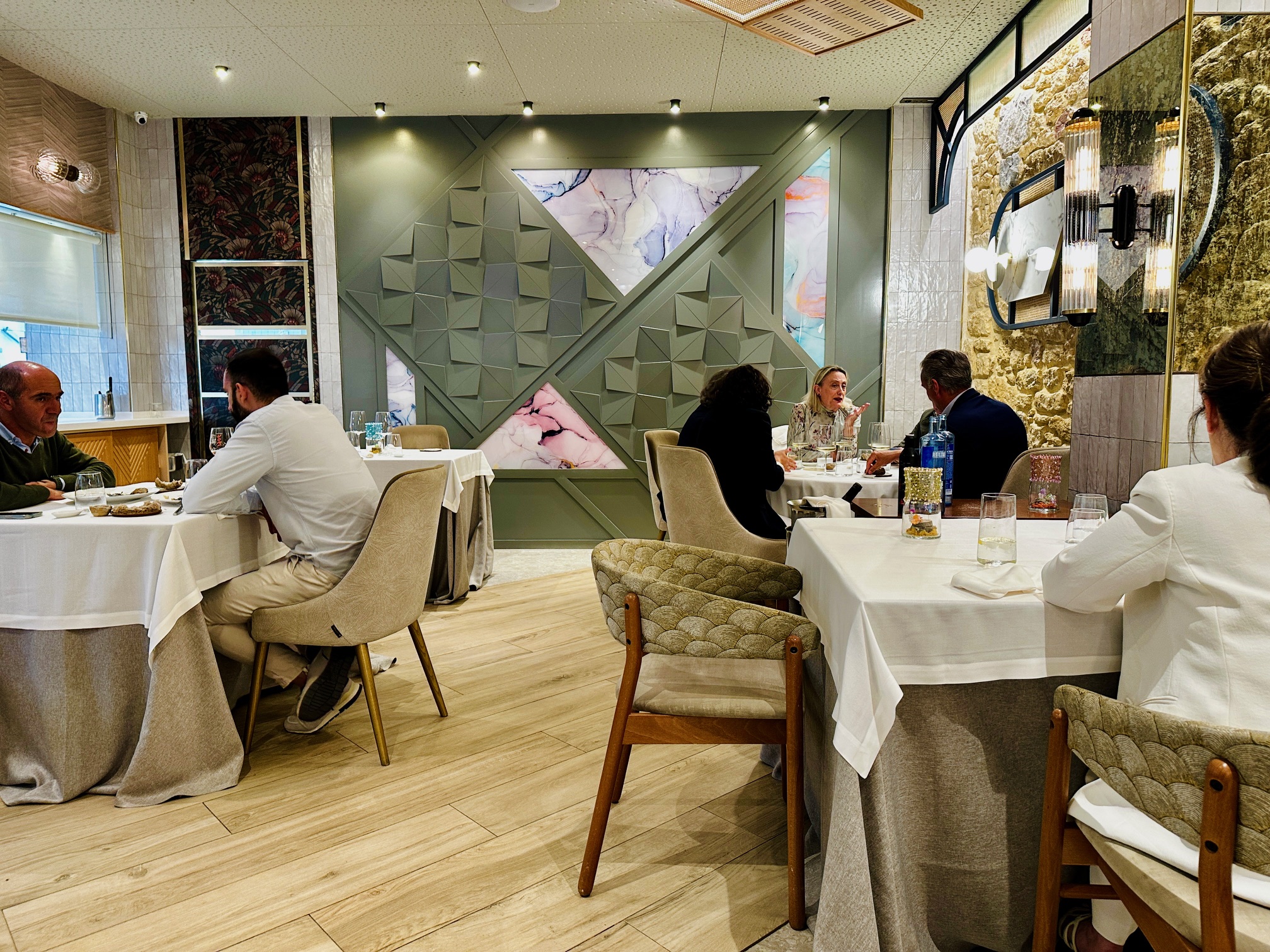
STEK
Nederkouter 129, Gent
https://www.stekgent.be

6. Take Five Espresso

I really loved Take Five when I visited Ghent in 2022, and on last month’s visit I was there every morning without fail for a latte, to sit inside at those big windows and enjoy what could feel like Ghent’s single biggest sun trap. The coffee is exceptional, the service is brilliant and they play effortlessly cool jazz – as you’d expect from the name – to soundtrack the start of your morning. The pain au chocolat from Kultur next door are so good that I’ve never tried Take Five’s food, but if it’s as good as their coffee it would be a treat indeed.
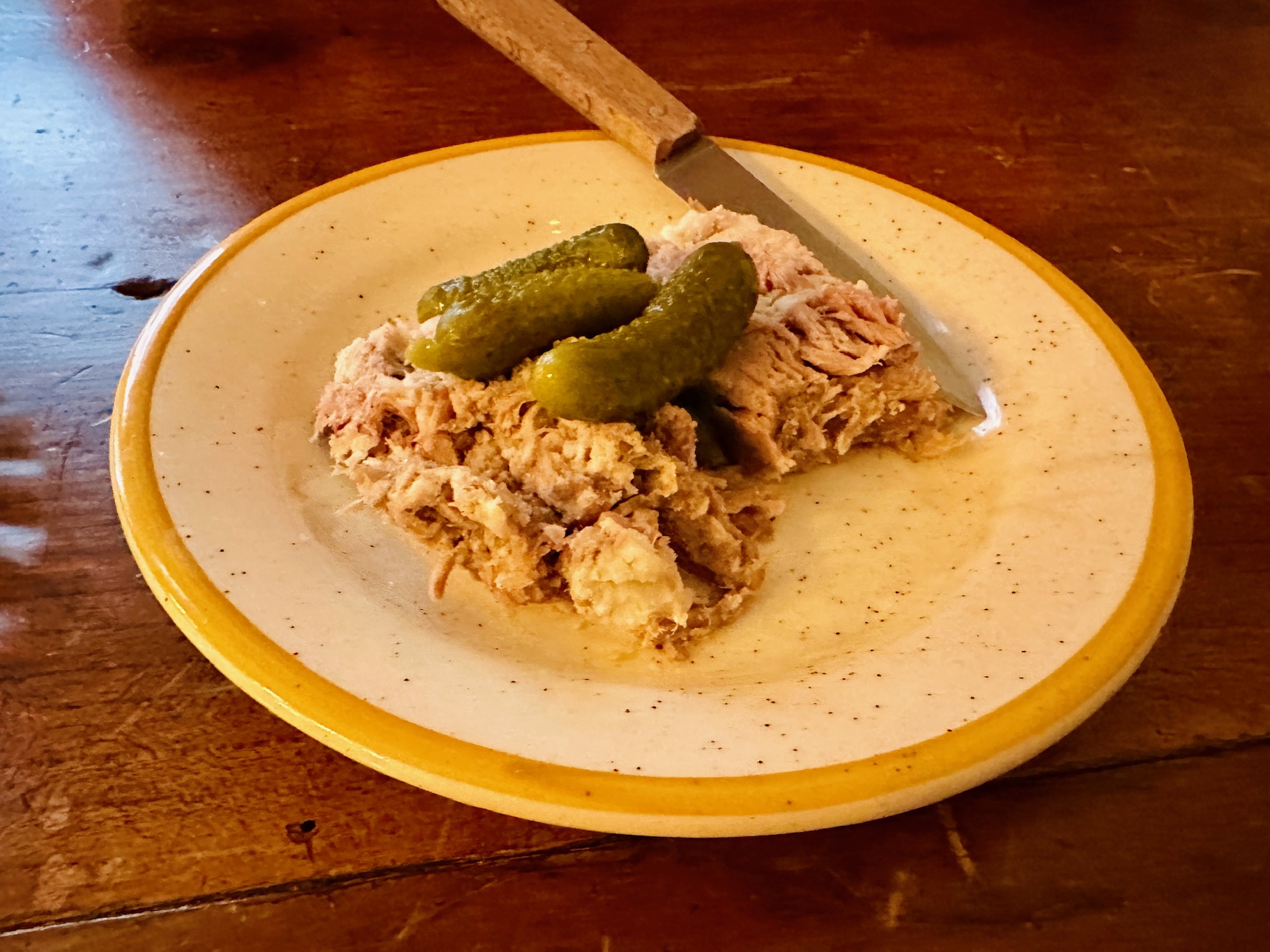
I follow Take Five on Instagram and there’s something about some places you visit on holiday that means you feel invested in them long after you have headed home with a heavy heart. So when I heard that Take Five had been so successful that they’d expanded and taken a second site across the city, I was as happy for them as I would have been any Reading-based business. But the original branch on Voldersstraat, with its beautiful tiled floor and its soothing, sophisticated atmosphere, will always be my first port of call.

Take Five Espresso
Voldersstraat 10, Gent
http://www.take-five-espressobar.be

7. Café Labath

According to their website, Café Labath was the very first third wave coffee joint in Ghent, opening twelve years ago. And I felt like I could sense that when I stopped there for a latte, that this was a place that didn’t feel the need to try too hard, that was comfortable in its own skin, knew what it was about and had nothing to prove. That showed too in the beautiful space they had created, all parquet floor and Ercol-style chairs, making best use of the corner plot and the huge windows to allow the very best people-watching experience. I loved the way that, as with Take Five, the public seating outside had been worked into the space, giving multiple options for al fresco drinking in better weather.

If anything, the less calculated interior led me to underestimate the coffee, but when my latte – ordered through a QR code at the table with no need to queue – turned up it was creditable. I had only stopped at Labath on the off chance to grab a quick shot of caffeination before lunch in the area, but when I return to Ghent I plan to have a far more leisurely drink there.

Café Labath
Oude Houtlei 1, Gent
https://www.cafelabath.com

8. Clouds In My Coffee

Clouds In My Coffee is one of the most stylish cafés I’ve seen in over a decade of going to Europe and seeking these places out. Quite aside from the Carly Simon reference, which manages not to be naff, the inside is truly gorgeous, like something out of Living Etc. From the street it looks small (and is surprisingly hard to find) but through the back is a wonderfully light, airy extension and beyond that another of those idyllic secret gardens that Ghent cafés seem to all have up their sleeves.

Did I want a coffee? Absolutely. Was my latte delicious? Of course it was. Did I look at the menu and wonder if it was too early for an Aperol Spritz? You bet I did. And did I feel like I was soaking up design tips for the duration of my visit? Yes, along with thinking Why doesn’t Reading have anywhere like this? The only drawback is that Clouds In My Coffee is the epitome of the best house on a bad street: Dampoort, where it lives, is an up and coming part of Ghent that, from my visit, has more upping and coming to do (the cafe’s website calls it a “multicolour fuse”, which I think is nicely poetic). The walk there from the tram stop involved walking through an Aldi car park and, for an awful moment, I thought I’d wandered through a wormhole in space and found myself on the outskirts of Basingstoke. Still worth a visit though, if only to go somewhere that fitted in about as much as I did.

Clouds In My Coffee
Dendermondsesteenweg 104, Gent
https://www.clouds9000.com/en/cafe-gallery

9. Het Waterhuis aan de Beerkant

On my first visit to Ghent, at the tail end of autumn 2018, I rather liked Het Waterhuis aan de Beerkant, a tall building by the canal (aren’t they all?) with rooms across several floors: the room right at the top reminded me of mid-90s boho drinking culture in a way which somehow summoned up memories of Bar Iguana. But it wasn’t until I went back on a hot July afternoon in 2022 that I really got what the fuss was about – sitting at a sunny table, overlooking the canal, surrounded by other afternoon revellers of all shapes and sizes it was an extremely agreeable place to while away a few hours and sink a tall, cold Brugse Zot on draft. We don’t have a word, really, for what time spent like that is like but I believe the Dutch describe it as gezellig.

Het Waterhuis aan de Beerkant
Groentenmarkt 9, Gent
https://www.facebook.com/Waterhuis-aan-de-Bierkant-171209319595287/

10. Dulle Griet

There are two very traditional beer places in Ghent with enormous lists, the kind of places CAMRA types hit up on a tour of the city. One is Trollkelder, which I’ve never really taken to – I had a drink outside it once but was faintly perturbed by the models of trolls in the window, glaring at you as you sip your beer. But Dulle Griet, named after a character called Mad Meg from Flemish folklore, was more my sort of thing.
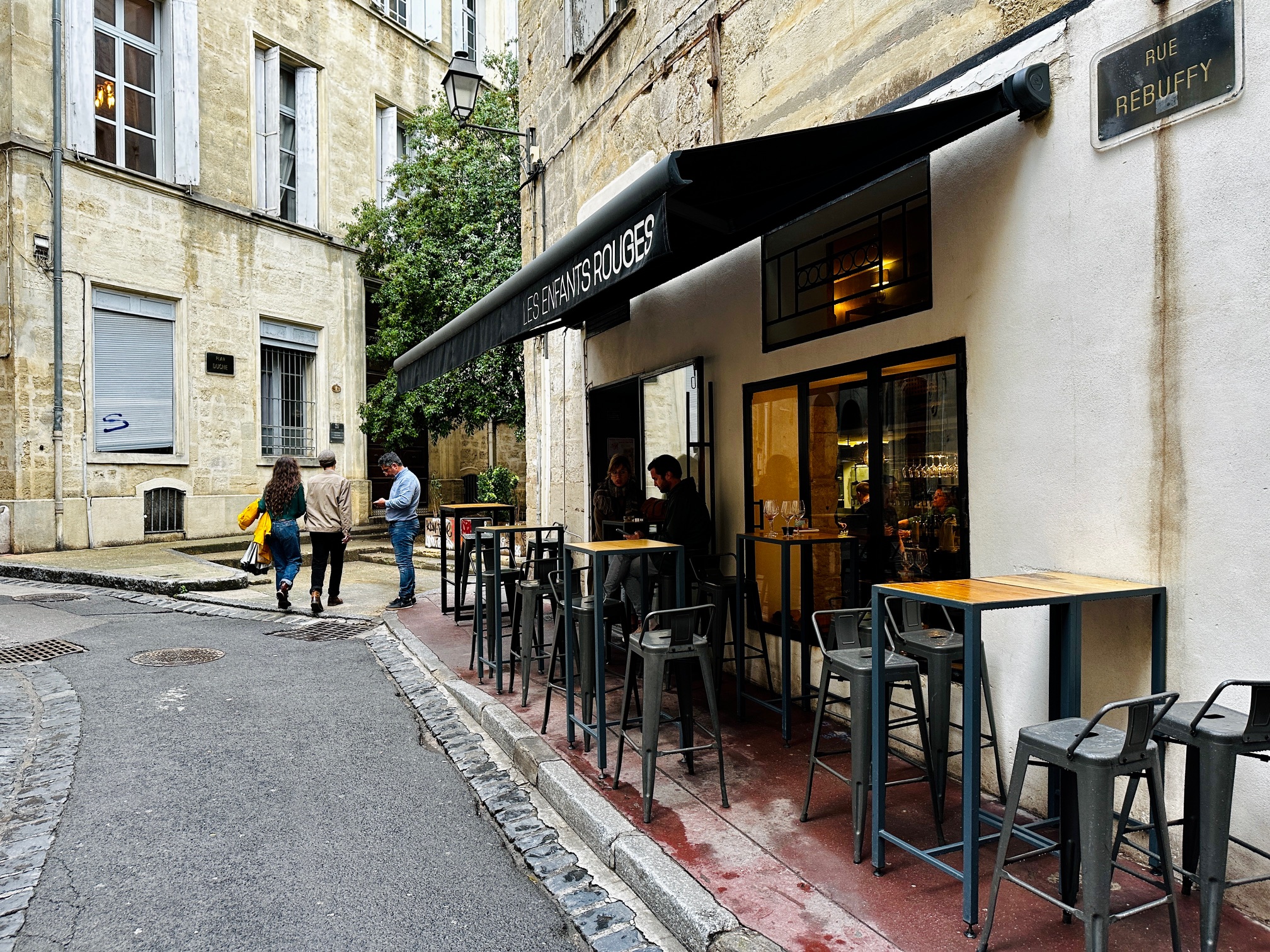
On previous visits I’ve had a drink outside in the front room and enjoyed the idiosyncratic decor: just look at all the random shit hanging from the ceiling. But I now realise that didn’t really do it justice, and on my most recent trip we had a few drinks there in the evening, sitting in a little booth out back, admiring the way any good Belgian bar covers every inch of wall space with signs, mirrors and memorabilia from the country’s seemingly limitless roster of breweries.
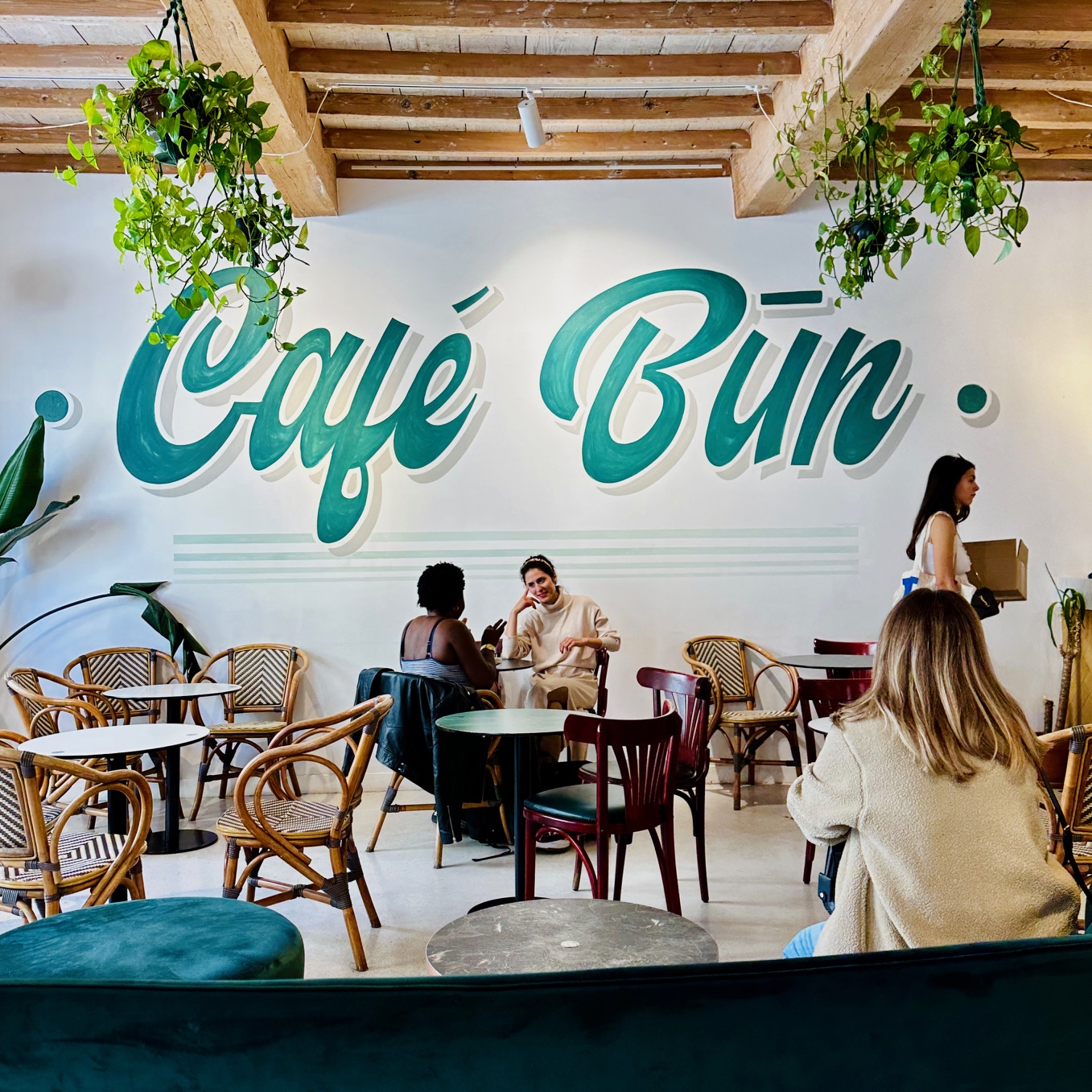
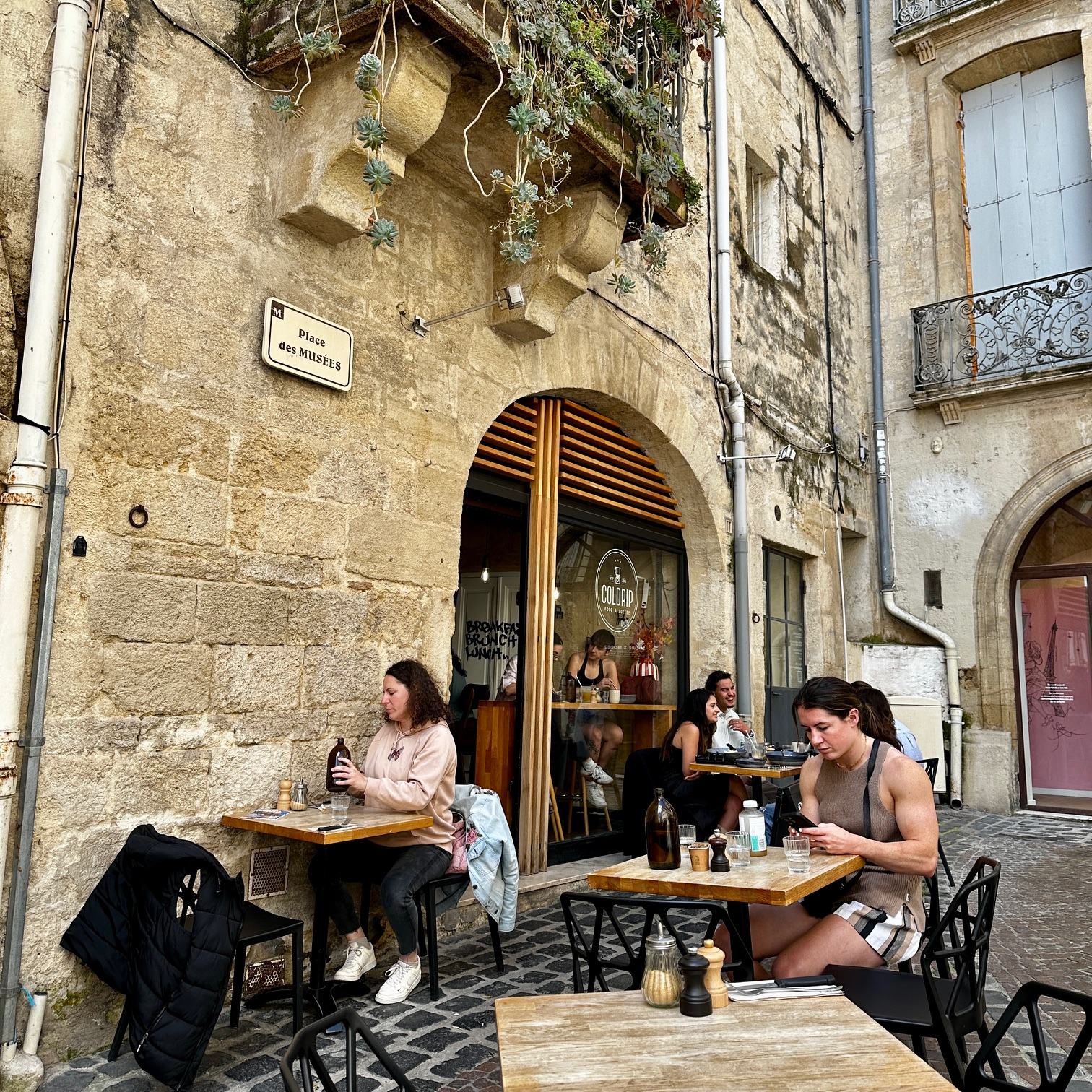
The beer list is indeed extensive – around 500 different options, apparently – and so intimidating that it makes the Little Bear’s look like a pamphlet. Prices are elevated compared to their neighbours in Bruges too, with many of the beers a few Euros more expensive (in fairness I’ve never settled up at the Little Bear without thinking is that all?), but I’d say it’s worth it for the experience. I was there on a Thursday night when the place was rammed, and when I gave up my plum spot left before closing time, knowing that I had packing and an early checkout in my future, I felt something of a wrench.

Oh, and however hungry you are, don’t order the cheese. I don’t know what that stuff is, but it’s not cheese in any meaningful sense.

Dulle Griet
Vrijdagmarkt 50, Gent
http://www.dullegriet.be/en/

11. Gitane

Gitane remains my favourite bar in Ghent, and one of my favourite bars in the whole wide world. When I went to Ghent in 2018 I fell completely in love with it, although when I returned in 2022 it was in the summer, the whole world was sitting outside and being at the only occupied table indoors felt a little bit forlorn and neglected.

Well, I don’t know why I thought that, because returning last month I was reminded of just what a wonderful place it is. It’s all panelled walls and red banquettes – I know I overuse the word “conspiratorial” to describe places like this, but I’m yet to find a better word. It’s louche without being sleazy, dimly lit without being dingy, and I like it a great deal. It helps that the beer list is good too – a model of pared-down focus compared to the bloat of places like Dulle Griet, but with a great yet compact selection including options from less widely seen breweries like Brouwcompagnie Rolling Hills and the always excellent De Leite.

Gitane
Meerseniersstraat 9, Gent
https://facebook.com/100054309860476/

12. Django

When I booked a table at Boris & Maurice, in Sint Amandsberg, I thought it would be nice to have a pre-dinner drink in the area. And the only thing I could find that was suitable, really, was a bar just over five minutes away called Django. We’ll go there, I thought. How bad can it be? And I love it when this happens, because it was the find of the holiday.

It was so louche, so hip, so suitable for nighthawks that it made Gitane look like the Hope Tap. From the red lighting to the formica topped tables, from the leather booths out back to the neon sign on the wall, from the wood-panelled bar to the textured concrete ceiling with a mirrorball hanging from it, it was an interiors nut’s Christmasses all come at once. It even has an upstairs balcony floor, nearer that mirrorball, where you can look down on all the ineffable coolness below. Why had I never heard anybody talking about this place, or ever seen a review anywhere? It was almost the perfect bar.

All it needed was great drinks. Except it transpired that they had those too, with brilliant Belgian pale Ouwen Duiker and iconic Tripel Karmeliet both on draft. The barman even apologised for bringing the latter in the wrong glass, something you would only ever hear in Belgium. So really all it needed was great food – but the local sausage with mustard, yours for three Euros, was coarse and unbelievably delicious. To think people in the U.K. get all excited about a packet of Tayto: they must be laughing at us on the continent. And although I didn’t get to try it Django also did a very attractive range of pizzas – just looking at the menu made me want to cancel my dinner plans.

Next time I go to Ghent I will spend a whole evening here, although if I do I may be sorely tempted to go the whole hog and move to Sint Amandsberg. I wonder if Ghent needs an itinerant restaurant blogger?

Django
Antwerpsesteenweg 330
https://www.instagram.com/djangogent/?hl=en-gb

13. HAL 16

HAL 16 is the craft beer capital of Ghent, a combination of food hall and tap room for local Dok Brewing out in the docklands, about ten minutes from the centre by bus or twenty on foot. It is honestly one of my favourite places in Ghent and since discovering it I’ve never visited the city without giving it a try. My first visit was in January 2019, when I think it had just opened, but it and the complex around it have gone from strength to strength on every successive visit.

I turned up on a Wednesday evening around 6 o’clock after buying some beer at the excellent De Hopduvel just around the corner, and the place began to fill up almost immediately after, the long tables being taken by group after group of young, cool, happy urbanites. None of them were saying dreary stuff like “but it’s a school night”, and they were probably drawn by the colossal range of beer on offer. Thirty lines on keg, many of them by Dok Brewing but with a number of guest beers including stuff you just wouldn’t otherwise see. On my most recent visit I got to try a sharp, peachy sour by tiny Trial & Ale Brewing, from Edmonton, Alberta, and I really loved it.

But the booze isn’t the only draw, because HAL 16 also has three terrific food traders to make sure you stick around. One, Officina Raffaelli, does pizza, pasta and antipasti and the stuff I’ve had from them has been decent. A second does burgers, and I’m sure they’re excellent, although I’ve never tried one. But the reason for that is that the third trader, RØK, does some of the best barbecue I’ve ever eaten – better than anything in the U.K., and for my money better than Copenhagen’s Warpigs. In the past I’ve raved about their pork chop, rhapsodised about their lamb neck.

But on this trip, although I liked my confit duck leg and absolutely adored Zoë’s beef rib, smoked for 10 hours, the standout dish was a vegetarian one – cauliflower, brick-red and sticky with a savoury marinade, its perimeter blackened and crispy from the grill, the whole plate festooned with a zigzag of curry mayo. Even writing this makes me hungry and sad because we only ordered one dish of it, shared it between two and then moved on somewhere else. This is how you get people to become vegetarian, by offering something this good so everyone wants their own, reluctantly sharing some beef rib into the bargain just to keep up appearances.

HAL 16
Dok-Noord 4b, Gent
https://www.hal16.be

14. Stadsbrouwerij Gruut

Gruut is the city centre’s only working brewery. It’s far more central than Dok Brewing and far more trad – they serve an amber ale, a blonde beer, a wheat beer, a brown ale and a triple and that’s it, no sours or lambics or more esoteric stuff. And they have a rich brewing heritage – their little booklet shows you that founder Annick De Splenter, who began the business in 2009, comes from a veritable family tree of Belgian brewing expertise.

So it might not surprise you to hear that it’s a really lovely, quirky and slightly eccentric place to while away some time. I tried their amber ale, which I really enjoyed, on a quiet weekday afternoon when the weather wasn’t quite nice enough to take advantage of their outside seating: a British delegation, seemingly from CAMRA, were camped outside before 2pm waiting for the place to open and had no such qualms. It’s a lovely place and I could happily have dallied there longer but I had places to go, food to eat, other beers to drink and, ultimately, a guide to write. Plus they charge you fifty cents to use the loo, according to one of the signs, and who carries cash any more?

Stadsbrouwerij Gruut
Rembert Dodoensdreef 1, Ghent
https://www.gruut.be

(Click here to read more city guides.)

Since January 2025, Edible Reading is partly supported by subscribers – click here if you want to read more about that, or click below to subscribe. By doing so you enable me to carry on doing what I do, and you also get access to subscriber only content. Whether you’re a subscriber or not, thanks for reading.