This week’s review came about because of a comment on the Edible Reading Facebook page. I’d posted a link to my do list, as I regularly do, asking if there was anywhere on it that I should prioritise. Somebody chipped in and told me I should check out Shawarma Reading on West Street. “Their mixed shawarma with rice is great on a cold day”, their comment said.
That was all well and good, but the comment wasn’t from just anybody. It was from Mansoor.
Mansoor has been a reader of my blog for as long as I can remember, an early and vocal supporter of what I do. He came to the very first readers’ lunch at Namaste Kitchen, over seven years ago, bringing a blue Toblerone because I’d enthused about them on the blog. He told me that when he was first courting his wife, he used my blog for tips; despite that, it seems to have worked out nicely for him.
He was also one of my very first subscribers, when I launched that last month. “Lifetime subscription please” he said, which moved me more than I can say. And that’s despite the fact that Mansoor, his wife and his beautiful daughter have moved to Bristol now, which makes him one of my few readers who avidly looks forward to reviews from that part of the world rather than ones from the ‘Ding (don’t worry Mansoor, you’ll get some later in the year).
But that’s not why I give Mansoor’s words such weight. Back when he lived in Reading, Mansoor tipped me off about all kinds of places which went on to be favourites. He was the one who told me to check out La’De Kitchen, out in Woodley, and Rizouq on the Wokingham Road. And perhaps most life-changing of all, Mansoor told me once about a little spot doing samosas, also on the Wokingham Road, that I ought to investigate. Years later I still stop by Cake & Cream regularly for their epic samosas and pakoras, and have recommended them to countless others.
So when Mansoor says somewhere is good, I pay attention. And he first mentioned Shawarma to me at a readers’ lunch about eighteen months ago. “Give it six months, and I think it will be worth you reviewing it”, he said. Well, that six months had more than elapsed, and Mansoor’s initial “you might want to try it out” had morphed into a “go here”.
Subscribe to continue reading
Become a paid subscriber to get access to the rest of this post and other exclusive content.
Here’s what happened: I was making Friday night dinner plans with my friend Graeme and I said I’d give him some restaurants to choose from, a mixture of places I wanted to review (or re-review) and others I just fancied eating at. My text was all ready to send, and then I stopped for a minute and thought what about Côte? So I added Côte to the list of places I was due to re-review and pinged the message over to Graeme, fully expecting him to pick somewhere else.
Why don’t we do Côte? came the reply. I haven’t been for a while, and it’s such a good chain restaurant.
Appropriately Graeme’s reasons for choosing it were the same as mine for including it in my selection. The last time I went there was something like eighteen months ago, with my family, to celebrate my just having got engaged. But before that? I honestly couldn’t tell you. And yet before the pandemic I used to go an awful lot – it was one of my regular spots.
I do wonder whether the pandemic had something to do with it. Because when Covid struck national Côte did what many restaurants did, diversifying into heat at home options. But Côte did it differently to everybody else, and unlike nearly everybody else they are still doing it years later, when for most restaurants their schemes, entirely born out of necessity, were shelved ages go.
Côte decided to take advantage of the fact that many of its dishes were prepared in a central kitchen and then finished in the restaurant, turning what you could potentially see as a weakness into a Covid-era hidden strength. And it continues today: Côte At Home still offers many of the dishes you can get in their restaurants, portioned for two people, for decidedly less money.
Back when I was reviewing takeaways and meal kits, I reviewed Cote At Home. And the truth was that I didn’t know what to make of it: it was good value, and undeniably polished, and somehow occupied a completely new genre that wasn’t takeaway, wasn’t meal kits, wasn’t eating in restaurants and wasn’t ready meals. What on earth was it, then? I’m still not entirely sure.
But I can’t help feeling that Côte At Home, although it may have saved the chain from going under, slightly changed the way I thought about the restaurant. Because if many of Côte’s dishes were just glorified ready meals you could cook at home, was there still a point to going to the restaurant to eat them there, spending more money in the process? And if that was the case three years ago when the shockwaves from the pandemic started to subside, wasn’t it even more the case now, when eating out is more and more of a luxury?
I didn’t know the answers, and it felt like a return to Côte might provide them. Besides, it was a Friday night at the end of an incredibly long week at work, and I figured I’d earned a good meal, a catch up with a good friend and at least a bottle of wine, and I was hoping for an enjoyable evening irrespective of whether my visit also solved those bigger, thornier questions. After all, nobody can dissect stuff for its deeper meaning 24/7. Not even me.
Subscribe to continue reading
Become a paid subscriber to get access to the rest of this post and other exclusive content.
If I asked most Reading residents to name Reading’s most famous restaurant, the chances are the majority of them would say either Kungfu Kitchen or Clay’s Kitchen. And that makes sense because those two, the Lennon and McCartney of Reading’s food scene, are the ones that have broken out into the national consciousness, as much as Reading ever does. If we had a round of Reading restaurants on Family Fortunes, asked 100 people to name a restaurant in Reading, those two would top the leaderboard. God knows what else would be on there – Sweeney Todd, probably, and a rogue vote for Munchees.
But that would only happen if you asked Reading residents, and is indicative of the bubble we live in. Because, last year at any rate, the most nationally known restaurant in Reading was Good Old Days Hong Kong Ltd, a nondescript Cantonese restaurant just the other side of Reading Bridge. And the reason for that is that last February it was reviewed in the Observer by journalist, jazz musician, TV show judge, relentless self-publicist and life president of the Jay Rayner Appreciation Society, Mr Jason Rayner.
He raved about the place, and explained that the chef used to cook at the Hong Kong Jockey Club, and Hong Kong’s Four Seasons Hotel. “It feels like finding a senior chef from the Ritz… doing their own thing in your local caff” he declaimed. The unspoken implication was that this was almost as extraordinary as finding the U.K.’s greatest restaurant reviewer doing his own thing in a Chinese restaurant most Reading folk had never heard of, slumming it for the greater good. Lucky us!
Now, don’t be fooled into thinking Rayner had come to Reading specifically to review Good Old Days. He was in Reading recording an episode of his Radio 4 series, and I suspect he decided to kill two birds with one stone before heading back to London: after all, if there’s one thing people like to moan about below the line on his reviews, it’s how many of them are of London restaurants.
That roving Radio 4 series must be a positive boon, as it gives Rayner an excuse to visit parts of the country he otherwise wouldn’t touch with a barge pole. And I think we can include Reading as one of those, given that he described Caversham as “Reading’s Latin Quarter, as nobody has ever called it”. Such a charmer. But anyway, it was close enough to the station and he had a friend who recommended it, so Good Old Days it was, rather than one of Reading’s more high profile restaurants.
And he did seem to enjoy it, sort of. He said that “if… you happen to live nearby, get the food to go. Because in truth Good Old Days is a takeaway that just happens to have a few tables.” And that’s the funny thing about Rayner’s review – it didn’t make me fall over myself to visit. And I don’t think it galvanised Reading either, because I still know relatively few people who have had a takeaway from Good Old Days and fewer still who have eaten in there. The ones who have, that I’ve spoken to, have told me that it was “nice”, or words to that effect. I’ve never had an oh my god, you really must go – can I come?
Especially that last bit. Despite it being on my to do list for almost a year, every time I mention it to someone in terms of joining me there on duty they ask if we can go somewhere else instead; people just didn’t seem to fancy the place. In that respect, Rayner’s review is a remarkable one – if you can praise food and still leave people lukewarm about going to a restaurant you definitely have some kind of skill, albeit not one most restaurant reviewers would want to develop.
Very few of the comments on the Observer review were from people in Reading, and what ones there were were evenly split between Don’t give the secret away and We went there on your recommendation and it was awful. So it looked like there was a gap in the market for a reliable review of Good Old Days, and I was happy to fill it.
Subscribe to continue reading
Become a paid subscriber to get access to the rest of this post and other exclusive content.
Zoë and I wound up in Bristol on the Saturday before Christmas because my friend James was having a barbecue to mark the end of what he refers to as the “grilling season”. Its boundaries are somewhat amorphous, because James likes to barbecue at almost any opportunity, but as far as I can gather the grilling season starts around Easter and ends at some point before New Year’s Eve. I can’t say that with any confidence though, because I wouldn’t put it past James to grill meat in the dead of winter too: it would make more sense to you, if you’d met him.
But anyway it was an evening do, and that left me with one final lunch in Bristol before the year was out. And rather than try the hot new place – assuming I knew where the hot new place was, of course – or one of the Bristol restaurants on my radar like Bank, Native Vine or The Clifton, I decided to go for a safe bet. What can I say: it was the end of the year, my last opportunity to eat on duty in 2024 and, just this once, I wanted a guarantee of what the festive season always promises, comfort and joy. So I chose Bosco Pizzeria, situated near the top of Whiteladies Road, before it meets The Downs.
I first went to Bosco the best part of a decade ago, when it was very much Bristol’s pizza pioneer, and although I hadn’t been back for some time I always had it down as a reliable banker for somewhere good to eat in the city. Since it first opened its fortunes had ebbed and flowed, opening a second branch in Clifton, closing it and reopening it, closing the Whiteladies Road branch due to Covid and then taking a long old time to reopen due to a fire. Other branches in Cheltenham and Bath had followed, and a sister restaurant called Pizzucci offering a more American, less Italian experience down the Gloucester Road.
But I’d always seen it as a sure thing, and a standout even as other pizza restaurants came and went in Bristol. I reckoned it was as good as Flour and Ash – the original one on the Cheltenham Road that Jay Rayner got worked up about that is, not the sanitised relaunched one on Whiteladies Road which I haven’t visited. And for my money it was better than the much-hyped Bertha’s on Wapping Wharf, which wasn’t quite as good as I’d expected it to be. I couldn’t definitively say it was the best pizza in Bristol: after all I don’t live there, and I’m yet to try the likes of Pizzarova or CanCanPizza, but I could say that it took some beating.
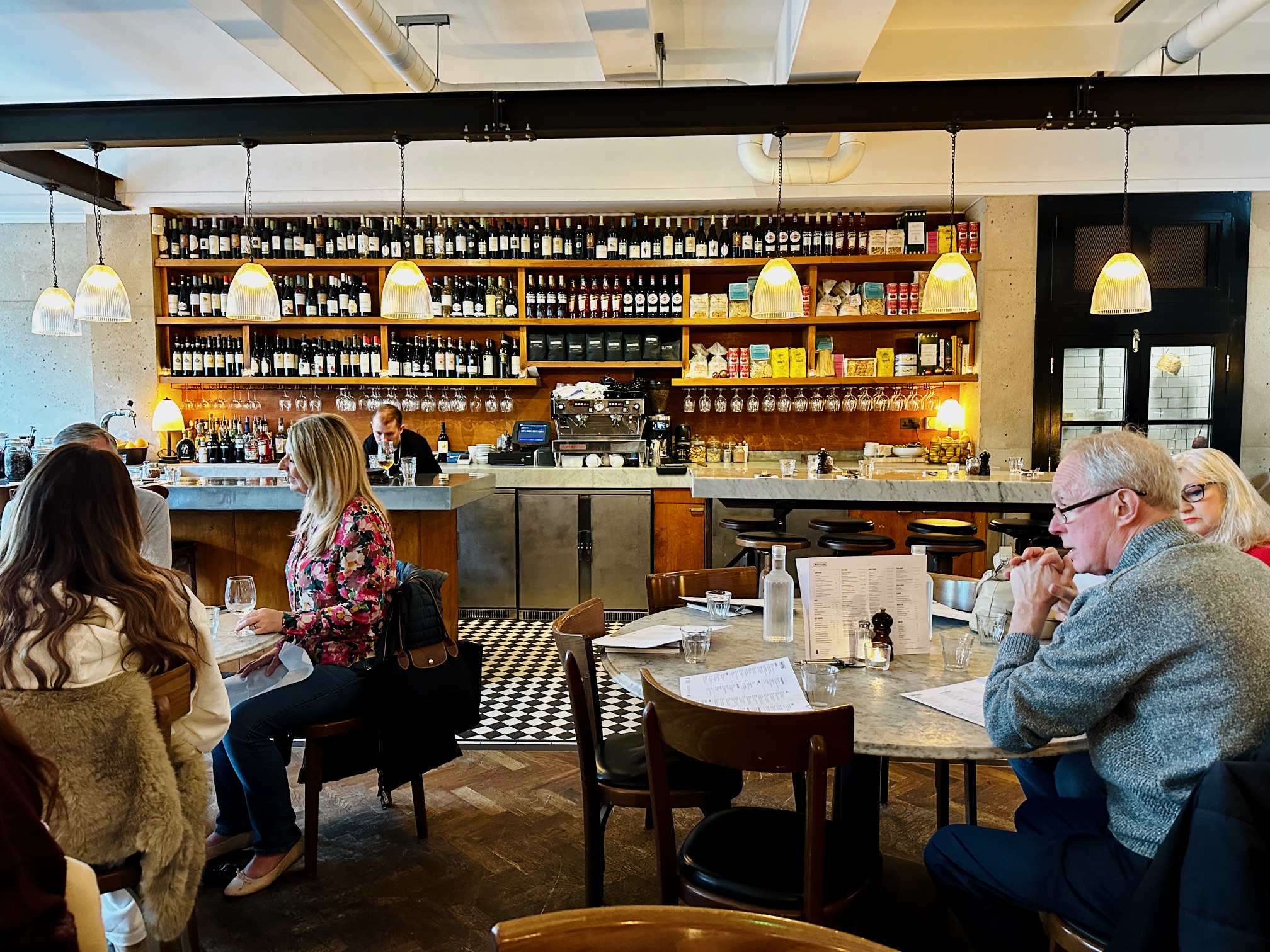
And it was a lovely, busy spot the Saturday before Christmas. They’d slightly rejigged it since I was last there, the front section buzzy and full of smaller tables, the one out back made up of booths for larger groups. You could sit up at the bar, which some people were doing, and it had that lovely air of a place where people, like me, were putting their cares to one side for a couple of hours and treating themselves. Christmas decorations were tasteful and muted, wreaths in the window, baubles running along the tops of the banquettes. My wife took a photo of me, sitting there all happy: I liked it enough to use it as a Facebook profile picture.
Bosco’s menu was split into sections – about half a dozen if you count salads, which personally I rarely do. Apart from salads there were cicchetti, a selection of meats and cheeses, plenty of permutations of pizza, a small range of pasta dishes priced as mains and a few bigger dishes (or, as they put it, “large plates”) – ribollita, parmigiana and what have you. It was, I reflected as I tried to make choices, exactly the kind of menu you always hope to see in mainstream Italian chains but never do. It struck me as the sort of place Maidenhead’s Storia was aiming to be. Zoë sipped a very good negroni, I sipped arguably an even better negroni sbagliato and gradually we honed our selection, sequencing them like a mix tape.
The first slight stutter came when we ordered. I said we’d like a couple of cicchetti, then a mixture of meats and cheeses, then our pizzas.
“We’ll bring out all the smaller dishes at the same time, is that okay?” said our server.
Now, I very much wanted to say no, actually, we’re really happy to be here and we’re in no rush so can we have the cicchetti first, then the other bits and then the pizza, like we asked for? And I would have done, but my wife gave me a look which very clearly said could you not be a restaurant reviewer, just this once? so I kept my mouth shut. It hasn’t stopped me mentioning it here, obviously, but it did irk me – what was the rush? It had that feel that Wagamama always has, that the kitchen’s convenience is the primary concern, not your experience.
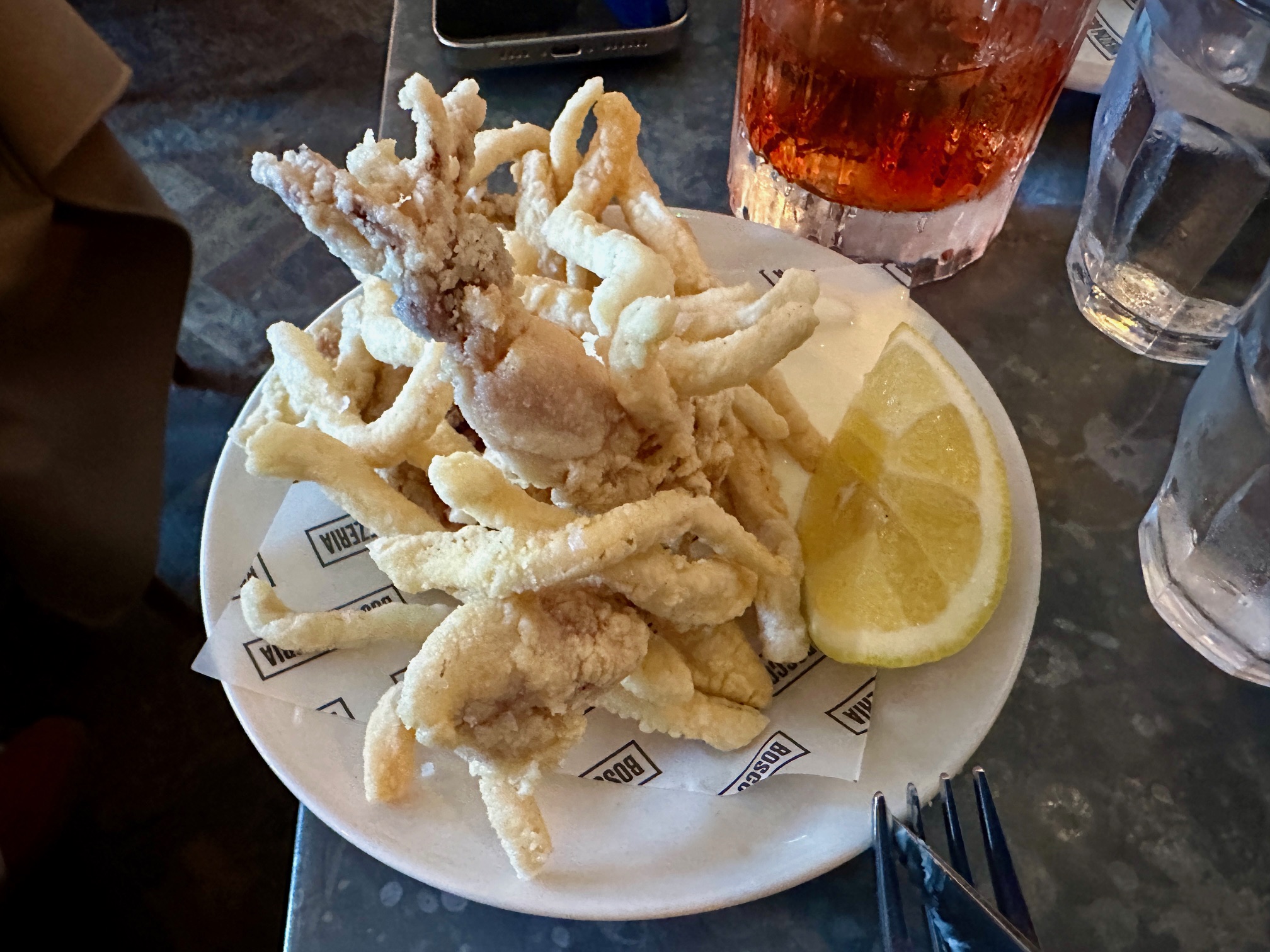
And it did literally all come out at once, in the space of a couple of minutes, causing not just a sequencing problem but a logistical one too, the table barely big enough to hold five small plates at once. We prioritised the calamari, as the only hot dish we’d asked for, and it was decent but flawed. The thing I’m always watching out for here is the bounce and twang of squid that needed to be fresher, and Bosco avoided that pitfall. But in its place were brittle sticks of squid, almost like Clifton Nik-Naks, which managed to be both pale and overcooked. We squeezed the lemon, dipped in the aioli but neither could totally redeem the raw materials.
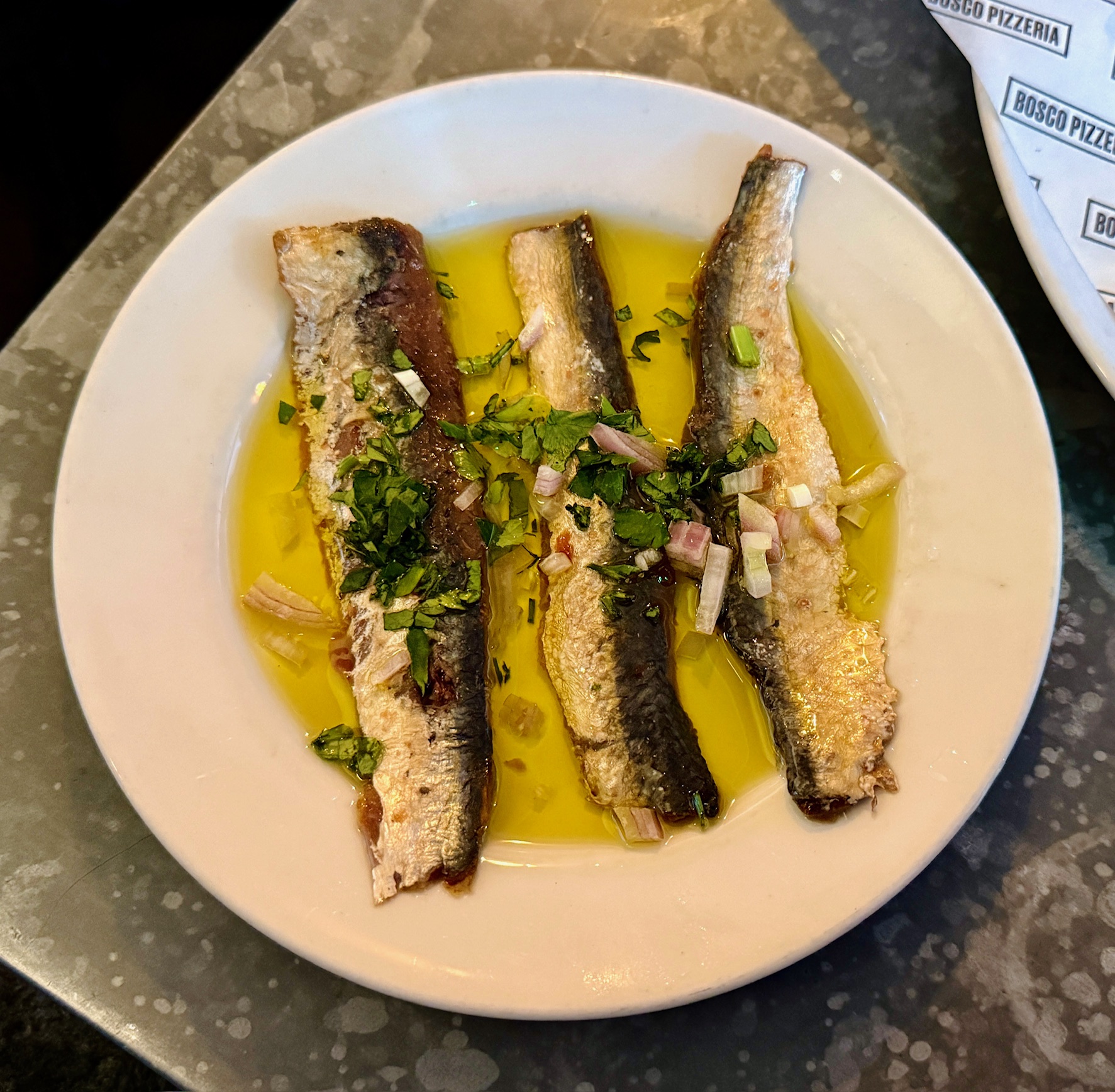
The anchovies also misfired. These were billed as coming with salted butter – as they had at Brutto – and focaccia, and almost did but didn’t quite. Instead they came with very good focaccia but swimming in extra virgin, oilier than a Bluesky reply guy, shallot finely diced on top. Is it wrong that I took against them for still having the skin on? Maybe, but it fooled me for a second into thinking these were more like vinegary boquerones than taut, salty anchovies. That wasn’t right – they were intensely salty – but somehow the texture of them didn’t feel quite as I expected.
It was either cognitive dissonance or cognitive disappointment, but I couldn’t work out which. Three anchovies for seven pounds felt a little steep, but I guess you were paying for the focaccia as well. And I liked the focaccia, as I said, and I know it wouldn’t have gone as well with butter as with olive oil. But the whole thing felt a tad disjointed.
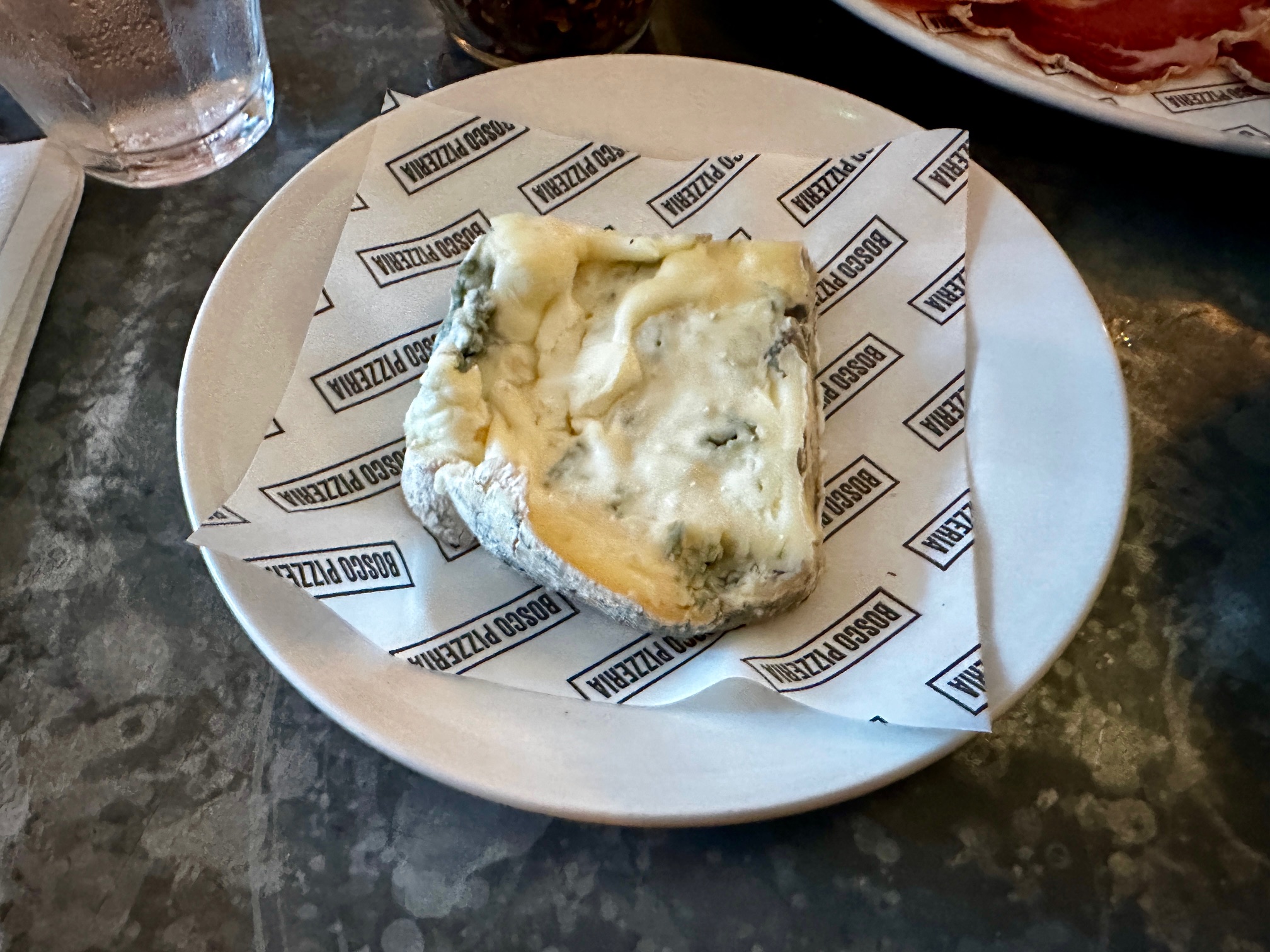
Bosco has always excelled for cheese and charcuterie, and the menu gives you an appealing range of both which you can mix and match in the most middle class multibuy of all time. My favourite of the cheeses was the one I neglected to photograph, a gorgeous Robiolo which was soft but not stinky, complex without being overpowering. It was great with the focaccia, which begged the question of how you’d eat it if you hadn’t ordered the anchovies. Almost as good was a Gorgonzola dolce which I liked and Zoë loved – simultaneously sweet and salty and very well balanced.
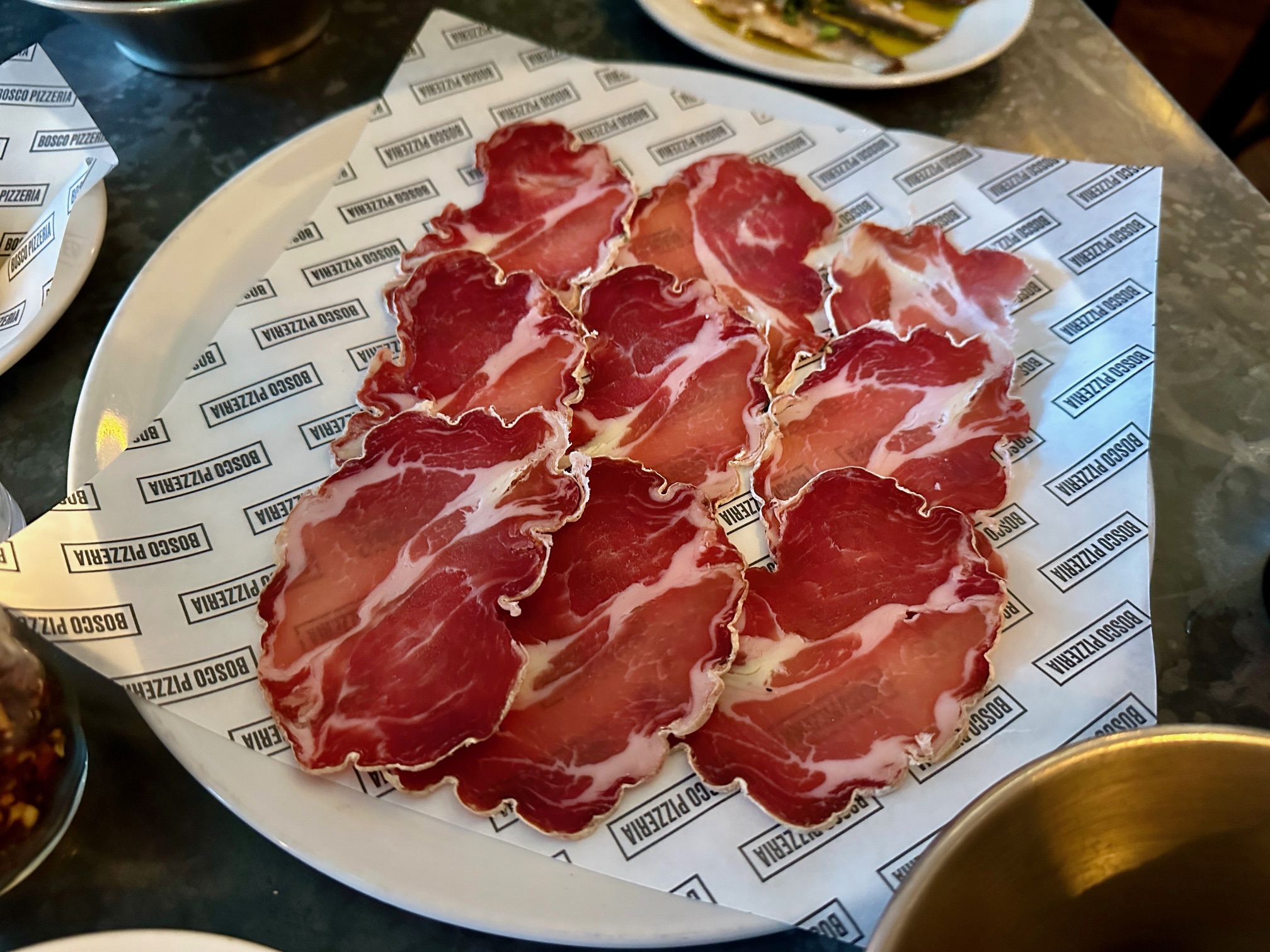
But again, without the focaccia it might have been messy to eat. I know that this kind of thing – getting in nice cheeses and cured meats, keeping the former well and slicing the latter thinly – is more about buying than cooking, but that doesn’t detract from the fact that many Italian restaurants don’t do this very well. Bosco’s years of experience showed in this respect, in cultivating excellent suppliers, buying the best stuff from them and not mucking it up. It can’t be that easy: if it was, it wouldn’t be so rare.
Oh, and the coppa was divine. Clearly sliced there and then, not exhumed from leaves of plastic, with that dryness and nuttiness that marks out the best specimens. This was the one thing that didn’t need bread at all, it just needed to be picked up and polished off, with or without a soupçon of cheese. The natural order had been restored, and I remembered just how good Bosco can be. We flagged someone down for another couple of sbagliatos: even though our reservation had been for a late lunch, the dining room showed no signs of thinning out.
Maybe the staff had got the message that we weren’t in a rush, or maybe they were just too busy to rush us, but there was a decent interval between our plethora of small plates and the main attraction.
Either way I was reminded, during that time, of lots of things: what a nice room it was, and how my many visits there had all been at different stages in my life, during a decade where almost everything about my life – what I did for a living, who I did it for, where I lived and who I lived there with – had changed, the only constant being this blog. I’d never been to Bosco with Zoë, and it made me happy to share this room with her at the end of a year itself full of changes.
I was also reminded, almost as much, just how nice a well made negroni sbagliato can be, but that’s probably beside the point.
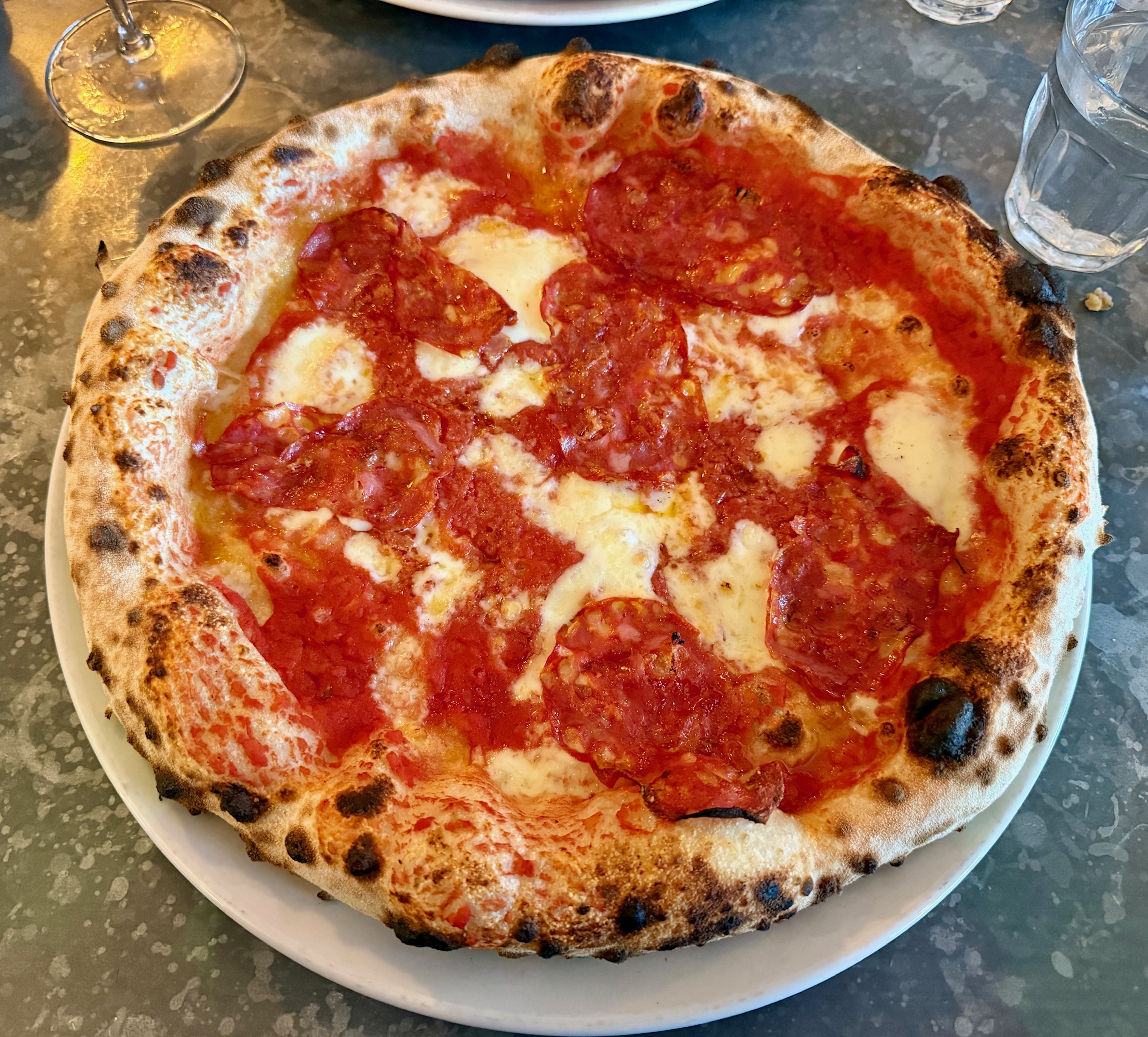
Zoë and I reverted to type in ordering our mains, that comfort and joy thing again. Her pizza was the ventricina, a very Zoë choice with spicy salami, chilli oil and honey. She loved it, as I expected she would, and it showcased what Bosco did really well – an exemplary base, a chewy, bubbled crust with plenty of blistering, a deep tomato sauce, winningly fruity. This was as good an advert for Bosco as you could hope for, and at thirteen-fifty I thought it was solid value, especially benchmarked against restaurants closer to home like Zia Lucia.
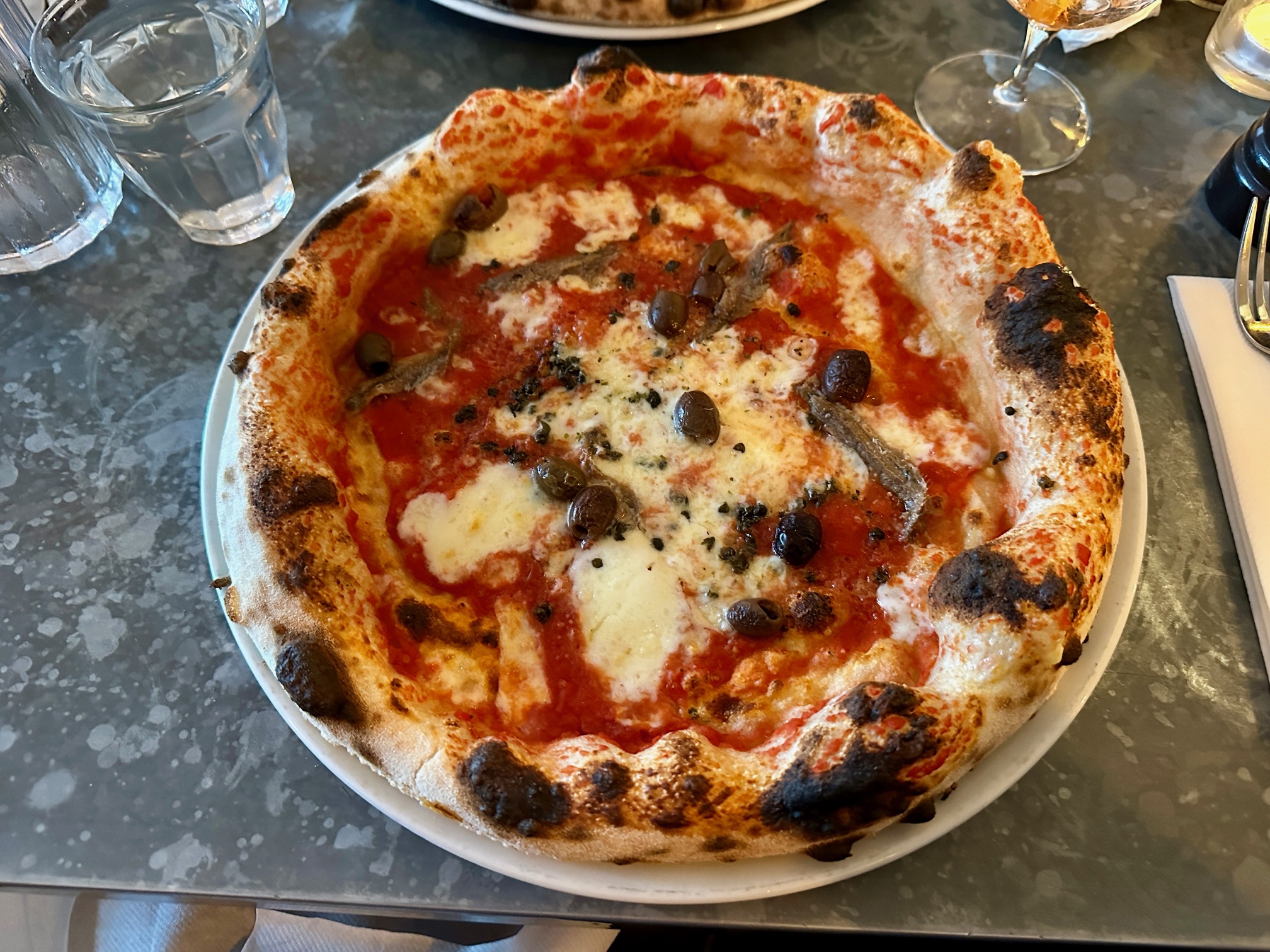
That I didn’t enjoy my pizza as much just goes to show that you can get the fundamentals bang on and then fluff it with the whistles and bells. I too had asked for my archetypal pizza preference, sometimes called the Neopolitan and sometimes, as here, the Venetian. Either way, it’s the old anchovy, olive, caper trifecta and it’s always my go to when I visit a pizza place, providing it’s on.
The base was still exemplary, so was the sauce, so what went wrong here? A few things, really. The anchovies were unevenly distributed, Franco Manca style, leaving a reasonable amount of surface area salt-free. And the anchovies (skinless this time, to be fair) were too much fish and not enough salt, although that might have been a personal preference.
And what about the capers? Apparently they were fried in this case, which can work brilliantly – Buon Appetito used to do this – but they seemed anonymous. There weren’t enough of them, and what there were didn’t contribute the acetic sharpness I wanted. This pizza is meant to be all about salt and vinegar, but instead it was more fish and mild disappointment.
Hey ho. It wasn’t a bad pizza, it just wasn’t as good as I knew it could be. The slightly haphazard timing, coupled with our gluttony, meant we ate too much too quickly and were too full for dessert, so we settled up. Our meal, including two negronis apiece and an optional 12.5% service charge, came to just over one hundred and six pounds. I didn’t begrudge that: besides, they had Aesop handwash in their very fetching loos, and that stuff doesn’t pay for itself. We called up an Uber and prepared ourselves to have a few drinks with James and Liz ahead of the official end of the grilling season. Well, maybe after a nap to sleep off some of those carbs.
It was a lovely evening, incidentally. The beers flowed thick and fast – James is the man who has turned his garage into a micropub – and the conversation was enormous fun. We got to bed well after midnight, too tired for the traditional couples debrief. But during the gathering somebody who knows that I write this blog asked me if I’d gone anywhere on duty at lunchtime and I said yes, I’d been to Bosco.
“I hear it’s not as good as it used to be, would you agree with that?” I was asked.
And the binary answer, although the world’s always more complicated than binary answers, is yes, I do agree. On my previous visits, Bosco was the place you wish would open near you, the place that could teach every Italian chain a thing or two. On this visit, although it was still good, it was closer in quality to those chains at their very best. The gap had narrowed, and not because the chains have upped their game. This is the point, often combined with expansion, at which independent restaurants need to take care.
But anyway, on that night – and, writing this now – it didn’t seem to matter quite so much. It was a very agreeable lunch, if not a perfect one, tucked away at the end of the year. If you asked me where to go for a rock solid reliable pizza in Bristol, I would still probably pick Bosco; it’s earned that latitude, because we go way back. And if one opened in Reading, all the Sarv’s Slices and Dough Bros in the RG postcode wouldn’t stop me paying it a more than occasional visit. Next time you’re in Bristol, if you want an absolute banker, I think Bosco is still that.
As of January 2025, Edible Reading is partly supported by subscribers – click here if you want to read more about that, or click below to subscribe. Whether you’re a subscriber or not, thanks for reading.
Last year, I got Covid at the start of December and the rest of the month was a bit of a write-off, and although I enjoyed writing about the best restaurants of the year – who wouldn’t? – the experience was dulled by my still hanging out of my arse. It was like going round the supermarket when you’re really not hungry. This year has been another isolated Christmas at home, because Zoë came down with the flu just before Christmas Eve. So it’s been just the two of us, eating everything we’ve stocked up in the fridge, missing out on a plethora of family celebrations. On the plus side, we managed to watch the Gavin and Stacey finale: every cloud.
I’m still waiting to contract flu myself, and fully expect that it will turn up in time to torpedo New Year, or the annual trip to Bruges, But in the meantime I’ve just been sitting a fair distance from my poorly wife and sleeping with the window cracked open, mainlining chocolate and looking enviously at everybody’s lavish celebrations on Christmas Day. Everybody’s tables were groaning with roasted meat and bronzed spuds, and everyone looked so happy.
On Christmas Day afternoon as Zoë slept upstairs I watched The Holdovers and felt a real affinity for anybody else feeling alone on the big day. I put something on Threads to that effect: nobody responded to it, so I made another cup of tea and reached for more chocolate.
Anyway, all that means that writing up my annual awards this year is more like going round the supermarket when you’re fucking ravenous and everything looks good. Because I’ve eaten so well this year, in Reading and elsewhere in the U.K., at home and abroad. That makes narrowing things down fun but agonising, involves running through a list of all the brilliant things you’ve eaten but may not get to sample again.
It was after all the year I gave out two of my highest ever ratings in Reading (and one of my lowest), and a handful of very high ratings elsewhere, mostly in London, although a rare 9.0 came from elsewhere in England.
It was also a year of confounded expectations, where the places you expected to be good were mediocre or middling and some of the best meals I had were from unsung, hype-free places. I like that a lot, to be honest. The day you can guess a rating for a review before you even read the thing is the day that you’re doing something that could be replaced by AI – although, as food writer Andy Lynes discovered this year, that day may come sooner than you think.
So yes, as interesting a year in food as I’ve had in all my time writing this blog, and one with almost 50% more reviews than the previous year. That makes this year’s awards trickier in many respects, but also the shape of my life – getting married, moving house – has changed the places I eat and drink at regularly.
There may come a time when I’m just not qualified to judge this kind of thing any more, if I ever was, so perhaps this is better read as a list of my absolute favourites rather than some kind of weird tablets of stone declaring Reading’s best restaurants. Actually, put like that it should always have been read that way, so let’s hope it has been.
A lot of the great food I’ve eaten this year has been outside Reading and in the past I’ve limited the awards to Reading dishes, with two separate categories for the best non-Reading restaurants, in Berkshire and further afield. I’ve done that again this year, but it’s getting increasingly hard to take that approach. Because eating outside Reading is a salutary reminder that our town is falling behind the rising bar elsewhere: dishes like Quality Chop House’s cod roe with salt and vinegar doughnuts, Kolae’s biryani rice crackers or Lucky Lychee’s Marmite chicken would comfortably win hands down against most of their Reading rivals.
Maybe next year I’ll do things differently, in more ways than one. But until then, let’s celebrate the best of this year – and let me take the opportunity to wish you a very Happy New Year into the bargain. Last year I was at Double-Barrelled with my in-laws enjoying a very lively 90s party, this year I will be relaxing on the sofa watching something good with, hopefully, a bottle of something even better. But however you celebrate I hope you have a fantastic time, and that 2025 brings you everything you hope for.
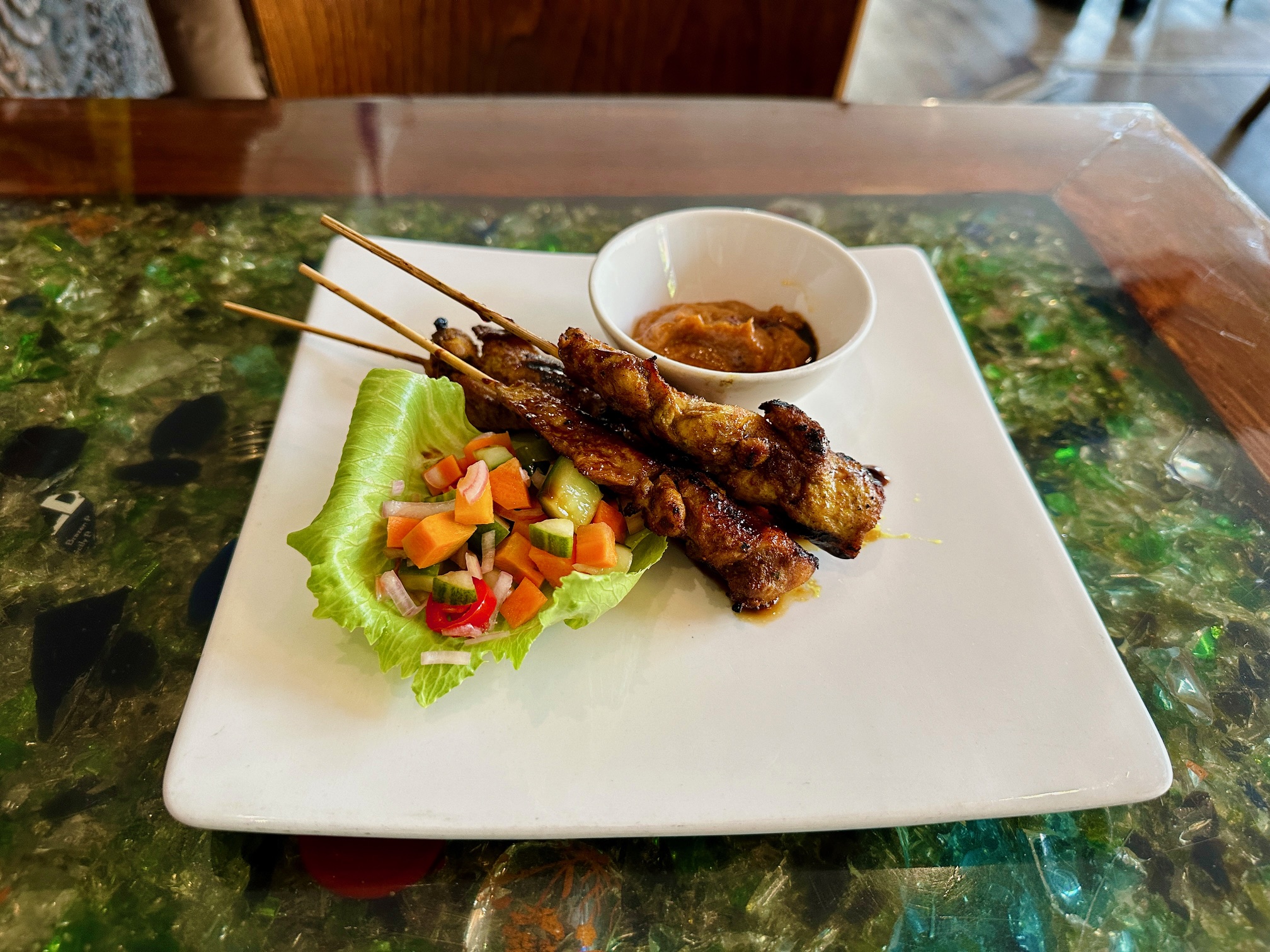
STARTER OF THE YEAR: Chicken satay, The Moderation
One of Reading’s great dishes, I’m disappointed that it took me so long to realise the genius of the Moderation’s chicken satay and I ate it several times this year – exactly as many times, in fact, as I went to the Moderation. It was nowhere near as good when I first visited the Mod on duty, eleven years ago, but in that time they have got it as close to perfection as possible.
It makes you realise how disappointing this dish is elsewhere when you order it at the Moderation. Elsewhere, the chicken is worryingly uniform and regular, just a beige vehicle for peanut sauce. At the Moderation it’s gorgeous stuff with marination and a lick of char. And the peanut sauce isn’t just hot spicy Sun-Pat, it’s a beautiful and brooding thing with a little heat, even more gloriously chunky than I am. The attention to detail here is spot-on, and that even extends to the cup of lettuce, generously filled with little pickles.
In a year full of excellent starters, honourable mentions go to the mutton fry at Chilis, one of many great small plates offered by that restaurant, and the deliciously inventive kaleji poppers at Calcot’s Coriander Club.
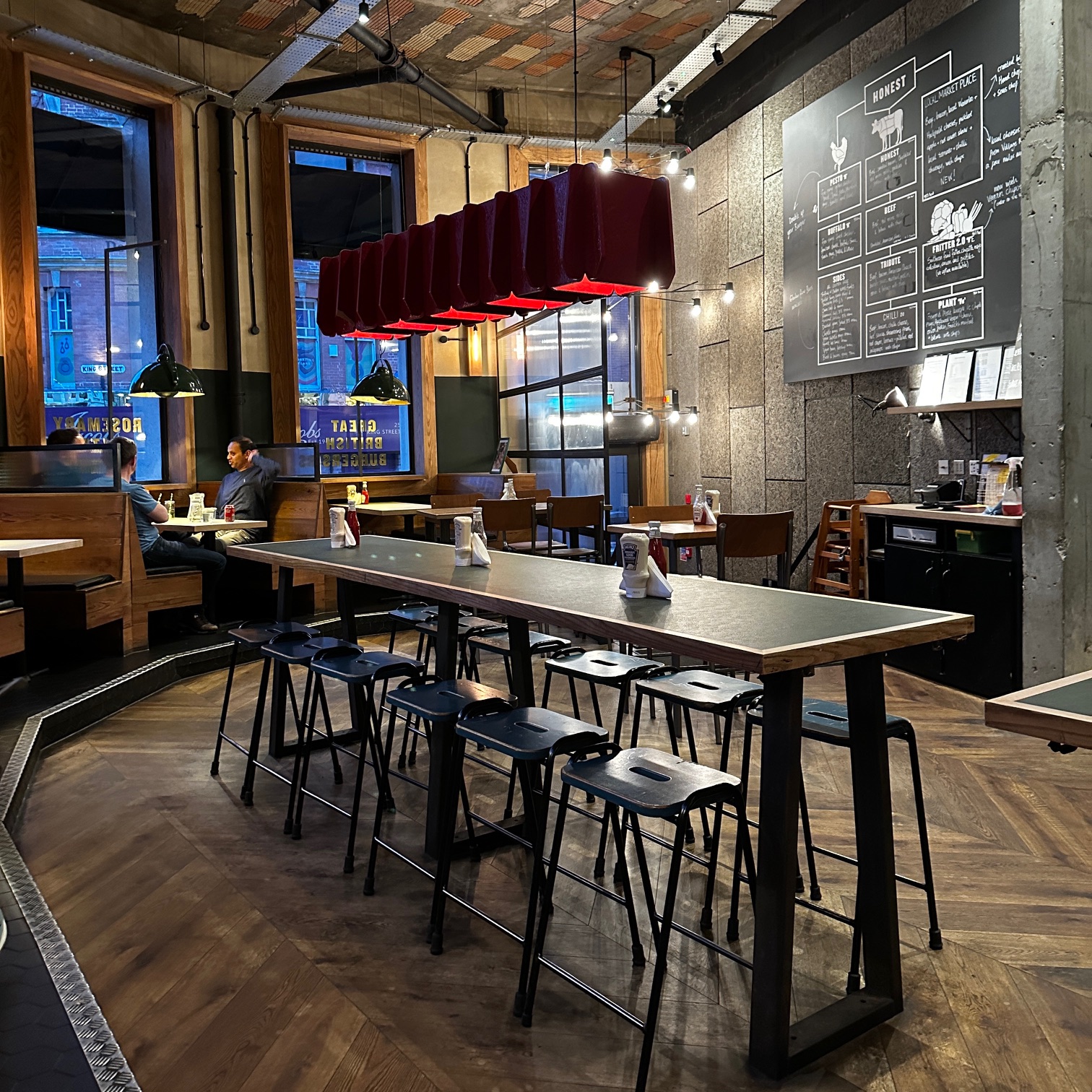
CHAIN OF THE YEAR: Honest Burgers
Last year’s winners win it again this year because they remain the preeminent chain restaurant in town. In a year when we lost the likes of Brown’s and TGI Friday, more because of redevelopment than poor takings, Honest proved that you can still pack in diners by being a reliable, known quantity and not making many mistakes. It’s been a regular stop off for me in town when I get in on the train after a day at work, am eating on my own and want to take no risks.
That doesn’t make Honest sound exciting, because exciting it isn’t, but that’s no insult because I don’t think that’s what a successful chain in 2024 wants to be in the slightest. Although that said, they have widened their appeal even further to the likes of me by putting Two Flints’ excellent Santiago on tap and finally, in the Reading branch at least, offering chicken tenders.
The best illustration I can find of why Honest Burgers has won this award is this: I ate there just before Christmas, on my own, and I decided to try their Christmas burger with some tenders on the side. The burger was a little indifferent – it could have been hotter and the puck of deep fried camembert seemed to have leaked its molten contents, leaving just a crispy shell. The tenders were also warm rather than piping hot. The chips, all that said, were as good as they’ve ever been.
By Honest standards it was probably a 6 out of 10, far from the best Honest I’ve had over the years. And it was still better than most meals I could have had at any other chain restaurant in town.
Honourable mentions go to Pho, the eternal runner-up and itself a very reliable restaurant, and Zia Lucia, which may not be amazing but is perfectly serviceable and has truly excellent service. Next year I will do my best to try them both out, even when I’m just in the mood to go back to Honest.
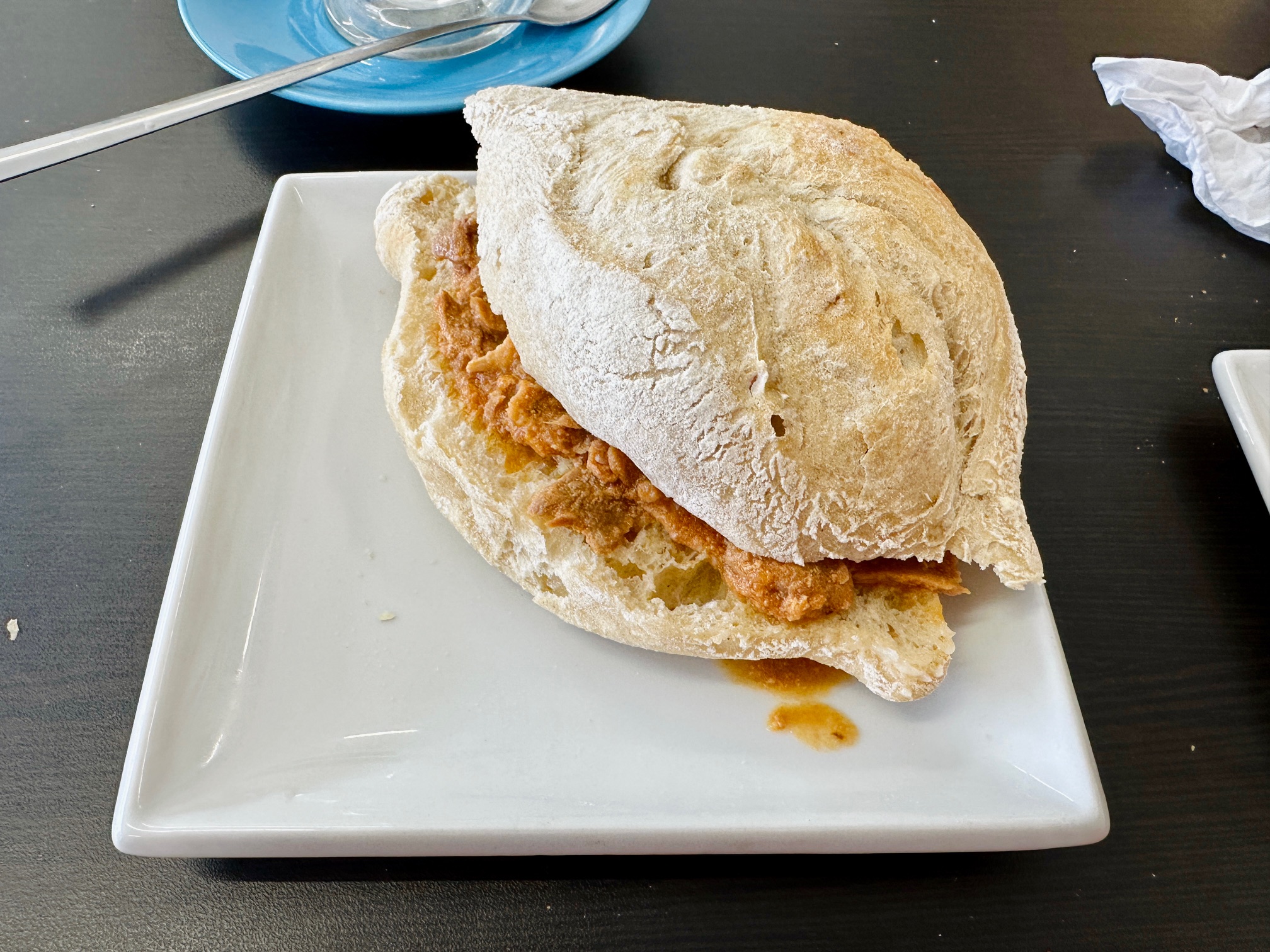
LUNCH VENUE OF THE YEAR: DaNata Coffee & Co
Not living near the centre, and having a partner who no longer works in the town centre, has definitely narrowed my lunch experiences this year, so in the second half of the year that meant most of my lunches happened at weekends. Even so it was a happy Sunday over the summer when I wandered down the Oxford Road, and DeNata turned out to be a little glimmer of Portuguese paradise.
Everything I had was great, especially the salt cod pasteis and the feature attraction, a floury, soggy, spectacular bifana. Oh, and the pasteis de nata. So essentially everything I had was great, and when I go back next year I plan to make inroads into the rest of the menu to see if it makes me miss Lisbon even less. West Reading residents are a fortunate bunch.
Honourable mentions go to two places. One is Tasty Greek Souvlaki, where a mixed gyros remains another of Reading’s most satisfying sandwiches, and the other is Blue Collar Corner. It can be quite vendor dependent but when it has someone decent there, like recent guest spots The Burger Society and Fornoza, it’s a wonderful spot for a weekend indulgence.
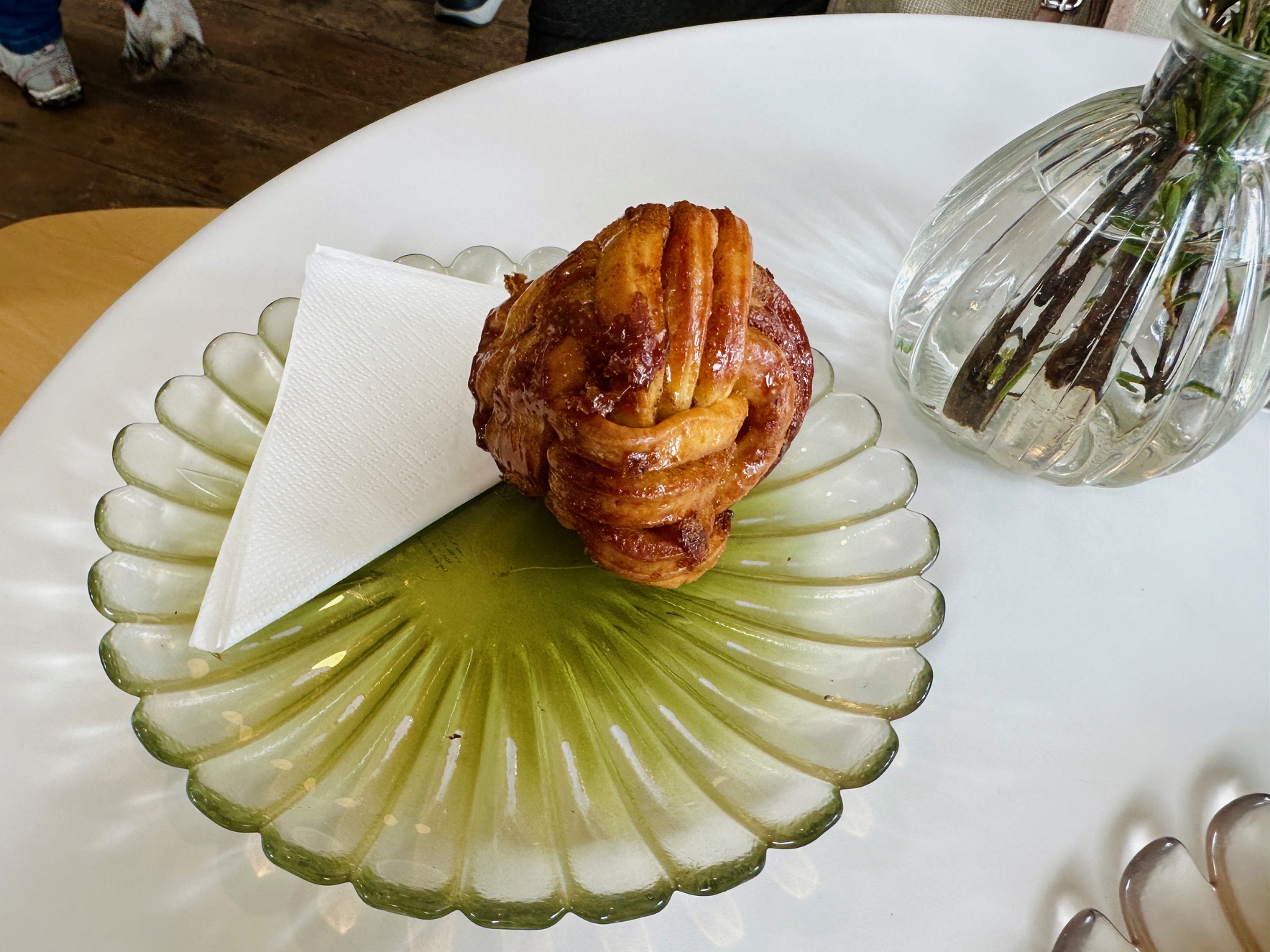
OUT OF TOWN RESTAURANT OF THE YEAR (BERKSHIRE): U. Bakery, Crowthorne
I ate out less in Berkshire than usual this year, and the field was less packed than it could have been because both my on duty visits to Maidenhead this year were so underwhelming. But in any year, in any field, U. Bakery would have been a very worthy winner. You could say it’s just a cafe, or just a bakery, but that would be completely missing what a great job owner Uri Zilberman has done in the two years since opening his Crowthorne venue.
Everything is so well realised – a beautifully put together spot, comfy and Scandi with excellent branding and cheery, ultra-competent staff. But all that wouldn’t mean much if the product wasn’t up to scratch and this is where U. Bakery excels. Brilliant baked goods, gorgeous and interesting sandwiches in outstanding pretzel baguettes, thoroughly acceptable coffee. Why Reading doesn’t have somewhere like this and has to slum it with GAIL’s – their pompous capitalisation, not mine – is a mystery. And U. Bakery’s Instagram is not only a great advertisement for what they do, but also a devilishly delicious virtual shop window.
Only one honourable mention in this category – Maidenhead must try harder – which is for the Bell at Waltham St Lawrence. My revisit this year was one of my happiest on duty meals in 2024, and I was delighted to find them still firing on all cylinders.
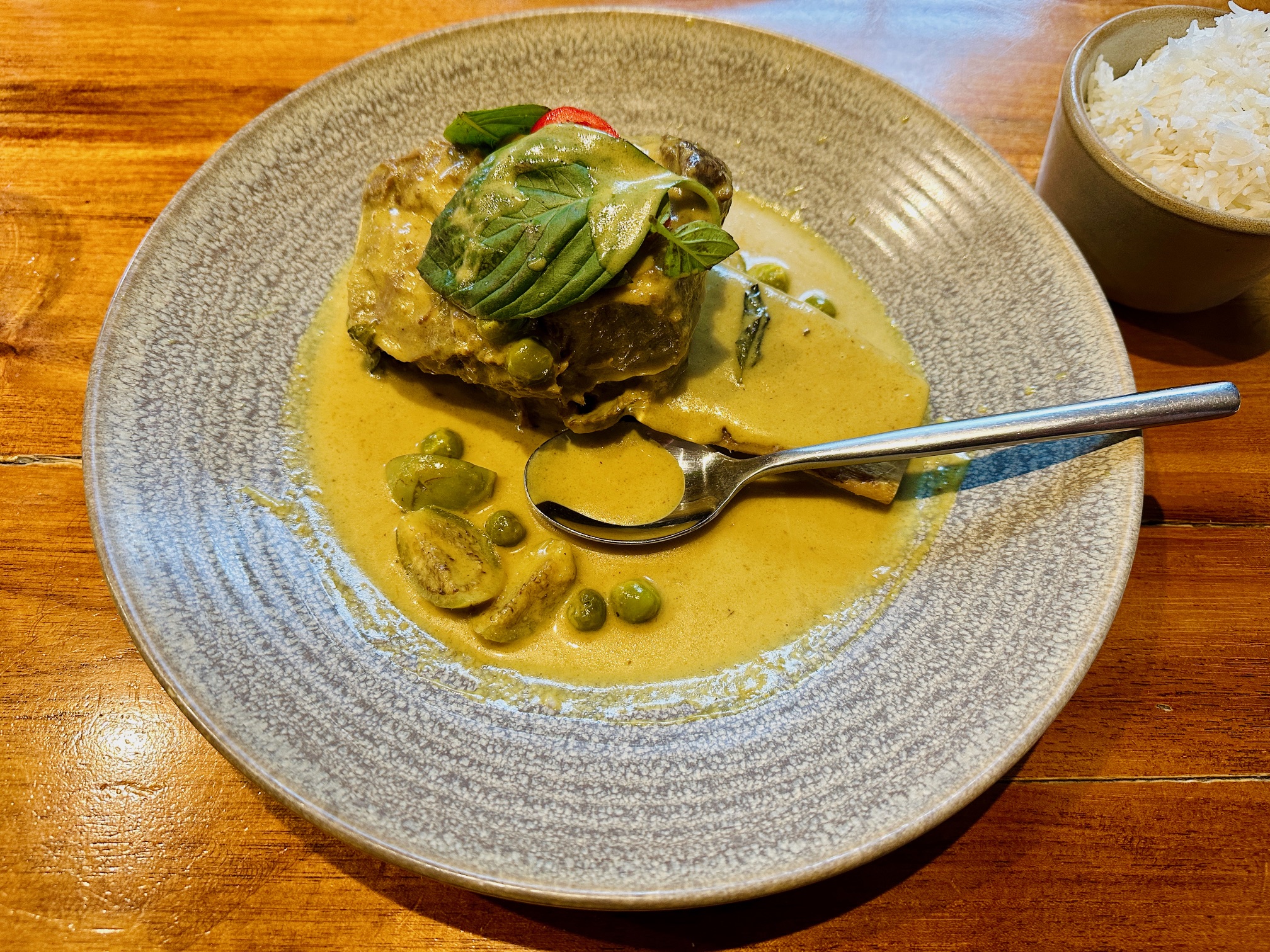
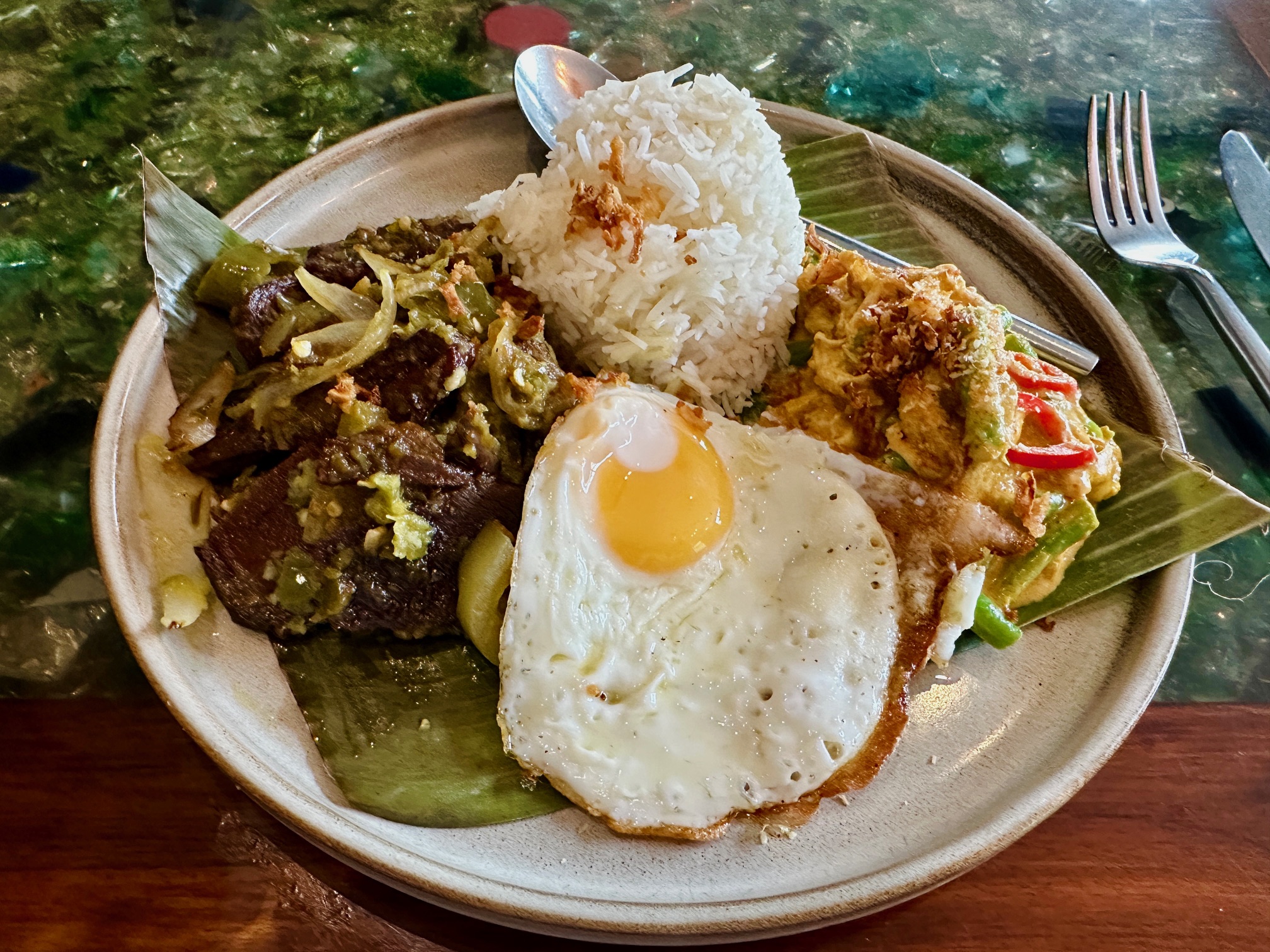
MAIN COURSE OF THE YEAR: Short rib green curry, The Moderation
I discovered this dish on a visit to the Moderation last month with my old friend Dave: he was my plus one when I reviewed the Mod earlier in the year and when he came to visit me again he picked it for lunch because he wanted to eat their nasi goreng again. I decided to take a punt on something new on the menu – possibly to atone for having the chicken satay and crispy squid yet again – so I thought I’d give the short rib Thai green curry a chance.
I couldn’t possibly have anticipated just how good it was. A giant slab of beef, slipping off the bone and breaking into strands, in a superlative green curry sauce, peppered with green tomato and nutty peas, it was possibly my biggest surprise of the year. I have thought about it many times since. I know that this was the year I reviewed Kolae, in Borough Market, the Thai restaurant raved about by every big nob in the food media. But on a dish against dish basis, I’m not sure I ate anything there I preferred to this number.
This was a year packed with runners-up, any of which could conceivably have won this award. Even narrowing it down to two honourable mentions is positively invidious, but since I must I should give a nod to The Cellar’s exemplary chicken Milanese and Clay’s Kitchen’s yakhni pulao, possibly the most complete plate of food on a menu shimmering with highlights.
CAFÉ OF THE YEAR: Coffee Under Pressure
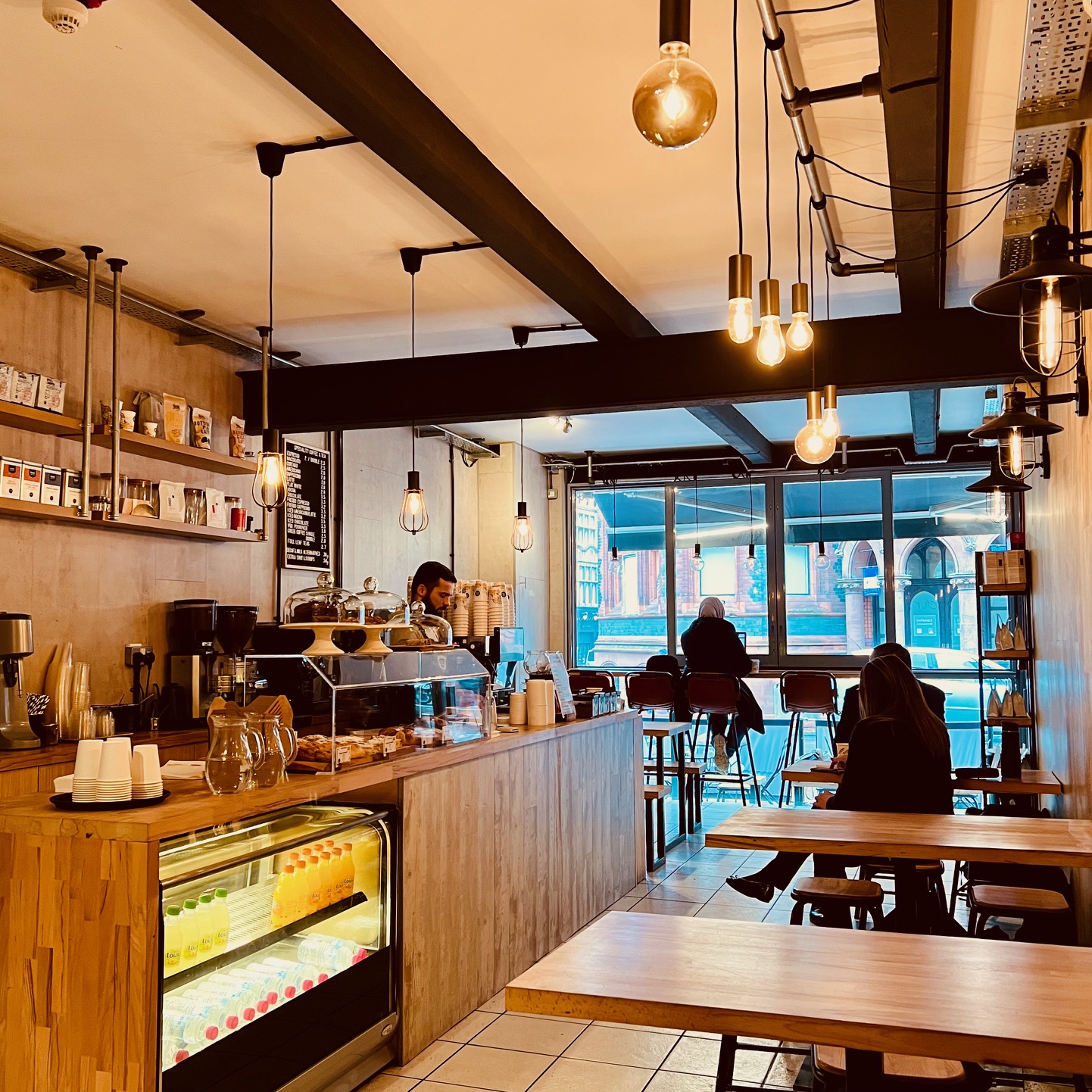
A year where we lost Workhouse was a tough year, and many of us found we had to make new rituals for our caffeination. But it was less challenging for me because I have always loved C.U.P. on Blagrave Street, and this was the year it took pole position in my affections. Sitting up at the window became a little ritual – bleary eyed on a weekday morning with a latter before taking my commuter train to work, relaxed with a mocha at weekends as a special treat.
This is also the year I got married, and the place I had my last coffee as a nervous bridegroom on a Friday afternoon, my first coffee as a newlywed the following morning. If you’d asked me on New Year’s Day if I could imagine a town without Workhouse in the centre, I’d have said absolutely not. But after nine months in a Workhouse free town I’ve got my head around it. If C.U.P. shut, though, I would be devastated.
Honourable mentions go to Compound Coffee – who I fear for, given the ongoing rumours about the viability of the Biscuit Factory which houses them – and Filter Coffee, who are thoroughly lovely. It’s a pity the latter has given up what little seating it had, mind you.
OUT OF TOWN RESTAURANT OF THE YEAR (OUTSIDE BERKSHIRE): Lucky Lychee, Winchester
My find of this year, and easily as good as my find of any other year, Lucky Lychee does Malaysian food in a pub in Winchester and I am still completely at a loss as to why it has so far escaped the notice of national restaurant critics. It is absolutely extraordinary, the kind of spot you wish you could pick up and drop just round the corner from wherever you happen to live.
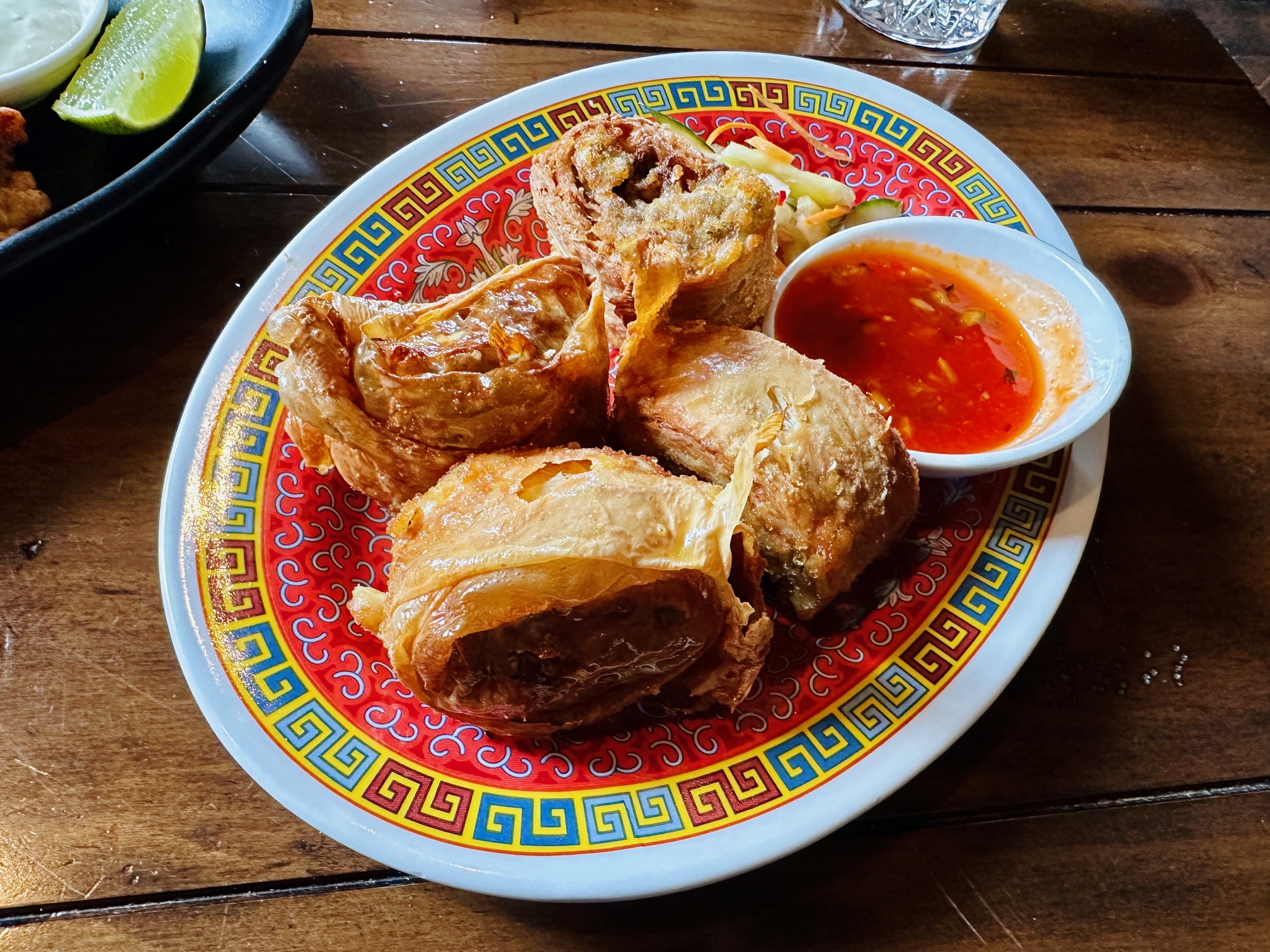
Everything I had there when I went was phenomenal – their chicken karaage, their sublime Penang pork rolls and a main course of dreams, fried chicken in a sticky honey and Marmite sauce which took the best of both and, through some magical alchemy, made it more delicious than either could possibly have been on its own. And yet I went away sad that I’d been too full to try the rendang, or a brunch roti crammed with spiced local sausage.
I know fewer people read my out of town reviews, and that they don’t always prompt people to head to the destination in question. But I’ve been so happy that a handful of readers have gone to Winchester on the basis of this review and reported back that they liked it as much as I did. Well, almost as much anyway: my old friend Dave took his wife there for brunch. “Really good” was his verdict. “It’s a nice place.” You’ll have to take my word for it that, coming from him, that’s an A minus. I loved it so much that I’m back there tomorrow for one last visit before the end of the year.
My honourable mentions in this category come both from London and much closer to home. Quality Chop House, a London institution, was almost as fantastic as everyone says it is (which is to say that it’s still pretty fantastic), and the Plough in Shiplake was classy, polished and really well executed.
SERVICE OF THE YEAR: The Coriander Club
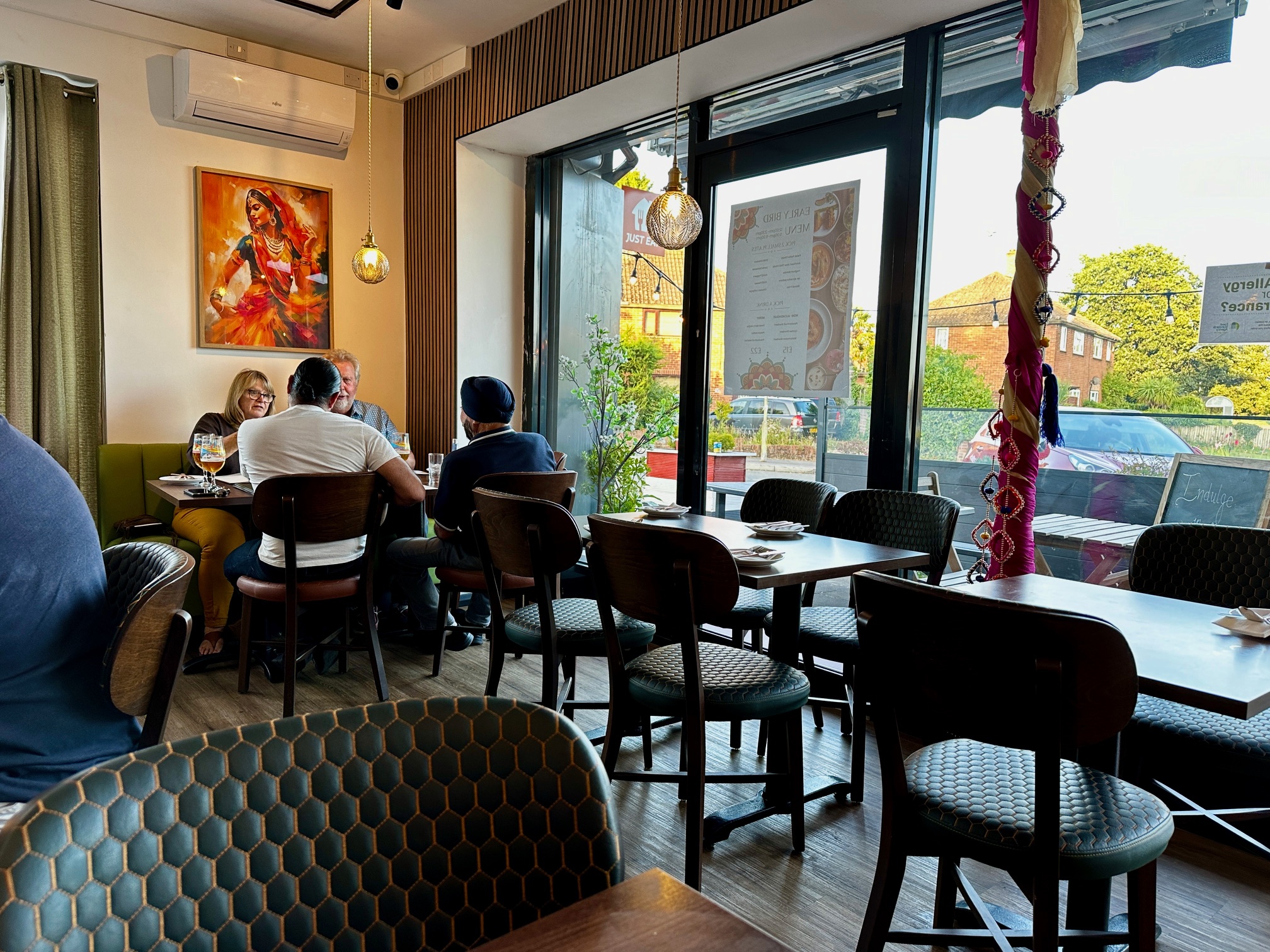
I’ve had excellent service nearly everywhere I’ve gone on my travels this year, but I was especially impressed by the Coriander Club, where the owner simultaneously worked her socks off while charming mine off into the process.
If I ever wanted a contrast between service where people really care about you having a good time and where people aren’t really that bothered whether you do or not, you see it in the difference between going somewhere like the Coriander Club – where the owner is passionate about the place, passionate about her food and wants you to have a fantastic time – and somewhere like, say, Bombay Brothers where the service never seemed to entirely recover from the shock of having customers at all.
The Coriander Club, on the other hand, is delighted to have customers and wants to turn them into repeat customers. My experience is that they’re very good at it.
Honourable mentions in this category go to Dough Bros, whose compact but perfectly formed team gets service instinctively right, and Clay’s Kitchen, whose young and enthusiastic squad does a fantastic job making one of Reading’s biggest restaurants feel small and intimate.
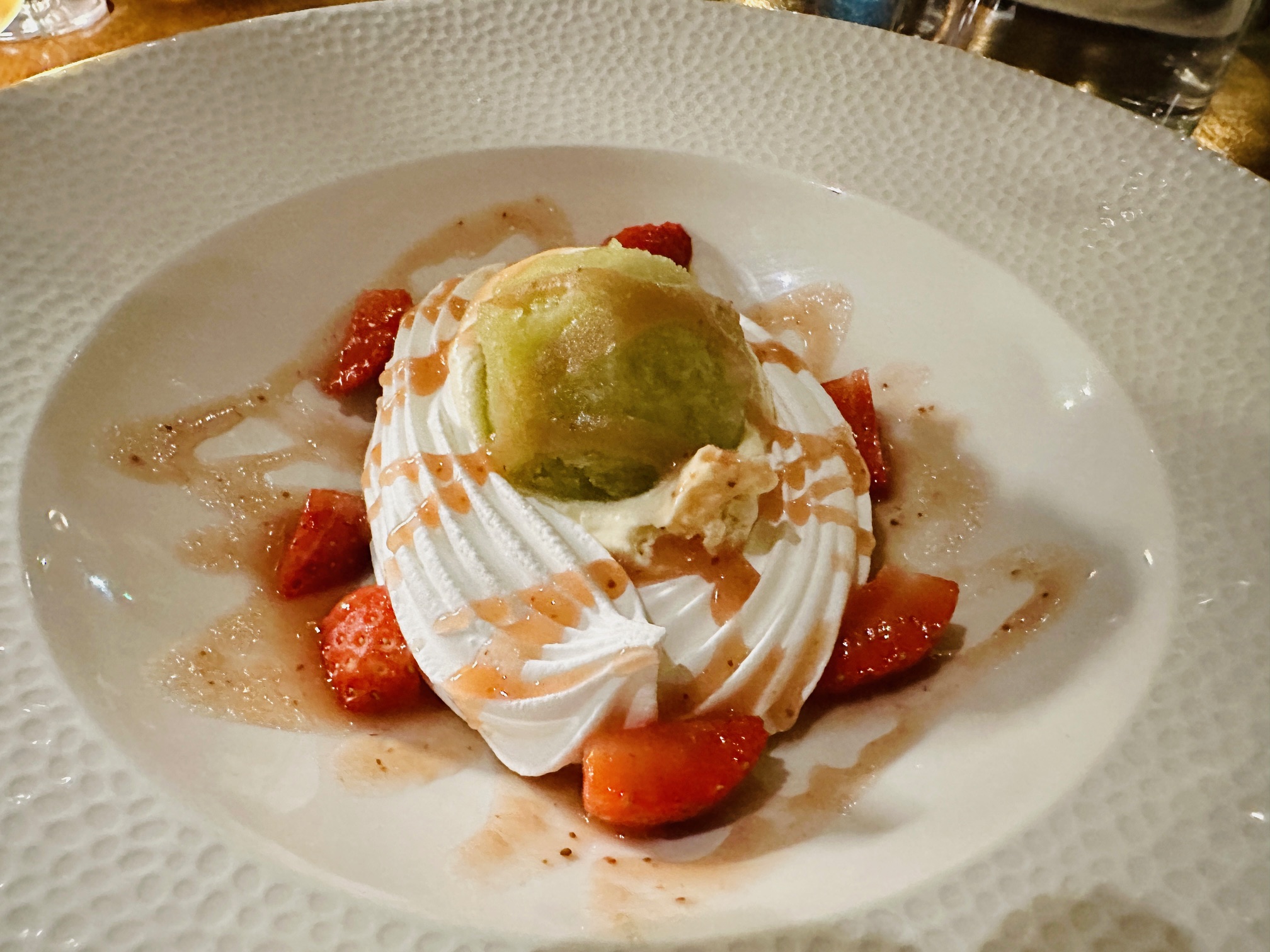
DESSERT OF THE YEAR: Strawberry pavlova, The Cellar
You don’t see pavlovas much on menus these days: restaurants are much more likely to be lazy and put on Eton mess, its accident-prone sibling. But fortunately The Cellar isn’t lazy and the resulting dessert – a graceful oval of meringue, strawberries and cream, syrup and a knockout orb of basil sorbet – is so delicious that their efforts aren’t remotely wasted.
When I reviewed The Cellar, I said “I give out awards every year for Dessert Of The Year, so thank god I went to The Cellar this week or I might have been writing a post next month saying ‘or you can just pick up a bar of Cadbury’s Top Deck from the corner shop’.” It’s almost as if I knew this moment would come, and come it did.
Having said all that, a challenger turned up right at the end of the year when I thoroughly enjoyed Thames Lido’s chocolate mousse, a classic made slightly quirky with the addition of pink peppercorns. Another honourable mention goes to DeNata’s eponymous egg custard tarts – up there with Lisbon standards, if you ask me.
NEWCOMER OF THE YEAR: Dough Bros
I’ve so enjoyed watching Dough Bros taking Reading by storm this year from its little site on Northumberland Avenue, just down the road from sister business Short Back & Vibes. They cut hair there, but they don’t cut corners at Dough Bros; right from the off they’ve made exceptional pizza – with the best flour, the best tomatoes – and have quietly plugged away hoping that if they did their best, word would get out and they would achieve Dough Bros’ stated ambition. They would transcend Whitley.
Well, they have well and truly done that. They may have started the year hoping for the best, but they end it having achieved the best. It’s genuinely heartwarming to see their Instagram stories saying that they’ve sold out of bases, week night after week night, or to see their little spot, on the edge of town, packed out with pizza enthusiasts.
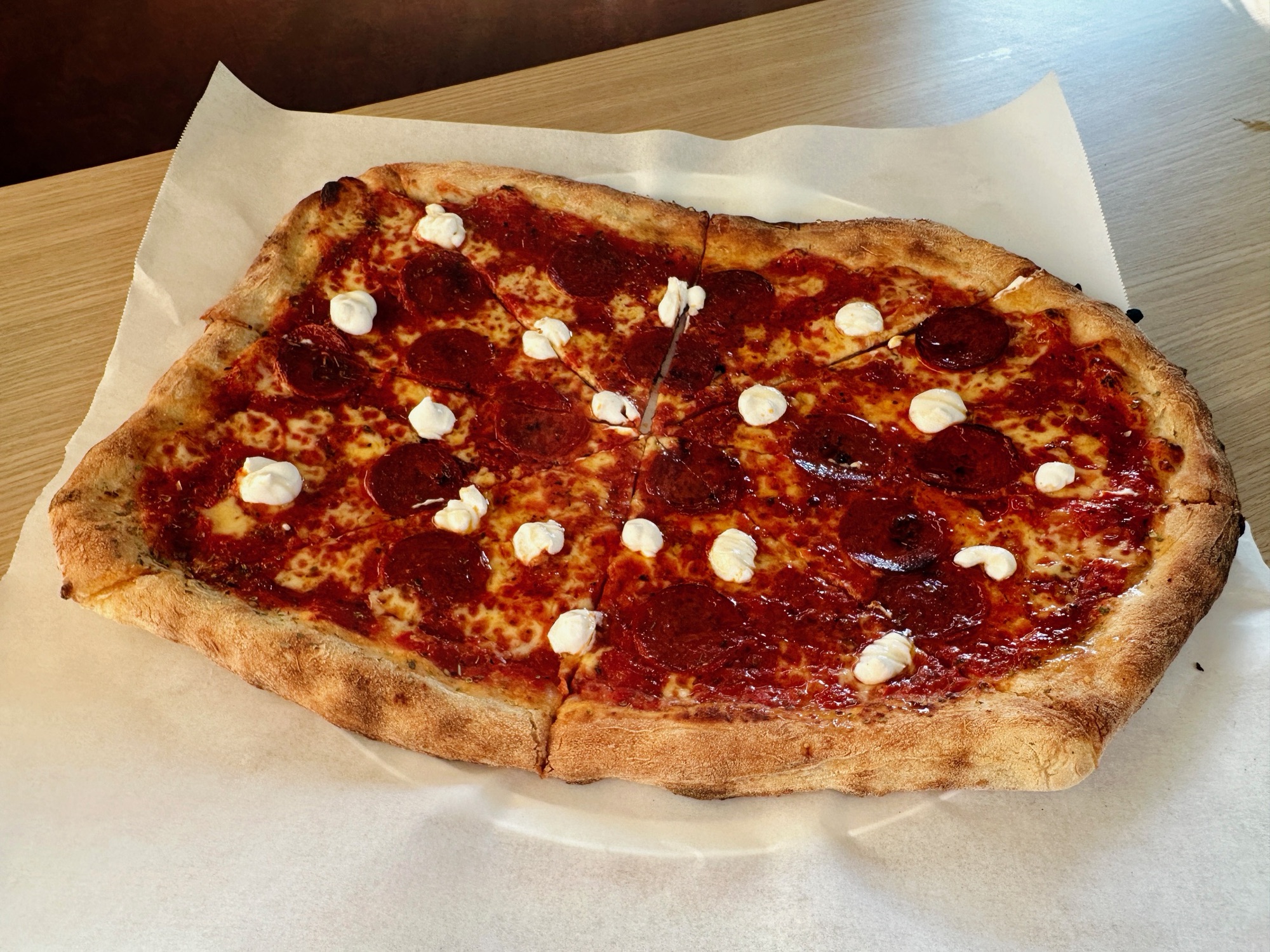
I don’t know what 2025 holds for Dough Bros, whether that’s expansion, or new menu items, or an alcohol license, or just them carrying on doing what they’re doing and consolidating their position. But whatever they do, I and a lot of people will be watching: it must be five years or so since I’ve seen a new Reading restaurant capture hearts and minds the way Dough Bros has. I’ve had their Honey Honey pizza – pepperoni, ricotta and hot honey – many times this year, and I have no doubt there will be more in the twelve months ahead. I count myself very lucky to live not too far away.
It’s a shame I can’t give this award to three different businesses. But DeNata Coffee & Co and The Cellar, both mentioned elsewhere in these awards, also made Reading a much better place this year, in marked contrast to the flashy, big money places that so underwhelmed in 2024.
TAKEAWAY OF THE YEAR: Gooi Nara
When I moved I had to try out other takeaway options, because I could no longer rely on food from the town centre, or from the north side of town, arriving hot or intact. In the process I had some truly dreadful experiences – some because things went cold, others because they went walkabout. My unimpressed conversations with Deliveroo customer service had a very 2021 feel about them.
I tried one of the renowned Katesgrove takeaways, Home Cooking on Highgrove Street, and I couldn’t believe how poor it was. Had Chinese takeaways changed, or had I changed? Were they bad, or had I been ruined by the hi-falutin’ stuff I was used to from Kungfu Kitchen?
As a last throw of the dice I placed an order with Gooi Nara, the Korean restaurant on Whitley Street, and I was blown away by how good it was. Gam-poong gi, crispy chicken in a hot, sticky sauce that clung to its crags and dimples. Chicken thigh in a deep, almost-sweet bulgogi sauce. Seafood pancakes and chicken dumplings, with a glorious dipping sauce of soy and sesame. All the containers with a little hole cut in the corner, so nothing steamed in its plastic casket.
I loved it so much I ordered again and again in the subsequent weeks, and it was always good, never disappointing. I even had their food on Christmas Eve: Gooi Nara’s sweet and sour chicken is a plastic tray crammed with those crispy, battered bits of chicken. The sauce – thin not gloopy, properly sweet and sharp with a really well-judged hit of vinegar – came in a separate tub, to add at the end. This is a new award, and I get it might be of limited use depending on where you live, but I was so impressed with Gooi Nara. So they get an award from me.
Honourable mentions in this category go to Dough Bros – their pizzas travel brilliantly, although they might be too massive for you to revive them in your oven – and You Me Sushi. Sushi is a great thing to order for delivery because it travels so well, and I’ve rather fallen in love with You Me Sushi’s stuff this year.
RESTAURANT OF THE YEAR: The Moderation
Surprised? Me too.
But really, The Moderation has given me so much joy this year, on every visit I’ve paid to it. Whether that was on duty with my old friend Dave at the beginning of spring, when I returned for a post work drink and to take advantage of their street food special on Wednesdays, the time I went back with Zoë because she read the review and felt aggrieved at missing out, or when I went back with Dave around the end of the year.
Every visit I’ve paid to the Moderation has been brilliant, and made me regret leaving it so long before I visited it again. It is a real asset to Reading, and one I probably closed my mind to for a while because of a pointless disagreement the landlord and I had somehow concocted between us. Free of that, I can now see the Moderation as it really is – an excellent Asian and pan-Asian restaurant in a pub’s clothing, with a menu that roves all over the place and never disappoints, and which changes often enough to prove that nobody there is complacent.
I’m sure many people will read this and say I told you so, or what took you so long? to which I can only say better late than never. I’ve had so many great meals in Reading this year, and Reading is still home to many great restaurants, despite 2024’s best efforts. But I can’t think of a more deserving winner this year than the Moderation. In the year that I spent a lot of time sad about losing one of the best restaurants Reading has ever had, I am very grateful to the Mod for doing such a good job of restoring my flagging faith.
Picking runners-up in this category feels even more redundant than in the others. But my two other favourite restaurants this year, both of which have fed me very well numerous times throughout 2024, are Dough Bros and Clay’s Kitchen. They are from completely different ends of Reading’s food spectrum, very different to one another and very different from the Moderation. But if you picture those three places on a metaphorical podium, I happen to think that image says quietly wonderful things about the U.K.’s largest town.
Since January 2025, Edible Reading is partly supported by subscribers – click here if you want to read more about that, or click below to subscribe. By doing so you enable me to carry on doing what I do, and you also get access to subscriber only content. Whether you’re a subscriber or not, thanks for reading.