Pub review: The Moderation

In 2013, the first year of this blog, I reviewed the grand total of fourteen Reading restaurants (don’t hold it against me, I only started in August). And there must have been something about those very first venues, because the majority of them are still going strong: Picasso, The Warwick, The Lobster Room, Kyklos and Forbury’s are no longer with us but the other nine are still going over ten years later. I won’t list them all because I don’t want to jinx anything in the here and now – 2024 is hard enough as it is – but you get the idea: for those restaurants still to be trading, a decade on, is truly no mean feat.

But time has passed and those reviews have become increasingly out of date; they might have reflected what a restaurant was like back in those days, when I wasn’t yet forty and mistakenly thought I had the rest of my life figured out, but you couldn’t necessarily use them now with confidence. So over the last couple of years I’ve been gradually revisiting the survivors from the class of 2013 to write new reviews and see how it all went so gloriously right. And generally, with the exception of Zero Degrees, I’ve had some good meals in the process.

Not only that, but I’ve left some of those Reading institutions delighted that they’re still with us. In a world where everything seems to change beyond recognition, more and faster, with every passing day, I was relieved to find that London Street Brasserie, for instance, was still a reliable benchmark in the centre of town. I was pleased that Pepe Sale, at the time freshly under new management, was recognisable as the place I had so loved on my first ever review. And returning to Café Yolk I found that the slightly iffy brunch place I wrote off eleven years ago had blossomed into a polished and Instagrammable performer.

All those places were older and wiser, as you would expect: I, on the other hand, was probably just older, but you can’t win them all. And that brings us to the subject of this week’s review, The Moderation, a place I really should have revisited long before now. When I went there in December 2013 I remember thinking they’d had an off night, because I’d eaten there a few times before that visit and always enjoyed it. I tried to say something to that effect in my review, but ultimately I was a little underwhelmed.

Back then the Moderation was part of a little chain, under the name Spirit House, along with the Warwick Arms on Kings Road, now closed. I’m pretty sure that at one time or another that group also included The Queens Head up on Christchurch Green and even the Lyndhurst, in a far earlier incarnation. The theme with those places was that they did pub food with a sideline in Thai food, as was the fashion ten years ago, and when I went to the Moderation on duty I found it a little unspecial, not bad by any means perhaps not quite as good as the Warwick in the centre of town.

In the intervening ten years I’ve been back a few times, but only really for drinks. I’ve always had a soft spot for the Moderation’s garden, a natural suntrap that never seems to get the plaudits it deserves, but the location has always been a little tricky for me: if I’m in that area I’m probably at Phantom instead, and if I was crossing into Caversham I’d wind up at the Last Crumb. So despite being fond of the Moderation I’ve made it there rarely.

I’m also not sure I’d have been entirely welcome there anyway, because I blotted my copy book with them a few years ago. It was in the run up to the 2019 General Election, when the Tories had selected car crash candidate Craig Morley to fight Reading East and he turned up in the constituency, not a place he knew well by the sounds of it, with Sajid Javid for a spot of campaigning. They were photographed pulling pints behind the bar at the Mod before scooting over to the Caversham Butcher, presumably to massage some gammon, and I’m afraid I might have been less than my usual diplomatic self about that on social media.

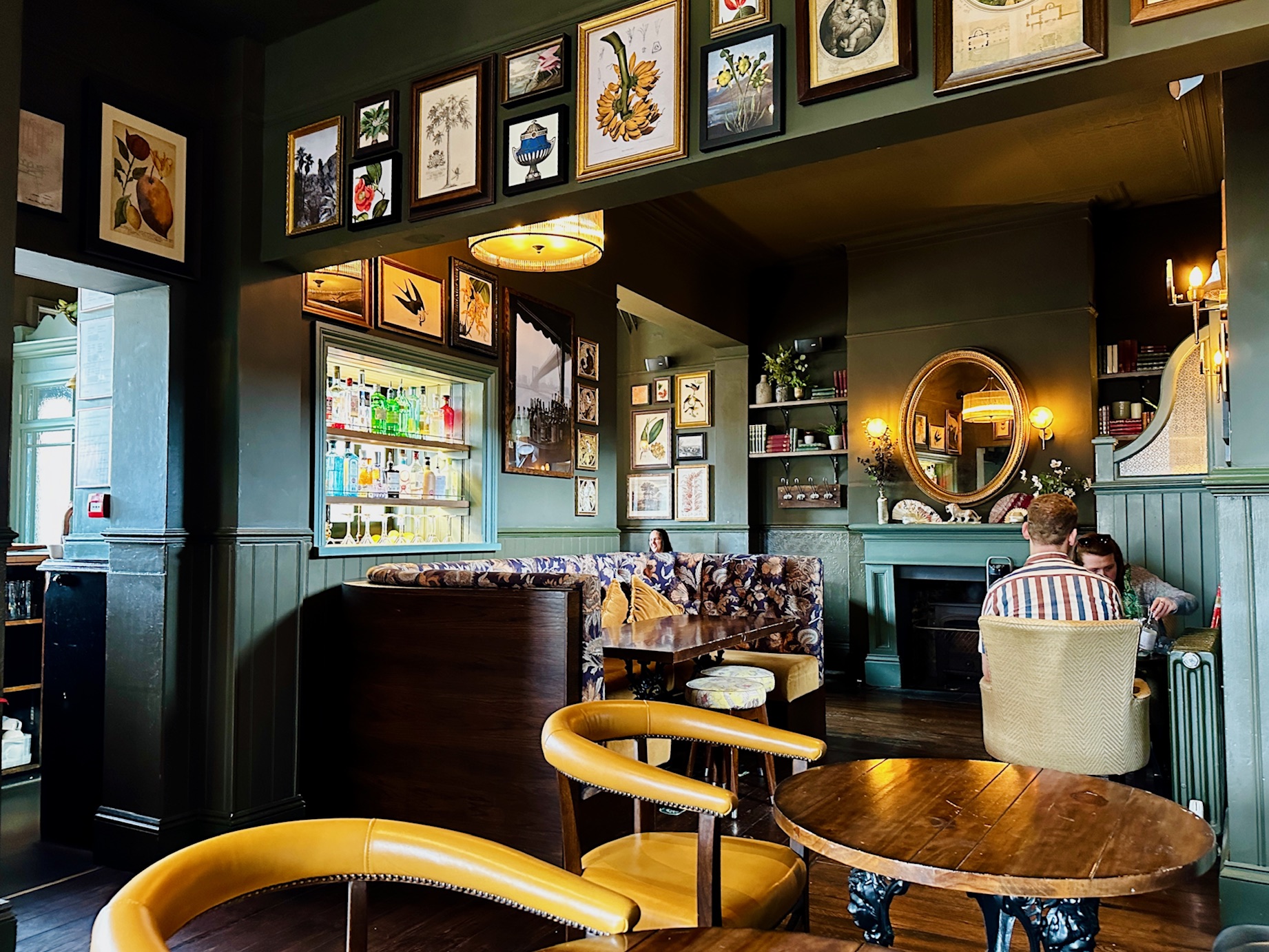
Anyway, there’s been a lot of water under Caversham Bridge since then. Craig Morley is now just a surreal footnote in Reading’s history, I’ve been known to purchase the occasional sausage at the Caversham Butcher and I reckoned it was about time I reassessed the Moderation. After all, Alok Sharma visited But Is It Art in the summer of 2020, maskless, less than a week after displaying Covid symptoms in the House Of Commons, and I still buy all my birthday cards there. So last Saturday I headed there with my old friend Dave, visiting from sunny Swindon, to honour a reservation we’d made – in his name, just to be on the safe side.

Subscribe to continue reading

Become a paid subscriber to get access to the rest of this post and other exclusive content.
Pub review: The Plough, Shiplake

I still remember the first time I gave out a really good rating on this blog. It was towards the end of 2013, when we were all a lot younger and more carefree, and my blog had been running for just over three months. I wasn’t drunk on the power (next to nobody read the blog in those days) but even so giving out a rating in the high 8s felt like a proper stake in the ground. This is my kind of thing, that rating was saying. Go here on my recommendation and I promise you won’t regret it.

Ten years on, unlike a lot of restaurant reviewers who think their pronouncements should be on tablets of stone – why do so many of them write like they’re on coke? – it still feels like a big thing to say. And a presumptuous one, too: for me, that trepidation about writing a rave review has never quite gone away. Nor has the euphoric relief when anybody visits a restaurant on the back of one of my reviews and tells me they didn’t hate it, let alone loved it. I know the blog’s free, so nobody can ask for a refund, but I can’t give anybody back the money they’ve wasted on a bad meal.

The recipient of that first rave rating, a rating that wasn’t beaten for two whole years, was a gorgeous pub called the Plowden Arms in Shiplake. Run by married couple Matt and Ruth Woodley, it was the most beautiful spot – snug in the winter, with a fantastic garden in a little corner of South Oxfordshire for the summer. The crockery was vintage before everyone jumped on the chintz and retro bandwagon, the menu revived classics from the pages of Mrs Beeton and there was 20s jazz playing all the time. I adored it, and I went there often – with friends, with my partner, with my family, with anybody I could persuade to head to Shiplake.

Just over three years later, the Woodleys left the pub. It reopened under new management, but it wasn’t the same. You looked at the menu and thought that food was just something the management thought it should offer, all function and no passion. It was the first in a long string of disappointments, of places that had the temerity to close despite my loving them. Since then there’s been Dolce Vita and Buon Appetito, and soon there will be the Lyndhurst, but that first one stung. I wish I’d gone more often. As Andy Bernard says in The Office – the funnier version – I wish there was a way to know you’re in the good old days before you’ve actually left them.

When it closed two years later, I wasn’t surprised. It sat vacant by the side of the road, and for a while it looked like it would just be the latest pub to turn into accommodation, the latest community to lose a hub and gain a handful of extra residents with nowhere to drink. It was empty throughout Covid, but then in summer 2021 there was an interesting development: the owners of nearby Orwells announced that they had saved it from near-certain demolition and were going to open it as The Plough in early 2022.

That news was welcomed beyond the narrow confines of Shiplake: Orwells has a lot of fans, and I’m sure they liked the idea of a more affordable, more casual venture from the same people. But then something strange happened in 2022. The Plough didn’t open early that year and at some point – I suspect we’ll never know exactly why – Orwells dropped out of the picture. But the Plough did open, just before Christmas 2022, owned instead by Canadian-born Jill Sikkert, her first hospitality business after a career in interior design. Last month she appointed a new chef, Charlotte Vincent, who has been on Great British Menu and got one of her previous venues into the prestigious Top 50 Gastropubs list four years ago.

All very impressive: who needs Orwells anyway? But I would be the first to admit that the revitalised Plough isn’t the kind of venue I would normally review. A lot of that’s down to accessibility: I know that the countryside around Reading has plenty of food pubs which ordinarily would interest people, like the Dew Drop Inn at Hurley, the Crown at Burchett’s Green or even the Wellington Arms at Baughurst. But as a non-driver who relies on public transport they don’t generally fit my catchment area, so you’re more likely to hear about restaurants near a train station, like Seasonality.

Besides, you don’t need me for those kind of places because they’re the province of the website Muddy Stilettos, which you may know. They love rural gastropubs, and they gush about them in their weirdly infantilised language where things are “yummy” or “scrumptious” and go in their “tummies”, where food and drink are summed up as “scoff and quaff”. Apparently if you like this kind of restaurant you also like twee: I even read one review which referred to something called a “Michelin twinkler”, presumably this is awarded when your scoff and quaff are particularly yummy and scrumptious. Goody gumdrops!

If I say more about Muddy Stilettos – especially that their annual awards are an exercise in epic grift where they get small businesses slogging away to promote their website while giving back nothing in return – I’ll probably get in trouble, so let’s move on. I found myself reviewing the Plough because a very good friend got me one of their vouchers for my birthday last year, so Zoë and I finally found an opportunity to get there on Good Friday, at the end of our holiday, literally days before it expired. So I suppose, technically, I only paid for part of my bill: I wonder if that gives me something in common with Muddy Stilettos?

The makeover the Plough has received is quite something. In its previous incarnation it looked like a pub, like a beloved local that also happened to serve food. Now it is a really gorgeous series of rooms – you can tell Sikkert has a background in interiors – that take advantage of the pub’s good bones, its bricks and beams and parquet floors, but create something much more luxe. That said, the chairs looked better suited to lounging than dining, but that’s probably just me being a bit old-fashioned.

We were seated in a room I remembered well, having eaten in it many times when it was the Plowden Arms, and yet it felt completely familiar and totally different all at once. Even though it was the end of March there was still a nip in the air and the fire was burning, and it felt properly comforting: I can’t wait for summer to come, but I’ll miss the smell of woodsmoke.

The menu is written in that way that was modish a few years back, listing ingredients but nothing else: sea trout pastrami, mussel, apple gremolata, that kind of thing. I know this annoys some people but it didn’t bother me – it was more detailed than other examples I’ve seen and, besides, a little element of surprise when you order dishes can add to the experience. Perhaps I’m just getting soft.

As is the fashion there were snacks, starters, mains and desserts – most of the snacks just over a fiver, the starters just over a tenner, the mains between twenty and twenty six pounds, desserts a tenner. You’ll have your own views about whether that’s steep, but I compared it to what things cost at London Street Brasserie these days and decided to judge it at the end, not the outset.

There’s also a no-choice set lunch menu, twenty-seven fifty for three courses, which didn’t overlap with the main menu. But in honesty I think if you’re going to only offer one option on a menu it has to be more interesting than the likes of swede and carrot soup, so I gave it a miss. The Plough could learn from the likes of Quality Chop House, whose set lunch costs about the same and seriously makes you consider swerving the à la carte. Besides, that voucher was burning a hole in my satchel – in for a penny, in for a pounding, as my fiancée likes to delicately put it.

We got some snacks while we made up our mind about everything else, and they were the first indicator that it wouldn’t all be plain sailing. Homemade focaccia/blue cheese butter was the first thing we tried. Now, I don’t object to minimalist wording provided there isn’t anything significant in the dish it neglects to mention, and so long as what you’re told will be there is actually present and correct.

So the menu really should have said homemade bread/garlic butter, because that, weirdly, is what I got. The picture below is one of the dullest ever to grace my blog, but I put it there for a reason, to demonstrate that this bread wasn’t springy or spongy or aerated. It wasn’t open-crumbed at all. It wasn’t permeated with olive oil, it didn’t have salt or rosemary or anything else to zhuzh it up. The reason it was none of those things is that it wasn’t focaccia.

It was, instead, perfectly serviceable bread. And as for the butter – well, we went from the blue cheese in this must be very subtle to there’s no blue cheese at all in this, is there? before ending up at isn’t this garlic butter? The menu wasn’t just economical with words, it was a little economical with the truth too.

The second snack was a lot more enjoyable. I’ll do away with the stripped down wording from here on in, but this was a clump of battered, fried enoki mushrooms, strewn with shoots, more mushrooms (pickled, I think, but my mind might be playing tricks) and a little Walnut Whip of mushroom ketchup. This was far more like it – wild mushrooms cropped up in a few places on the Plough’s menu, and the mushroom ketchup, lending gorgeous depth, was the star of the show.

But at the risk of nit picking again, the ratio of the enoki to batter was so out of kilter that I felt like I was eating a savoury churro that just happened to have a tiny bit of mushroom in the middle. That said, if it had been described as that on the menu I might still have ordered it. Anyway, it was only a fiver.

The starters proper were more successful, and started to give me an idea of what the kitchen could do. My pork terrine wasn’t bad – a slab of pork, bound up with jamon iberico and strewn with gubbins – cups of onion with thyme crumb nestling in them, and more of those little shoots. I would have preferred some acidity in the mix – a piccalilli, or some caperberries – and without them it was nice but a little well behaved for my liking. A tad too fridge-cold, clean and pristine where it needed to be gutsy.

This came with what was billed as sourdough bread – I wasn’t sure it was sourdough but if anything, it was more open-textured than the focaccia had been. This dish felt sanitised, but it would probably have been a hit with the Muddy Stilettos crowd – every time I read a review by them, the reviewer practically apologises for having three courses and makes a tired joke about undoing the top button of her trousers. I never feel like I have to apologise to you lot for ordering too much food: it’s one of the reasons I’m so fond of you all.

Zoë had chosen scallops, a couple of plump specimens in a puddle of dashi beurre blanc, topped with some kind of sea vegetable whose name I’m sure I used to know but have since forgotten. I wouldn’t have ordered this – I’m not sure beurre blanc is improved by cross-pollinating it with dashi – but Zoë really enjoyed it. Unfortunately I wasn’t allowed to try any, and when I asked her for a more detailed critique she said “I fucking loved it, I’d order it again, what more do you want from me?”.

This will please fans of her expletives, and I know there are a few of you out there, but probably isn’t of practical help. She did eventually tell me under cross-examination that the scallops were beautifully cooked, the contrasting textures managed just right, but that’s all I have for you.

At this point I was feeling slightly underwhelmed, but the Plough rescued things with two exemplary and very different main courses. Fish and chips – just described as “day boat fish”, so I have no idea what it was – was outstanding. A thick cylinder of pearlescent, just-cooked fish was hugged by brilliant, almost ethereal batter. I was allowed to try a bit and it was miles better than I’d been expecting, and weirdly it made me think of my dad. He has a bit of a habit of ordering fish and chips in fancy restaurants, so I’ve seen him try it at Rick Stein’s place in Padstow, at the Beehive in White Waltham and in my opinion, the Plough’s rendition was better than either of those.

The accompaniments were bang on too – excellent peas which were crushed rather than mushy, and a tartare sauce Zoë could tolerate, which meant that it wasn’t quite vinegary enough for me. Having it with fries, although that was clearly communicated on the menu, felt a little strange to me. They were very good fries but, in an inversion of how I feel every time I look in the mirror these days, I’d sooner they had been chunky rather than skinny.

If that covers the pub classics end of the menu, my choice was cheffier and one of the best plates of food I’ve eaten this year. Lamb rump was just stellar – thick and tender, accurately seasoned, the perfect shade of pink with just the most beautiful stripe of fat, the kind of thing I could eat all day. It came with a little of everything wonderful – more onion, this time smoked, chewy and delectable nubbins of Jerusalem artichoke, a sweet and glossy puree, a little jus and, by the looks of this picture, some extra virgin olive oil thrown in for good measure.

Oh, and I neglected to mention my other favourite part of this dish – described as hash browns, they were a couple of golden pyramids of pressed and fried potato that were worth the price of admission by themselves. I truly loved this dish, and it single-handedly justified the trip to Shiplake. A few forkfuls in and that dense non-focaccia and the slightly timid terrine were completely forgotten. All was forgiven: this dish was twenty-six pounds and, I reckon, worth every penny. Even looking down at the picture I can remember how happy it made me.

As it was a little light on the veg I’d ordered some green beans on the side with pickled chilli and soy sauce. They were well enough executed, the beans with a little bite, but I didn’t think they quite worked: the sauce didn’t adhere, so you ended up with a pool of the stuff at the bottom. I’ll go for the ubiquitous hispi cabbage next time.

We both wanted dessert, which is a good sign, and we both wanted the same dessert. So we had it, unrepentantly and without loosening any garments. Again, it was good but not perfect and again, it wasn’t quite as billed. It was allegedly a dark chocolate cheesecake but, for my money, it wasn’t in any way dark. And texturally I didn’t think it entirely worked – that huge layer of chocolate was a tad gelatinous, the base so heavy and thick that you couldn’t get a spoon through it without risking injury to passers-by.

And again, it was a pity because the minor details were all excellent, from the chocolate soil on top to the blobs of yuzu gel and – especially – the warming, boozy cherries. I finished it, because it’s rude not to, but I would have liked something slimmer and more refined. That is something I often say when I look in the mirror, come to think of it.

Replete and satisfied, we asked for our bill and prepared for the trip home. And it would be remiss of me not to mention at this point that – more than once on my visit to the Plough – Zoë had raved about the bathrooms. “Seriously, you have to go to the loo before we leave” she said. “I think they’re some of the best restaurant toilets I’ve ever seen.” So I did, and they were indeed very chic and the handwash smelled magnificent. But, just as with Zoë and those effing scallops, that’s all I can remember. I wish I’d taken a picture.

Our bill for all that food, a non-alcoholic cocktail called a tropical something or other which Zoë found too sweet (and at nine pounds, a little too rich) and a couple of bottles of sparkling mineral water – because I was on antibiotics – came to a hundred and thirty-eight pounds, including a 12.5% service charge. And it feels like an insult to shoehorn the service in here, between the loos and the conclusion, because it was faultless from start to finish. We had just the right level of attention, enthusiasm and smiles from the moment we were greeted to the point where we said goodbye and went out the front door. It made me think what a boon this place must be to genuine locals, although if you live in Shiplake I imagine you had enough to be smug about even before the Plough came along.

I’ve ummed and aahed since about what I made of the Plough, on balance. In the debit column, some of the dishes were underpowered or didn’t work, and the feng shui menu didn’t always reflect what turned up on the plate. I suppose I compare it in some ways to the robust, magical cooking of somewhere like the Bell at Waltham St Lawrence, and it doesn’t quite match that standard. But on the other hand, some of the dishes were exceptional, especially the mains, and the little touches with much of the food show an imagination which quite won me over. And then there’s the room, the welcome, that open fire and – yes, let’s mention them again – those bathrooms.

But the main thing I took from my trip to the Plough was a feeling of being in really capable hands, of a menu that could please almost anybody and managed to walk that very fine line where it was accessible and clever. That’s not an easy balance to strike, and many chefs or restaurants, despite their best intentions, end up falling clumsily on one side or the other. That the Plough has avoided that pitfall, and that the team have created somewhere so universal but sophisticated is a more skilful trick than you might think.

“This is the kind of place we could take your dad and stepmum” said Zoë in the car on the way back to Reading, and that’s as good a summary of its appeal as I can think of: it might mean more if you’d met them, but hopefully you get the drift. I think you could take anybody here for a meal – either for a special occasion or for no reason – and have a properly charming time.

This might not read like an out and out rave, I may not have talked about tummies or the fact that they might be awarded a Michelin twinkler at some point, but regular readers will know that this is me saying I was quietly impressed. This is my kind of thing. Hopefully, if you go here on my recommendation, you won’t regret it.

Nope, still feels presumptuous.

The Plough – 8.0
Plough Lane, Shiplake, RG9 4BX
0118 9403999

https://www.theploughshiplake.co.uk

City guide: Ghent (2024)

If you’re here for the Edible Reading Bruges city guide, a brand new expanded and updated 2026 Bruges city guide is now available on the blog, and can be found here.

Back in the mists of time, in the prehistoric year that was 2018, Ghent was the first ever city guide I wrote. I went in a drizzly October week and, despite that, it completely won me over. It had gorgeous winding lanes and modern architecture, brown pubs and craft beer, excellent coffee, really cracking restaurants and street food, superlative baked goods and street art everywhere you looked. I loved it and I resolved to go back, although Covid conspired to prevent it for another four years.

When I went back I did it, as I always have since, as part of a two centre holiday with Bruges. It’s easily done: the two are less than half an hour apart by train. The problem was that the next time I wrote a city guide to Ghent, it shared the billing with Bruges, and I have been back to Bruges far more often since than I have to Ghent, despite loving the city. And over the years, with one thing or another, Ghent has increasingly felt like an afterthought. Which isn’t fair: it deserves more than that.

So this time round I have finally got rid of the uneasy cohabitation and separated them out. This guide covers my old friends and new discoveries from a very happy visit to Ghent in 2024 and the Bruges stuff – I’ll stop using the B word now – can be found elsewhere. When I visited Ghent in 2024 the thing that surprised me the most was that the secret seemed to be out. I wasn’t used to seeing crowds of tourists in Ghent, but on this occasion they seemed to be everywhere, and I thought that perhaps a city that had always flown under the radar was finally getting some recognition.

Quite right too. If you’re a photographer, it has some of the best buildings and architecture you can find – all the pretty stuff, but plenty of contrast too. You can do a street art tour of the city, using a map you get from the tourist office, and if you like this sort of thing – as I do – you can spend a very enjoyable few hours ambling and snapping. Ghent is a university city and, like many other great university cities – Montpellier, Bologna, even Oxford – that means it has a vibrancy, edge and lack of stuffiness that other, more conventionally beautiful cities might envy. Not naming any names.

Although I haven’t included the places from my 2018 guide, because I’ve not been back since, many of them are still alive, kicking and well worth a visit: spots like Oak for Michelin starred dining, Du Progres for unbeatable chateaubriand (Du Progres will never go out of fashion because it doesn’t care about being in fashion) or Himschoot for outrageously good pastries.

And although this guide might be small, don’t be deceived: it is mighty. I’ve had few meals as good on my travels as the one I had at Roots, only a handful of European cafés anywhere I’ve been were as enjoyable to sip and people watch in as Take Five Espresso. And two of the bars in this guide – Gitane and Django – are two of my favourite places to drink in twenty years of travelling Europe being an attempted flâneur, and eight years of writing about it. It really is a wonderful place, and saying this makes me want to go back sooner rather than later. On its own, not sharing the limelight next time.

1. Roots

Roots, sadly, closed at the start of July 2026. The owners are opening a new restaurant, Klaar, on Donkersteeg on 24th August.

Roots was one of my favourite finds of last month’s trip to Ghent, a small and exceptionally tasteful restaurant in the Patershol district, possibly the prettiest part of the city. It’s a really beautiful space, the staff speak the kind of English that made me ashamed of my nonexistent Dutch and the lunch menu, a crazy forty-five or fifty-nine Euros for three or four courses, is an utter bargain.

I loved everything I had on a beautiful fish-led menu to the point where it was difficult to single anything out. But a langoustine tartare served on little lozenges of toasted brioche, like an open sando, was simply terrific. So was deft and delicate sea bass with potatoes and a leaf called bulls blood, which was a new one on me. But even better was a precisely cooked piece of ling with whey, draped in lardo, crowned with broccoli and striped with an intense, deep sauce.

Throw in an exemplary cheeseboard and a dessert of pear, chocolate ganache, chicory and caramel and you have as good a lunch as I can remember in Belgium. The fact that the room is so gorgeous was just the icing on the cake, as was the presence of a very agreeable-looking courtyard for the summer months. When I go back I’ll have dinner there and do it properly, but it will have to go some to top this magnificent first impression.

Roots
Vrouwebroersstraat 5, Gent
https://rootsgent.be

2. Boris & Maurice

Boris & Maurice was the Ghent restaurant I expected to adore, but merely came away really liking. It’s in Sint Amandsberg, a suburb out to the east a short bus hop away, in an area which is resolutely for locals and not tourists. In case you’re wondering, that’s a good thing: I loved the fact that the wait staff told us they didn’t have any English language menus, not realising that if anything that was a draw rather than a disincentive.

It is – as seems par for the course with Ghent restaurants – an impossibly stylish place full of impossibly stylish people, and if we got the least appealing table, nearest to the door, it merely proved to me that they had no intention of lowering their standards. Fair play to them for that. The restaurant has connections to a place, now long closed, called Bodo that I ate at and loved in 2018, and the menu is every bit as tempting as Bodo’s was: not masses of options, just a handful of snacks, three starters, mains and desserts and a cheeseboard to choose from.

Much of what I had was gorgeous, from bone marrow with gremolata and sourdough toast to a veal tartare with anchovy tapenade and capers, all the way through to a spot-on onglet with béarnaise, frites and something which was referred to as “spicy salad” (it wasn’t, really). All that makes the menu sound very robust and meat focused, which is unfair to the place because there was also white asparagus, hake with brandade, sea bass carpaccio with fennel vinaigrette. I just wasn’t in that mood when I went there, so I can’t tell you about those.

What I can say is that my dessert – rhubarb on crushed sablé Breton, punctuated with citrus and moated with crème anglaise, an upside-down crumble – was one of the nicest things I ate all week, and a dish I thought about a fair few times the next day. Other than that I found Boris & Maurice more amiable than exceptional, but I’d still go back. Especially because, as you’ll see shortly, it’s a brief walk from the most amazing bar.

Boris & Maurice
Antwerpsesteenweg 329, Gent
https://boris-maurice.be

3. Aperto Chiuso

Although Aperto Chiuso has been on my Ghent to do list for some time, I only finally managed to tick it off last month. It was open on Monday evenings, which many Ghent restaurants appear not to be, and the dining room was packed when we took our table at half seven. It’s on the beautifully named Sleepstraat, which is the road where Ghent stops being pretty and starts feeling gritty, and I’ve noticed it before because of the front half of a Fiat 500 gazing out of the window.

Inside the dining room is all dark muted tones – I love the picture of the Last Supper on one wall, looking down on the diners – and the menu looks a darned sight more authentic than many Italian restaurants you find both in the U.K. and elsewhere in Europe. Interestingly it offers antipasti, starters and desserts yet all but one of the main courses were pasta dishes – almost no secondi here, and no pizza.

Everything we tried was utterly glorious, offering that comfort which Italian food brings quite unlike any other. It was a drizzly night, I felt a bit jaded after three consecutive evenings of boozing on Belgian beer, and Aperto Chiuso turned out to be exactly what I needed. Bruschetta came as little canapés topped with tomato and mozzarella, red pesto, anchovy butter. Burrata, so often derided in the U.K., was superb with blood orange, toasted hazelnuts and coriander seeds and an olive oil infused with lavender and honey.

And then my main course was the best spaghetti carbonara I’ve ever had – not a white creamy blob of blandness but a bundle of beautifully al dente, top quality pasta hugged by a a thick, mollifying sauce of egg, bacon, parmesan and nothing else. Honestly, it was as close to a panacea as I’ve ever found in a bowl, and when I’m in Ghent again I will eat it again. All that and a stonking house red for a ridiculous four Euros a glass: I wandered back down Sleepstraat well-fed, full of carbs and ready for a little sleep of my own.

Aperto Chiuso
Sleepstraat 82, Gent
https://apertochiuso.be

4. De Rechters

Still my favourite place in Ghent for traditional Belgian food, De Rechters is a contemporary-looking restaurant which is far better than it needs to be given its plum spot next to St Bavo’s Cathedral. When I visited in 2022, I got to sit outside in the sunshine and it made a good meal, if anything, even better. We drank Orval, and Zoë pointed out to me that her beer and mine were bottled on different days, which explained why mine was fizzier than hers: I love it when she goes full Raymond Babbitt about beer like that.

Never having had moules in Belgium – I know, such an oversight – I had some as a starter, cooked simply with thyme and they were plump and fragrant. But next time I’ll go the whole hog and have them as a main with garlic and cream, which for me is the only way really to eat moules, dipping your bread and frites into the sauce until you are truly replete.

The frites, incidentally, were a bit wan on that visit – which is a shame, because frites are something Belgium does better than practically anybody. But the stoverij, beer slow-cooked in beer until the whole thing is a symphony of dark brown, almost-sweet ambrosia, is worth the price of admission alone. You can get frites anywhere but beef like that requires patience and skill, both of which De Rechters has in abundance.

De Rechters
Sint-Baafsplein 23, Gent
https://derechters.be/nl/

5. STEK

STEK, in between the centre and Sint Pieters train station, is a lovely little cafe and a perfect spot for brunch, a meal which Ghent, in my experience, does better than Bruges. On a previous visit in the summer I sat out on their gorgeous terrace and enjoyed an exemplary avocado toast with crispy bacon, a splendid latte and a great dose of people watching.

This time around the less clement weather meant I could sample their indoors, a very tasteful space full of cool people and foliage – not necessarily in that order – and very friendly and attentive service. The coffee was as good as I recalled, the fresh lemonade with ginger was a sinus-tickling treat and the lunch game was, if anything, at a higher level than before. I had a potato salad with hot honey smoked salmon, caramelised onions, yoghurt dressing and pistachios which felt relatively virtuous while tasting a little sinful. I got there just before noon and grabbed pretty much the only table which wasn’t either occupied or reserved, so it might be making a lunch reservation online if you fancy giving STEK a go.

STEK
Nederkouter 129, Gent
https://www.stekgent.be

6. Take Five Espresso

I really loved Take Five when I visited Ghent in 2022, and on last month’s visit I was there every morning without fail for a latte, to sit inside at those big windows and enjoy what could feel like Ghent’s single biggest sun trap. The coffee is exceptional, the service is brilliant and they play effortlessly cool jazz – as you’d expect from the name – to soundtrack the start of your morning. The pain au chocolat from Kultur next door are so good that I’ve never tried Take Five’s food, but if it’s as good as their coffee it would be a treat indeed.

I follow Take Five on Instagram and there’s something about some places you visit on holiday that means you feel invested in them long after you have headed home with a heavy heart. So when I heard that Take Five had been so successful that they’d expanded and taken a second site across the city, I was as happy for them as I would have been any Reading-based business. But the original branch on Voldersstraat, with its beautiful tiled floor and its soothing, sophisticated atmosphere, will always be my first port of call.

Take Five Espresso
Voldersstraat 10, Gent
http://www.take-five-espressobar.be

7. Café Labath

According to their website, Café Labath was the very first third wave coffee joint in Ghent, opening twelve years ago. And I felt like I could sense that when I stopped there for a latte, that this was a place that didn’t feel the need to try too hard, that was comfortable in its own skin, knew what it was about and had nothing to prove. That showed too in the beautiful space they had created, all parquet floor and Ercol-style chairs, making best use of the corner plot and the huge windows to allow the very best people-watching experience. I loved the way that, as with Take Five, the public seating outside had been worked into the space, giving multiple options for al fresco drinking in better weather.

If anything, the less calculated interior led me to underestimate the coffee, but when my latte – ordered through a QR code at the table with no need to queue – turned up it was creditable. I had only stopped at Labath on the off chance to grab a quick shot of caffeination before lunch in the area, but when I return to Ghent I plan to have a far more leisurely drink there.

Café Labath
Oude Houtlei 1, Gent
https://www.cafelabath.com

8. Clouds In My Coffee

Clouds In My Coffee is one of the most stylish cafés I’ve seen in over a decade of going to Europe and seeking these places out. Quite aside from the Carly Simon reference, which manages not to be naff, the inside is truly gorgeous, like something out of Living Etc. From the street it looks small (and is surprisingly hard to find) but through the back is a wonderfully light, airy extension and beyond that another of those idyllic secret gardens that Ghent cafés seem to all have up their sleeves.

Did I want a coffee? Absolutely. Was my latte delicious? Of course it was. Did I look at the menu and wonder if it was too early for an Aperol Spritz? You bet I did. And did I feel like I was soaking up design tips for the duration of my visit? Yes, along with thinking Why doesn’t Reading have anywhere like this? The only drawback is that Clouds In My Coffee is the epitome of the best house on a bad street: Dampoort, where it lives, is an up and coming part of Ghent that, from my visit, has more upping and coming to do (the cafe’s website calls it a “multicolour fuse”, which I think is nicely poetic). The walk there from the tram stop involved walking through an Aldi car park and, for an awful moment, I thought I’d wandered through a wormhole in space and found myself on the outskirts of Basingstoke. Still worth a visit though, if only to go somewhere that fitted in about as much as I did.

Clouds In My Coffee
Dendermondsesteenweg 104, Gent
https://www.clouds9000.com/en/cafe-gallery

9. Het Waterhuis aan de Beerkant

On my first visit to Ghent, at the tail end of autumn 2018, I rather liked Het Waterhuis aan de Beerkant, a tall building by the canal (aren’t they all?) with rooms across several floors: the room right at the top reminded me of mid-90s boho drinking culture in a way which somehow summoned up memories of Bar Iguana. But it wasn’t until I went back on a hot July afternoon in 2022 that I really got what the fuss was about – sitting at a sunny table, overlooking the canal, surrounded by other afternoon revellers of all shapes and sizes it was an extremely agreeable place to while away a few hours and sink a tall, cold Brugse Zot on draft. We don’t have a word, really, for what time spent like that is like but I believe the Dutch describe it as gezellig.

Het Waterhuis aan de Beerkant
Groentenmarkt 9, Gent
https://www.facebook.com/Waterhuis-aan-de-Bierkant-171209319595287/

10. Dulle Griet

There are two very traditional beer places in Ghent with enormous lists, the kind of places CAMRA types hit up on a tour of the city. One is Trollkelder, which I’ve never really taken to – I had a drink outside it once but was faintly perturbed by the models of trolls in the window, glaring at you as you sip your beer. But Dulle Griet, named after a character called Mad Meg from Flemish folklore, was more my sort of thing.

On previous visits I’ve had a drink outside in the front room and enjoyed the idiosyncratic decor: just look at all the random shit hanging from the ceiling. But I now realise that didn’t really do it justice, and on my most recent trip we had a few drinks there in the evening, sitting in a little booth out back, admiring the way any good Belgian bar covers every inch of wall space with signs, mirrors and memorabilia from the country’s seemingly limitless roster of breweries.

The beer list is indeed extensive – around 500 different options, apparently – and so intimidating that it makes the Little Bear’s look like a pamphlet. Prices are elevated compared to their neighbours in Bruges too, with many of the beers a few Euros more expensive (in fairness I’ve never settled up at the Little Bear without thinking is that all?), but I’d say it’s worth it for the experience. I was there on a Thursday night when the place was rammed, and when I gave up my plum spot left before closing time, knowing that I had packing and an early checkout in my future, I felt something of a wrench.

Oh, and however hungry you are, don’t order the cheese. I don’t know what that stuff is, but it’s not cheese in any meaningful sense.

Dulle Griet
Vrijdagmarkt 50, Gent
http://www.dullegriet.be/en/

11. Gitane

Gitane remains my favourite bar in Ghent, and one of my favourite bars in the whole wide world. When I went to Ghent in 2018 I fell completely in love with it, although when I returned in 2022 it was in the summer, the whole world was sitting outside and being at the only occupied table indoors felt a little bit forlorn and neglected.

Well, I don’t know why I thought that, because returning last month I was reminded of just what a wonderful place it is. It’s all panelled walls and red banquettes – I know I overuse the word “conspiratorial” to describe places like this, but I’m yet to find a better word. It’s louche without being sleazy, dimly lit without being dingy, and I like it a great deal. It helps that the beer list is good too – a model of pared-down focus compared to the bloat of places like Dulle Griet, but with a great yet compact selection including options from less widely seen breweries like Brouwcompagnie Rolling Hills and the always excellent De Leite.

Gitane
Meerseniersstraat 9, Gent
https://facebook.com/100054309860476/

12. Django

When I booked a table at Boris & Maurice, in Sint Amandsberg, I thought it would be nice to have a pre-dinner drink in the area. And the only thing I could find that was suitable, really, was a bar just over five minutes away called Django. We’ll go there, I thought. How bad can it be? And I love it when this happens, because it was the find of the holiday.

It was so louche, so hip, so suitable for nighthawks that it made Gitane look like the Hope Tap. From the red lighting to the formica topped tables, from the leather booths out back to the neon sign on the wall, from the wood-panelled bar to the textured concrete ceiling with a mirrorball hanging from it, it was an interiors nut’s Christmasses all come at once. It even has an upstairs balcony floor, nearer that mirrorball, where you can look down on all the ineffable coolness below. Why had I never heard anybody talking about this place, or ever seen a review anywhere? It was almost the perfect bar.

All it needed was great drinks. Except it transpired that they had those too, with brilliant Belgian pale Ouwen Duiker and iconic Tripel Karmeliet both on draft. The barman even apologised for bringing the latter in the wrong glass, something you would only ever hear in Belgium. So really all it needed was great food – but the local sausage with mustard, yours for three Euros, was coarse and unbelievably delicious. To think people in the U.K. get all excited about a packet of Tayto: they must be laughing at us on the continent. And although I didn’t get to try it Django also did a very attractive range of pizzas – just looking at the menu made me want to cancel my dinner plans.

Next time I go to Ghent I will spend a whole evening here, although if I do I may be sorely tempted to go the whole hog and move to Sint Amandsberg. I wonder if Ghent needs an itinerant restaurant blogger?

Django
Antwerpsesteenweg 330
https://www.instagram.com/djangogent/?hl=en-gb

13. HAL 16

HAL 16 is the craft beer capital of Ghent, a combination of food hall and tap room for local Dok Brewing out in the docklands, about ten minutes from the centre by bus or twenty on foot. It is honestly one of my favourite places in Ghent and since discovering it I’ve never visited the city without giving it a try. My first visit was in January 2019, when I think it had just opened, but it and the complex around it have gone from strength to strength on every successive visit.

I turned up on a Wednesday evening around 6 o’clock after buying some beer at the excellent De Hopduvel just around the corner, and the place began to fill up almost immediately after, the long tables being taken by group after group of young, cool, happy urbanites. None of them were saying dreary stuff like “but it’s a school night”, and they were probably drawn by the colossal range of beer on offer. Thirty lines on keg, many of them by Dok Brewing but with a number of guest beers including stuff you just wouldn’t otherwise see. On my most recent visit I got to try a sharp, peachy sour by tiny Trial & Ale Brewing, from Edmonton, Alberta, and I really loved it.

But the booze isn’t the only draw, because HAL 16 also has three terrific food traders to make sure you stick around. One, Officina Raffaelli, does pizza, pasta and antipasti and the stuff I’ve had from them has been decent. A second does burgers, and I’m sure they’re excellent, although I’ve never tried one. But the reason for that is that the third trader, RØK, does some of the best barbecue I’ve ever eaten – better than anything in the U.K., and for my money better than Copenhagen’s Warpigs. In the past I’ve raved about their pork chop, rhapsodised about their lamb neck.

But on this trip, although I liked my confit duck leg and absolutely adored Zoë’s beef rib, smoked for 10 hours, the standout dish was a vegetarian one – cauliflower, brick-red and sticky with a savoury marinade, its perimeter blackened and crispy from the grill, the whole plate festooned with a zigzag of curry mayo. Even writing this makes me hungry and sad because we only ordered one dish of it, shared it between two and then moved on somewhere else. This is how you get people to become vegetarian, by offering something this good so everyone wants their own, reluctantly sharing some beef rib into the bargain just to keep up appearances.

HAL 16
Dok-Noord 4b, Gent
https://www.hal16.be

14. Stadsbrouwerij Gruut

Gruut is the city centre’s only working brewery. It’s far more central than Dok Brewing and far more trad – they serve an amber ale, a blonde beer, a wheat beer, a brown ale and a triple and that’s it, no sours or lambics or more esoteric stuff. And they have a rich brewing heritage – their little booklet shows you that founder Annick De Splenter, who began the business in 2009, comes from a veritable family tree of Belgian brewing expertise.

So it might not surprise you to hear that it’s a really lovely, quirky and slightly eccentric place to while away some time. I tried their amber ale, which I really enjoyed, on a quiet weekday afternoon when the weather wasn’t quite nice enough to take advantage of their outside seating: a British delegation, seemingly from CAMRA, were camped outside before 2pm waiting for the place to open and had no such qualms. It’s a lovely place and I could happily have dallied there longer but I had places to go, food to eat, other beers to drink and, ultimately, a guide to write. Plus they charge you fifty cents to use the loo, according to one of the signs, and who carries cash any more?

Stadsbrouwerij Gruut
Rembert Dodoensdreef 1, Ghent
https://www.gruut.be

(Click here to read more city guides.)

Since January 2025, Edible Reading is partly supported by subscribers – click here if you want to read more about that, or click below to subscribe. By doing so you enable me to carry on doing what I do, and you also get access to subscriber only content. Whether you’re a subscriber or not, thanks for reading.

Café review: U. Bakery, Crowthorne

The origin story for this week’s review goes all the way back to last December, and involves a chap called Chris.

I was at home recovering from Covid, minding my own business, and I saw that Chris had sent a message to the blog’s Facebook page containing a video of him and his mates having dinner on a Tuesday night at Masakali. It had just opened at the time. To be honest I was just relieved it wasn’t hatemail, but it was rather sweet to see the camera panning round a group of friends enjoying dinner together. “Just sending you a video message, which is a bit weird” Chris began, before telling me I really should try Masakali. “It’s the restaurant place opposite TGI Friday that always changes. Love you Edible Reading! Please come here before it closes!”

I took my time – I blame the Covid – but then of course I got round to it a few weeks back, and when I did a comment popped up on the Facebook post about it. “The video message outcome!”, Chris said to a friend, one of his fellow diners. I resolved to be a little bit quicker acting on Chris’ next recommendation – it seemed the least I could do – and I got my opportunity when he chipped in after my controversial visit to the mediocre Honesty at Thames Quarter.

Chris knew just how I could get over the disappointment of that meal. If I wanted a seriously good pain au chocolat, he said, I needed to get myself to U. Bakery in Crowthorne. It was a stone’s throw from the train station, so no fuss to get to. He sent me a message with more details, telling me that the owner Uri was from Tel Aviv and the range of baked goods included plenty of stuff you couldn’t get elsewhere. “I can tell you with certainty that you won’t be disappointed” he added. “If you don’t agree I’ll pay for your train fare!”

How could I argue with an endorsement like that? So I did my research, and made plans to hop on the Gatwick train last Saturday, just in time for lunch in Crowthorne. The homework I’d done backed up what Chris had told me: U. Bakery opened last spring, owner Uri Zilberman did indeed hail from Tel Aviv and he was keen to offer a menu inspired by the food he grew up with. That meant, among other things, challa and chocolate babka, neither of which you often see round these parts. The smelly, tired old Gatwick train was packed that morning, but I at least felt like I was taking it to go somewhere better.

U. Bakery is literally two minutes’ walk from Crowthorne station and was very full when I got there. It’s a corner plot with tables outside on both sides, nearly all of which were occupied by couples and families enjoying the sun. Plenty of dog walkers, too, which was unsurprising with all the wide open space nearby. Inside I think the place seated about sixteen and again a lot of the tables were full, with a big queue in place, some waiting for tables, some grabbing loaves and coffee to go. The whole thing had that tasteful, muted, Scandi look to it – the baked goods were all on display under glass behind the counter and through a door to the left you could see the bakery, where everything on sale was produced.

The place was bright and sunny, light pouring in through the big windows, and had the happy bustle of success. And I thought to myself that Chris might be on to something, because I couldn’t think of anywhere in Reading that combined this kind of style and polish with goods baked on the premises. You had the Collective, which had this kind of aesthetic but bought their stuff in, or Geo Café, which made good pastries, but didn’t bake most of its own bread and had a more homely feel. Or, of course, there was Rise which has plenty of fans but has no space for customers to eat in.

No, on the face of it U. Bakery was the whole package – and racking my brain the only place I could think of that was anything like it was Exeter’s rather magical Exploding Bakery, just round the corner from its own train station. If you’d told me I could have something even a little like the Exploding Bakery a thirteen minute train journey from Reading I might have exploded myself, with jubilation. But anyway, looking good was less than half the battle: it was time to try the merchandise.

I’d been hoping to try the much vaunted pain au chocolat but by the time I got there, a smidge before noon, pretty much all the pastries were gone: I now understand from looking at U. Bakery’s Instagram that pastries in general and cruffins in particular shift fast after the bakery opens at 9am. But there was still an excellent range of sweet treats, many of which looked enormously tempting – Basque cheesecake, blueberry muffins, orange polenta cake and that babka. Easter being round the corner there were also hot cross buns and chocolate hot cross buns, although regrettably the latter still came with dried fruit which ruled them out for me.

A few savoury options were on display too – huge, spiralling feta swirls, filo bourekas stuffed with cheese. And then there was a range of sandwiches – mozzarella, gouda, tuna or roasted veg. They also sold big squares of rosemary focaccia, although I wasn’t quite sure why you’d pick one of these with no filling, or oil to dip it in. Whether by accident or design, nearly everything was vegetarian and the rest was pescatarian, and I heard the staff running some customers through a decent range of gluten free options including a potato sourdough which nearly made it home with me.

Prices struck me as hugely reasonable, especially when you got an idea of the work that went into everything, so cakes were between three and four pounds and those sandwiches were just shy of six pounds. I thought back to my trip to Honesty at the start of February, a place which on paper had claimed to be everything it seemed U. Bakery actually was, and I understood why Chris had told me to check out this place.

Of course, none of that would have mattered if the stuff from U. Bakery had been as underwhelming as Honesty’s output. But that never felt like it was going to happen, and once I took my order to the table I’d bagged and began to tuck in I was delighted that the hype was more than justified. My mozzarella sandwich was outstanding stuff. I sometimes think the clamour about burrata has relegated mozzarella to the status of also-ran, but great mozzarella is a wondrous thing, and the best thing you can do with it is serve it cold and fresh in thick discs, not heat it up, stretch it out and kill its magic.

Here it was its best self, and it came with gorgeous cherry tomatoes, red and yellow bombs of sweetness, some salad and a glug of balsamic vinegar which transformed it from components to a composition. But the thing I liked best of all about this sandwich, and there was plenty to choose from, is that the bread was the star of the show. It was a long, thin pretzel roll with that distinctive taste, the slightly glazed exterior and little salt crystals. It had the structure to stand up to all the goodies that had been put in it, not dry, not mushy from the balsamic, a great roll in harmony with a great filling.

What a sandwich! What a great way to spend just over a fiver and just under fifteen minutes on a train. Lunchtimes next week, I thought to myself, would be pretty dreary – and good luck finding anything of this quality in Reading for approaching the same price.

U. Bakery’s cinnamon bun was a triumph, too. More like a kanelbulle than a more ho-hum cinnamon swirl, it was a dense and sticky knot of sweet and lacquered joy. I tore into it and tore it apart, enjoying every mouthful. I think it’s possibly the best cinnamon bun I’ve had in this country, and up there with anything I can dimly remember from Copenhagen four years ago. It made me wish I’d got there earlier so I could try the pastries, although that would have meant sitting around like a lemon for quite some time until lunch. Maybe this was why all the Crowthorne residents sitting in the café looked so at ease with their life choices, because they didn’t have to rely on Great Western bloody Railways to get there.

If U. Bakery’s weakest link was its coffee, that’s not to say it wasn’t good. It came in an extremely tasteful cup, which by the looks of it they sell in the shop, and although my first sip made me think it had some lingering bitterness which might keep it out of the top tier, I found as I worked my way through it that it was a very creditable latte.

This is the point in the review where I wish I was telling you about the Basque cheesecake; I saw a portion go past to another table, simultaneously looking burnished and fluffy, and I thought is it greedy to go back up? And I nearly did, but I’m getting married in a couple of months and I keep telling myself that when I stand in the Town Hall, wearing a suit for the first time in something like five years, I’d ideally like to be ever so slightly less corpulent than I am now. It probably won’t happen, but I have to at least give myself a fighting chance.

Even so, I could easily see how you could settle in at U. Bakery for longer – grab another coffee, try one of those savoury snackettes or another cake, watch the line of people snaking in to collect their treasures. Everyone was so happy to be there, and the staff were uniformly all smiles and sunshine. I heard the spiel, obviously frequently delivered, explaining that you had to be there early for cruffins. One customer, walking away with an armful, said “it’s not for me, my wife’s in the car”, which may or may not have been true. On a warmer day, those tables outside would have looked mighty tempting, too.

All told, my bill came to just under twenty pounds, although that’s because I also picked up a little bag of chocolate chip shortbread to take home; I’d been under strict orders to bring something back with me. We ate them a couple of nights later in front of Interior Design Masters, and if you struggle to believe that a bag of six dense little shortbread biscuits, crumbly but with a hint of chewiness, shot through with plenty of dark chocolate, can be worth seven quid, all I’ll say is that U. Bakery might just change your mind. They just about changed mine.

The trains back from Crowthorne are hourly, so with time to kill I hopped next door to The Hive, which is more of a café by day and a craft beer bar by night, and sat there with a beer and a paperback. The Hive, like U. Bakery, is the kind of place Reading just doesn’t have – the closest was the Grumpy Goat, before it closed, although the new Siren Craft place due to open on Friar Street will change the landscape considerably.

It was a lovely place to while away the time, full of people watching opportunities (and, again, plenty of those people had dogs), there was outside space for when the weather was good and aside from the half dozen or so beers on keg the fridges were groaning with interesting stuff, some of it from breweries I’d never heard of. And I thought how curious it was – Crowthorne was kind of a one horse town, with just two places I might want to visit, but they happened to be side by side and between them, offering coffee, beer and baked goods, they ticked a lot of my personal boxes. The Hive also did food, including charcuterie boards, and I made a mental note for next time.

So there you have it – a very useful tip, from the man who sent me a random video three months ago. And I’m very grateful that he did, because otherwise I might never have heard about U. Bakery at all, let alone paid a visit. Having done so, I could appreciate why the people of Crowthorne might have been keeping it to themselves, but I don’t see why they should have all the fun. So thank you very much, Chris. You don’t have to reimburse the train fare, although I know you never expected that you’d need to. I might have to invoice you later in the year, though, to help support my baked goods habit as it careers out of control.

U. Bakery – 8.2
198 Duke’s Ride, Crowthorne, RG45 6DS

https://www.ubakery.co.uk

Restaurant review: Pierre Victoire, Oxford

I had to check because I thought my mind might be playing tricks, but there used to be a French restaurant chain called Pierre Victoire, the Côte of its day, thirty years ago. I remember eating in the Nottingham branch when I lived there at the turn of the last century, and I’m pretty sure Reading had one too. Perhaps readers with even longer memories than mine can correct me if I’m wrong, but I seem to recall it was on St Mary’s Butts, where Favourite Chicken is now. Anyway, also around the turn of the century the chain went bust leaving just one outpost, on Little Clarendon Street in Oxford, as the only survivor.

And it’s still going strong.

It’s approaching its thirtieth birthday in a couple of years, and I can’t remember a time in my restaurant-going life, really, when it wasn’t there. It’s been an ever-present across the past two decades, constant as my life has shifted and changed, and I’ve had countless lunches and dinners there, with family and with friends. Back when I didn’t review places outside Reading, it was my venue of choice for eating in Oxford, especially pre-theatre before watching something at the wonderful Oxford Playhouse. But there were more than a few boozy evenings there too: I still remember the horror and confusion of an American friend I lost in the divorce, trying snails for the first time.

Just as my life has changed in that time, the topography of Oxford has too. Little Clarendon Street used to be the epicentre of Oxford, for me, where everything was going on. It had Pierre Victoire, a great little tapas place next door and ice cream café George & Davis opposite, a brilliant interiors shop called Central and another little shop across the way called Ottoman selling cool bits and bobs. At night it was criss-crossed with fairy lights, just a magnificent place to be.

And then the years intervened and other parts of Oxford got more interesting – Jericho just around the corner, Summertown further north, the explosion of interesting restaurants and coffee down the Cowley and Iffley roads. I found myself more likely to have lunch at Arbequina and coffee at Peloton, or to amble down North Parade before a reservation at Pompette. The Westgate, a shopping development that makes the Oracle look sad and tired, altered Oxford’s landscape too. Little Clarendon Street by contrast didn’t really change, both its biggest strength and weakness.

But in recent times the pendulum has swung back, and heading to Pierre Victoire last Saturday for a late solo lunch I was struck by the fact that Little Clarendon Street is having another moment. Central may have closed, but next door social enterprise and excellent café Common Ground was doing a roaring trade. Across the way, The Jericho Cheese Company was full of lactic treats to take home and newish bottle shop and restaurant Wilding, where the Café Rouge of my student days used to be, looked very tempting. And there, familiar and unchanged, was Pierre Victoire: I was surprised by how gladdened I was to see it.

Pierre Victoire only opens for lunch Friday to Sunday nowadays, and it’s a tribute to how popular the place is that when I rang in the week to make a lunch booking pretty much all they had left was a table at quarter to two. And the place was humming with life and conversation when I stepped through the front door. The ground floor dining room goes back a long way and I seem to remember they have another dining room upstairs, or they certainly used to. I’m pretty sure these bare brick walls predate any trend for exposed bricks: it’s that sort of place.

But the tables at the front, with daylight, are the plum ones. Mine, literally tucked behind the front door, had “table for one” written all over it but gave a great view of the room and the happy diners of North Oxford. A table for six was making a meal of settling their bill, and the staff were perfectly attentive and friendly, showing no frustration. A steady stream of diners came in even after me – some with bookings, others chancing their arm on spec. All of the latter were turned away: an establishment this busy at 2pm on a Saturday afternoon has cracked something which eludes many restaurants, including a lot of the ones I review.

Pierre Victoire offers a prix fixe menu for lunch and dinner, and they differ slightly in terms of how much choice you get and the type of dishes: for instance, duck confit is on the lunch menu, while it’s magret de canard for dinner. The price varies too – lunch is about twenty pounds for two courses and twenty-five for three, whereas dinner is closer to thirty and thirty-five. Back when Pierre Victoire was open for weekday lunches I think it was even more affordable, but back when Pierre Victoire was open for weekday lunches literally everything was more affordable: I’m not sure how helpful that comparison is, really.

In any event the menu was full of French classics, many of which I’ve tried over the years – onion soup, chicken liver parfait, moules, escargots, steak frites and so on. I was a little jaded after an evening on the wine with a friend the night before, so I swerved the wine list on this occasion and instead opted for a fortifying Orangina. It came in the classic, original bottle and I wondered, short of Perrier and Fanta Limon, whether any non-alcoholic drink had as great a capacity to transport you as Orangina does. My body needed the sugars, that was for certain. The staff also brought a jug of iced tap water without me having to ask. Either they do this as standard or I looked as off the pace as I felt: either way, it was appreciated.

The other thing they always bring without you having to ask at Pierre Victoire is bread. Not ubiquitous sourdough: sourdough has completely passed Pierre Victoire by, or rather it’s above such things. No, you get a little basket of cheap, plain baguette with some decent butter which came out of the fridge a little too recently. But it’s always ambrosial; like the Orangina, like the hubbub, there’s something of elsewhere about the whole thing. You’re simultaneously mentally very much in Oxford and across the Channel, both of which are pleasant experiences.

My normal order at Pierre Victoire would be the chicken liver parfait, which comes in a little sphere with brioche toast and sweet, sticky, jammy red onion. But I was trying to be less predictable for once, so I chose the one vegan dish on the menu, a fricasée of mushrooms. It came out mere minutes after I’d ordered – I’d forgotten how brisk, how well oiled a machine Pierre Victoire is at lunchtime – and was a lovely and delicate piece of work. The decision to put it in a little chalice of filo pastry was a clever one which added texture, as did resting the whole lot on what I assume was a splodge of butternut squash purée.

I wasn’t sure about the tangle of pea shoots – one or two restaurants I love tend to overuse these as punctuation and I wish they wouldn’t – but overall it worked nicely. The mushrooms themselves, a mixture of wild and button if the menu was to be believed, were in a sauce with cognac and a little sweetness, but I found it slightly thin. It needed the cosseting touch of cream, I reckoned. But then it wouldn’t have been vegan, and that was the box it was ticking on the menu. Even so it was polished off in minutes, and there was just enough bread to mop up the last of the sauce.

If I’d chosen a curveball as a starter, I played safe for the main. I don’t think I’ve ever been to Pierre Victoire for lunch and not seen duck confit on the menu, and it’s rare for me not to order it there. I don’t understand why more places, especially pubs, don’t serve duck confit: it’s so easy to get right and such a joy to eat. There’s always plenty of meat, it always falls off the bone to the point where picking it clean is a meticulous delight and, done well, you get that crispy skin and that subcutaneous, glossy fat. Confit duck, as it happens, is one of the options on the menu for my wedding later in the year, and it will take all my strength not to pick it.

I really love how Pierre Victoire serves duck confit, too, with just the two accompaniments. A brick of rosti, which in this case was maybe a tiny bit too soggy and not crispy enough, and a bitter orange sauce which brought everything together beautifully. Good luck finding duck à l’orange anywhere on a menu these days – it’s one of those relics of the past, at least in this country – but Pierre Victoire’s smart, affordable take on it is all you really need.

It was a perfect, simple pleasure and it made me very glad to be at that table, in that room, in that restaurant, in that city, exactly where I should be. My paperback (an Anne Tyler I’d never read) stayed untouched throughout my meal because when I wasn’t eating, or taking pictures, I was too busy enjoying where I was. Watching the staff, so on it and so harmonious, always in control without being mechanical. And looking at my fellow diners, imagining their stories and their lives outside this little parcel of Saturday afternoon where we all happened to be in the same place.

As I said, Pierre Victoire is nothing if not efficient – I’d be surprised if I was the first customer at that table that lunch service, and I saw other tables turned while I was there. But they never made me feel processed, and I gave the dessert menu serious consideration before deciding to settle up. It’s more compact than the choice for the other two courses, and a crêpe au citron called to me, but not loud enough. My bill for the two courses and that iconic Orangina set me back twenty-two pounds fifty, not including tip. Pierre Victoire maybe isn’t the bargain it once was, but I’m not sure I want restaurants I like to be bargains any more. I want them to survive.

Don’t be fooled by the rating below (I know you’ve probably already scrolled down and checked). Yes, I gave Pierre Victoire a 7.3, but what I would say is that there are 7.3s and then there are 7.3s. There are the expensive restaurants where dinner or lunch costs you the best part of three figures and you think “well, it was okay”, and there are cheap and cheerful places where you come away thinking that your hosts have surpassed, or possibly even transcended, your expectations. And yet Pierre Victoire, would you believe, is neither of those things.

No, what Pierre Victoire is is that rarest of beasts, a truly consistent restaurant. I can honestly say that the last time I went there was every bit as good as this time – and not just that, but every bit as good in exactly the same way. The time before was too, and I dare say the next time will be as well. And there will be a next time, the next instalment in a series of meals that started something like twenty years ago and, if I’m lucky, will go on for many more.

Your mileage may vary, but for my money that’s worth a dozen culinary comets or flashes in the pan. I’d say that every town should have a place like Pierre Victoire, although travelling to Oxford is really no hardship. And I’d almost go one step further and say that every town should have a Pierre Victoire, but that’s dangerous nonsense: it is, as we know, how chains get started. Pierre Victoire doesn’t need that. It’s already been there, done that, got the t-shirt – and then moved on, a long time ago, to far better things.

Pierre Victoire – 7.3
9 Little Clarendon St, Oxford, OX1 2HP
01865 316616

https://pierrevictoire.co.uk