Tutu’s Ethiopian Table

As of April 2019 the Global Café has a new vegetarian menu and Tutu cooks at her new café in Palmer Park. I’ve kept this review up for posterity but the restaurant it describes no longer exists. The Global Café is reviewed here, and Tutu’s new café is reviewed here.

Usually, when I eat at a restaurant I have a pretty good idea whether I’ll enjoy it fairly early on. First impressions are important – the welcome, the service, the room, the menu – but even if they aren’t good, you normally know by the time you taste those first few forkfuls of your starter. Not to say there aren’t still chances to save the day: a knockout main course can redeem all sorts of prior disappointments, although by that stage it’s increasingly unlikely. And if everything else has underwhelmed you up to that point, a dessert (if you order one) is only going to be damage limitation, however magnificent it might be.

Tutu’s Ethiopian Table was a huge puzzler for me, because it didn’t fit that pattern at all. I was undecided from the moment I sat down to the moment I finished, and even afterwards I found myself mulling it over and weighing it up for quite some time. This in itself puts me out of step with most of Reading: Twitter is regularly awash with people raving about Reading’s well-established Ethiopian restaurant, not to mention the string of awards and mentions in the national media (one of my friends, ever the curmudgeon, was the solitary voice of dissent – “good luck with that, it’s just slop” he said when I mentioned that I was planning to pay it a visit).

Perhaps it would be easier to talk about what I liked and didn’t like. So for instance, I liked the room. I wasn’t expecting to, but the section of the Global Café at the front of the building is a lovely, bright, buzzy place, full of people and with lovely old jazz playing in the background. It may be a bit scruffy, but it’s so likeable that it didn’t matter. (I wouldn’t have felt the same, however, if I’d been stuck in the back room – long, windowless and distinctly cold and uninviting.)

I liked the service at the counter, too – no table service which makes sense as Tutu’s is only part of the Global Café which also does coffee, tea and all sorts of interesting alcoholic and non-alcoholic drinks, some of them Fairtrade. Everyone was friendly, engaging and genuinely funny (“I’m going to blow your mind now,” said one of the bar staff to another customer, “I’ve accidentally dished up your cappuccino in a latte cup and your latte in a cappuccino cup”). I wasn’t so convinced about the unsmiling, functional service from the staff at Tutu’s, who just plonked the plates on the table and left.

The menu gave a choice of seven vegetarian dishes and four meat dishes, with a choice of rice or injera (a thick, flat pancake), or you could opt for a platter – one meat dish and two vegetable dishes – for the same price. We went for platters, partly out of indecision and partly to try as much of the menu as possible. The indecision was strangely appropriate, because if I couldn’t make up my mind about the experience of eating at Tutu’s, it turned out that I couldn’t make up my mind about the food either.

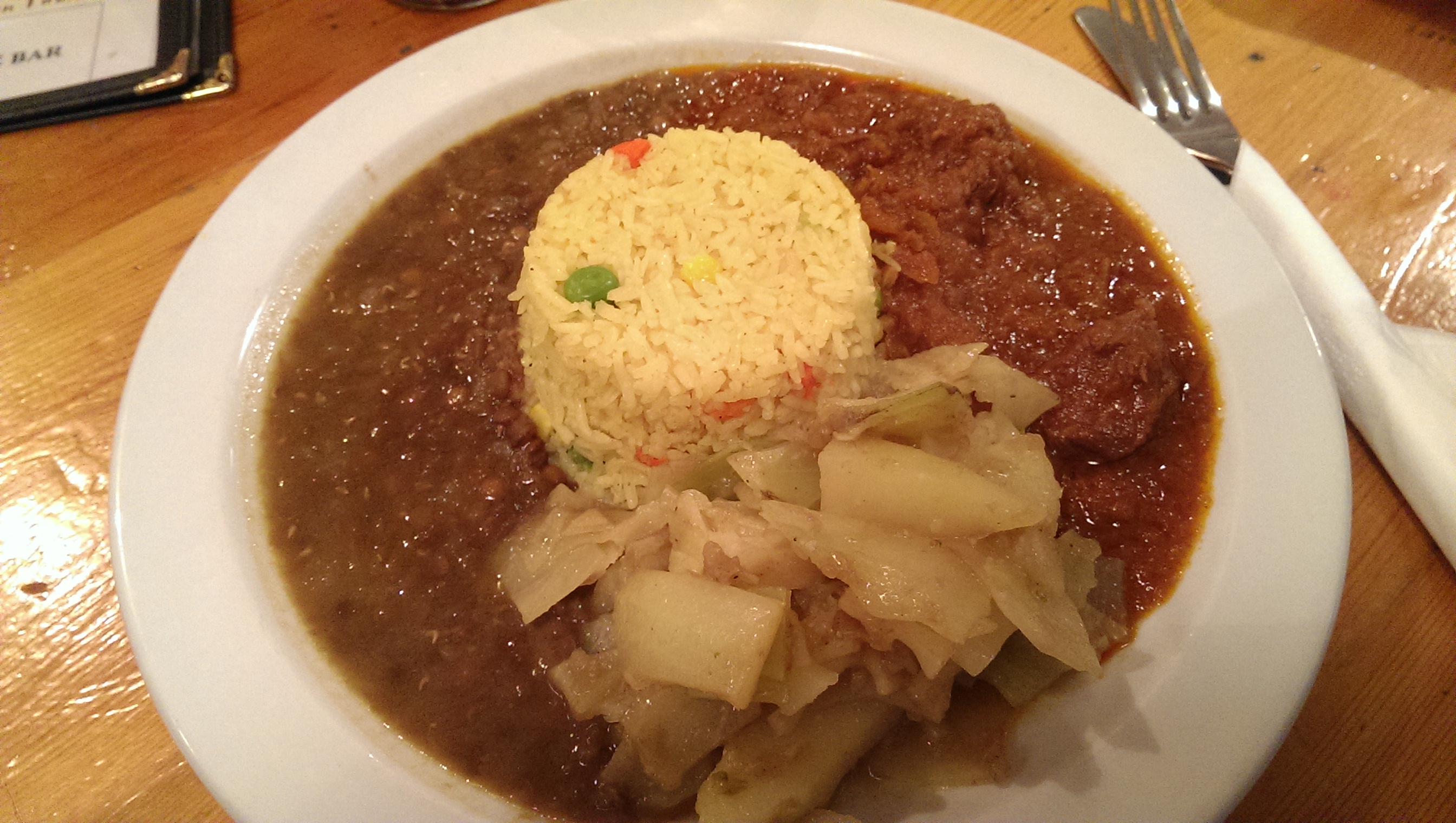
So I liked the doro wot, chicken on the bone in a rich spiced sauce. I liked that an awful lot, in fact. The chicken was so soft, so tender and so well cooked that taking it off the bone was no challenge at all, and once I’d done that I was struck by how much of it there was. The sauce was magnificent too, sticky and delicious with a heat which gradually, subtly developed without ever being too much. By the end of the dish my mouth had a wonderful, warm glow; if I went back to Tutu’s, I think I’d just order this dish, as nothing else I tasted came anywhere close to it.

I didn’t like the keya sega wot – beef in a remarkably similar sauce – anywhere near so much. The beef was everything the chicken wasn’t. It needed a lot more cooking; none of it passed the two forks test and one piece was downright wobbly in a way best not remembered, let alone written about. There also wasn’t much of it – I counted less than half a dozen pieces, none of them huge.

I liked the injera, like a thick flat sourdough crumpet you could tear off and use to eat your food, almost an edible plate (and who among us has never fancied one of those?). It was a bit of a soggy experience, perhaps, but still a fun one – and the slight vinegary note in it worked better with the sauce than I expected. I was less keen on the rice – a little dome of yellow rice with what looked suspiciously like frozen vegetables in it, it didn’t feel like it added an awful lot to proceedings.
Tutu

This, I’m afraid, is where I largely ran out of likes. The vegetable dishes were bland variations on a theme, and it’s hard to be positive about any of them. Fosolia, described as “a dish of subtly flavoured fried green beans and carrots” was a mulch of green beans and what looked like tinned or frozen carrots which tasted of beans, carrots and nothing else (so very subtly flavoured, then). I couldn’t see how this could possibly have been fried, either, because fried food doesn’t normally wind up this damp.

White cabbage and potatoes and collard greens and potatoes were very close relations and again, were basically soggy brassica with cubes of potato. One was apparently cooked with exotic herbs and spices, but it reminded me of my school dinners and trust me, there was nothing exotic about those. The other featured garlic, in theory at least (I could barely tell the two dishes apart). Last of all, the difen misr wot, green lentils in sauce, was impossible to either like or dislike. The lentils had a nice bite but it was just a puddle of brown blandness. Maybe nothing could live up to the sauce which came with that chicken and beef, or perhaps my palate just isn’t developed enough to pick up both ends of the spectrum in Tutu’s food. I’m not sure I could tell which it was by that stage, and worse still I’m not sure I cared.

I’d rather end on a positive, so I will say that my Ubuntu Cola – a fairtrade African version that is never going to appear on a tacky red festive truck outside the Oracle – was very tasty indeed. But then, like much of what I enjoyed in my visit, this had more to do with the Global Café than it did with the restaurant. The whole bill came to around twenty-three pounds, and to my shame I left really, really wanting a big slice of cake somewhere else.

So, did I like Tutu’s Ethiopian Table? I should have, I wanted to, but did I? I don’t know, what do you think?

Tutu’s Ethiopian Table – 5.7
35-39 London Street, RG1 4PS
0118 9583555

Quattro

One of the drawbacks of this gig is taking the photographs, especially when I visit a restaurant and find myself sitting in a very empty room trying to take sneaky pictures without the staff noticing (this is more of a problem in some places than others: where the service is poor you could probably get on a table and belt out I Will Survive without anybody batting an eyelid). Empty Room Syndrome happens much more often if I’m dining at quiet times, so Quattro immediately had me feeling hopeful when I rocked up on a Monday night to a bustling dining room.

Subscribe to continue reading

Become a paid subscriber to get access to the rest of this post and other exclusive content.

Bill’s

If you’re surprised that I’ve written a review of Bill’s the main thing I can say is this – me too. I had written it off: it’s always struck me as a chain trying its damnedest to convince people that it isn’t one, the rustic reclaimed school chairs and blackboards full of homespun quotes a sleight of hand concealing a respectable-sized chain (over fifty restaurants and growing), backed by Richard Caring, who also owns or has owned parts of Strada, Carluccio’s and Cote. So I was surprised when someone suggested I review the place, but he made some interesting points; it wasn’t a chain when it came to Reading, he said, and it offers something different to other Reading restaurants.

My first instinct was to say thanks but no thanks, but then I thought about it a bit more. I’ve always said that not all independents are good and not all chains are bad, and one of the plusses of writing Edible Reading has been eating at restaurants I’d otherwise never have considered. Why shouldn’t that apply to Bill’s, too? So I found myself sitting in Bill’s on a weekday night, at one of those reclaimed chairs (are they reclaimed, I wonder, or do they have a supplier who makes all these distressed-looking chairs, tables and defeated-looking leather armchairs for them?) reading the menu, not entirely sure what I was doing there.

Subscribe to continue reading

Become a paid subscriber to get access to the rest of this post and other exclusive content.

Arepas Caffe

N.B. Arepas Caffe closed in November 2014. I’ve left the review up for posterity.

There are some restaurants where, as a customer, I get the distinct feeling that the staff simply don’t care. They don’t want to be there and they would rather you weren’t too and a smile when showing you to your table or taking your order is just too much bother. In others, they at least make an effort at the façade: they’re all smiles and charm to get you to a table and then they ignore you once you’re settled in, however many times you sit up like a meerkat and pull the “I’m ready to be served” face (surely it’s not just me? Actually, don’t answer that).

Why do I mention this? Well, Arepas Caffe might have the warmest and most genuine welcome of any Reading restaurant I’ve visited. The staff behind the counter went out of their way to talk me through the menu in detail, with a level of knowledge and enthusiasm that put most places to shame. There were party balloons up on the day I visited and the effusive woman at the till (who turned out to be the owner) told me it was her birthday recently. They’d had a party in the restaurant, she said, with customers and friends. “Many of our customers become friends” she said, and I can well believe her. Throughout my short lunchtime visit there were customers coming and going, collecting food and chatting, and all the time I struggled to tell the difference between customer and friends – not just because many of them were speaking Spanish.

Arepas Caffe is a Venezuelan café and has been open in Reading for a pretty astonishing eighteen months, tucked away opposite Greyfriars church, invisible to most of the population. I would never have found it myself if it hadn’t been for Jo Romero’s blog and it’s taken me almost six months get round to going – a huge oversight, I now realise, especially since they do churros (more of that later, though). The cafe itself is a small, skinny room with a counter at one end and seating along one side, with homely prints and pictures along the other (I noticed one saying mi casa, su casa which was particularly appropriate).

The menu is pretty simple, although more customisable than it looks at first glance. The main thing here, in accordance with the Ronseal Principle, is the arepas – small, round, pitta-like pockets made from corn instead of wheat – that can be filled with an array of, erm, fillings. The main ones are carne mechado and pollo mechado (shredded beef and chicken respectively) but you can also team these with black beans and cheese. Or you can have La Reina, a particularly decadent sounding combination of chicken, avocado and garlic sauce. But if you don’t fancy arepas there are other options, all revolving around those fillings: burritos, empanadas or pabellón, which is basically the same thing served with rice and beans. The owner told me, with obvious pride, that everything is made by hand on the premises and, if you needed any further incentive, it’s also gluten free (and I thought Nibsy’s was the first to do this: you live and learn).

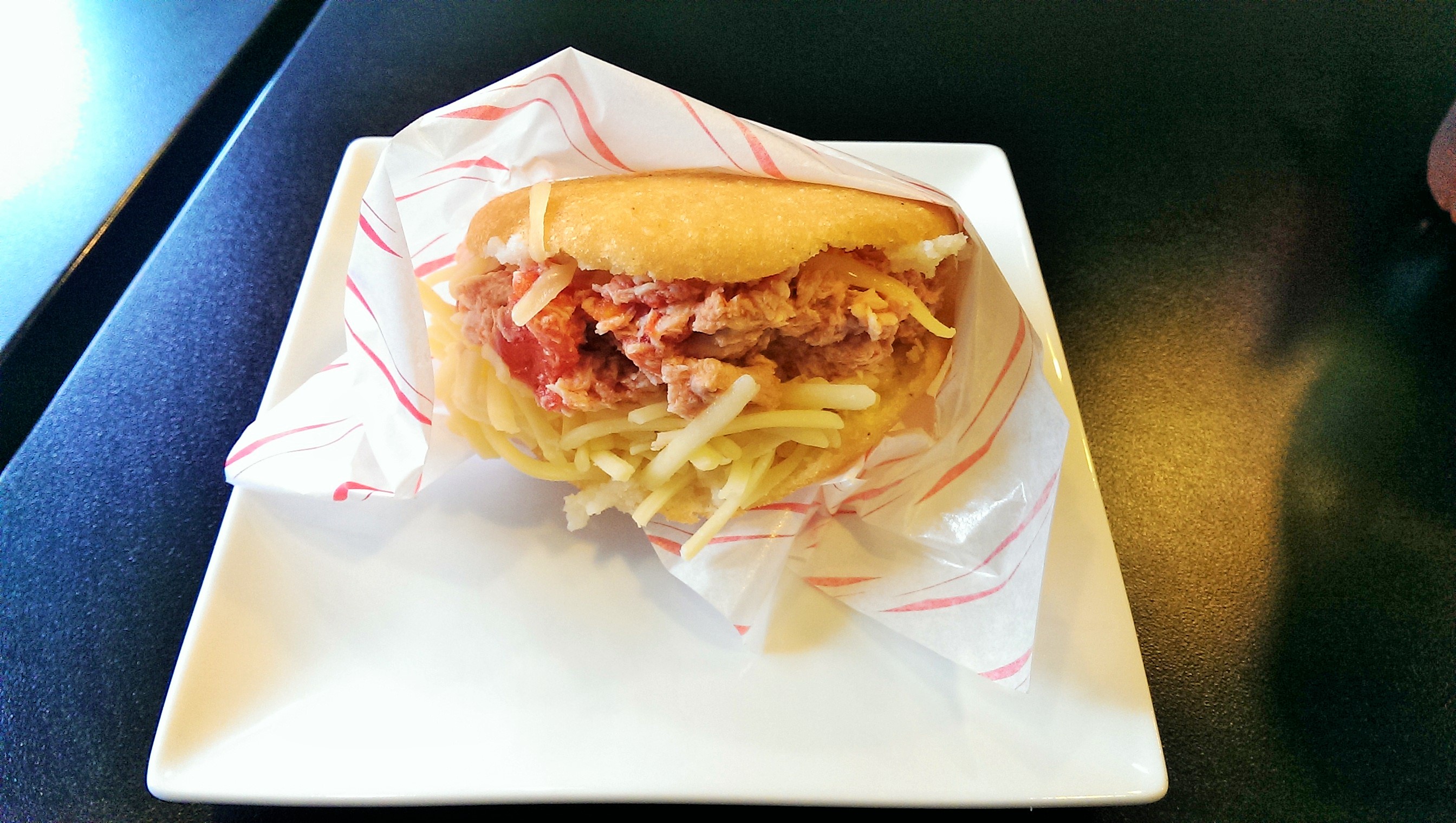
So far, all terrific, but was the food any good? Well, generally, yes it was. The arepa itself was crispy on the outside and slightly sticky and doughy in the middle, which made it feel a little heavy. But what was in it was tasty: chicken cooked until it was falling apart in a tomato and chilli sauce, topped with grated cheese. And the cheese! The owner said that the cheese was really good and she was right – it had the flavour of a decent tangy cheddar but the slightly plasticky (in a good way) texture of processed cheese, perfect for melting. So it was almost a big hit: I’m not sure if I would have the arepa again – that gluey texture left me a little underwhelmed – but the contents were really good, especially considering they were only a fiver. I think I missed the chance to pick a few more fillings, being a bit overloaded with choice, but that’s something definitely worth rectifying with a return visit.

Arepa

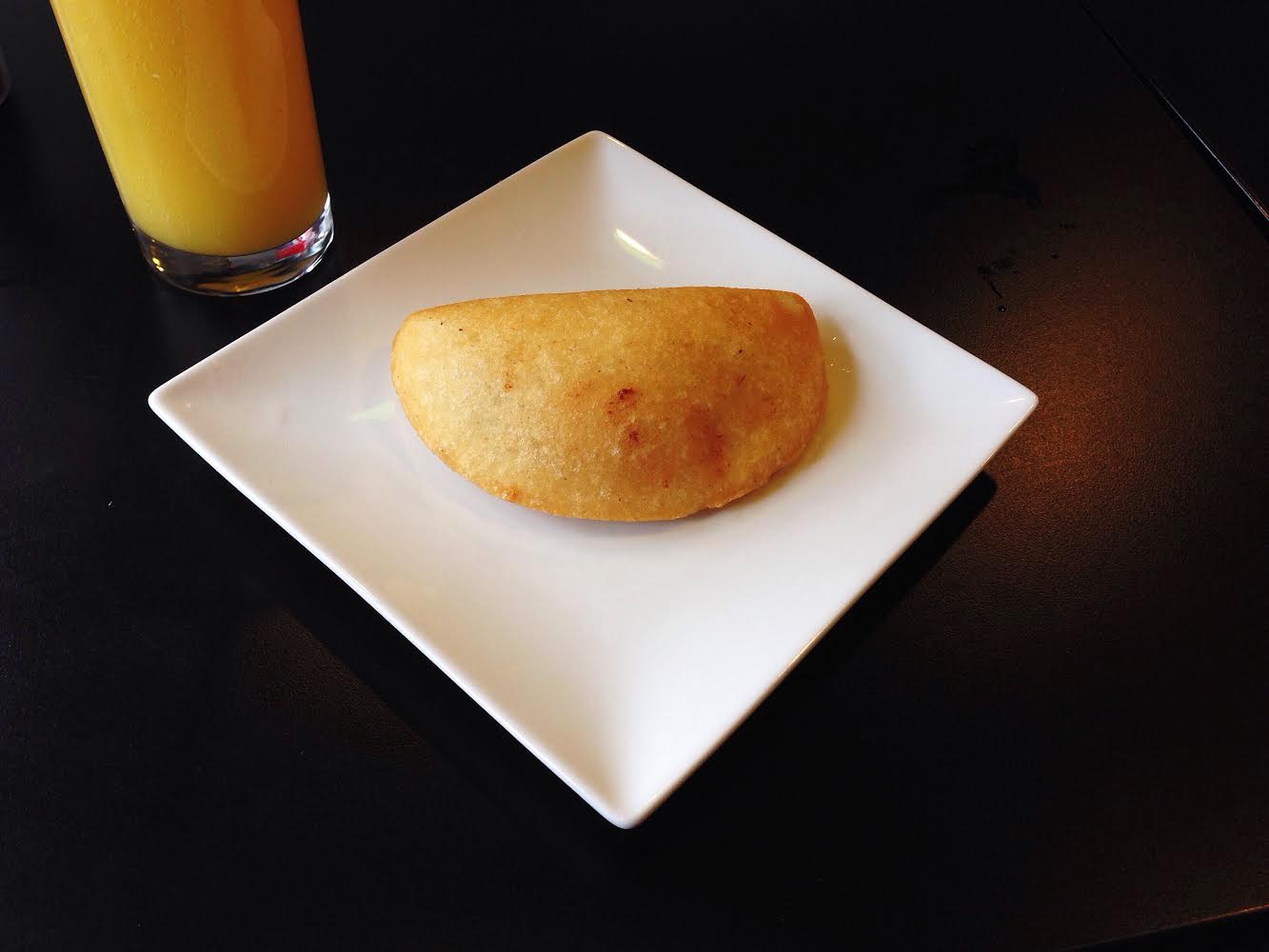
The beef empanada was a very similar story. There isn’t a sign on the wall at Arepas saying You don’t have to like corn to eat here, but it helps but there really should be: I’m used to Argentinian empanadas made with thin pastry, but the Venezuelan version is also made with corn and as a result was also a little bit thick and stodgy for my tastes. But the filling was magnificent – sticky shreds of slow-cooked, savoury beef. Beautiful on the inside, iffy on the outside, like seeing a hot person wearing an unflattering outfit. But it didn’t make me think Never again, it just made me think next time I’m cutting the crap and having the pabellón.

Empanada

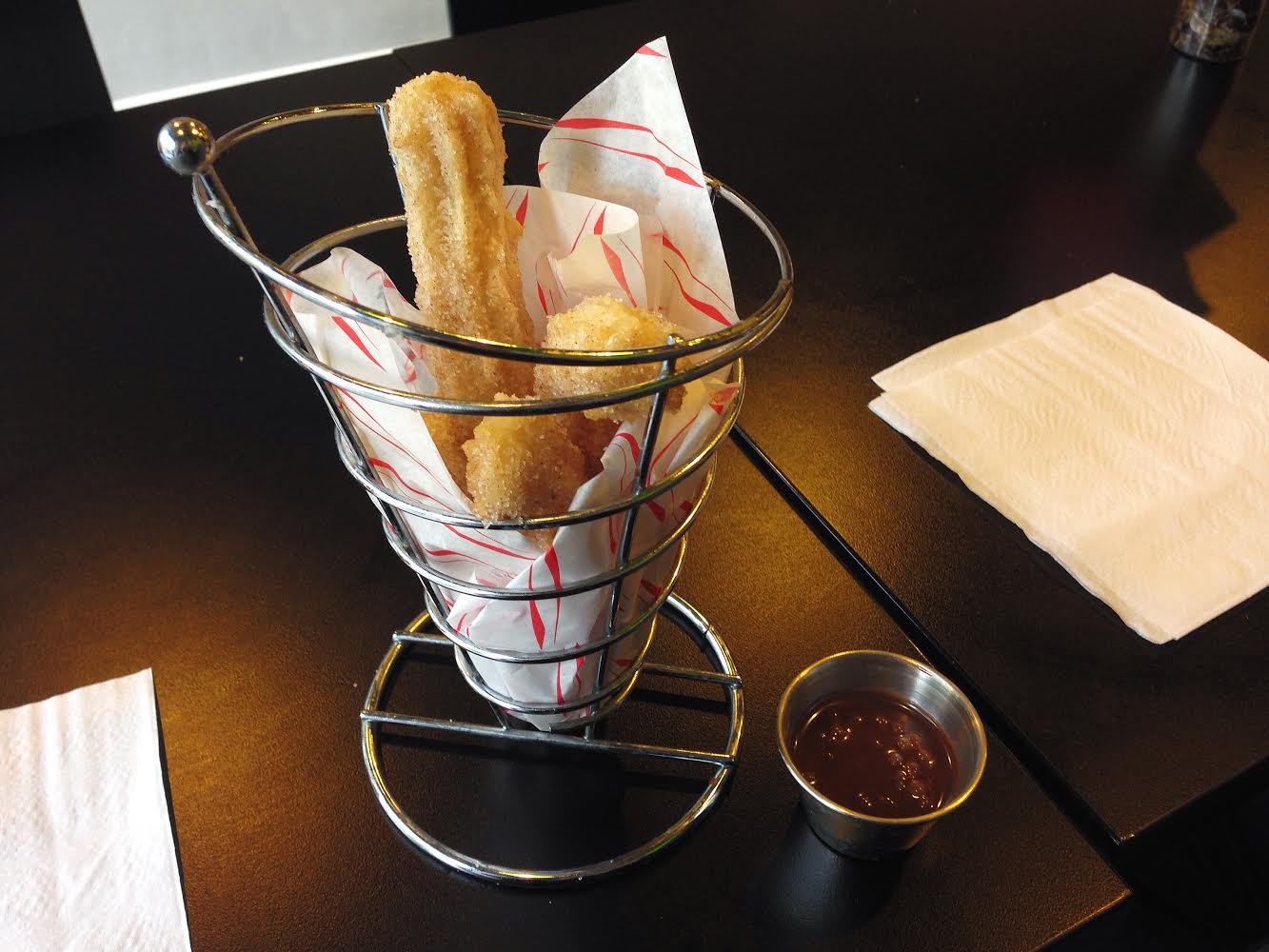
Now, back to those churros I mentioned earlier: I know this was only lunch but I couldn’t resist trying them. I’ve had them in Spain and not heard of them elsewhere, but the owner told me that they’re absolutely churro crazy in South America so here they are. There is even a chain of cafes over there called Churromania, apparently: now that’s one chain I wouldn’t mind seeing expand to Reading. For two pounds forty-nine they serve up four stubby churros (about the size of a fat marker pen) with a small dish of chocolate sauce. If the arepa made me want to come back and order something different then the churros made me want to come back and order the churros. They were heaven: piping hot, crispy on the outside, fluffy in the middle, and lightly dusted with sugar and cinnamon. The chocolate sauce was like a thin Nutella: not to my personal taste, but it didn’t go to waste at my table and was perfect for dipping and taking out a little of that heat. All told, I can think few ways to spend under three quid in a Reading restaurant that would bring anywhere near as much joy as these did.

Churros

On the side we had an iced tea and a mango juice. The owner told me, again with pride, that the juice had been freshly made that day – I got that in that clean, green taste but I found it a little on the watery side (I think maybe that’s my fault, though – spoiled by all those mango lassis I’ve enjoyed this year). The total bill came to fifteen pounds: not half bad for a hot two course lunch in an enthusiastic independent café.

I can’t help wondering what might have been. Maybe if I had gone for a burrito or the pabellón instead of the more sticky arepas and empanadas I’d be giving this a higher rating (I also fancied trying the cachapa, a corn – what else? – pancake filled with something a bit like mozzarella). But, on the other hand, the sign of a good restaurant is that you’re planning what you’ll eat on your second visit before you’ve finished the first, and on that basis it’s impossible not to recommend Arepas Caffe. They’re open until eight in the evening, and I can well imagine I’ll drop by after work one day to have another crack at finding the best things on the menu. Besides, when the staff are this friendly it would be rude not to go back for another helping of the churros. Just for quality control purposes, si?

When I got home, I looked at Arepas’ Facebook page. The owner wasn’t kidding about the birthday party – they even have photos up, and everyone looks like they’re having a fantastic time. Go have a look and let me know if you can tell the difference between the customers and friends: I know I couldn’t.

Arepas Caffe – 6.8
89 Friar Street, RG1 1EL
0118 957 1551

Arepas Caffe

RYND

RYND closed in August 2016. I’ve left the review up for posterity.

My normal rule is not to review restaurants that have just opened. It’s not fair to judge a place in the first month when it’s finding its feet, and most restaurants in Reading don’t have a soft launch to phase themselves in. One minute they’re all boarded up with people beavering away inside, the next they’re open and the front of house and the kitchen are learning to work together to offer something seamless. It must be a steep curve, doing that with all those hungry, demanding customers at tables expecting everything to be perfect from day one.

My other rule is that I base my review on a single visit. In an ideal world it would be lovely to make multiple visits to a restaurant before writing a review, but life’s too short – especially if you want to read a new review every week. So instead they get one chance to impress and that’s it. Sometimes that can be a little unfair on restaurants: I’ve revisited some and found them to be better than I thought. Dolce Vita, for example, has constantly impressed me when I’ve gone back there and Bhel Puri House has become a reliable staple for a quick, interesting lunch. Sometimes it flatters places: Sushimania has never been anywhere near as good since as it was the time I went on duty.

All of this makes RYND a difficult review to write. In the interests of full disclosure, I went there “off duty” shortly after it opened and really liked it. I thought the food was interesting and well done and the service was excellent. But going back, just over a month after it opened, was like going to a different restaurant. What changed?

Well, the menu for a start. Sitting down I was presented with a different menu to the one I chose from on my previous visit – and, indeed, a different menu from the one on the website at the time of writing. The alterations were subtle but telling: no courgette fries any more, two of the burgers had come off the menu, one of the starters had been removed, you no longer have the option to order pulled pork as a main except as part of the upsold combo with chicken wings (odd, really: the menu boasts about how proud RYND is of its pulled pork but it’s not possible to order it on its own). The burgers that had been taken off were the basic options: a plain hamburger or a cheeseburger. The cheapest things on the old menu, as it happens.

That leads to the second change on the menu: the prices. Everything has been hiked in the month since the restaurant opened, the starters by around a pound and the main courses by between two and three pounds. All the burgers are now over a tenner, although in fairness to RYND you pay about the same for a burger at their closest competitors, the Oakford or Handmade Burger. Even so, it just felt a little cynical. Perhaps the initial prices were soft launch prices and RYND just decided not to tell anybody.

It wasn’t a brilliant first impression, but I put it to one side. After all, the prices weren’t necessarily unreasonable and RYND deserved to be judged on the food, the room and the service, just like any other restaurant. And the room, it has to be said, looks gorgeous. All that exposed brickwork and exposed light bulb filaments might be a trope that’s been done to death in London, Liverpool and Glasgow but in Reading it still makes a refreshing change to see somewhere so beautifully fitted out. It’s broken up nicely into lots of little sections with a long, atmospheric bar (when I went there were a row of very bearded chaps sitting at it, all check shirts and beanies, presumably having a craft beer and pretending to be in Williamsburg). The only drawback was the black banquette running round the room – it looked plush and comfy but was disturbingly like a church pew, with less give than Jimmy Carr and Gary Barlow put together.

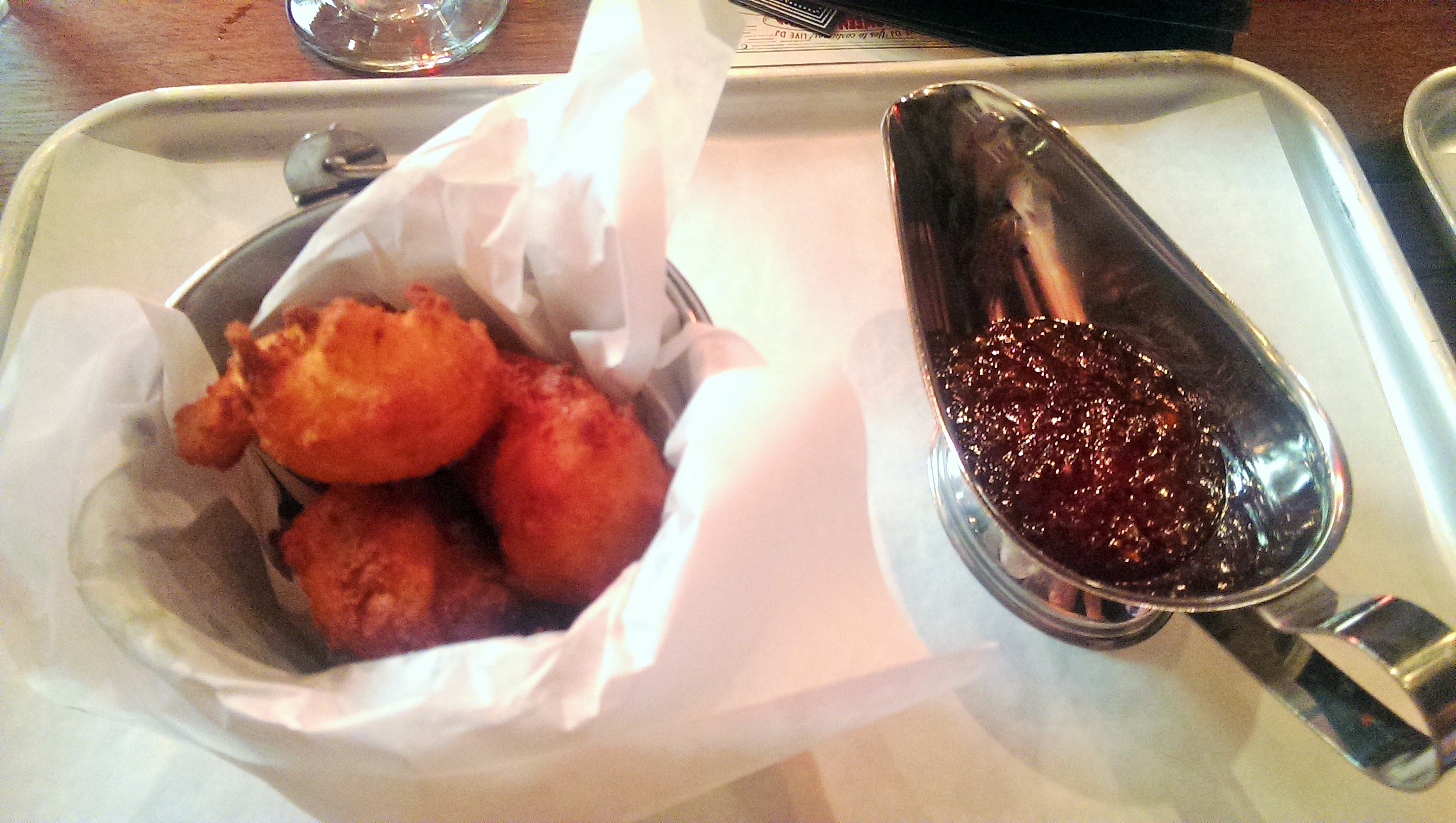
And the food? Well, the food is where RYND really fails to impress. Of the starters, hush puppies were pleasant enough – deep fried corn fritters with enough texture to just about compensate for the lack of taste, still a little too crumbly for my liking but quite nice paired with sweet, spicy, slightly smoky chilli jam (“quite nice”, with hindsight, may well have been the high point of the meal).

Puppies

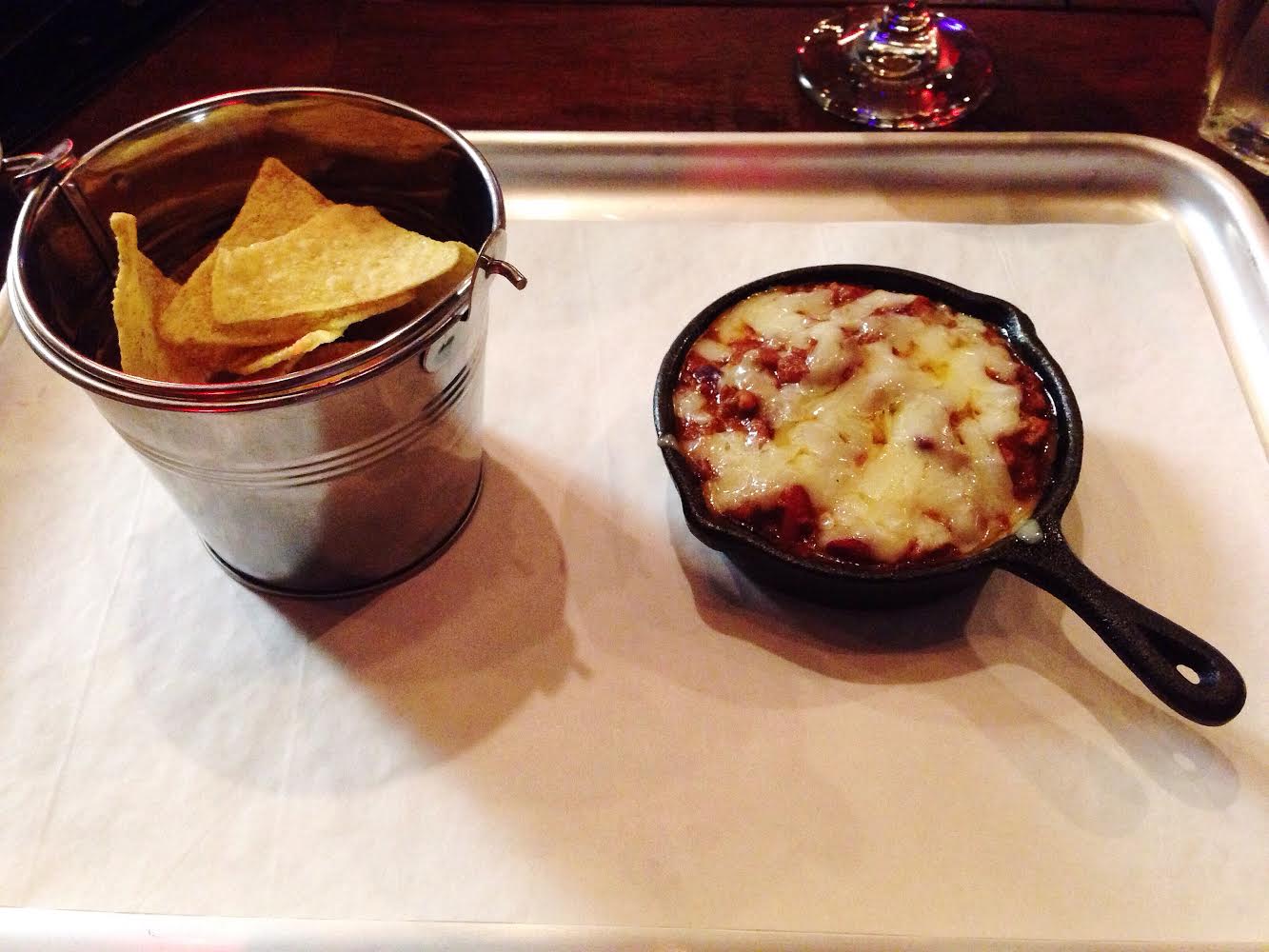
The other starter, the chilli bowl, was poor: a very small skillet of slightly anonymous chilli with a little heat but not enough, too much bounce and nothing interesting going on. I was hoping for something slow-cooked and complex, but this was miles from that (I’m no cook but I can make better chilli than this at home, and when I’m saying that there’s definitely a problem). Worse still was the little metal bucket of tortilla chips which came with it. Tortilla chips must be one of the cheapest things RYND serves up, and yet the bucket was barely two-thirds full. Again, it felt cynical.

Chilli

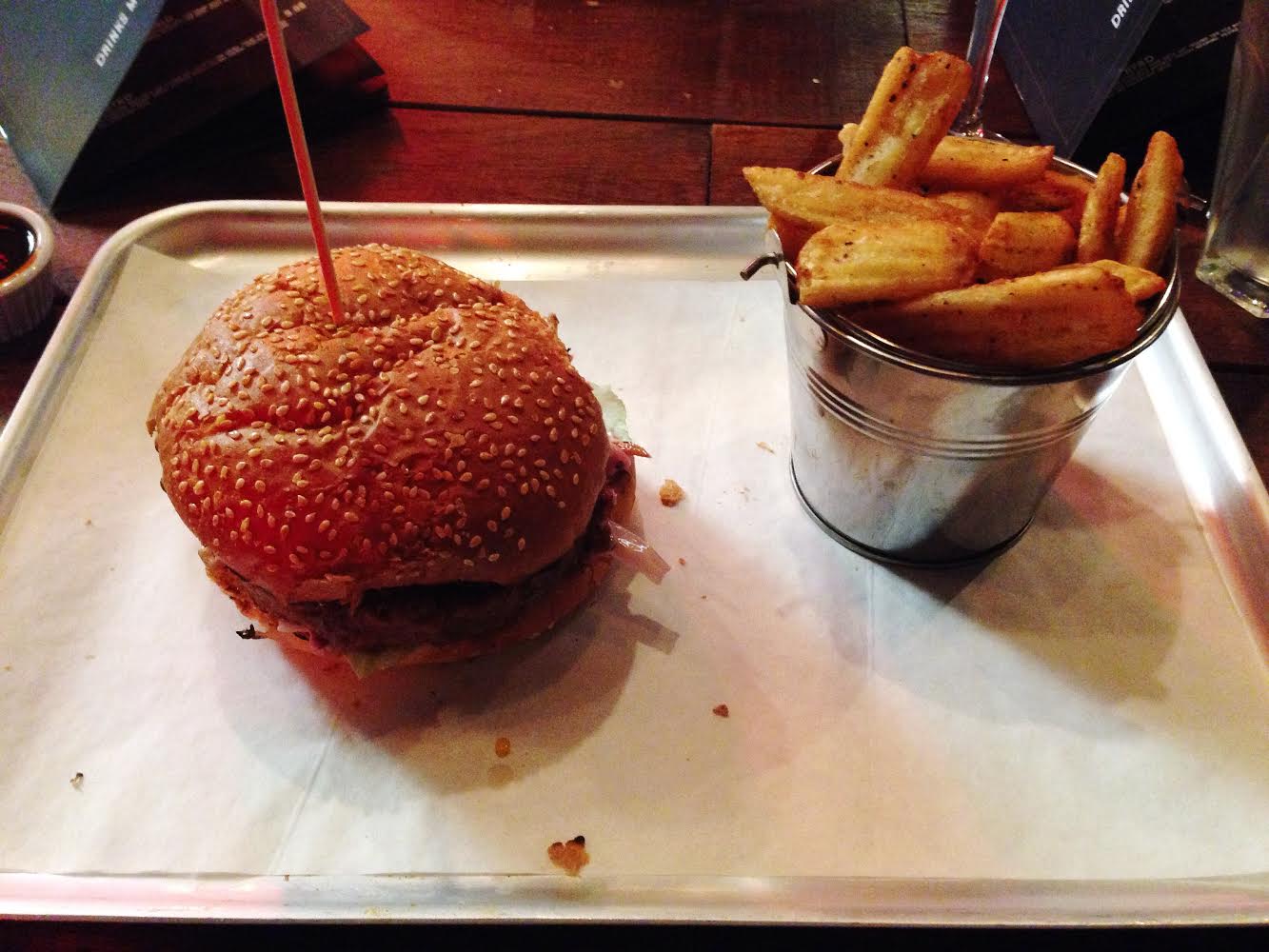
Pulled pork was possibly the crowning disappointment. Pulled pork should be dry and sticky with some smoke and spice, but this was just wet. Not moist, not even damp, but plain wet. It came in a sesame seed bun (with a needless wooden skewer: it was nowhere near tall enough to need one of those) drowned in mayonnaise. There was, I’m told, cheese and barbecue sauce and coleslaw in it but it didn’t feel like that at all. It didn’t even really feel like pork – with all that finely shredded mulch in mayonnaise I felt more like I was eating Reading’s most expensive tuna melt. It was so sloppy that eating it tidily was almost impossible – every bite forced more of it out of the other end on to the tray (of course it’s a tray, just like they’d have in Williamsburg). It wasn’t a sandwich, it wasn’t a burger, I’m not really sure what it was. A mess, I guess.

PPBurger

I did like the fries, though – flattened crinkle-cut slices like mutant McCoys, they were one of the better things I ate, especially dipped in the barbecue sauce. I think I’d probably describe the fries as quite nice.

The “smokehouse burger” was a run of the mill beef patty, a little bouncy in places as the chilli was. It was meant to come with barbecue sauce, mature Cheddar and crispy fried onions, but the onions were missing, substituted with a thick dollop of red onion marmalade so sweet and sticky that you could easily confuse it with dessert. The mini-pail of sweet potato fries on the side (I asked for these instead because I wanted to try them out) did little to lift the overpowering sugariness. In their defence, they were really good – crisp and light where sweet potato can often be a tad soggy and limp. With a different burger they would be worth the swap but with this one it all felt a little cloying. It just didn’t feel like an eleven pound main course, and until recently it wouldn’t have been one.

Service was pleasant and friendly: our waitress did have a crack at flogging us olives and recommending the most expensive main course, but that probably wouldn’t even have registered if I hadn’t already been irked by the menu so I won’t hold it against them. I should also mention the drinks – it was happy hour so I tried the spiced apple daiquiri which was pleasant but no more than that, and a 125ml glass of Portuguese red which was straightforward, uncomplicated and really easy to drink (hats off to RYND for offering small glasses of wine and pricing them fairly: many places don’t). The meal for two, two starters, two mains, those cocktails and a small glass of wine came to forty-six pounds, not including tip. Looking at the bill I saw the final piece of stealth margin maximisation – charged an extra pound for substituting sweet potato fries for standard fries, another thing the menu neglects to mention.

As you can probably tell, RYND got my back up from the start. But being dispassionate about it and trying to forget my earlier, better visit (and wider menu. And better pricing. Hmm. Suddenly there seems to be quite a lot to try to forget) I still can’t recommend it. Judging it on its merits, if I wanted this kind of food Blue’s Smokehouse does it many times better (and a little bit cheaper). And if I wanted this kind of food and didn’t want to leave Reading, I think I’d go to the Oakford which offers more, better burgers, again slightly more attractively priced. But I suspect RYND will do perfectly well all the same – it’s a kind of food people want to eat at the moment, the kind of place people want to eat it in and I imagine hipsters will enjoy telling each other that the Oakford is so last year.

Oh, one last thing: RYND is pronounced rynd as in quite nice rather than rynd as in cynical. But in reality it’s probably a bit of both.

RYND – 6.2
11 Castle Street, RG1 7SB
0118 9505555

http://ryndreading.com/